The best MTB trails in Czarny Las
4.5
(22)
176
riders
29
rides
Mountain bike trails in Czarny Las are primarily characterized by dense forests and varied topography, offering a range of experiences within the Małopolskie Voivodeship of Poland. The region features a mix of doubletrack and singletrack trails, with some routes incorporating natural contours and elevation changes. These wooded areas provide a natural backdrop for mountain biking, with trails suitable for different skill levels.
Best mountain bike trails in Czarny Las
- The most popular mountain bike trail is Brick Roadside Shrine –…
Last updated: June 25, 2026
5.0
(1)
3
riders
14.5km
00:57
70m
70m
Easy mountain bike ride. Great for any fitness level. Suitable for all skill levels.
3
riders
45.2km
03:21
370m
370m
Moderate mountain bike ride. Good fitness required. Advanced riding skills necessary.

Sign up for free
8
riders
30.9km
02:24
240m
240m
Moderate mountain bike ride. Good fitness required. Suitable for all skill levels.
4.0
(1)
4
riders
52.0km
03:21
400m
400m
Moderate mountain bike ride. Good fitness required. Suitable for all skill levels.
5.0
(1)
10
riders
18.2km
01:28
150m
150m
Easy mountain bike ride. Great for any fitness level. Suitable for all skill levels.
Get access to more routes and recommendations from other explorers.
Sign up for free
Already have an account?
Our route recommendations are based on thousands of hikes, rides, and runs completed by other people on komoot.
Start today with a free account
Your next adventure awaits.
Login or Signup
Tips from the Community

From here you can enjoy a wonderful view of Lake Ukiel and the Olsztyn skyline in the background.👌
0
0

A chapel in the village of Łupstych
0
0

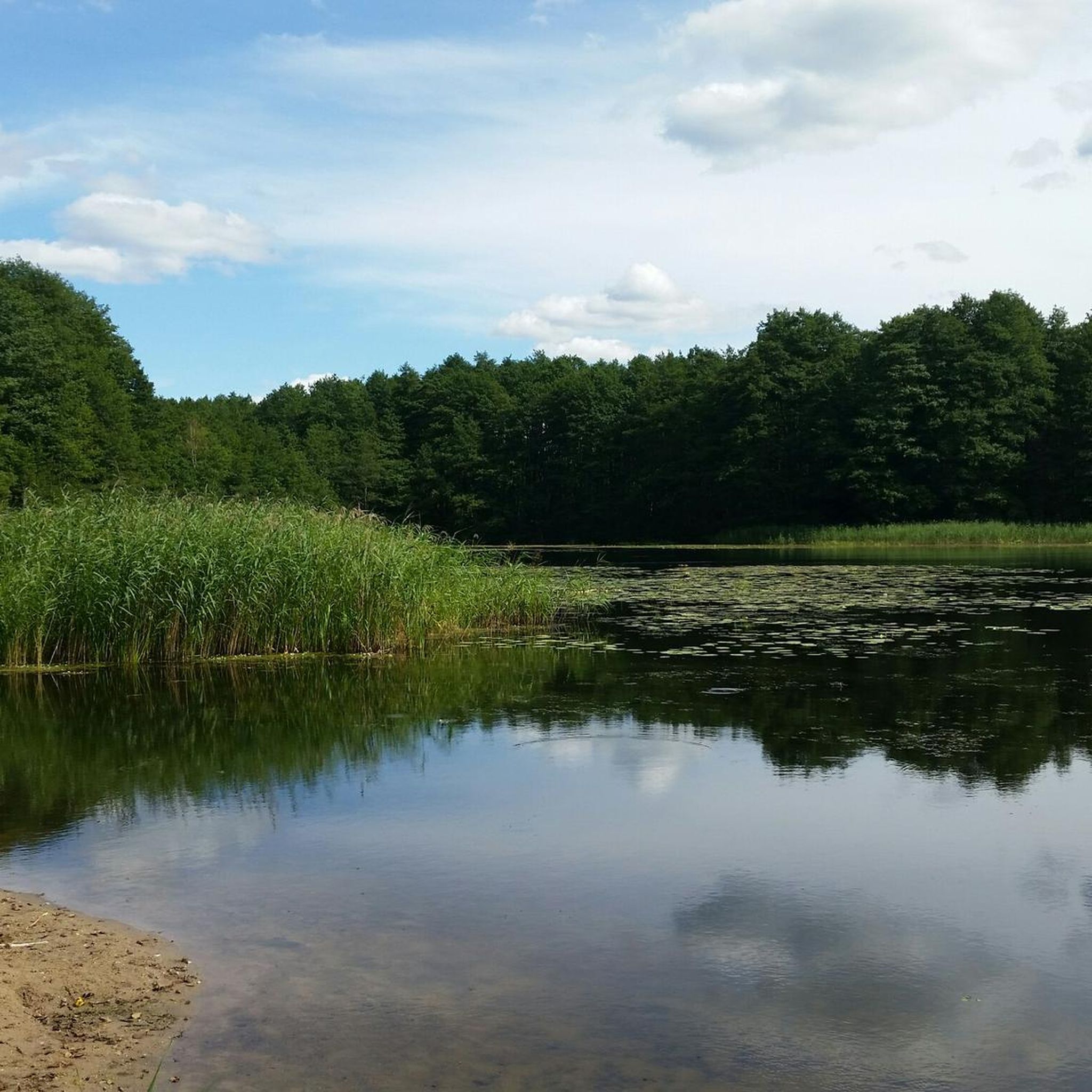
Great swim spot with change room, several wooden piers, sandy beach, and comfy reclined rest benches right along the bike trail
5
0
Probably the most prominent structure of the Brick Gothic style in northern Poland, rhe church was probably built between 1370 and 1380, after Allenstein was granted city rights in 1352. The impressive east gable was built shortly after 1429. During the Fourth Coalition War, the church was used as a prison for 1,500 Prussian and Russian soldiers in the winter of 1806/07, who used the furnishings as firewood. The current furnishings were then created, which fortunately survived the end of the war in 1945 thanks to the work of Pastor Johannes Hanowski. The baroque interior design that had been installed in the meantime was removed in 1866. In 1896, the main altar with its valuable Flemish paintings, which had been installed from the castle's St. Anne's Chapel, fell victim to a fire. In 1899, the roof was replaced. Around 1900, the composer Feliks Nowowiejski worked as an organist at St. James' Church. On June 28, 1972, the church became a co-cathedral of the archdiocese. In 1991, Pope John Paul II visited it, and in 2004, he elevated St. James' Church to a minor basilica. The three-aisled hall church was built without a choir. The tower was initially built free-standing only up to the church roof and was only raised to its current size between 1582 and 1596. With the construction of the side chapels, which were added between 1715 and 1721 together with a general restoration, the tower became part of the church. The current spire was added in 1867/68, with the golden star dating from the original building in 1596. At the same time, the façade was redesigned in a neo-Gothic style, with Ferdinand von Quast and August Stüler contributing. In 2001, the church received a representative main portal made of bronze.
5
0
In 1334, a watchtower was established on the Łyna River. In 1346, the forest was cleared at the location for a new settlement, mentioned in a historical document from 1348. The following year, the Teutonic Knights began the construction of an Ordensburg (castle) as a stronghold against the Baltic Prussians. Allenstein was granted municipal rights by the cathedral chapter of the Bishopric of Warmia in October 1353. The German "Allenstein" referred to the river's Baltic Prussian name Alna, which meant a hind. Local Poles, having arrived along with German settlers, called it Holstin and Olsztyn, which are Polonizations of the German name. The castle was completed in 1397. The town was captured by the Kingdom of Poland during the Polish-Lithuanian-Teutonic War in 1410, and again in 1414 during the Hunger War, but it was returned to the monastic state of the Teutonic Knights after hostilities ended.
5
0


Smooth asphalt north and difficult gravel south of the bridge.
0
0

Allenstein Castle was built in the 14th century and served as the residence of the grand masters of the Teutonic Order. Today the castle houses a museum that presents a variety of exhibitions and exhibits on the history of the Teutonic Order and the city of Allenstein.
8
1
Frequently Asked Questions
How many mountain bike trails are available in Czarny Las?
Czarny Las offers a network of 27 mountain bike trails. These routes cater to various skill levels, providing options for both easy and moderate rides through the region's forested landscapes.
What kind of terrain can I expect on mountain bike trails in Czarny Las?
You can expect primarily dense forests and varied topography. The trails feature a mix of wider doubletracks, suitable for more casual rides, and more technical singletracks. Some routes incorporate natural contours, elevation changes, and even elements like drops, jumps, and berms for a dynamic experience.
Are there mountain bike trails for beginners in Czarny Las?
Yes, Czarny Las has 13 easy mountain bike trails perfect for beginners or those looking for a relaxed ride. An excellent option is the Kesing loop from Brąswałd, an easy 3.9-mile (6.2 km) path that provides an accessible ride through the local landscape.
Are there challenging mountain bike trails for experienced riders in Czarny Las?
Yes, for more experienced riders, Czarny Las offers 14 moderate trails. These routes often feature varied topography with elevation gains and descents, and some singletracks include elements like drops, jumps, and berms, providing a more dynamic and exciting ride. The Ukiel Lake beach – Bagniska Forest Wetlands loop from Olsztyn Gutkowo is a moderate 31.9-mile (51.3 km) trail that leads through forest wetlands and past Ukiel Lake.
Are the mountain bike trails in Czarny Las suitable for families?
Many trails in Czarny Las are suitable for families, especially the easier, wider doubletrack routes. These multi-use trails are also popular for hiking and trail running, making them accessible for various outdoor activities. The Brick Roadside Shrine – Church in Wrzesina loop from Jonkowo is an easy 9.0-mile (14.5 km) loop that families might enjoy.
Can I bring my dog on the mountain bike trails in Czarny Las?
Yes, the Czarny Las trails are generally dog-friendly. Many of these multi-use trails allow dogs, making it a great option if you wish to bring your canine companion along for the ride.
Are there any circular mountain bike routes in Czarny Las?
Yes, many of the mountain bike routes in Czarny Las are designed as loops, offering convenient circular journeys. Examples include the Brick Roadside Shrine – Church in Wrzesina loop from Jonkowo and the Kesing loop from Brąswałd.
Where can I park when visiting the Czarny Las mountain bike trails?
Parking is typically available within a few miles of the trailheads in Czarny Las. While specific parking lots are not detailed, you can generally find convenient access points to begin your ride.
What natural features can I see along the mountain bike trails in Czarny Las?
The trails in Czarny Las are characterized by dense forests, offering a sense of immersion in nature. You'll experience varied topography, natural contours, and potentially pass by features like Ukiel Lake and the Bagniska Forest Wetlands, as seen on routes like the Ukiel Lake beach – Bagniska Forest Wetlands loop from Olsztyn Gutkowo.
What do other mountain bikers enjoy most about mountain biking in Czarny Las?
The mountain bike trails in Czarny Las are highly rated by the komoot community, with an average score of 4.5 stars from over 20 reviews. Riders often praise the diverse terrain, the immersive forest environment, and the variety of trails suitable for different skill levels, from easy loops to more challenging routes with technical features.
What is the best time of year for mountain biking in Czarny Las?
While specific seasonal conditions are not detailed, the dense forests of Czarny Las provide shaded trails, making them enjoyable during warmer months. Spring and autumn typically offer pleasant temperatures and beautiful scenery, while winter riding might depend on snow conditions, as these are primarily woodland trails.
Are there any less crowded mountain bike trails in Czarny Las?
With 27 trails available, you can often find less crowded options, especially during off-peak hours or by exploring some of the less-trafficked routes. While specific crowd levels vary, the extensive network allows for a sense of solitude in the natural environment. Consider exploring routes like the Chapel in Łupstych loop from Łupstych for a potentially quieter experience.
Most popular routes in Czarny Las

Get inspired with the komoot mobile app


Explore more
Browse the best MTB trails in other regions.
