The best running trails in Mosigkauer Heide
4.6
(273)
2,714
runners
308
runs
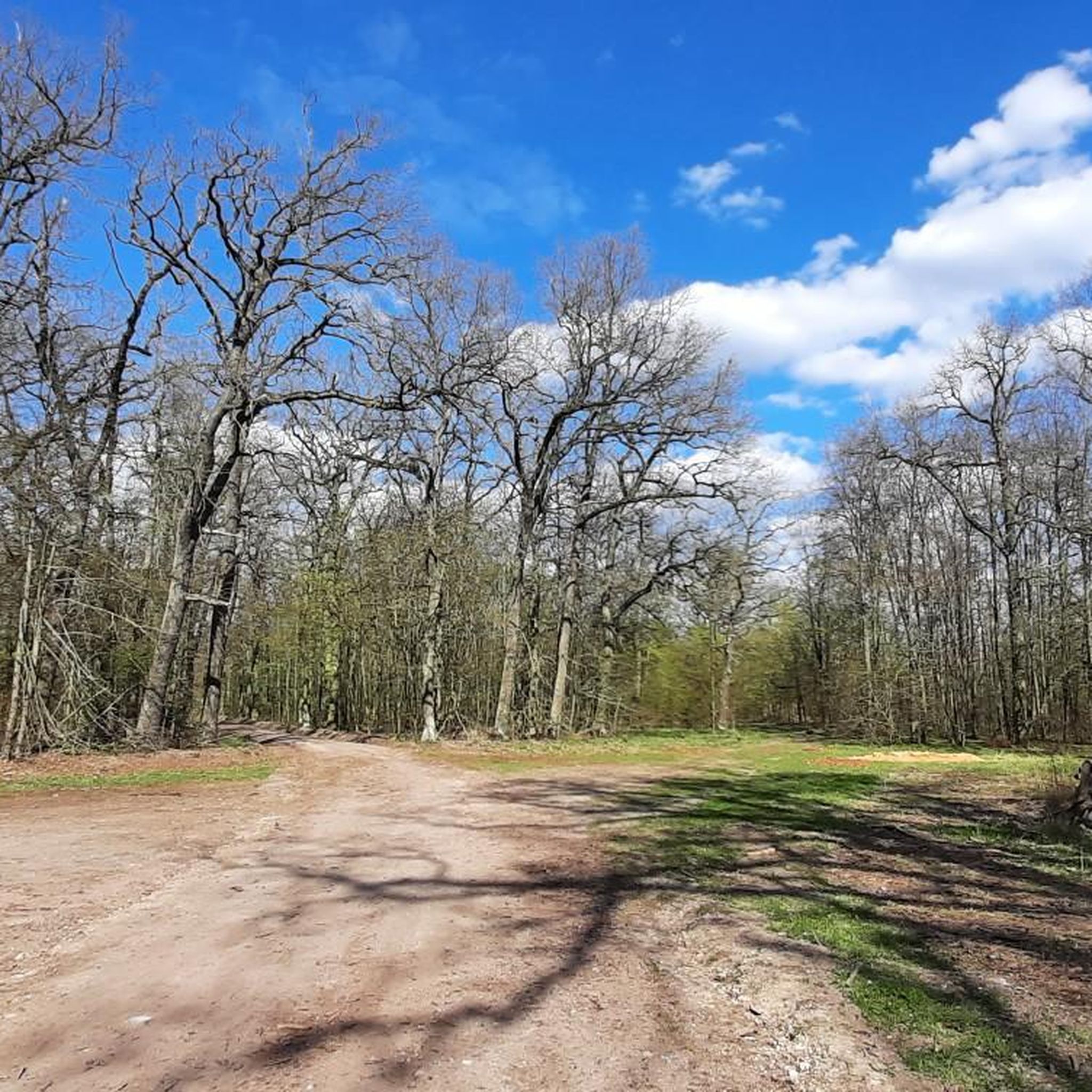
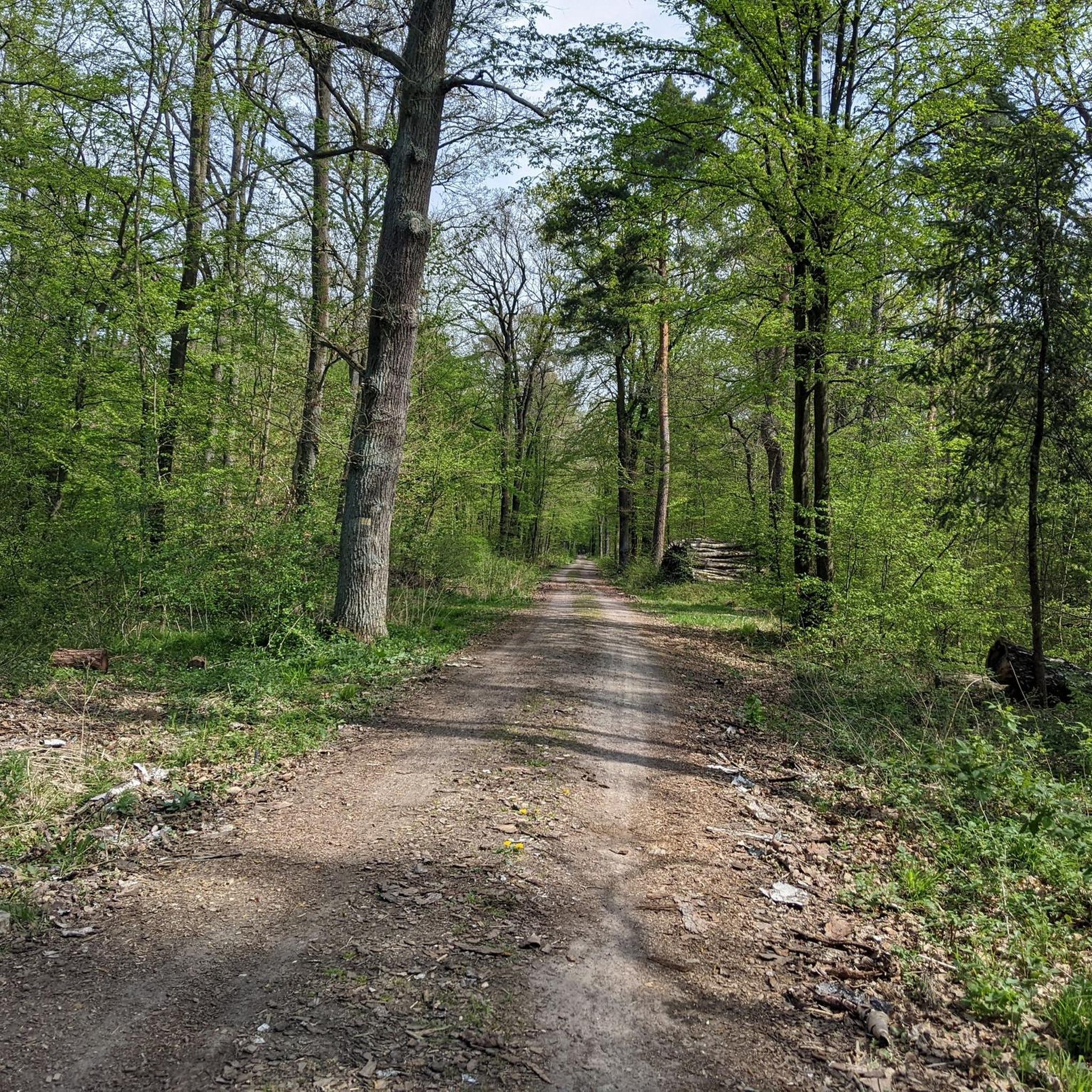
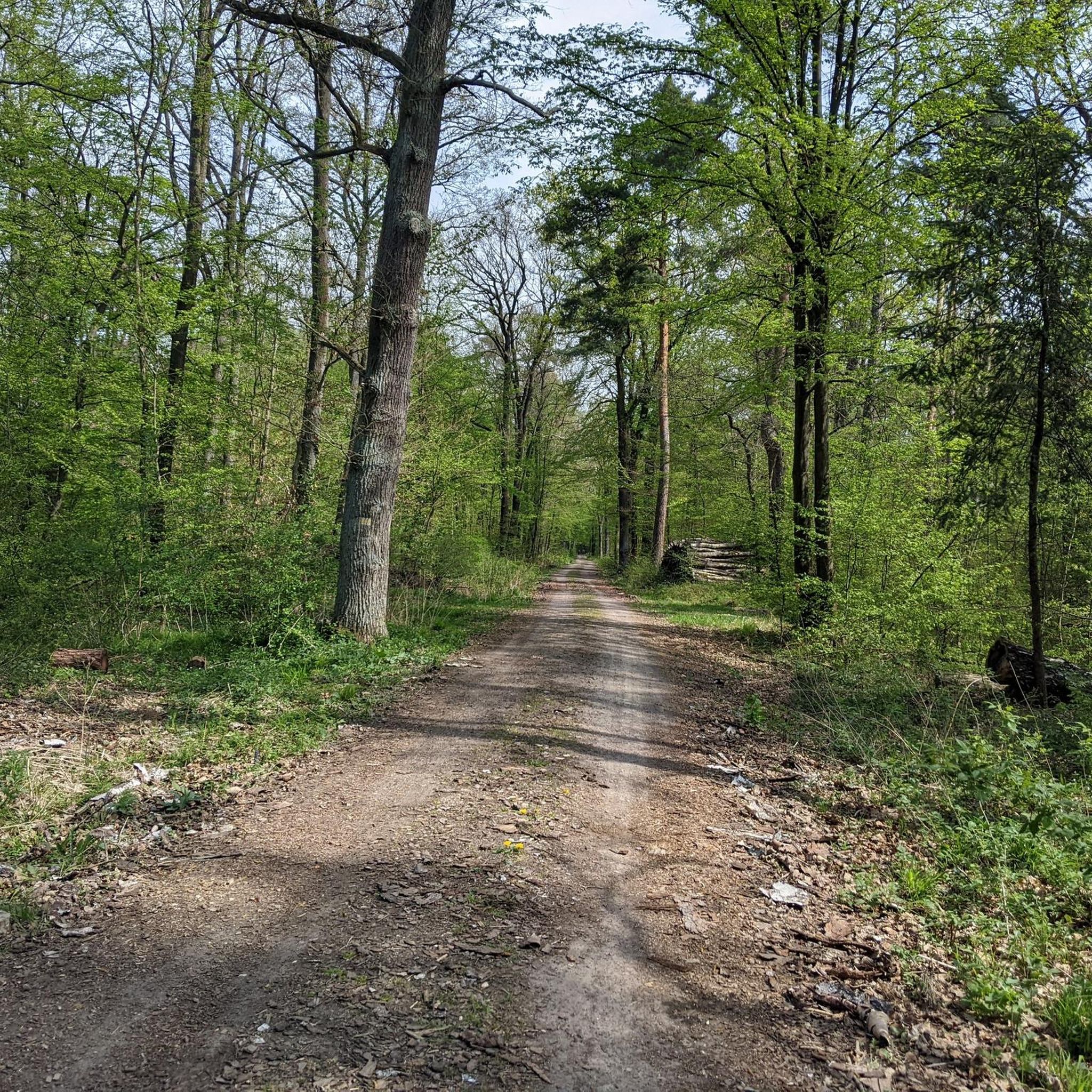
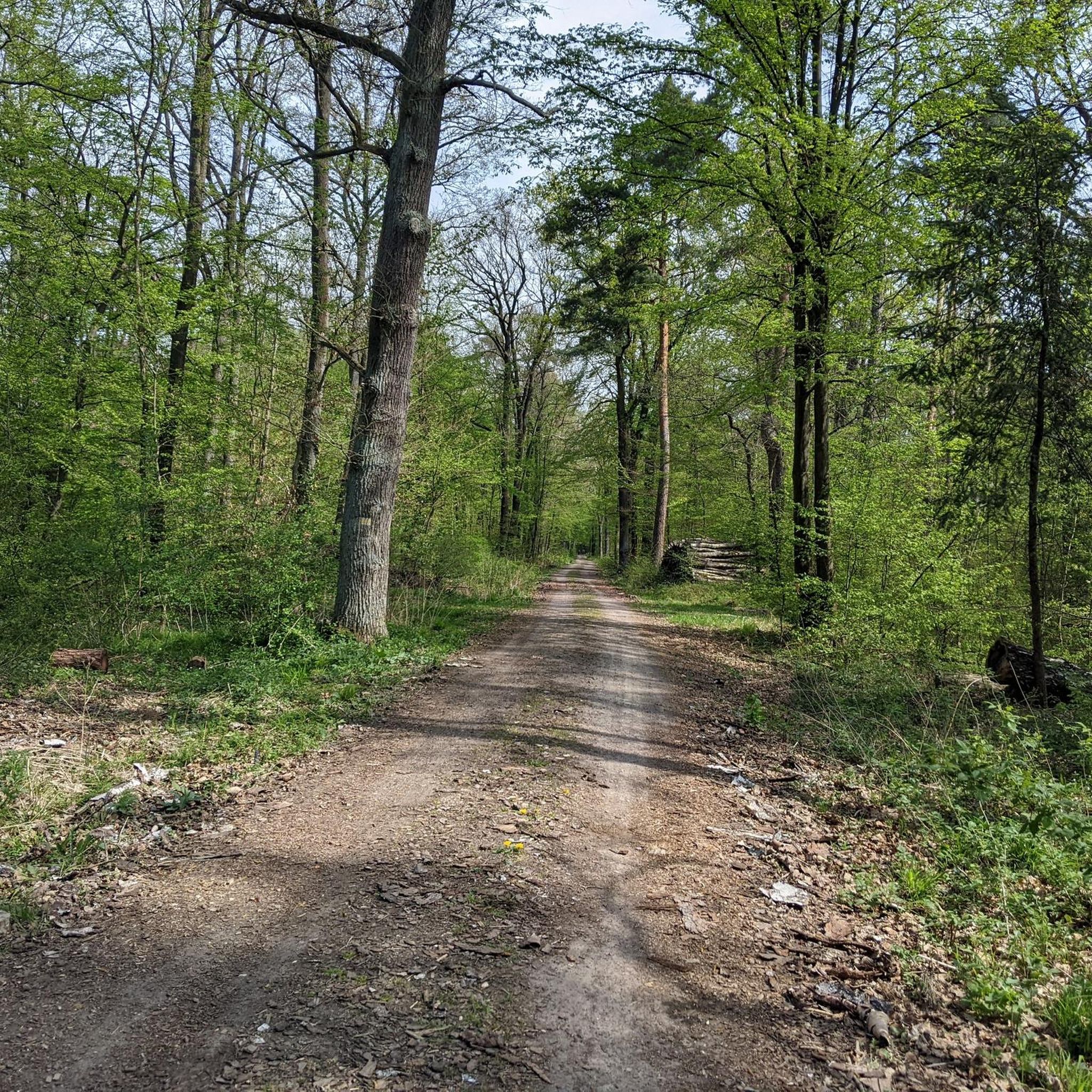
Jogging routes in Mosigkauer Heide traverse a region characterized by tranquil mixed forests and a nearly flat plateau. The terrain primarily consists of a sandy old moraine landscape, offering easily walkable paths suitable for running. Gentle undulations from watercourses provide minor elevation changes, making it ideal for less strenuous runs.
Best jogging routes in Mosigkauer Heide
- The most popular jogging route is Jonitzer Mulde – Jonitzer Mulde loop from Dessau Süd, a 13.3 miles (21.4 km) difficult trail that…
Last updated: October 13, 2026
5.0
(1)
33
runners
21.3km
02:13
30m
30m
Hard run. Very good fitness required. Mostly paved surfaces. Suitable for all skill levels.
4.5
(2)
20
runners
9.57km
01:01
30m
30m
Moderate run. Good fitness required. Mostly paved surfaces. Suitable for all skill levels.

5.0
(1)
18
runners
10.2km
01:04
10m
20m
Moderate run. Good fitness required. Mostly paved surfaces. Suitable for all skill levels.
15
runners
Hard run. Very good fitness required. Mostly paved surfaces. Suitable for all skill levels.
5.0
(1)
18
runners
5.46km
00:34
20m
20m
Moderate run. Good fitness required. Mostly paved surfaces. Suitable for all skill levels.
Get access to more routes and recommendations from other explorers.
Already have an account?
Our route recommendations are based on thousands of hikes, rides, and runs completed by other people on komoot.
Start today with a free account
Your next adventure awaits.

Tips from the Community

This is Mosigkau Castle.
3
0
Also commonly known as an egg slicer.
5
0
Memorial stone commemorating the last ride through the Tiergarten on June 6, 1903.
5
0
Beautiful paths in the Tiergarten for running, hiking and cycling.
6
0
The former castle and town church of St. Mary in Dessau is a late Gothic, three-aisled brick hall church with an ambulatory and a west tower, which replaced a Romanesque predecessor. The first Romanesque church dedicated to St. Mary was consecrated in 1263. On May 25, 1506, Prince Ernst of Anhalt-Dessau laid the foundation stone for the construction of a new Gothic church under the direction of the Halle city architect Ulrich von Schmiedeberg, which replaced the Romanesque structure. After the prince's death, his wife, Margarethe von Münsterberg, oversaw its completion and the festive consecration on October 15, 1523, under Cardinal Archbishop Albrecht of Mainz and Magdeburg. The church was vaulted in 1540/1541 by Melchior Wilde and Ludwig Binder, and the west tower was added between 1551 and 1554. In 1553, Ludwig Binder added another gallery, which was decorated with balustrade paintings from the school of Lucas Cranach the Younger. The interior was remodeled between 1780 and 1784 under Prince Franz by Georg Christoph Hesekiel. As the castle and town church, St. Mary's housed the burial place of the Ascanian princes until the construction of the new mausoleum in what is now the Dessau Zoo. A crypt was built in the ground floor of the tower between 1848 and 1850; the portal to it on the north side of the tower dates from 1850 to 1852. St. Mary's was destroyed by an air raid on March 7, 1945, leaving only the tower, the outer walls, and the interior pillars standing. The church burned down, and its interior furnishings were lost. Destroyed in the process were a sandstone pulpit from 1540, the baptismal font made by Ludwig Binder in 1533, and the 52-stop[1] Rühlmann organ.[2] The tower—secured by a temporary roof—with its octagonal top section survived, as did the half-gables on either side of the tower. The ruins were transferred to the Dessau City Council on March 1, 1983, and rebuilt between 1989 and 1998 to serve as a public venue for concerts, theatrical performances, special exhibitions, and other cultural events. The tower's onion dome with lantern, the steep gable roof, and the triangular gables above the transept-like extensions were reconstructed. On September 4, 2022, Dessau native Dieter Hallervorden opened his Central German Theater in St. Mary's Church.[3] Source https://de.wikipedia.org/wiki/Marienkirche_(Dessau)
4
0
St. Mary's Church (Marienkirche) is a church originally Catholic, but Protestant since 1534, located in the center of Dessau-Roßlau, Saxony-Anhalt. Today it serves as an event center. Dessau was destroyed in the air raids of March 1945 and rebuilt in the 1990s. St. Mary's was formerly the castle and town church. Source: https://de.wikipedia.org/wiki/Marienkirche_(Dessau)
4
0
The building plans were completed in August 1898. In October 1898, architect Möbius from Berlin took over the local construction management for the new town hall. The city established a special town hall building office, which Möbius headed. He was assisted by construction assistant Schütz, who died a few months later, as well as construction assistant Kramer and building clerk Stürz.[4] The demolition of the old town hall was completed by February 1899. No foundation stone was found. The larger stones from the lowest section of the wall were later placed on Kaiserplatz (Emperor's Square) as a memorial to the old town hall, bearing the inscription "Foundation Stones of the Town Hall 1563."[4] The groundbreaking ceremony took place in mid-February 1899, followed by the ceremonial laying of the foundation stone on Duke Frederick I's birthday, April 29, 1899.[5] The building's shell was completed by the end of 1900.[6] The tower and Ratskeller portals were reinstalled in the courtyard of the new town hall built in 1901 after the old one was demolished in 1899.[3] On the night of January 27-28 and again on April 4, 1901, severe storms caused considerable damage to the building. Among other things, the storm on Schloßstraße tore the crowning element of the southern gable from its height. The windows in the large council chamber of the town hall were shattered, and the roof was damaged by falling scaffolding planks. After the damage was repaired, the wing of the building received a new weather vane and copper decorations, as the old ones were too heavy for the structure and had also been damaged. As a result, the tower, which had originally measured 75 meters to its outer tip, lost height.[6] Source: https://de.wikipedia.org/wiki/Rathaus_Dessau
4
0
In the 13th century, a merchant's house stood on the site of today's town hall. Towards the end of the 13th century, it was granted as a hereditary fief to the Dreycken family by the then sovereign, Prince Bernhard III. A council of the city of Dessau was first documented in 1323.[2] On March 12, 1336, the fief was transferred to the city of Dessau by Princes Albrecht and Waldemar. The building then served the citizenry for their assemblies and is therefore considered the first town hall. Little is known about the building's subsequent history. However, it is likely that it burned down in 1467. A subsequent building also appears to have been destroyed by fire.[3] The third Dessau town hall, with a large and small council chamber, a council hall, an armory and treasury on the upper floors, and the council cellar in the basement, was built in 1563. In front of the building stood an octagonal tower crowned with a cupola, inside which a spiral staircase led to the upper floors. The tower portal had a lion's head as the keystone of a semicircular arch, two corbel-like human heads, and the city's coat of arms carved in stone with the year 1563. The gable facing the market square housed the town clock with its bell. In 1601, the Ratskeller (town hall cellar) received an entrance portal with a cornice, obelisk, and a ground gable with a shell motif.[3] After renovations in 1883, it soon became apparent that the newly created premises were insufficient to accommodate the administration. In 1885, a room in the Ratskeller had to be shared, and in 1887, a floor of a neighboring building was also used. Therefore, on April 27, 1895, the city council decided to construct a new building.[4] Source: https://de.wikipedia.org/wiki/Rathaus_Dessau
4
0
Frequently Asked Questions
How many running routes are available in Mosigkauer Heide?
Mosigkauer Heide offers a wide variety of running routes, with over 300 tours available on komoot. These include options for all fitness levels, from easy strolls to challenging long-distance runs.
What kind of terrain can I expect when jogging in Mosigkauer Heide?
The region is characterized by tranquil mixed forests and a nearly flat plateau, making for easily walkable paths. The ground is primarily a sandy old moraine landscape, with only gentle undulations from watercourses, offering a less strenuous running experience.
Are there any easy running routes suitable for beginners in Mosigkauer Heide?
Yes, Mosigkauer Heide has 40 easy running routes perfect for beginners or those looking for a relaxed jog. These trails typically feature minimal elevation changes and well-maintained paths through the serene forests.
What are some notable landmarks or attractions I might see while running in Mosigkauer Heide?
You can encounter several interesting sights. For example, the Haideburg Hunting Lodge, a Neo-Gothic structure, is a significant historical landmark. Another unique point of interest is the Curve of Youth, a historical banked curve from the former Dessau race track now being reclaimed by nature.
Are there any circular running routes in Mosigkauer Heide?
Yes, many of the running routes in Mosigkauer Heide are circular, allowing you to start and finish at the same point. An example is the moderate Torhaus Kochstedt loop from Kochstedt, which covers about 7 km.
What do other runners say about the trails in Mosigkauer Heide?
The running routes in Mosigkauer Heide are highly rated by the komoot community, with an average score of 4.6 stars from nearly 250 reviews. Runners often praise the quiet woodlands, well-maintained paths, and the serene environment perfect for an escape into nature.
Is Mosigkauer Heide suitable for family jogging or running with children?
Absolutely! The largely flat plateau and easily walkable paths through mixed forests make Mosigkauer Heide an excellent choice for family jogging. Many of the easy and moderate routes are suitable for children, offering a pleasant outdoor experience for everyone.
When is the best time of year to go running in Mosigkauer Heide?
Spring and autumn are particularly recommended for outdoor activities in Mosigkauer Heide. These seasons offer mild weather and picturesque changing foliage, enhancing the natural beauty of the mixed forests and making for a very pleasant running experience.
Are there any longer, more challenging running routes in the region?
Yes, for those seeking a greater challenge, Mosigkauer Heide offers 42 difficult running routes. An example is the Mulde Bridge Near Dessau – Cycle Bridge over the Mulde loop from Dessau Süd, which spans over 16 km and explores the Mulde river landscape.
What kind of natural features can I observe while running in Mosigkauer Heide?
The region is rich in natural beauty, primarily characterized by dense mixed forests that provide ample shade. You might also encounter diverse flora and fauna, including various bird species, frogs, lizards, and slow worms, adding to the natural experience of your run.
Is it possible to combine running with exploring historical sites in Mosigkauer Heide?
Yes, the region seamlessly blends natural beauty with historical significance. For instance, the Oranienbaum Palace loop from Mosigkau is a moderate 9.5 km route that passes by historical sites like Oranienbaum Palace, allowing you to enjoy both exercise and cultural exploration.
Most popular routes in Mosigkauer Heide
Most popular attractions in Mosigkauer Heide

Get inspired with the komoot mobile app


