Attractions and Places To See around Općina Brela - Top 20
Best attractions and places to see around Općina Brela include a diverse range of natural landmarks, historical sites, and scenic trails along the Makarska Riviera. This municipality is characterized by its dramatic Biokovo mountain backdrop and extensive pebble beaches. Visitors can explore ancient churches, unique rock formations, and historic roads that offer insights into the region's past. The area provides numerous walking paths Brela and opportunities to experience its coastal and mountainous landscapes.
Best attractions and places to see around Općina Brela
- The most popular attractions is The French Road Educational Trail, a trail that features information boards providing historical background. This route offers impressive views as it runs along the mountain.
- Another must-see spot is Brela Rock (Kamen Brela), a natural monument. This green-covered boulder, jutting out of the sea near Punta Rata beach, serves as a landmark for Brela and the Makarska Riviera.
- Visitors also love Baška Voda to Brela Coastal Walk, a trail that connects two coastal towns. This path offers views of the sea and mountains, making it a popular choice for walks.
- Općina Brela is known for its natural monuments, historical sites, and scenic trails. The region offers a variety of attractions to see and explore, from ancient churches to coastal walks and mountain passes.
- The attractions around Općina Brela are appreciated by the komoot community, with 30 upvotes and 27 photos shared across the highlights.
Last updated: August 11, 2026
Church of St. Nicholas (Crkva Sv. Nikole)
Highlight • Religious Site
It was made with a single nave in the Gothic style. The church nave is 11.50 m long and 5.30 m wide. It is made of stone, irregularly hewn blocks covered with plaster. In the eastern part of the church, there is a presbytery, i.e. a niche measuring 1.30 x 2.70 m, where there is an altar, in front of which there is supposedly a priest's grave. The interior is vaulted with a Gothic broken vault under which a simple stone cornice flows, and its walls are divided by blind arcades.
Two stone crosses with equal arms are preserved on the inner rocks, signs of the consecration of the church, which took place on May 26 of an unknown year.
In 1933, the people of Brel, under the leadership of pastor Soljanić, carried out the repair of the cemetery and the church "from the ground up", but unfortunately inexpertly. From 1952 to 1990, the Yugoslav army did not allow anyone to approach the church, so even St. Mass. Since then, the church was in a very neglected state.
Incentive for the restoration of the Church of St. Nikole started from Dr. Darko Šošić in 1998. When they reached the church, they found it in a decaying state. The restoration was carried out in cooperation with conservators. The church was completely renovated. New windows and a new front door were installed.
Water was brought from the spring from Bukovačka draga at a distance of 1000 m, which reaches the church by free fall. The Croatian army greatly helped in the restoration of the church.
In less than two years, the restoration of the church was brought to an end. A project estimated at around 500,000 kuna was renovated for only 162,000 kuna.
After the renovation, the bell was returned to the church, on which the dedication from 1933 was written.
On May 28, 2000, the church was ceremoniously blessed.
Nada Marušić
Translated by Google •
Tip by

Nevistina Stina (Bride's Rock) Pass
Highlight • Mountain Pass
According to legend, a girl somewhere "from above", probably from Dalmatian Zagora, was supposed to get married in Primorje. The mother was against that love, and above all against her daughter marrying someone the family did not choose. Maybe it was a problem that the young man is from Primorac, that is, from a poor area!? Be that as it may, the mother sent her daughter off with the words: When she saw the sea, she must have been petrified! Despite these terrible words, the wedding procession set off, led by the groom and the bride on horseback, and not realizing the power of their mother's curse. However, when the merry company reached the top of the hill above Brel, the curse came true. Evidence of this is rocks in the shape of horses with newlyweds, cakes and water barrels made of clay. If you look carefully, you can see the bride's veil, which at that moment the wind took off her head, as well as the whole procession of the wedding guests who followed them, and today it is a little harder to see them if you don't look for them specifically, because the pine tree has been for decades quite grown up.
(text written by Vanja Sokol)
Translated by Google •
Tip by
Sign up now to discover places like this
Get recommendations on the best single tracks, peaks, & plenty of other exciting outdoor places.
Sign up for free
Napoleon's Road (Napoleonova cesta) in Biokovo Nature Park
Highlight (Segment) • Trail
Marmont notes that the road along the coast on the route Split - Omiš - Makarska could not be built because it was within the range of cannons from enemy ships. That's why he decided to go inland, from the bridge near Trilje, through Zabiokovlje and the Turia pass to Vrgorac and on to the Neretva. The road that the French built in a very short time along the entire length of Dalmatia - from Obrovac to Boka Kotor - is known as Napoleon's Road or the French Road. Part of that Napoleon's road, as the locals still call it, was conceived on the territory of today's Brela municipality. In that part, namely, the road was supposed to connect the Makarska coast with the French road that passed through Zabiokovlje, via the Nevista and Poletnica passes (Brela Gornja), along the Grabovac - Zagvozd - Župa - Rašćani route. Napoleon's road on the mentioned route was built in 1808. It was known what that road meant, therefore all people capable of working were listed and could only be freed from that work if they sent a replacement. They worked mostly for free, for food and drink. A. Ujević wrote about this: "This work on the construction of the road through the Imotski Krajina was difficult and painful, especially the one between Zagvozd and Župa, through the desolate and rocky Turia, exposed to wind and snow, heat and drought, wolf and hajduka. However, the French did not give up. They built a road through that waterless and inaccessible desert. For an eternal memory, a large commemorative plaque was carved into the stone cliff at the top of Turia." However, the inscription on that commemorative plaque, as well as on all the others except for one that referred to the construction of the Šibenik - Trogir section, was stamped by the Austrians after 1815, after Dalmatia became an Austrian province. With the withdrawal of the French army, part of the road in the area of today's Brela municipality was not completed, but we can see the valuable remains of the dry stone walls of that road under Nevisto and under Poletnica. Today they are a valuable topic for mountaineers and alpinists.
Translated by Google •
Tip by
Brela Stone (Kamen Brela)
Highlight • Natural Monument
Quelle: placesofjuma.com/de/punta-rata-strand
Tip by

Brela Rock (Kamen Brela)
Highlight • Natural Monument
Translated by Google •
Tip by

Church of Our Lady of Health
Highlight • Religious Site
kroati.de/kroatien-infos/wandern-im-naturpark-biokovo.html
Translated by Google •
Tip by

The French Road Educational Trail
Highlight • Trail
Translated by Google •
Tip by

Šuplja Stina Natural Arch
Highlight • Natural Monument
Translated by Google •
Tip by
Bikini Dive Center
Highlight • Rest Area
Translated by Google •
Tip by

Sign up for free to discover even more attractions around Općina Brela.
Sign up for free
Already have an account?
Start today with a free account
Your next adventure awaits.
Login or Signup
Tips from the Community

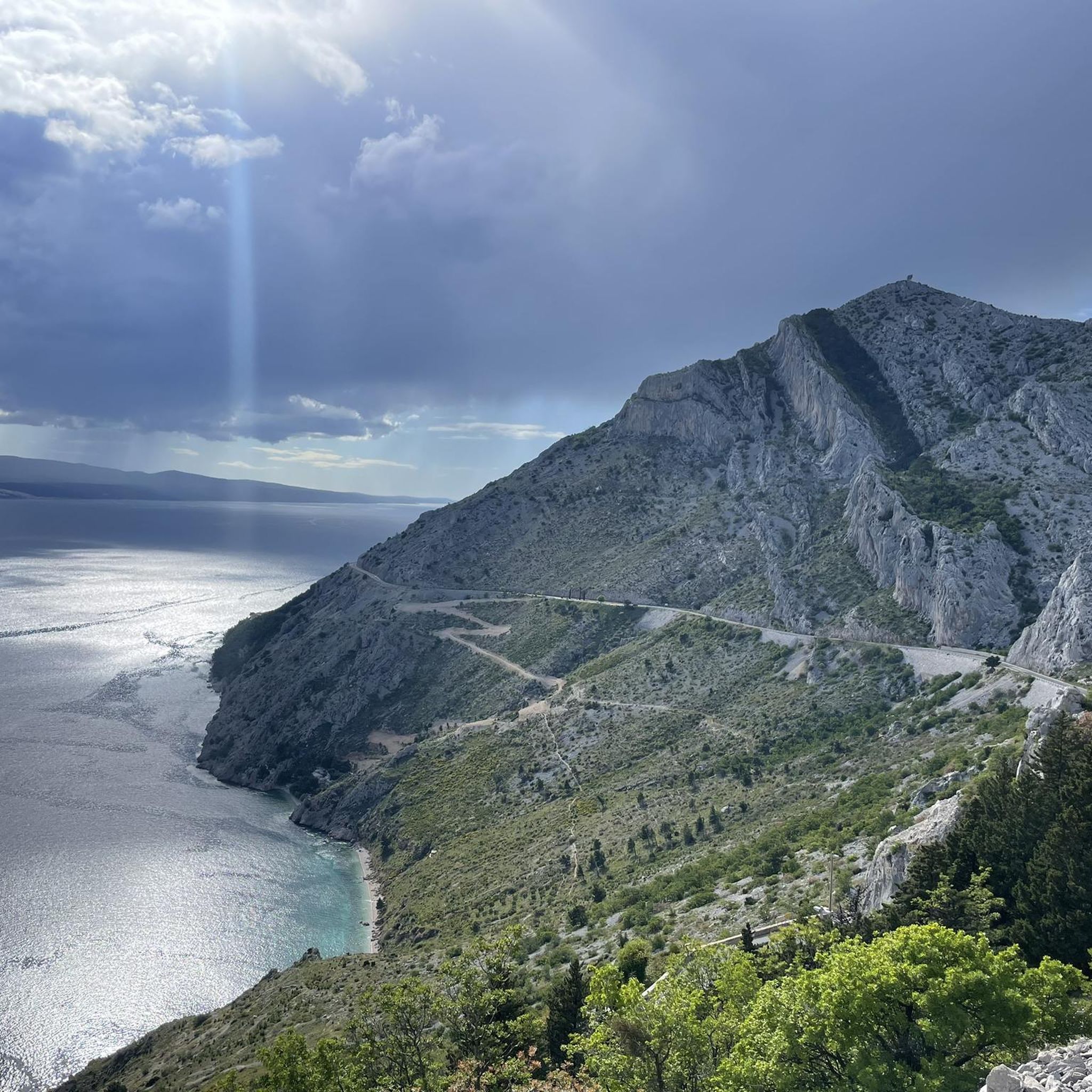
Beautiful stretch of coast with a lonely rock in the sea.
0
0


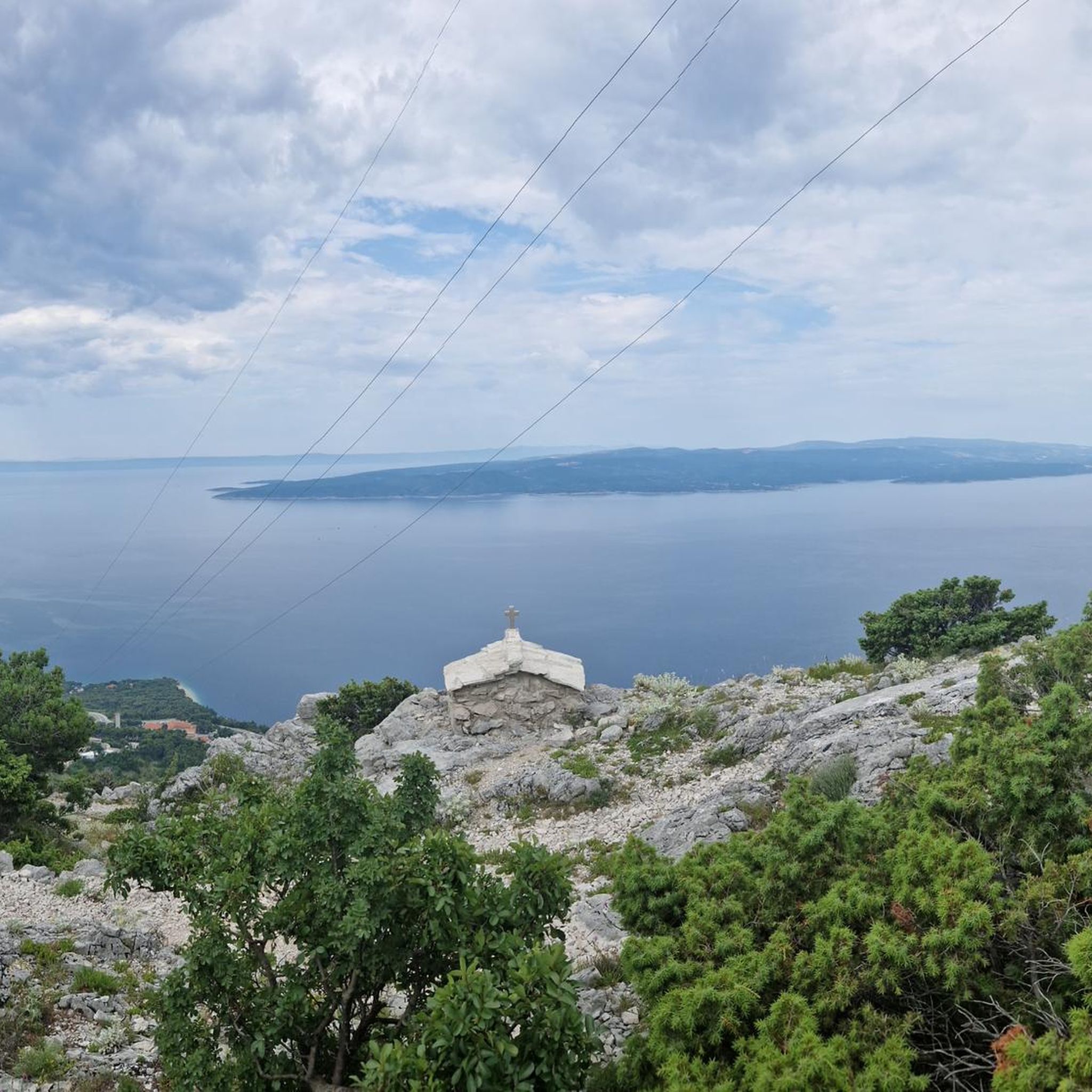
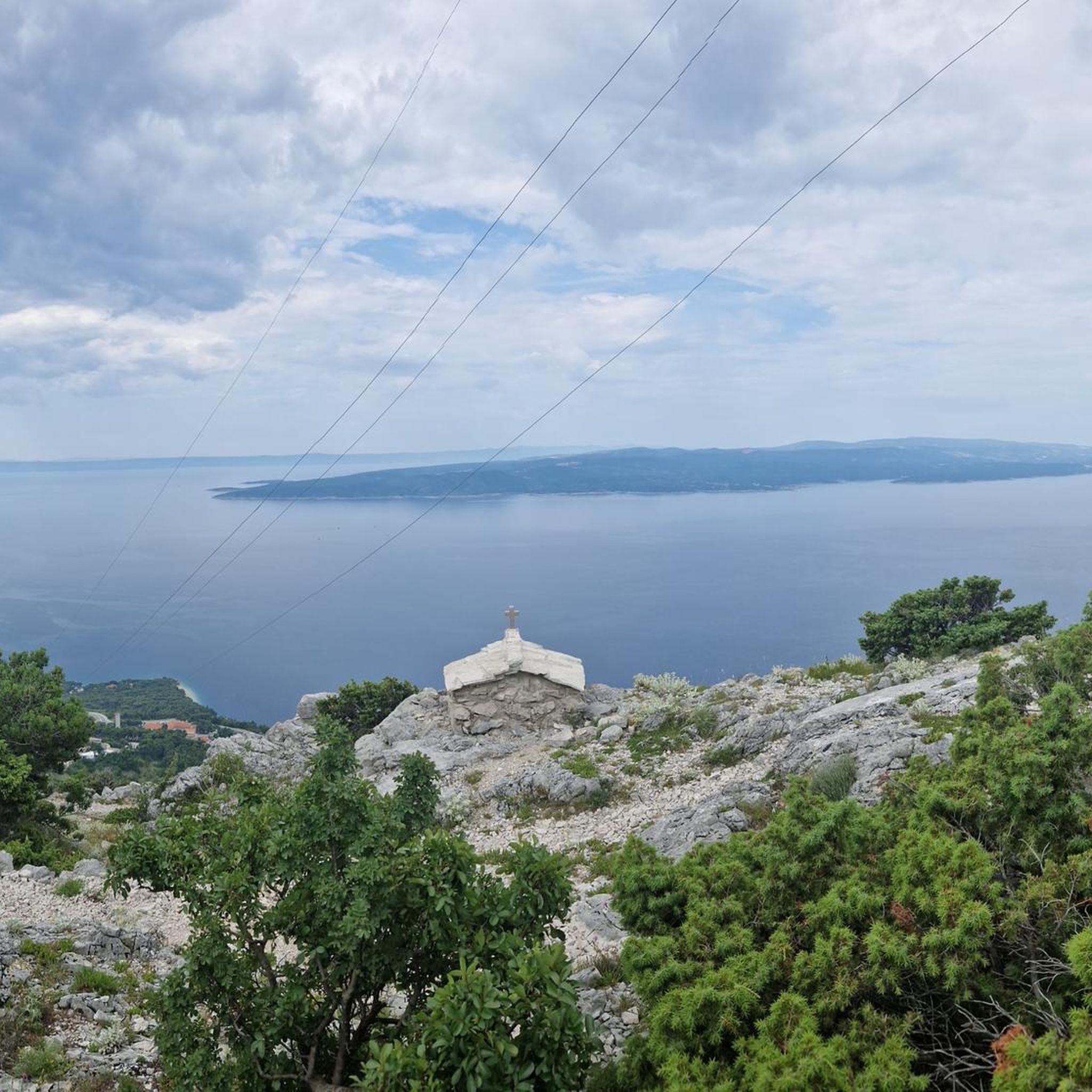
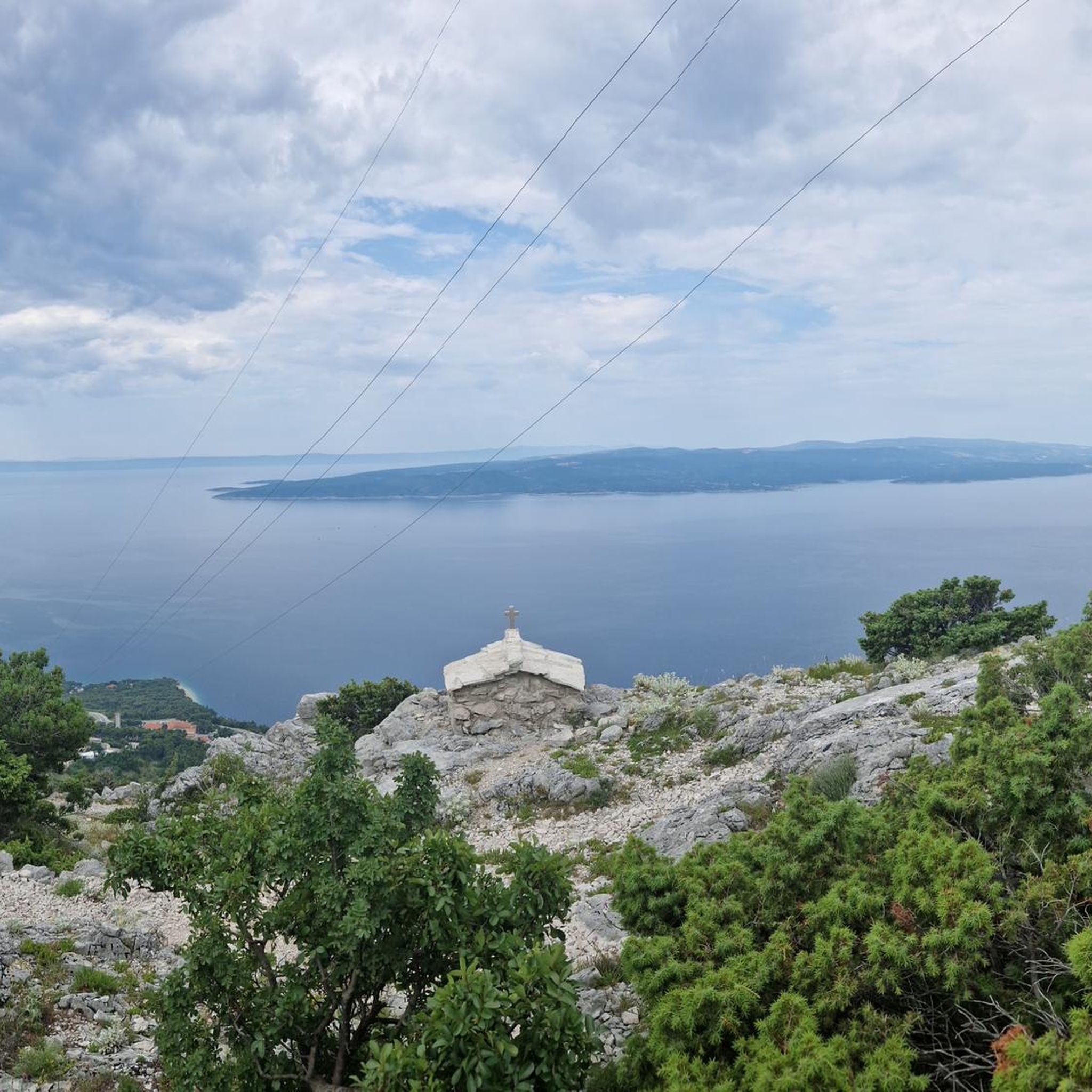
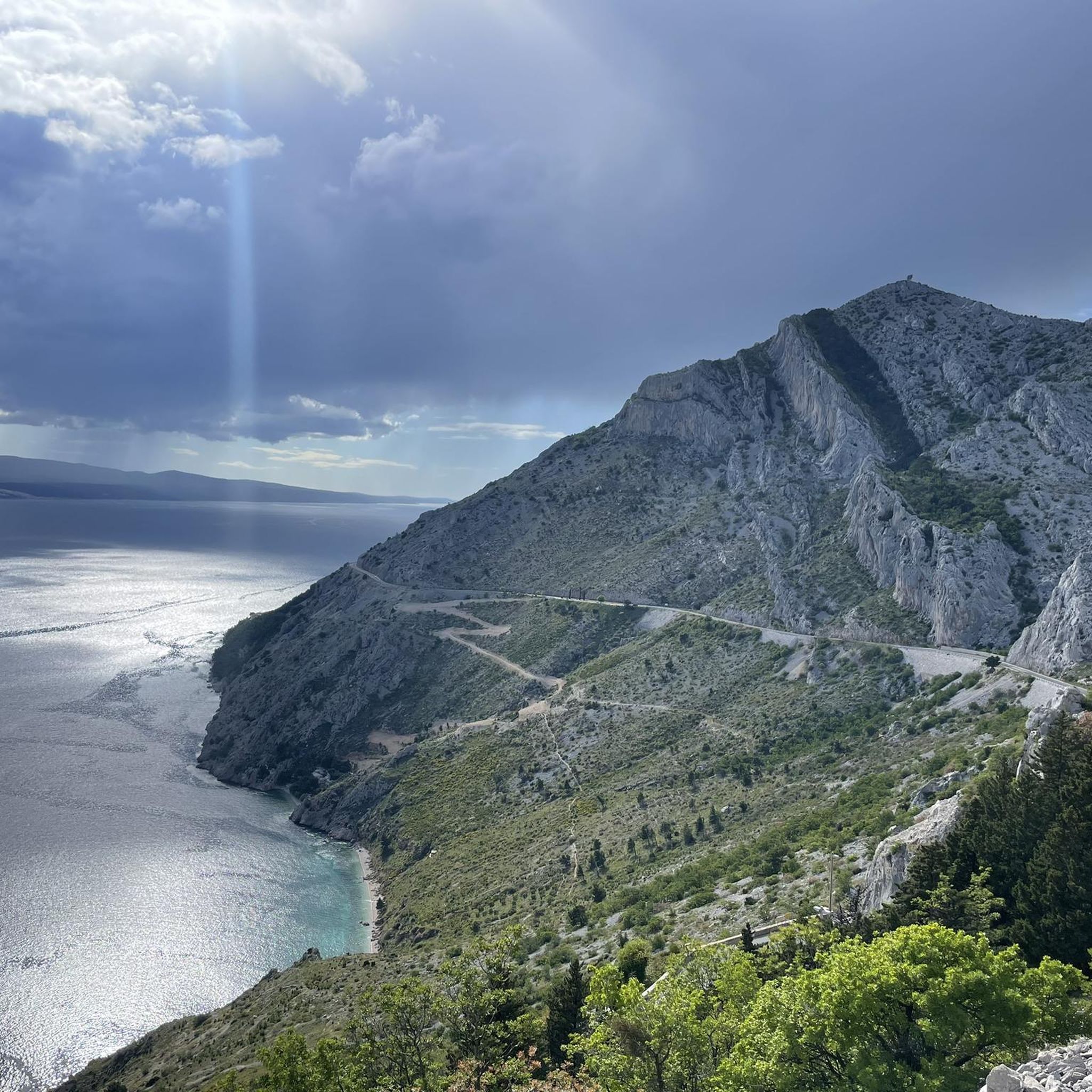
Hiking in the Croatian Karst Mountains involves steep inclines. The French Street, above Baska Voda, is a nice highlight. After the ascent, the view from the steep slopes is simply enchanting. 🤩
0
0

Here today the circular hiking trail starts
0
0

Church of St. Nikole is located at an altitude of 572 m above sea level, on the Prirovac hill. It is assumed that it was made in pre-Turkish times between 1200-1500. It was first mentioned by the Byzantine emperor Constantine VII Porphyrogenet in his work "De administrando imperio" - "On the administration of the empire". It is the oldest church in Brela. It was made with a single nave in the Gothic style. The church nave is 11.50 m long and 5.30 m wide. It is made of stone, irregularly hewn blocks covered with plaster. In the eastern part of the church, there is a presbytery, i.e. a niche measuring 1.30 x 2.70 m, where there is an altar, in front of which there is supposedly a priest's grave. The interior is vaulted with a Gothic broken vault under which a simple stone cornice flows, and its walls are divided by blind arcades. Two stone crosses with equal arms are preserved on the inner rocks, signs of the consecration of the church, which took place on May 26 of an unknown year. In 1933, the people of Brel, under the leadership of pastor Soljanić, carried out the repair of the cemetery and the church "from the ground up", but unfortunately inexpertly. From 1952 to 1990, the Yugoslav army did not allow anyone to approach the church, so even St. Mass. Since then, the church was in a very neglected state. Incentive for the restoration of the Church of St. Nikole started from Dr. Darko Šošić in 1998. When they reached the church, they found it in a decaying state. The restoration was carried out in cooperation with conservators. The church was completely renovated. New windows and a new front door were installed. Water was brought from the spring from Bukovačka draga at a distance of 1000 m, which reaches the church by free fall. The Croatian army greatly helped in the restoration of the church. In less than two years, the restoration of the church was brought to an end. A project estimated at around 500,000 kuna was renovated for only 162,000 kuna. After the renovation, the bell was returned to the church, on which the dedication from 1933 was written. On May 28, 2000, the church was ceremoniously blessed. Nada Marušić
2
0
There is a legend among the people about the great love of a girl and a young man who were petrified by evil fate on Nevista. Nevista's rock is also a pass, once the only link between Primorje and Zabiokovlje, and a beautiful viewpoint. According to legend, a girl somewhere "from above", probably from Dalmatian Zagora, was supposed to get married in Primorje. The mother was against that love, and above all against her daughter marrying someone the family did not choose. Maybe it was a problem that the young man is from Primorac, that is, from a poor area!? Be that as it may, the mother sent her daughter off with the words: When she saw the sea, she must have been petrified! Despite these terrible words, the wedding procession set off, led by the groom and the bride on horseback, and not realizing the power of their mother's curse. However, when the merry company reached the top of the hill above Brel, the curse came true. Evidence of this is rocks in the shape of horses with newlyweds, cakes and water barrels made of clay. If you look carefully, you can see the bride's veil, which at that moment the wind took off her head, as well as the whole procession of the wedding guests who followed them, and today it is a little harder to see them if you don't look for them specifically, because the pine tree has been for decades quite grown up. (text written by Vanja Sokol)
0
0
In addition to urban development in Dalmatian cities and the construction of numerous fortresses and forts throughout Dalmatia, during the French administration (1806 - 1813) a whole series of cart roads from Knin to Dubrovnik were built. Before the arrival of the French in Dalmatia, there were almost no roads. Recent research, based on memoirs and official correspondence of the time, indicates that General (later Marshal) Auguste Marmont, as the supreme military commander of the French army in Dalmatia, started building roads as soon as the opportunity arose. It was necessary to lay out good roadways that would enable the rapid movement of troops, especially artillery and chambers. In addition to French engineering experts, local people also worked on the design and supervision of the works. Among the difficult sections, the ones in Zabiokovlje were also mentioned, where the road passes through the side of the hill, and high retaining walls had to be built. Some sections (such as the one from Cetina to Aržan) were built exclusively by peasants. Marmont notes that the road along the coast on the route Split - Omiš - Makarska could not be built because it was within the range of cannons from enemy ships. That's why he decided to go inland, from the bridge near Trilje, through Zabiokovlje and the Turia pass to Vrgorac and on to the Neretva. The road that the French built in a very short time along the entire length of Dalmatia - from Obrovac to Boka Kotor - is known as Napoleon's Road or the French Road. Part of that Napoleon's road, as the locals still call it, was conceived on the territory of today's Brela municipality. In that part, namely, the road was supposed to connect the Makarska coast with the French road that passed through Zabiokovlje, via the Nevista and Poletnica passes (Brela Gornja), along the Grabovac - Zagvozd - Župa - Rašćani route. Napoleon's road on the mentioned route was built in 1808. It was known what that road meant, therefore all people capable of working were listed and could only be freed from that work if they sent a replacement. They worked mostly for free, for food and drink. A. Ujević wrote about this: "This work on the construction of the road through the Imotski Krajina was difficult and painful, especially the one between Zagvozd and Župa, through the desolate and rocky Turia, exposed to wind and snow, heat and drought, wolf and hajduka. However, the French did not give up. They built a road through that waterless and inaccessible desert. For an eternal memory, a large commemorative plaque was carved into the stone cliff at the top of Turia." However, the inscription on that commemorative plaque, as well as on all the others except for one that referred to the construction of the Šibenik - Trogir section, was stamped by the Austrians after 1815, after Dalmatia became an Austrian province. With the withdrawal of the French army, part of the road in the area of today's Brela municipality was not completed, but we can see the valuable remains of the dry stone walls of that road under Nevisto and under Poletnica. Today they are a valuable topic for mountaineers and alpinists.
0
0

This is one of the most beautiful places I know. On foot or by bike, both are possible. Don't forget your swimming trunks. Around every bend there is a beach to linger on. Fantastically beautiful here.
0
0
Frequently Asked Questions
What natural landmarks should I visit in Općina Brela?
Općina Brela is rich in natural beauty. A must-see is the iconic Brela Rock (Kamen Brela), a green-covered boulder jutting from the sea near Punta Rata beach. You can also explore the dramatic landscapes of Biokovo Nature Park, which features unique formations like the Šuplja Stina Natural Arch, a popular spot for hikers.
Are there any historical sites or cultural attractions in Općina Brela?
Yes, Općina Brela offers several historical and cultural sites. The Church of St. Nicholas (Crkva Sv. Nikole), perched at 572 meters, is the oldest church in Brela, dating back to 1200-1500. You can also discover remnants of Napoleon's Road (Napoleonova cesta), a historic route through Biokovo Nature Park, or visit the Church of Our Lady of Health.
What are the best beaches in Općina Brela?
Općina Brela is renowned for its stunning pebble beaches. Punta Rata Beach is particularly famous, often cited as one of Croatia's most beautiful, known for its crystal-clear waters and pine-lined surroundings. Other popular pebble beaches include Podrače and Jakiruša, all offering excellent opportunities for swimming and relaxation.
Are there family-friendly activities or attractions in Općina Brela?
Many attractions in Općina Brela are family-friendly. The pebble beaches, including Punta Rata, are perfect for families to enjoy the sea. The Baška Voda to Brela Coastal Walk is an easy and scenic path suitable for all ages, offering beautiful views of the sea and mountains. The Brela Stone (Kamen Brela) is also a popular and accessible landmark for families.
What kind of hiking trails can I find near Općina Brela?
Općina Brela offers a variety of hiking trails, from coastal walks to mountain ascents. You can enjoy the scenic Baška Voda to Brela Coastal Walk or explore historical routes like The French Road Educational Trail, which provides impressive views and historical context. For more challenging hikes, the trails in Biokovo Nature Park lead to spots like Šuplja Stina Natural Arch. You can find more hiking options in the Hiking around Općina Brela guide.
Are there easy walking paths suitable for beginners or casual strolls?
Yes, Općina Brela has several easy walking paths. The coastal promenade extends for several kilometers, connecting various beaches and towns, perfect for a leisurely stroll. The Baška Voda to Brela Coastal Walk is a popular and easy option with beautiful sea and mountain views. For more easy routes, check the Easy hikes around Općina Brela guide.
What are some good viewpoints in Općina Brela?
Općina Brela offers numerous stunning viewpoints, particularly due to its mountainous backdrop. The Church of St. Nicholas (Crkva Sv. Nikole), located at 572 meters, provides panoramic views. The Nevistina Stina (Bride's Rock) Pass is another excellent spot for breathtaking vistas. Additionally, trails like The French Road Educational Trail offer impressive views along the mountain.
Can I go cycling in Općina Brela?
Yes, Općina Brela and the surrounding Makarska Riviera offer various cycling opportunities. The coastal promenade is suitable for relaxed cycling, while the slopes of Biokovo mountain provide more challenging routes for mountain biking. You can find detailed routes and guides for mountain biking in the area by visiting the MTB Trails around Općina Brela guide.
What is Gornja Brela and what can I see there?
Gornja Brela is one of the main settlements in the municipality, offering a glimpse into traditional Dalmatian life with its authentic atmosphere and stone houses. It's the starting point for the 'Paths of Ancient Berulia' educational trail, which guides visitors through the region's history and natural beauty, concluding at the historic Church of St. Nicholas.
What do visitors enjoy most about the attractions in Općina Brela?
Visitors consistently praise the stunning natural beauty, particularly the contrast between the dramatic Biokovo mountains and the crystal-clear Adriatic Sea. The Brela Rock (Kamen Brela) is often highlighted as a beautiful sight, especially around sunset. Many appreciate the well-maintained coastal walks and the historical insights provided by trails like The French Road Educational Trail.
Are there any unique rock formations to see?
Absolutely. Besides the iconic Brela Rock (Kamen Brela), which is a landmark in itself, the Biokovo Nature Park is home to the fascinating Šuplja Stina Natural Arch (also known as the Eye of Biokovo), a unique rock formation popular with hikers seeking distinctive natural features.
Most popular routes around Općina Brela
Most popular attractions around Općina Brela

Get inspired with the komoot mobile app


Explore more
Still not found the Highlight you’re looking for? See guides of the top attractions in other regions:
