Attractions and Places To See around Zawiercie - Top 20
Best attractions and places to see around Zawiercie are found in the heart of the Jura Krakowsko-Czestochowska highlands in Poland. This region is characterized by its picturesque landscape of limestone island mountains and serves as a base for exploring the Trail of the Eagles' Nests. Visitors can find a variety of historic castles, unique natural formations, and cultural sites. The area offers opportunities for hiking, cycling, and rock climbing amidst its distinctive Karst landscape.
Best attractions and places to see around Zawiercie
- The most popular attractions is Okiennik Wielki, a natural monument that features a recognizable rock with a "window," a rock opening approximately 7x5 meters in size. Archaeological finds in a natural cave below the window indicate prehistoric human habitation dating back about 60,000 years.
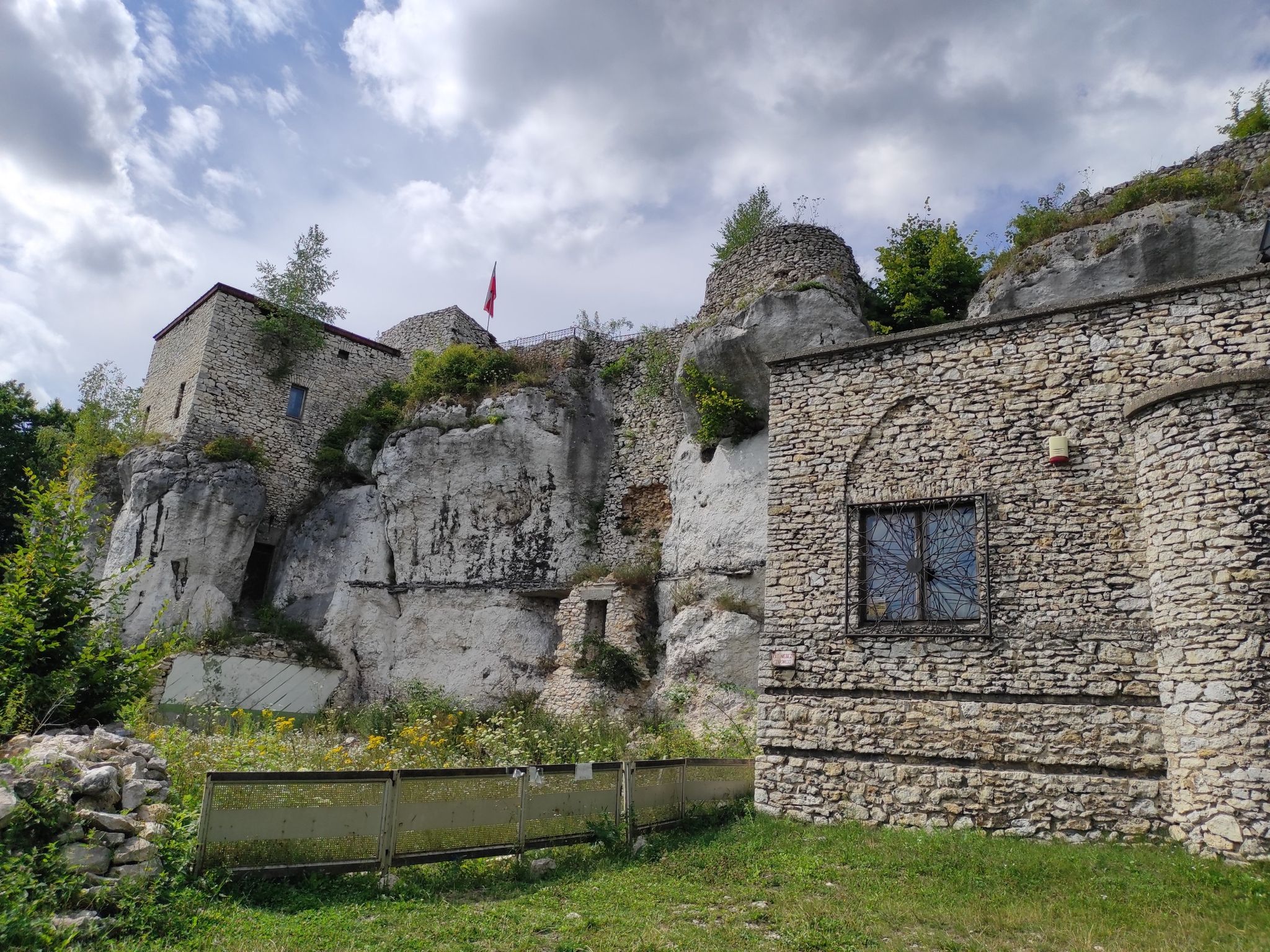
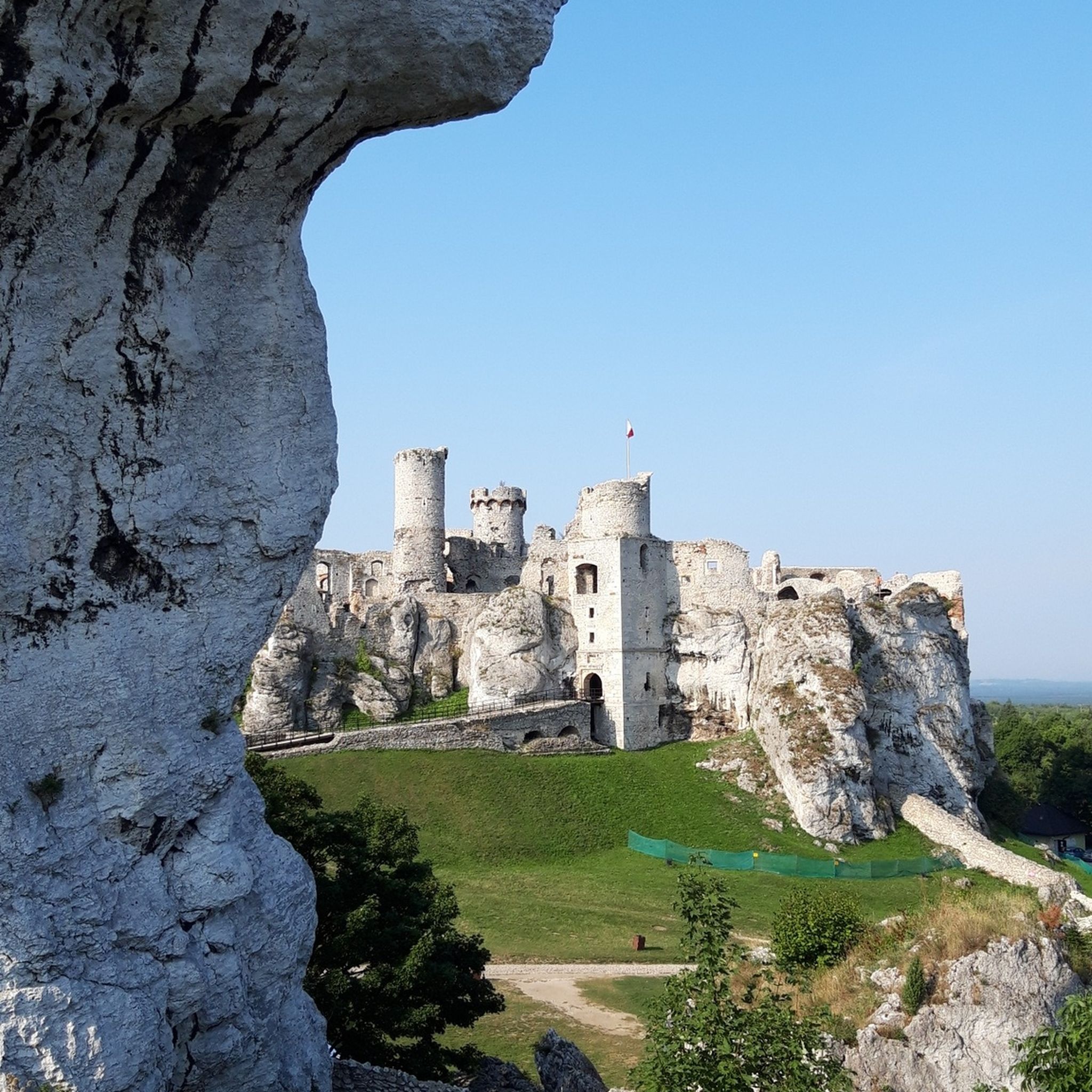
- Another must-see spot is Ogrodzieniec Castle, a castle that is the largest and one of the best-preserved strongholds on the Trail of the Eagles' Nests. The impressive ruins feature numerous viewing terraces, chambers, towers, and courtyards open to the public.
- Visitors also love Bąkowiec Castle Ruins, picturesque ruins of a medieval stronghold. Located on a rocky hill amidst forests, it offers views of the surrounding Jurassic hills.
- Zawiercie is known for its historic castles, unique natural formations, and cultural sites. The region offers a diverse range of attractions, from medieval fortresses to significant geological features and historical churches.
- The attractions around Zawiercie are appreciated by the komoot community, with more than 90 highlights and over 300 photos shared by visitors.
Last updated: August 25, 2026
Ogrodzieniec Castle
Highlight • Castle
Translated by Google •
Tip by

Okiennik Wielki
Highlight • Natural Monument
According to historians, around the 12th – 13th centuries, at the foot of the rocks, there was a fortified town with a wooden structure; traces of the walls were still visible in the 19th century. The rock with the rock window was a keep, the walls were reinforced with a rampart. The entrance led through a natural chimney in the rock. There is a carved hole in the rock window, which was probably used to fasten the structure made of wooden logs that covers the rock window.
In a natural cave below the window, archaeologists have found flint tools dating back about 60,000 years, i.e. the Middle Palaeolithic. They testify that the cave was then inhabited by prehistoric people. Archaeologists included them in the Mikocko-Prądnik culture.
pl.wikipedia.org/wiki/Okiennik_Wielki
Translated by Google •
Tip by

Sign up now to discover places like this
Get recommendations on the best single tracks, peaks, & plenty of other exciting outdoor places.
Sign up for free
Bąkowiec Castle Ruins
Highlight • Castle
Translated by Google •
Tip by

Grodzisko on Birów Mountain
Highlight • Historical Site
Translated by Google •
Tip by
Pilcza Castle
Highlight • Castle
Translated by Google •
Tip by

Sanctuary of Our Lady of Skałka
Highlight • Religious Site
Translated by Google •
Tip by

Pustynia Błędowska - Training Ground
Highlight • Natural
It stretches from Błędów (a district of Dąbrowa Górnicza) in the west to the Klucze commune in the east. The northern border of the desert is the village of Chechło, and in the south it is limited by a large forest area. The desert is less than 10 km long and up to 4 km wide. The sands have an average thickness of 40 m, maximum 70 m. The Biała Przemsza flows through the desert from east to west. The desert area is covered by the Natura 2000 protection program.
During the Ice Age, successive ice ages into the valley where the desert is located, successive portions of sand and gravel were deposited. For a long time, these vast areas were affected by winds and water, which was not conducive to the growth of vegetation.
After the Ice Age, a dense forest appeared, which only began to be intensively exploited around the 13th century. For the silver and lead mines established in the Olkusz area, large amounts of wood were needed to strengthen the mine shafts. The intensive logging of trees and the uptake of groundwater in areas where the substrate is gravel and sand led to the formation of an anthropogenic desert.
pl.wikipedia.org/wiki/Pustynia_B%C5%82%C4%99dowska
pustynia-bledowska.eu/p,68,militaria
Translated by Google •
Tip by

Old Polish Manor House in Krzykawka
Highlight • Historical Site
The building dates from 1724. The first owners were the Romiszowski family of Jelita coat of arms. The first mention of the manor comes from 1756, when its owner was Jan Romiszewski.
Near the manor house, there is a monument commemorating the deaths of those killed in the insurgent battle on May 5, 1863. Colonel Francesco Nullo and the Polish insurgent Władysław Romer, Eugeniusz's uncle, died during the fights. The last private owner was Antoni Bogucki until 1950.
In the years 1984–1989, the dilapidated manor house was renovated.
Currently, it houses a branch of the Cultural Center and the Commune Library in Bolesław.
Since 2005, it is also the seat of the Polish Legend Center.
Open to visitors.
pl.wikipedia.org/wiki/Dw%C3%B3r_w_Krzykawce
archiwum.gminaboleslaw.pl/index.php?option=18&action=articles_show&art_id=572&menu_id=512&page=297
Translated by Google •
Tip by
Bike Route Around the Błędów Desert
Highlight (Segment) • Cycleway
Translated by Google •
Tip by

Bydlin Castle Ruins
Highlight • Castle
Translated by Google •
Tip by

Sign up for free to discover even more attractions around Zawiercie.
Sign up for free
Already have an account?
Start today with a free account
Your next adventure awaits.
Login or Signup
Popular around Zawiercie
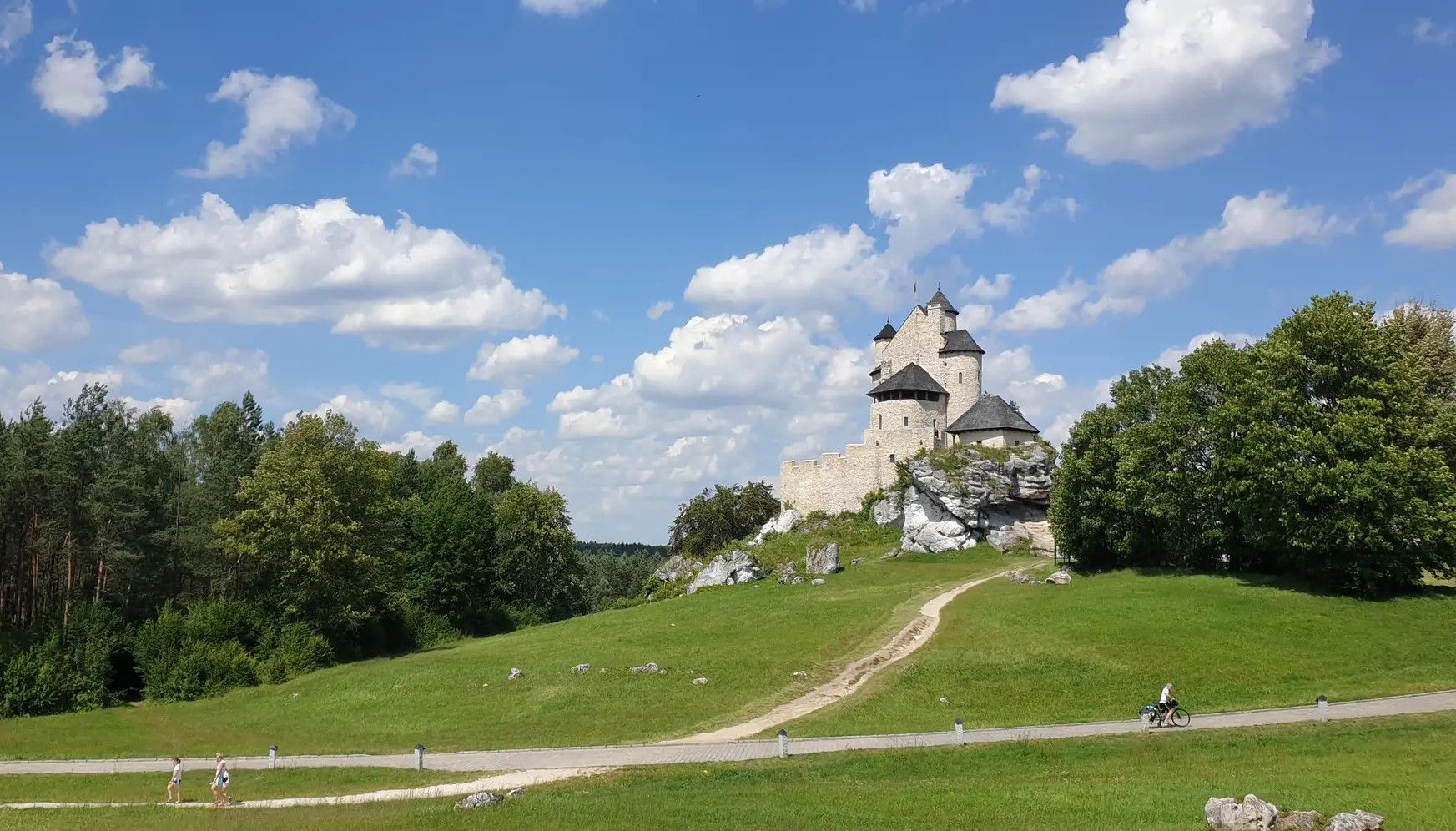
Trail of the Eagle's Nests — Magnificent Castles of Kazimierz Wielki and beautiful Grottos and Rocks
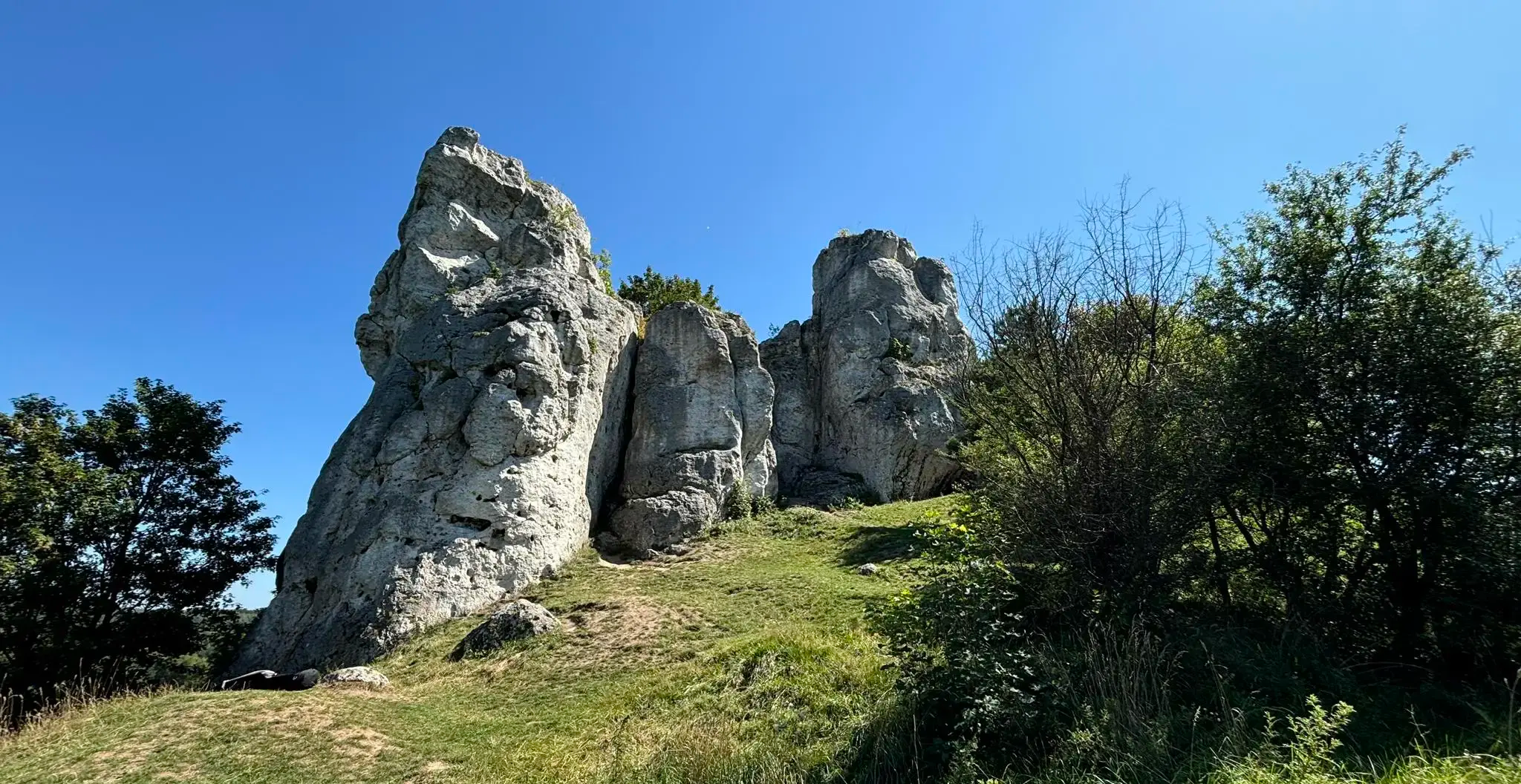
The Eagle's Nests Trail – Gravel Treasure of the Polish Jurassic Highlands
Picturesque Jura with a hint of adrenaline - Jurassic Fortresses Trail
Cycling around Zawiercie
Hiking around Zawiercie
MTB Trails around Zawiercie
Road Cycling Routes around Zawiercie

Gravel biking around Zawiercie
Running Trails around Zawiercie
Other adventures around Zawiercie


Tips from the Community

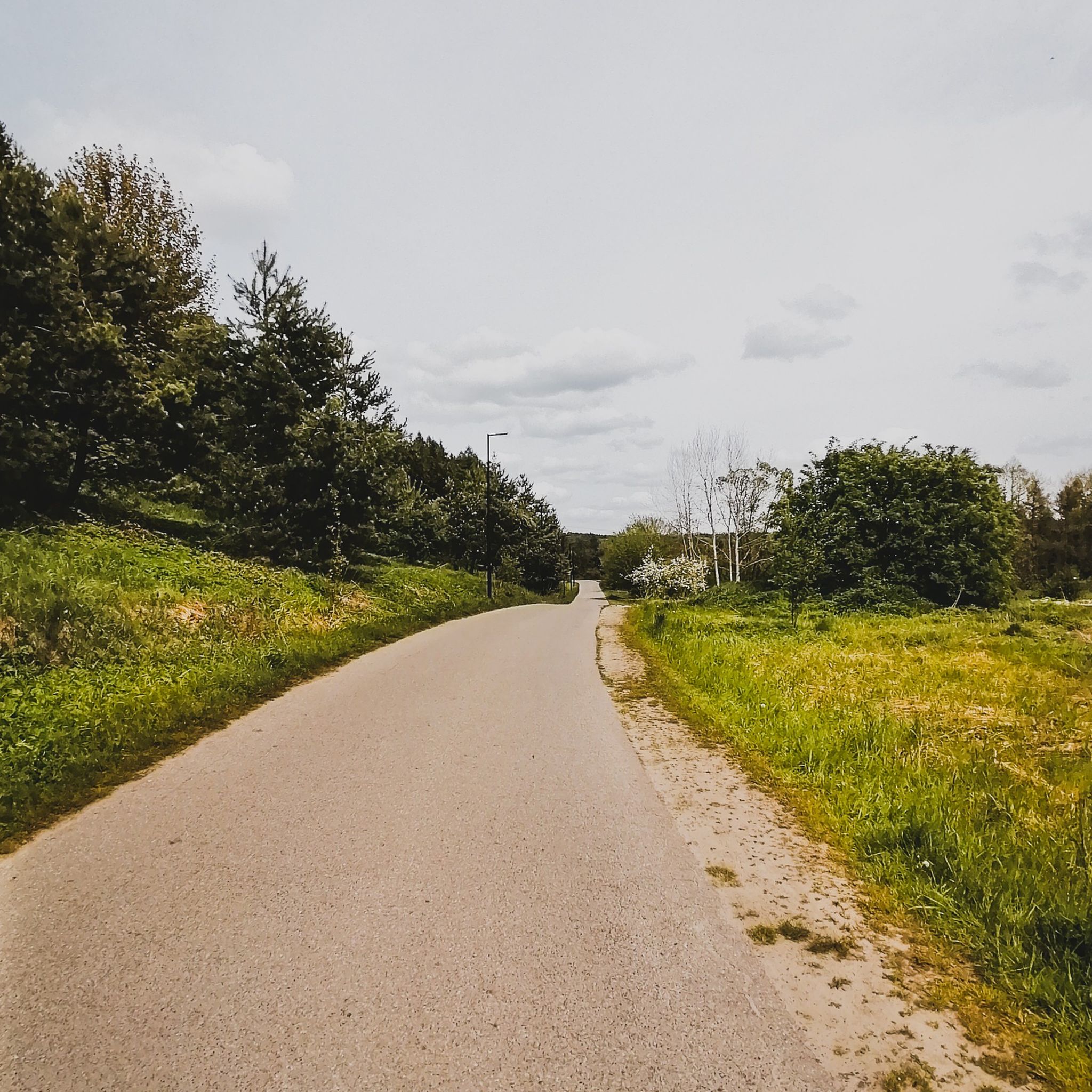
Although the concrete route does not cover the entire perimeter of the desert, there is no need to fear sand at the end. It transitions into premium gravel, and the trail is very well marked. The route around the "lower" desert, including a trip to the northern viewpoint, is about 25 km.
0
0

Very easy route, I recommend it
1
0

This is probably the most scenic route in this area. It's worth slowing down a bit, as the paths aren't strictly for bikes. They're pedestrian-bicycle paths, so you'll often encounter pedestrians with strollers or small children on plastic scooters.
1
0

Pilcza Castle in Smoleń is a picturesque ruin of a medieval stronghold, situated on a lofty hill amidst the forests of the Kraków-Częstochowa Upland. The castle was once the seat of the mighty Toporczyk family, and later became associated with the Pilecki family – hence its name. Today, you can visit the restored tower and fragments of the defensive walls, from which there is an extensive view of the surrounding area. The castle is an attraction of the Eagle's Nests Trail and a great stopping point on a bicycle trip through the Jura – although the ascent to the ruins is steep, it is worth taking shoes for a short walk.
3
0
Pilcza Castle in Smoleń is a picturesque ruin of a medieval stronghold located on a hill among the forests of the Kraków-Częstochowa Upland. Although only fragments of walls and a tower have survived, the viewing point offers a beautiful panorama of the area. It is a peaceful place, ideal for a break during a bicycle trip through the Jura, especially since the castle is located near popular trails (Eagle's Nests Trail, Jura Fortresses Trail). Next to the ruins you will also find information boards and a place to rest.
3
0
Ogrodzieniec Castle in Podzamcze is the largest and one of the best-preserved strongholds on the Trail of the Eagles' Nests and the Trail of Jurassic Strongholds. The impressive ruins tower over the area and offer numerous viewing terraces and chambers, towers and courtyards open to the public. It is a popular tourist attraction with catering facilities and bicycle-friendly infrastructure. In the season, it is worth visiting the castle first thing in the morning or late in the afternoon to avoid the crowds. Access by bike is possible via the asphalt road from the Podzamcze side or via a more off-road option through the Towarne Mountains.
3
1
Bąkowiec Castle in Morsko is a small but picturesquely situated ruin on the Trail of the Eagles' Nests and the Trail of Jurassic Fortresses. The remains of a medieval fortress are located on a rocky hill among forests, near a holiday resort. It is a peaceful place, ideal for a short stop and photos, especially since the rocks offer a view of the surrounding hills of the Jura.
4
0
Ogrodzieniec Castle in Podzamcze is the largest and one of the best-preserved strongholds on the Trail of the Eagles' Nests. The impressive ruins tower over the area and offer numerous viewing terraces and chambers, towers and courtyards open to the public. It is a popular tourist attraction with catering facilities and bicycle-friendly infrastructure. During the season, it is worth visiting the castle first thing in the morning or late in the afternoon to avoid the crowds. Access by bike is possible via the asphalt road from the Podzamcze side or via a more off-road option through the Towarne Mountains.
4
0
Frequently Asked Questions
What historical castles can I visit near Zawiercie?
The region is rich in historical castles, many of which are part of the Trail of the Eagles' Nests. You can explore the impressive ruins of Ogrodzieniec Castle, which is the largest and best-preserved stronghold. Other notable castles include the fully restored Bobolice Castle, the picturesque Bąkowiec Castle Ruins, the Gothic Mirów Castle Ruins, and the historic Siewierz Castle. Don't miss the Pilcza Castle (Smolen Castle) for panoramic views.
What natural attractions are there to explore around Zawiercie?
Zawiercie offers unique natural features within the Jura Krakowsko-Czestochowska highlands. A must-see is Okiennik Wielki, a limestone rock formation with a distinctive 7x5 meter 'window' opening. You can also visit the sources of the Warta River in Zawiercie-Kromołów and the Czarna Przemsza River. The area is characterized by its picturesque limestone island mountains and Karst landscape, part of the Eagles' Nest Park.
Are there family-friendly attractions in Zawiercie?
Yes, several attractions are suitable for families. Ogrodzieniec Castle offers viewing terraces, chambers, and courtyards that are engaging for all ages. The reconstructed Castle on Góra Birów is also a great family option. For an interactive experience, consider visiting Małe Centrum Nauki SOWA (Small Science Center SOWA).
Where can I find good hiking trails around Zawiercie?
The region is excellent for hiking, with trails often leading through the distinctive Karst landscape and past historical sites. You can find numerous routes, including those around the castles and natural formations. For specific running trails, you can explore options like the 'View of Bąkowiec Castle – Zborów Hill loop' or a 'Running loop from Zawiercie' on the Running Trails around Zawiercie guide.
Are there opportunities for cycling in the area?
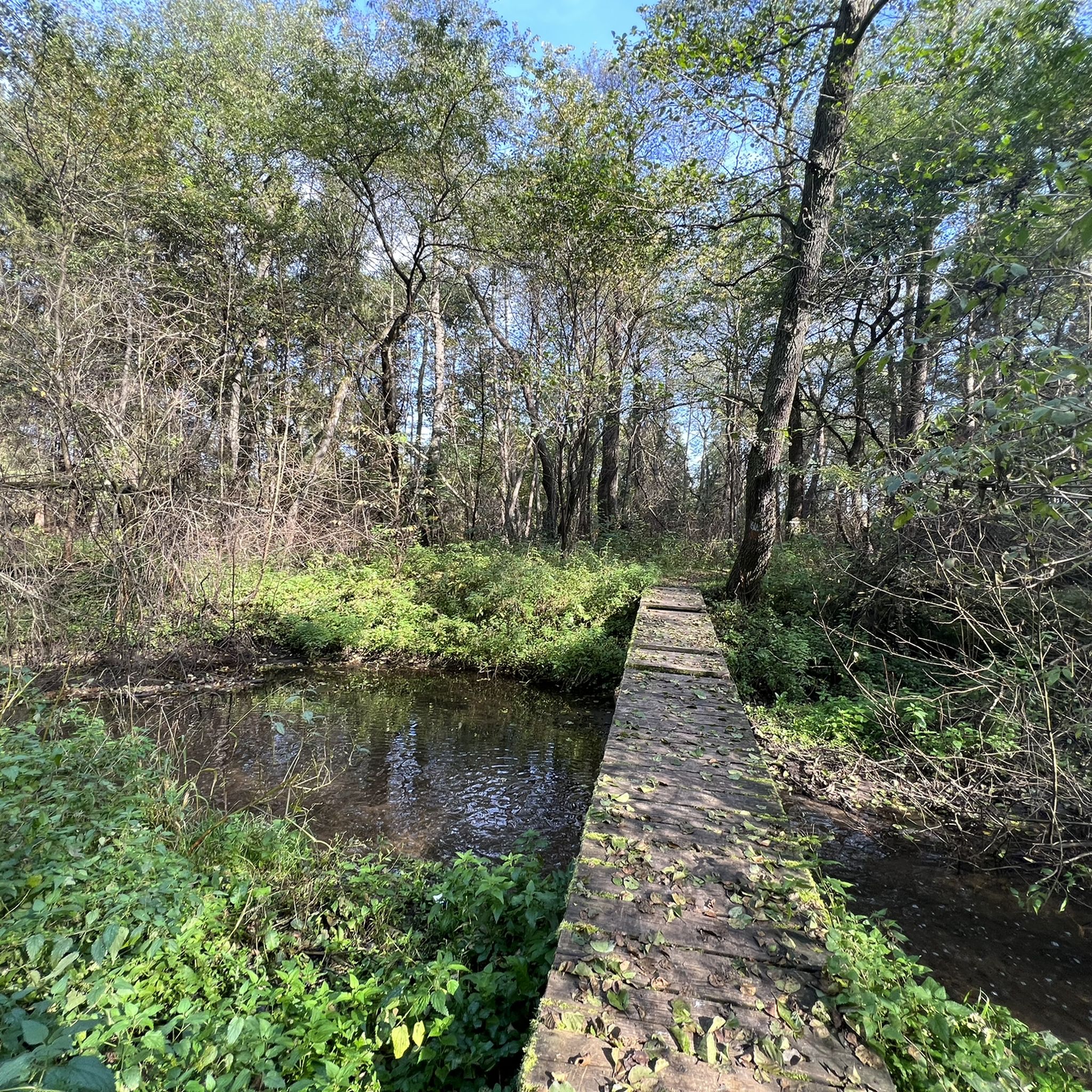
Absolutely, Zawiercie and its surroundings are popular for cycling. The area offers various routes for different types of cycling. For mountain biking, check out the MTB Trails around Zawiercie guide, which includes routes like 'Velo Błędowska Desert – Compass Rose loop'. If you prefer gravel biking, the Gravel biking around Zawiercie guide has options such as the 'Wooden Footbridge – Błędów Desert loop'.
What unique geological features can be found near Zawiercie?
Beyond Okiennik Wielki, the region is part of the Jura Krakowsko-Czestochowska highlands, known for its limestone island mountains and Karst landscape. You can also visit Zborów Mountain in Podlesice and the Rzędowickie Rocks, which are popular for rock climbing. The area also features caves like Biśnik Cave, one of the oldest human habitation sites in Poland.
What cultural or religious sites are worth visiting in Zawiercie?
Zawiercie has several significant cultural and religious sites. The Neo-Gothic Collegiate Church dedicated to St Peter and Paul, erected in 1900, is a prominent architectural landmark. You can also visit the historic Church of St. Holy Trinity in Zawiercie-Skarzyce (built 1583) and the 16th-century Church of St. Nicholas in Zawiercie-Kromołów. The Zawiercie Museum provides insights into the town's history and culture.
Are there any educational or interactive attractions?
Yes, Małe Centrum Nauki SOWA (Small Science Center SOWA) offers interactive exhibits, making it an engaging destination for visitors of all ages interested in science and learning. Additionally, the Castle on Góra Birów, a reconstructed Slavic stronghold, offers an educational glimpse into medieval life.
What is the best time of year to visit Zawiercie's attractions?
The Jura Krakowsko-Czestochowska region, including Zawiercie, is generally best visited from spring to early autumn (April to October). During these months, the weather is most favorable for outdoor activities like hiking, cycling, and exploring the castles and natural formations. Many attractions, such as the Castle on Góra Birów, have extended opening hours during this period.
What kind of terrain can I expect on trails around Zawiercie?
The terrain around Zawiercie is characterized by the Jura Krakowsko-Czestochowska highlands, featuring picturesque limestone island mountains and a Karst landscape. Trails often involve rocky paths, forested areas, and some elevation changes, offering scenic viewpoints. Surefootedness may be required in some areas, especially around castle ruins like Ogrodzieniec Castle.
Can I find places for rock climbing near Zawiercie?
Yes, the region is well-known for rock climbing. Zborów Mountain in Podlesice and the Rzędowickie Rocks are popular rock climbing areas conveniently accessible from Zawiercie. The unique limestone formations provide excellent opportunities for climbers of various skill levels.
Are there any unique historical insights from the area's past?
The area holds deep historical roots. For instance, archaeological finds in a natural cave below Okiennik Wielki indicate prehistoric human habitation around 60,000 years ago. Biśnik Cave also shows human traces dating back 150,000 years. The region's castles, like Bobolice Castle, were royal strongholds from the 14th century, part of a system of fortifications.
Most popular routes around Zawiercie
Most popular attractions around Zawiercie

Get inspired with the komoot mobile app


Didn’t find what you were looking for?
Are you keen on exploring more awesome places nearby? Browse our guides:
Explore more
Still not found the Highlight you’re looking for? See guides of the top attractions in other regions:
