Attractions and Places To See around Łowicz - Top 20
Best attractions and places to see around Łowicz, a city in Poland, offer a blend of rich history, vibrant folklore, and distinctive urban planning. The area is characterized by its unique triangular market squares and the flowing Bzura River. Visitors can explore numerous historical landmarks, cultural sites, and natural features that reflect the region's heritage. This makes Łowicz a notable destination for those interested in Polish history and traditions.
Best attractions and places to see around Łowicz
- The most popular attractions is Romantic Garden in Arkadia, a historical site that was founded in 1778 by Helena Radziwiłłowa. This garden features architectural elements like the Cascade, the Temple of Diana, and an Aqueduct, set amidst old oaks.
- Another must-see spot is Old Market Square in Łowicz, a historical site known for its unique triangular urban layout, a rare feature in Poland. It features colorful townhouses, monuments, and has served as a commercial and historical hub for centuries.
- Visitors also love Radziwill Palace in Nieborow, a historic castle designed by Tylman van Gameren. This palace, once belonging to the Radziwiłł family, is surrounded by baroque gardens and now functions as a branch of the National Museum in Warsaw.
- Łowicz is known for its historical sites, cultural institutions, and natural areas. These include significant religious buildings, unique market squares, and serene parks along the Bzura River.
- The attractions around Łowicz are appreciated by the komoot community, with 20 highlights featuring photos and 52 upvotes.
Last updated: October 5, 2026
Romantic Garden in Arkadia
Highlight • Historical Site
The architectural and garden setting was developed by Szymon Bogumił Zug with great personal involvement and participation of the duchess. Architectural ideas were sketched by Jan Piotr Norblin and Aleksander Orłowski, which were implemented until 1797 by Zug, and later by Henryk Ittar. The duchess began to establish the garden in the spring of 1778, but she continued to develop and compose it for over twenty years, until her death in 1821. The first buildings to be built on the shore of the great Arcadian pond, which was dammed in 1781, were the Cascade and the Cottage by the Waterfall (1781), and a little later the Temple of the High Priest (1783) and the Temple of Diana (1783-1785) with a ceiling by Norblin depicting the Morning Star, and the Aqueduct (1784). In the years 1785-1789, a symbolic Tombstone of the Duchess was built on Poplar Island with an ambiguous Latin sentence Et in Arcadia ego, modeled on the Tomb of Jean Jacques Rousseau in Ermenoville, as well as the Grotto of the Sibyl built of field stones, the rustic Cottages of Philemon and Baucida, the Stone Arch, the Corner of Melancholy, the Gate of Time, the altar circle on the Island of Offerings. In the 1990s, the expansion of Arcadia continued under Zug's direction. At that time, the House of the Murgrave adjacent to the Stone Arch and the Gothic House above the Grotto of the Sibyl were built. In the last years of the passing century, the interior of the Etruscan Cabinet was decorated in the Temple with a neoclassical interior and paintings by Michał Płoński and Aleksander Orłowski.
Around 1800, the Duchess turned towards the aesthetics of a romantic garden. At that time, the garden in Arkadia expanded from the small and previously closed area of the sentimental park to the surrounding vast fields located behind the Skierniewka River, freely incorporating viewing axes and new buildings into the vast space of the surrounding natural landscape. The Duchess's bold intentions from that time were implemented in Arkadia by a young romantic visionary, an extremely talented architect of the new generation, Henryk Ittar. At that time, the Tomb of Illusions (1800) was built on the Champs Elysees located behind the river, the Roman Circus (1803) and the Amphitheatre (1804). A little later, the folk Swiss House was built, concealing fairy-tale "crystal interiors" (1810), which the Duchess located among the buildings of the Arcadian village.
Translated by Google •
Tip by

General Stanisław Klicki Tower
Highlight • Monument
The building complex was built in the south-eastern part of the city, on the wastelands of Fr. missionaries and Piarists, at the then Warsaw route. Initially, an English-style landscape park was created "with lots of rare trees and plants". In the 1820s, a complex of buildings designed by Karol Krauze was constructed in the park. It consisted of a tower, a chapel, a caretaker's house and a palace. The preserved four-sided tower with a round tower was to house a military library. At the top of the tower with battlement there was an observation deck. Epigraphic elements from the primate's castle are embedded in the tower wall. After the Second World War, for over 30 years it housed the Headquarters of the Polish Scouting Association. In the 90s of the twentieth century, the building was taken over by the city authorities, then sold, and now recovered.
Translated by Google •
Tip by

Sign up now to discover places like this
Get recommendations on the best single tracks, peaks, & plenty of other exciting outdoor places.
Old Market Square in Łowicz
Highlight • Historical Site
Translated by Google •
Tip by

Radziwill Palace in Nieborow
Highlight • Castle
Tip by

Cathedral Basilica of the Assumption of the Blessed Virgin Mary and St. Nicholas in Łowicz
Highlight • Religious Site
Translated by Google •
Tip by

Sign up for free to discover even more attractions around Łowicz.
Already have an account?
Start today with a free account
Your next adventure awaits.

Tips from the Community

It was built in the 12th century and is the oldest in the city. The current Baroque church dates back to the 17th century and was consecrated on October 14, 1668. Since September 25, 1433, the parish church has been a collegiate church. On March 25, 1992, by the papal bull Totus Tuus Poloniae Populus, the collegiate church was raised to the dignity of a cathedral. During his 7th pilgrimage to his homeland, visiting Łowicz, Pope John Paul II, on June 14, 1999, gave it the title of minor basilica. The church is located in the city center at the Old Market Square. https://pl.wikipedia.org/wiki/Parafia_Wniebowzi%C4%99cia_Naj%C5%9Bwi%C4%99tszej_Maryi_Panny_w_%C5%81owiczu
1
0

In the northern part there is the so-called Primate's Gate from the mid-17th century with the Jastrzębiec coat of arms designed by Tomasz Poncino and the former dean's office, currently the seat of the Bishop of Łowicz. The western frontage is built up with a complex of canonries from the 16th-18th centuries with numerous foundation plaques. In the southern part there is a Renaissance tenement house of the Cebrowski family, their distinguished representative was Andrzej Kazimierz Cebrowski, a pharmacist, doctor, author of the first chronicle of the city "Annales Civitatis Loviciae". On the side of the courtyard at ul. Aptekarska there are Renaissance cloisters. For several centuries, the market square served a commercial function - since the Middle Ages, markets were held there - weekly and annual famous fairs. Once in the middle of the market square there was a Gothic, brick town hall, demolished around 1830. The market square is also a place of historical events. On the market square, on 24-25 October 1790, Tadeusz Kościuszko inspected the 9th Crown Infantry Regiment, and on 18 December 1806, Napoleon Bonaparte stopped in one of the tenement houses on his way to Warsaw after his victory at Jena and Auerstadt. There are two monuments on the market square: to the Sons of the Łowicz Region from 1927 and to Pope John Paul II unveiled in 2000.
0
0
On the site of the current Cathedral Basilica, a wooden church was probably built in the 12th century. In the 14th century, it was replaced by a single-nave brick church with elements of bog iron ore. The remains of the Gothic temple were discovered during archaeological research in 2015. The expansion to the form of a three-nave basilica took place in the second half of the 17th century, carried out by the Poncino brothers. The founder of the expansion, carried out "at a more magnificent expense than the king's", was Primate Maciej Łubieński. Over the centuries, distinguished European artists worked at the Łowicz collegiate church, including Hieronim Canavesi, Jan Michałowicz from Urzędów, Giovanni Battista Falconi, Tylman from Gameren, Konstanty Tencalla, Karol Bay, Efraim Szreger, Szymon Bogumił Zug, Jakub Fontanna, Jan Jerzy Plersch, Adam Swach. In 1992, the church became a Cathedral, and in 1999 it gained the rank of Basilica. In 2012, the Łowicz church was entered on the list of historical monuments.
0
0
Founded in 1778 by Helena Radziwiłłowa. The architectural and garden setting was developed by Szymon Bogumił Zug with great personal involvement and participation of the duchess. Architectural ideas were sketched by Jan Piotr Norblin and Aleksander Orłowski, which were implemented until 1797 by Zug, and later by Henryk Ittar. The duchess began to establish the garden in the spring of 1778, but she continued to develop and compose it for over twenty years, until her death in 1821. The first buildings to be built on the shore of the great Arcadian pond, which was dammed in 1781, were the Cascade and the Cottage by the Waterfall (1781), and a little later the Temple of the High Priest (1783) and the Temple of Diana (1783-1785) with a ceiling by Norblin depicting the Morning Star, and the Aqueduct (1784). In the years 1785-1789, a symbolic Tombstone of the Duchess was built on Poplar Island with an ambiguous Latin sentence Et in Arcadia ego, modeled on the Tomb of Jean Jacques Rousseau in Ermenoville, as well as the Grotto of the Sibyl built of field stones, the rustic Cottages of Philemon and Baucida, the Stone Arch, the Corner of Melancholy, the Gate of Time, the altar circle on the Island of Offerings. In the 1990s, the expansion of Arcadia continued under Zug's direction. At that time, the House of the Murgrave adjacent to the Stone Arch and the Gothic House above the Grotto of the Sibyl were built. In the last years of the passing century, the interior of the Etruscan Cabinet was decorated in the Temple with a neoclassical interior and paintings by Michał Płoński and Aleksander Orłowski. Around 1800, the Duchess turned towards the aesthetics of a romantic garden. At that time, the garden in Arkadia expanded from the small and previously closed area of the sentimental park to the surrounding vast fields located behind the Skierniewka River, freely incorporating viewing axes and new buildings into the vast space of the surrounding natural landscape. The Duchess's bold intentions from that time were implemented in Arkadia by a young romantic visionary, an extremely talented architect of the new generation, Henryk Ittar. At that time, the Tomb of Illusions (1800) was built on the Champs Elysees located behind the river, the Roman Circus (1803) and the Amphitheatre (1804). A little later, the folk Swiss House was built, concealing fairy-tale "crystal interiors" (1810), which the Duchess located among the buildings of the Arcadian village.
0
0
Stanisław Klicki was a cavalryman, a division general of the Kingdom of Poland, a participant in the fight for independence and the commander of the staff in Łowicz. The palace was built on his orders, and he wanted it to become a place where various military memorabilia could be collected.
0
0
Historic palace in Nieborów, designed by Tylman van Gameren on behalf of Michał Stefan Radziejowski. The palace belonged to the Radziwiłł family from 1774 to 1945. After World War II, it became a branch of the National Museum in Warsaw.
0
0

An interesting place to visit, with various dining options around
0
0

Frequently Asked Questions
What historical and cultural sites can I explore in Łowicz?
Łowicz is rich in history and culture. You can visit the impressive Cathedral Basilica of the Assumption of the Blessed Virgin Mary and St. Nicholas, often called the 'Masovian Wawel,' known for its Baroque architecture and as a burial place for Polish primates. The Old Market Square in Łowicz is also a must-see, featuring a unique triangular layout and historic tenement houses. Additionally, the Museum in Łowicz, located in a former Jesuit college, offers deep insights into local culture, art, and history, including its famous striped costumes and paper cutouts.
Are there any family-friendly attractions around Łowicz?
Yes, several attractions are suitable for families. The Romantic Garden in Arkadia offers a beautiful and educational experience with its historical architectural elements like the Cascade and the Temple of Diana. Another great option is the Radziwill Palace in Nieborow, which features a historic palace and baroque gardens that children can explore. The Open-air Museum in Maurzyce (Łowicz Ethnographic Park) is also excellent for families, showcasing traditional wooden cottages and hosting craft shows and folk picnics.
Where can I experience nature and peaceful walks near Łowicz?
For nature lovers, the Bzura River flows through Łowicz, offering picturesque views and adjacent to it is Adam Mickiewicz Park, perfect for peaceful walks and relaxation. The Romantic Garden in Arkadia, with its old oaks and serene atmosphere, is another excellent choice. Łowicz is also situated at the edge of the Bolimów Landscape Park, providing easy access to broader natural areas.
What outdoor activities, such as hiking, can I do near Łowicz?
You can enjoy various outdoor activities around Łowicz. For easy walks, consider routes like the 'Radziwill Palace in Nieborow – Nieborów Palace and Park loop' or the 'Arkadia Romantic Park – Aqueduct in Arkadia Park loop.' You can find more options and detailed routes in the Easy hikes around Łowicz guide.
Are there cycling routes available near Łowicz attractions?
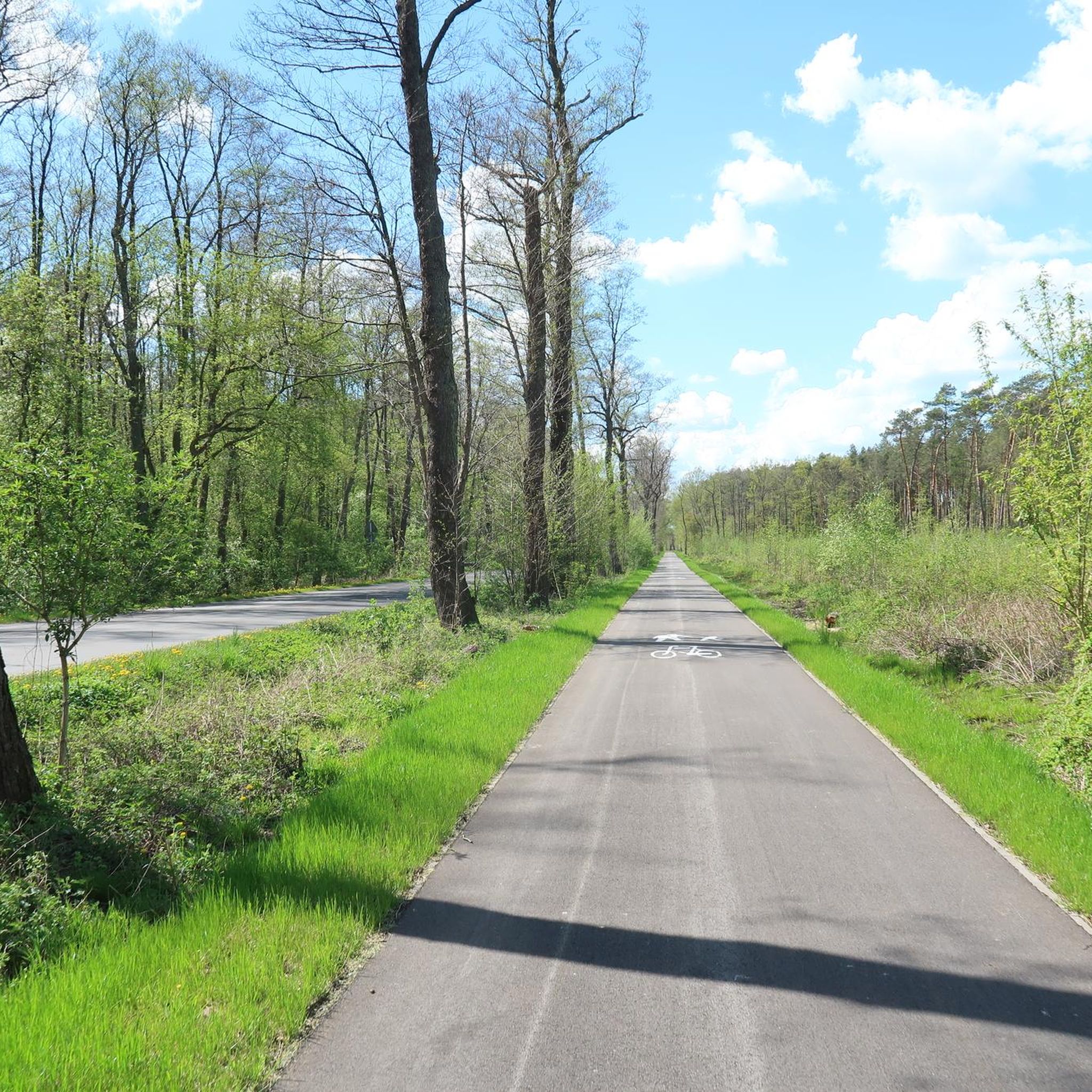
Absolutely! Łowicz offers several cycling routes for different skill levels. You can find easy routes such as the 'Wygoda Cyclists' Rest Stop – General Stanisław Klicki Tower loop' or the 'General Stanisław Klicki Tower – Bicycle and Pedestrian Path loop.' For more options, explore the Cycling around Łowicz guide.
Can I find gravel biking trails in the Łowicz region?
Yes, the Łowicz region has gravel biking opportunities. You can find routes ranging from easy to difficult, such as the 'Polana Siwica Nature Reserve – Nieborów Palace and Park loop' for an easier ride, or more challenging options like the 'Bridge Over the Rawka River – Bolimowski Reservoir loop.' Check out the Gravel biking around Łowicz guide for detailed information.
What is the Open-air Museum in Maurzyce and how far is it from Łowicz?
The Open-air Museum in Maurzyce, also known as the Łowicz Ethnographic Park, is a significant cultural highlight located approximately 7 km from the city center. It features traditional wooden cottages, a windmill, a tavern, and farmsteads, depicting the historical village life of the Łowicz region. It's a great place to experience local folklore and history.
Is there anything unique about the urban layout of Łowicz?
Yes, Łowicz is distinctive for its unique triangular urban layout, which is a rare feature in Poland. Both the Old Market Square in Łowicz and the New Market Square share this triangular shape, making them notable architectural points of interest.
What is the General Stanisław Klicki Tower?
The General Stanisław Klicki Tower is a historical monument in Łowicz, part of a romantic complex built by General Stanisław Klicki in the 1820s. It was originally intended to house a military library and features an observation deck with battlements. It's a site with significant historical ties to the region.
What do visitors enjoy most about the attractions around Łowicz?
Visitors particularly appreciate the blend of rich history and natural beauty. The unique architecture of the Old Market Square and the serene, historical ambiance of the Romantic Garden in Arkadia are frequently highlighted. The opportunity to explore historical palaces like Radziwill Palace in Nieborow, combined with peaceful walks along the Bzura River, offers a diverse and engaging experience.
When is the best time to visit Łowicz for cultural events?
If you are interested in cultural events, visiting Łowicz in June is highly recommended. This is when the Corpus Christi procession takes place, which is one of Poland's most picturesque processions, featuring participants in traditional Łowicz costumes and listed on the national list of intangible cultural heritage.
Most popular routes around Łowicz

Get inspired with the komoot mobile app


Explore more
Still not found the Highlight you’re looking for? See guides of the top attractions in other regions:
