Attractions and Places To See around gmina Siennica - Top 20
Best attractions and places to see around gmina Siennica, located in Mińsk County, Masovian Voivodeship, Poland, encompass a variety of historical landmarks, natural features, and cultural sites. The region is characterized by its natural landscapes, including the Świder River and several nature reserves. Visitors can explore historical architecture, religious sites, and protected natural areas. This area offers diverse opportunities for those interested in history, nature, and quiet exploration.
Best attractions and places to see around gmina Siennica
- The most popular…
Last updated: July 1, 2026
Bagno Bocianowskie Nature Reserve
Highlight • Natural
The biggest attraction is a peat bog depression called Gołe bagno.
Translated by Google •
Tip by

Celestynów Railway Station
Highlight • Monument
Translated by Google •
Tip by

Sign up now to discover places like this
Get recommendations on the best single tracks, peaks, & plenty of other exciting outdoor places.
Sign up for free
Former Brickworks Chimney (Mazowiecki Landscape Park)
Highlight • Monument
Showing Translation
Tip by

Chapel of Our Lady of Częstochowa
Highlight • Religious Site
Translated by Google •
Tip by

Jedlina Nature Reserve
Highlight • Forest
Translated by Google •
Tip by
Sign up for free to discover even more attractions around gmina Siennica.
Sign up for free
Already have an account?
Start today with a free account
Your next adventure awaits.
Login or Signup
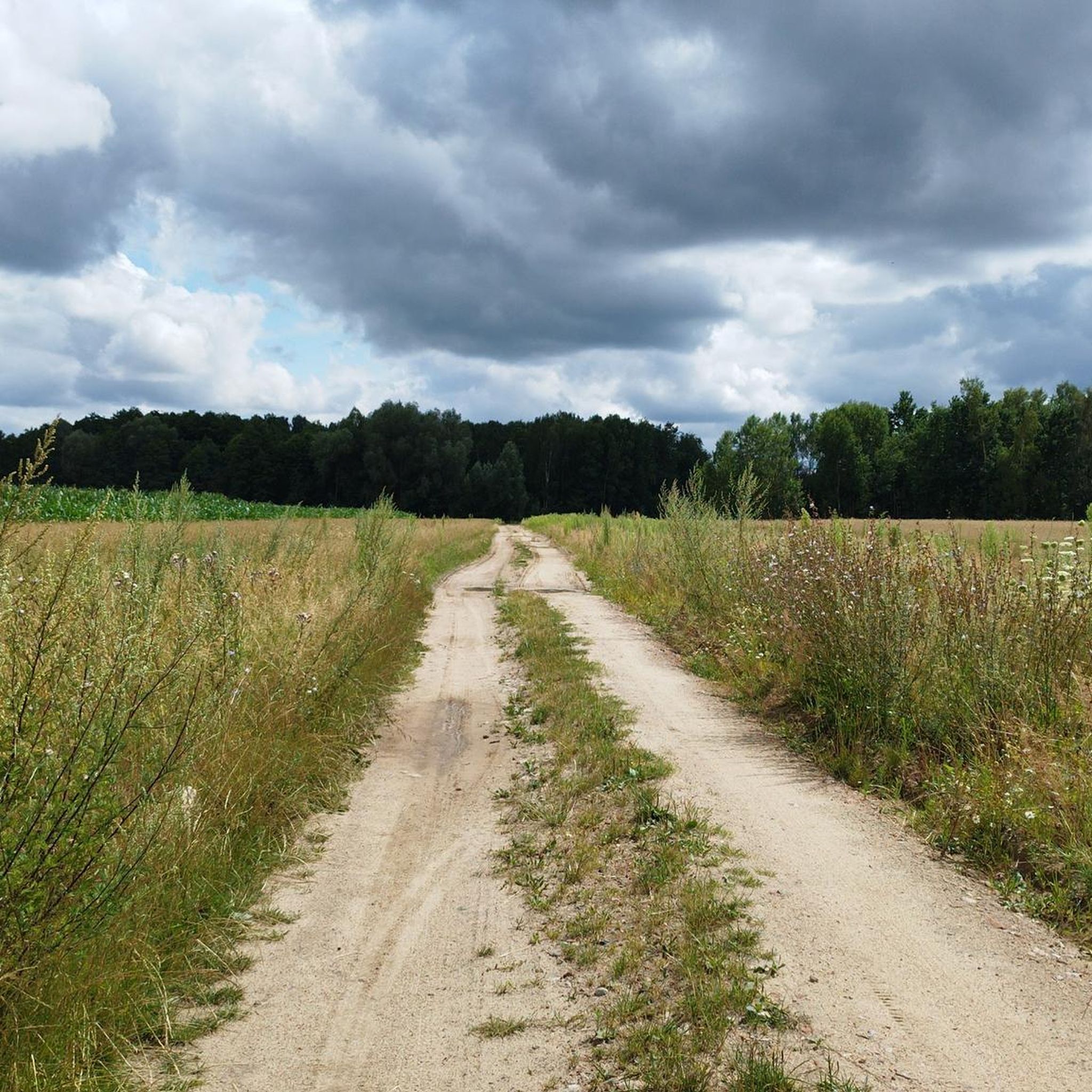

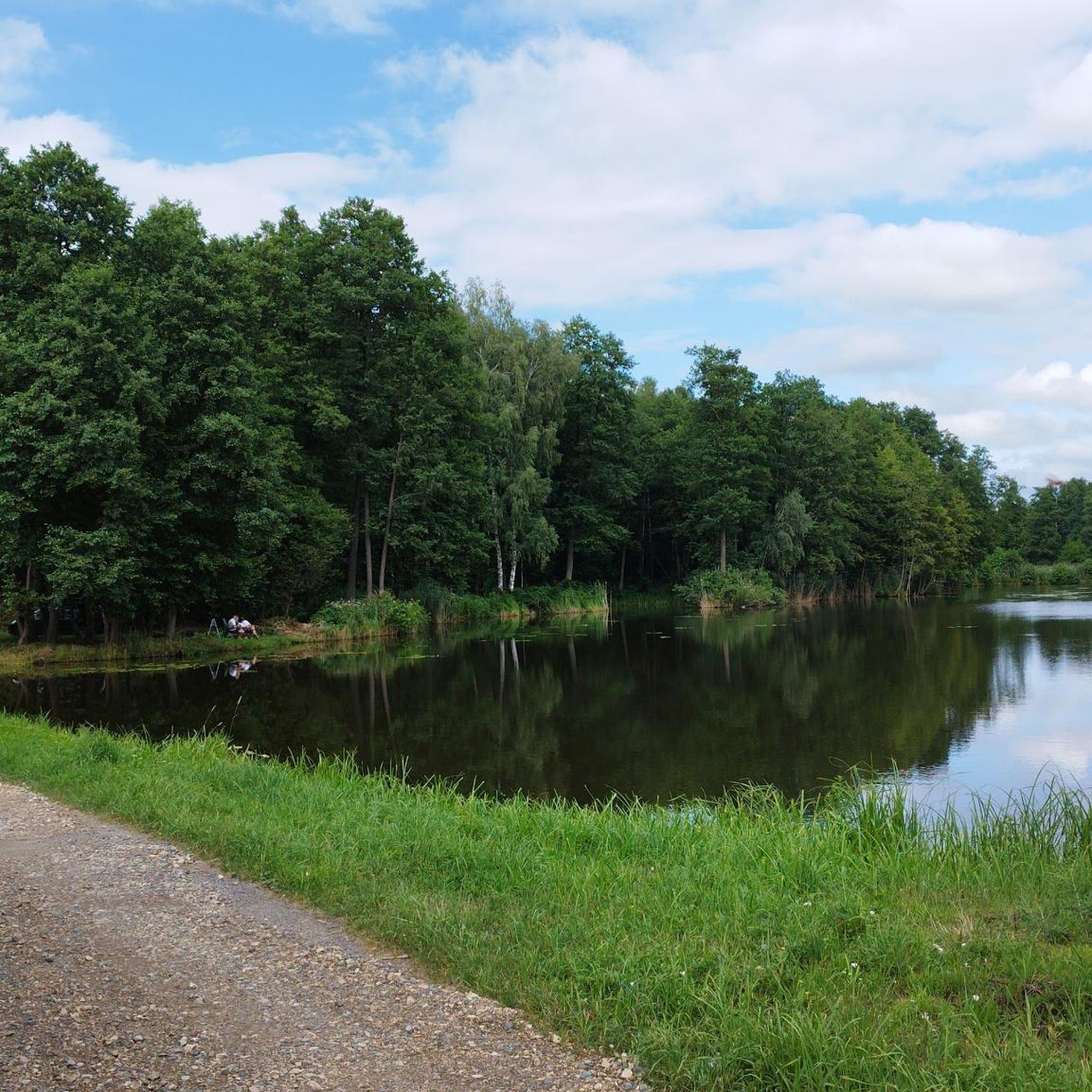
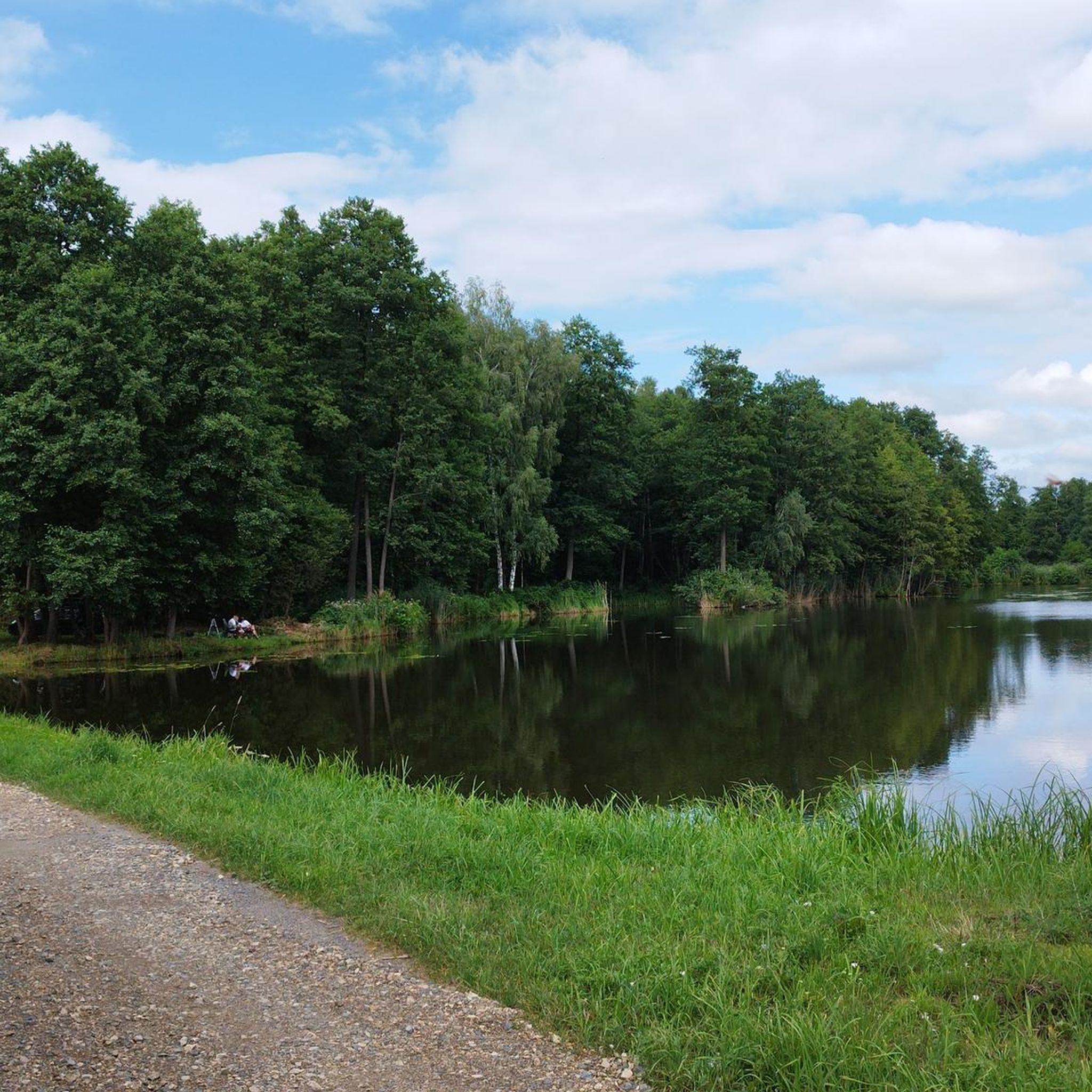
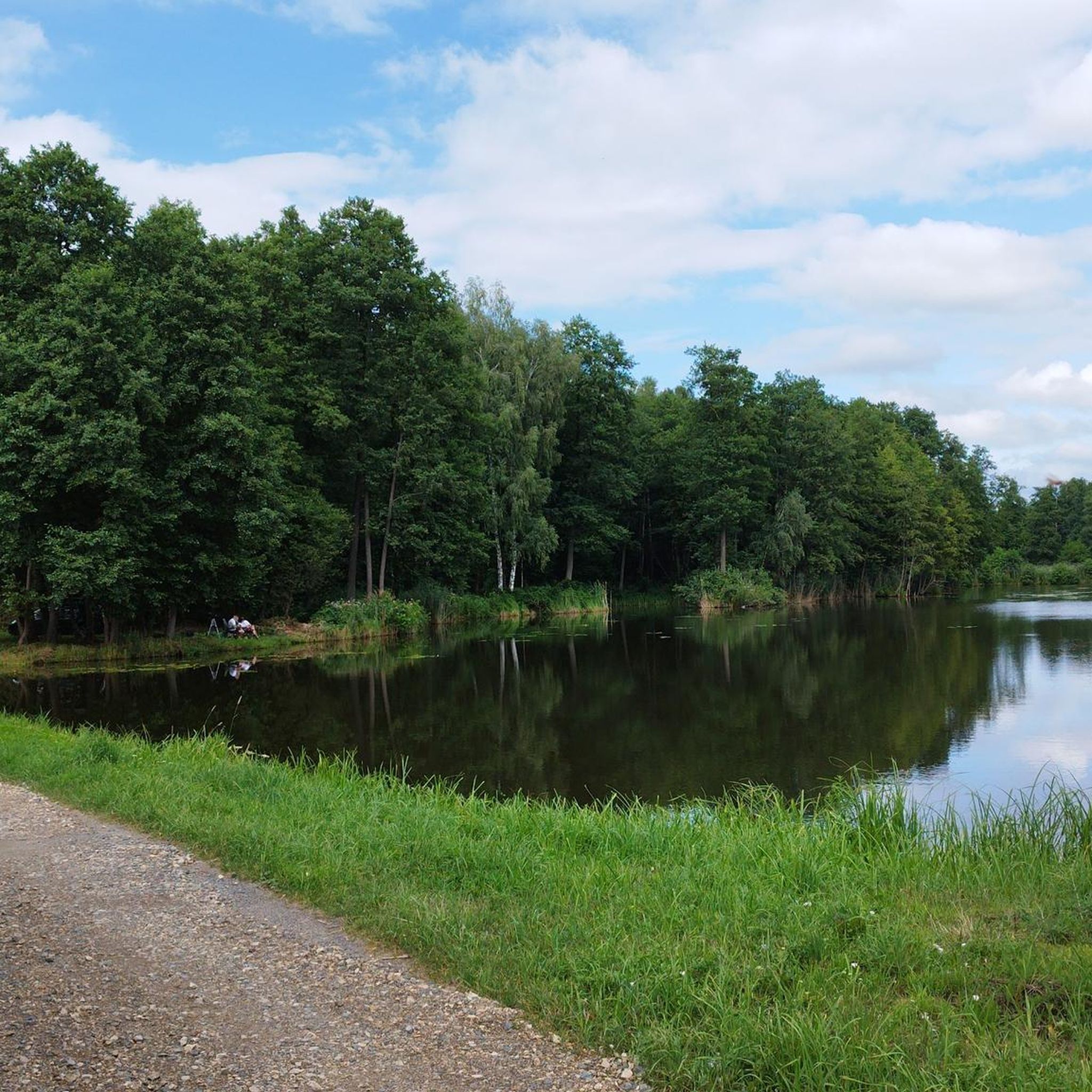
Tips from the Community

The brickyard in Radzin was established around 1850 as part of the local manor. Initially, bricks were produced solely for the manor's needs, but over time the plant expanded its operations – residents of the surrounding villages began to buy bricks. In 1928, the characteristic brick chimney, towering over the trees, was erected, which dominated the area for years. Residential barracks for workers and their families were also built at the plant. The construction of the massive structures, especially between 1890 and 1930, was a laborious process involving the precise manual laying of hundreds of bricks, layer by layer, on increasingly higher wooden scaffolding. Specialist bricklayers, often risking their lives without adequate safety measures, ensured the perfect verticality and roundness of the structure, using lime mortar and occasionally steel hoops for increased stability. Such height was not an architect's whim – it was a key technological element, ensuring a strong, natural draft necessary for efficient combustion in brick kilns and for dispersing smoke and pollutants far from the plant, which, in the understanding of the time, was intended to protect the environment and human health in the immediate vicinity. The brickyard operated successfully until the tragic December of 1939, when history added a tragic chapter to its story. During the German occupation, in December 1939, an attack occurred in Celestynów on the home of the German Zommer family. In response, German gendarmes carried out a brutal reprisal. It was assumed that the perpetrators of the attack were residents of the settlement near the brickyard. 18 men were arrested (many of them former employees of the plant). The detainees were gathered near the train station. As we read in the memoirs of Władysław Święch, "among them was also Father Banasiewicz". Mrs. Zdziechowska, a resident of Celestynów and German by birth, who knew the priest, attempted to secure his release. In a dramatic gesture, she threw herself at the feet of a German officer, begging for mercy. Her desperate pleas were successful, as the priest was released, but the other men were led into the forest along Osiecka Street, where an execution took place. After this tragedy, the brickyard never resumed its operations.
1
0
Railway station located in Celestynów in the municipality of Celestynów. The station is located on the Vistula railway line from Warsaw East to Dorohusk (railway line No. 7). In the area of the station, there is a historic building with a ticket office and waiting room of Koleje Mazowieckie. In the area of the station, there is also the Celestynów (Cl) signal box building.
1
0
Nature reserve „Bagno Bocianowskie” – a forest nature reserve, located in the Celestynów commune, northeast of Celestynów, in the area of the Masovian Landscape Park. It was established by the Regulation of the Ministry of Forestry and Wood Industry of October 12, 1982, on an area of 68.98 ha
1
0

A charming and intimate place. But as is usual in a reserve - a lot of trees knocked down by beavers across the path
1
0

A very nicely restored PKP station. Unfortunately, there was no money for a ticket machine (which was supposedly there before the renovation). The station has existed since at least 1879 – initially as a passenger stop and passing loop. It is also known that in 1893 the station building was expanded[12]. Around 1895, a freight station was built on the Nadwiślańska Railway line in Celestynów, used by the Zamoyski family. On January 12, 1958, the first electric train appeared at the Celestynów station, driven by a Celestynów resident, Władysław Kot. On May 5, 2019, the last scheduled passenger train of the Mazowieckie Railways departed from the Celestynów station. The station was closed for modernization, and replacement bus service was introduced. On December 13, 2020, trains ran for the first time on the newly built second track between Otwock and Pilawa. After many years, long-distance trains also returned without stopping at Celestynów station. On December 17, 2024, the modernization of the station building was completed. During the renovation, which has been ongoing since February 2023, the wooden building was thoroughly renovated - including the installation of new window and door joinery, the roof covering was renovated, the floor with a geometric pattern in the waiting room and the wooden paneling were recreated, and the historical signs were reconstructed. In addition, the station was equipped with modern amenities and modernized installations. https://pl.wikipedia.org/wiki/Celestyn%C3%B3w_(stacja_kolejowa)
2
0

The Jedlina Nature Reserve in the Mazovian Voivodeship is a small but unique protected area dominated by a natural fir forest – a rarity in this part of Poland. It is a great place for a quiet bike or hike, especially for lovers of nature and silence. The reserve's paths lead through dense forests, where you can meet various species of birds and wild animals. The route is not demanding, but it is worth having solid footwear or a bike adapted to forest paths. In autumn, the forest delights with its colors and is an ideal place for observing nature.
1
0

Peace and quiet, a bench on the west side
1
0
The Bagno Bocianowskie nature reserve was established in 1982 and is located in the Masovian Landscape Park. It is worth looking out for sundews growing naturally here. The biggest attraction is a peat bog depression called Gołe bagno.
3
0
Frequently Asked Questions
What natural attractions can I explore in Gmina Siennica?
Gmina Siennica offers several beautiful natural areas. You can visit the Bagno Bocianowskie Nature Reserve, known for its peat bog depression called Gołe bagno and naturally occurring sundews. Another unique spot is the Jedlina Nature Reserve, which features a rare natural fir forest, perfect for quiet walks or bike rides. The Świder River also flows through the southern part of the gmina, with a particularly charming section in Dłużew, marking the beginning of the Świder Nature Reserve.
Are there historical sites or architectural landmarks to visit in Gmina Siennica?
Yes, Gmina Siennica is rich in history. You can explore the Baroque Church of St. Stanislaus Bishop and Martyr in Siennica, built between 1749 and 1769. The region also features several 19th-century manors, including Żaków Manor, Dłużew Manor, and Boża Wola Manor, each with its own unique architectural style and history. Don't miss the Chapel of Our Lady of Częstochowa, a picturesque wooden temple considered one of Mazovia's most original sacred buildings.
What kind of outdoor activities can I do near the attractions?
The area around Gmina Siennica is excellent for outdoor activities. You can find numerous routes for hiking and gravel biking. For hiking, consider routes like the 'Loop Mińsk Mazowiecki - Oldest pine in Poland' or the 'Educational trail "Najstarsza Sosna" (loop)'. If you prefer cycling, there are gravel biking routes such as the 'Świder River Bridge loop from Celestynów'. You can find more details and routes in the hiking guide and gravel biking guide for the region.
Are there any family-friendly attractions in Gmina Siennica?
The natural reserves offer great opportunities for families. The Jedlina Nature Reserve is particularly suitable for quiet bike rides or walks with children through its dense fir forests. The general appeal of nature walks and exploring the historical manors can also be enjoyable for families.
Where can I find unique natural landscapes or wildlife spotting opportunities?
For unique natural landscapes, the Bagno Bocianowskie Nature Reserve with its peat bog and sundews is a must-see. The Jedlina Nature Reserve, with its rare natural fir forest, is also an excellent spot for nature observation, where you might encounter various species of birds and wild animals.
What are some lesser-known or 'hidden gems' in Gmina Siennica?
Beyond the main attractions, consider visiting the Ruins of the Watermill and Weir in Tarachowizna along the Świder River, which offers a glimpse into 19th-century industrial history. The Historic Cemetery Chapel in Siennica, with its Neoclassical altar, is another quiet historical spot. The Chapel of Our Lady of Częstochowa, with its unique wooden architecture, is also a charming discovery.
What do visitors enjoy most about the attractions in Gmina Siennica?
Visitors particularly appreciate the tranquility and natural beauty of the reserves, like the Bagno Bocianowskie Nature Reserve, which is described as a beautiful, vast swamp with a climatic path. The Jedlina Nature Reserve is loved for its quiet paths through dense forests, ideal for nature lovers and for 'resetting your head'. The unique wooden architecture of the Chapel of Our Lady of Częstochowa also receives high praise for its picturesque and original character.
Are there any memorials or sites related to World War II history in the area?
Yes, Gmina Siennica has sites commemorating its wartime history. You can visit the Mass Grave of those Fallen in 1939 in the parish cemetery in Siennica, which is the resting place for soldiers of the 25th Greater Poland Uhlan Regiment. Additionally, there is a Monument to the Residents Murdered in Łękawica in 1939, commemorating victims executed by Wehrmacht soldiers.
What is the best time of year to visit Gmina Siennica for outdoor activities?
The best time to visit Gmina Siennica for outdoor activities like hiking and cycling is typically during spring, summer, and early autumn. During these seasons, the weather is generally pleasant for exploring the nature reserves and historical sites. In autumn, the forests, especially in the Jedlina Nature Reserve, are particularly delightful with their changing colors.
Are there any notable educational or cultural institutions in Gmina Siennica?
The Hipolit and Kazimierz Gnoiński School Complex in Siennica is a notable example of interwar period educational architecture, constructed between 1923 and 1926. The Dłużew Manor also serves as a center for students of the Academy of Fine Arts in Warsaw, highlighting its ongoing cultural significance.
Can I find places for quiet walks or bike rides in Gmina Siennica?
Absolutely. The Jedlina Nature Reserve is specifically highlighted as a great place for quiet bike rides or walks through dense forests. The Gravel Forest Road from Ponurzyca to Augustówka also offers a picturesque route winding through pine forests, ideal for a peaceful ride or stroll.
How long should I plan for visiting the attractions in Gmina Siennica?
To fully appreciate the diverse attractions, including nature reserves, historical manors, and cultural sites, planning at least a full day or a weekend trip is recommended. This allows ample time to explore a few key sites like the nature reserves and a historical manor or two, along with some outdoor activity.
Most popular routes around gmina Siennica
Most popular attractions around gmina Siennica

Get inspired with the komoot mobile app


Explore more
Still not found the Highlight you’re looking for? See guides of the top attractions in other regions:
