Attractions and Places To See around gmina Mała Wieś - Top 20
Attractions and places to see around gmina Mała Wieś, a rural administrative district in Płock County, Masovian Voivodeship, Poland, include historical landmarks and natural features. The gmina borders the Vistula River, offering diverse landscapes and protected areas. It is characterized by its agricultural land and historical sites, providing a blend of cultural and natural points of interest. The region features several natural monuments and historical structures dating back centuries.
Best attractions and places to see around gmina Mała Wieś
- The…
Last updated: July 1, 2026
Bridge over the Bzura River in Kamion
Highlight • Bridge
Translated by Google •
Tip by

Holy Trinity Church in Wyszogród
Highlight • Religious Site
Translated by Google •
Tip by

Sign up now to discover places like this
Get recommendations on the best single tracks, peaks, & plenty of other exciting outdoor places.
Sign up for free
Church of St. Michael the Archangel and St. Anne
Highlight • Religious Site
Translated by Google •
Tip by
Vistula River Valley Settlers' Open-Air Museum
Highlight • Historical Site
Translated by Google •
Tip by
Water Gauge at Kępa Polska
Highlight • River
Translated by Google •
Tip by

Sign up for free to discover even more attractions around gmina Mała Wieś.
Sign up for free
Already have an account?
Start today with a free account
Your next adventure awaits.
Login or Signup
Popular around gmina Mała Wieś
Tips from the Community

Until the mid-17th century, there was a wooden church here. Around 1670, another wooden church was built in the immediate vicinity of the Bzura River. Due to frequent floods, it was moved to its current location in 1841. The temple built at the initiative of Father Józef Krawczykowski existed until 1916. It burned down during World War I. A wooden temple was built on the foundations of the old church in 1917. After World War II, it turned out to be too small for the growing community. In 1978, the then parish priest, Father Paweł Flaszczyński, unable to obtain the appropriate permits to build a new temple, undertook to build it with the help of the parishioners without consent or designs. On April 8, 1978, in one day, about one hundred and fifty parishioners built the walls of the new temple, enclosing the wooden church with them, which was then demolished. The construction works that had begun were continued despite the penalty imposed, and as a result, the church in its present form was built. It was consecrated on July 26, 1980 by the auxiliary bishop of Warsaw, Jerzy Modzelewski.
0
0
The first bridge over the Bzura in Kamion was built in 1915. It was a wooden structure of a temporary nature. After 9 years, the bridge was destroyed during the flood in 1924. It was rebuilt in the same year, but the ice embankments (elements protecting the bridge from flowing ice floes) were not made until the following year. The war that began in 1939 caused the destruction of five spans, which were later repaired by the Germans. Military operations in 1945 and the flowing ice floes in 1947 destroyed the bridge again, but in 1947 it was rebuilt by the State Road Bridge Reconstruction Directorate over the Vistula and Bzura near Wyszogród. In this form (during the last reconstruction it received steel girders) the bridge survived until 2010, when the flowing ice floes damaged it so much that vehicle traffic had to be significantly limited (to 3.5 tons and max. 2 m wide. The reconstruction, or rather construction from scratch, was carried out in the "Design and Build" system. It turned out to be necessary to rebuild the drainage, technical infrastructure devices and build traffic safety devices. The structure has four spans, is 160.5 m long and 9 m wide and has a load capacity that allows for the movement of vehicles weighing up to 80 tons. The contractor completed the work on October 30, 2012, while the ceremonial handover of the new bridge to the residents of Kamion and the Sochaczew district took place on January 2, 2013. The total cost of the works in Kamion amounted to PLN 14.7 million. The subsidy in the amount of PLN 6.8 million came from government funds for the removal of the effects of flooding, which was allocated by the Mazovian Voivode Jacek Kozłowski. The remaining funds in the amount of PLN 7.9 million were provided by the local government of the Mazovian Voivodeship.
0
0
The current late Baroque parish church in Wyszogród is the fourth in a row. The first church existed before 1320, closer to the Vistula. The next church was destroyed in 1726, when the riverside slope collapsed. The existing church was built from 1774 (or from 1779) on the foundations of the older one, which was destroyed by fire. These foundations were reinforced and slightly changed according to the design of the Gdańsk architect Samuel Fischer. The walls were completed in 1786 and this date was placed on the front elevation of the church. Probably in 1800 the new church was consecrated, and its name was changed from St. James to the Holy Trinity, as it is to this day. The church towers were completed and the interior furnishings were completed only after 1819. The towers themselves were added in 1837. In the second half In the 19th century the altar was rebuilt, using older elements. In 1942 the German occupiers closed the church and turned it into a grain granary.
0
0

Late Baroque temple completed in the late 18th century, a hall church with two towers.
0
0
It shows the remains of the Olender settlers in the Vistula valley. There is a former Evangelical church, a cemetery, a reconstructed village school and residential buildings with farm buildings. My inner onion grimaced at the thought that free admission ended in May and tickets cost PLN 15 (concession PLN 10).
0
0
Church of St. Michael the Archangel and St. Anne. Next to it stands a wooden bell tower, which looks quite old.
0
0

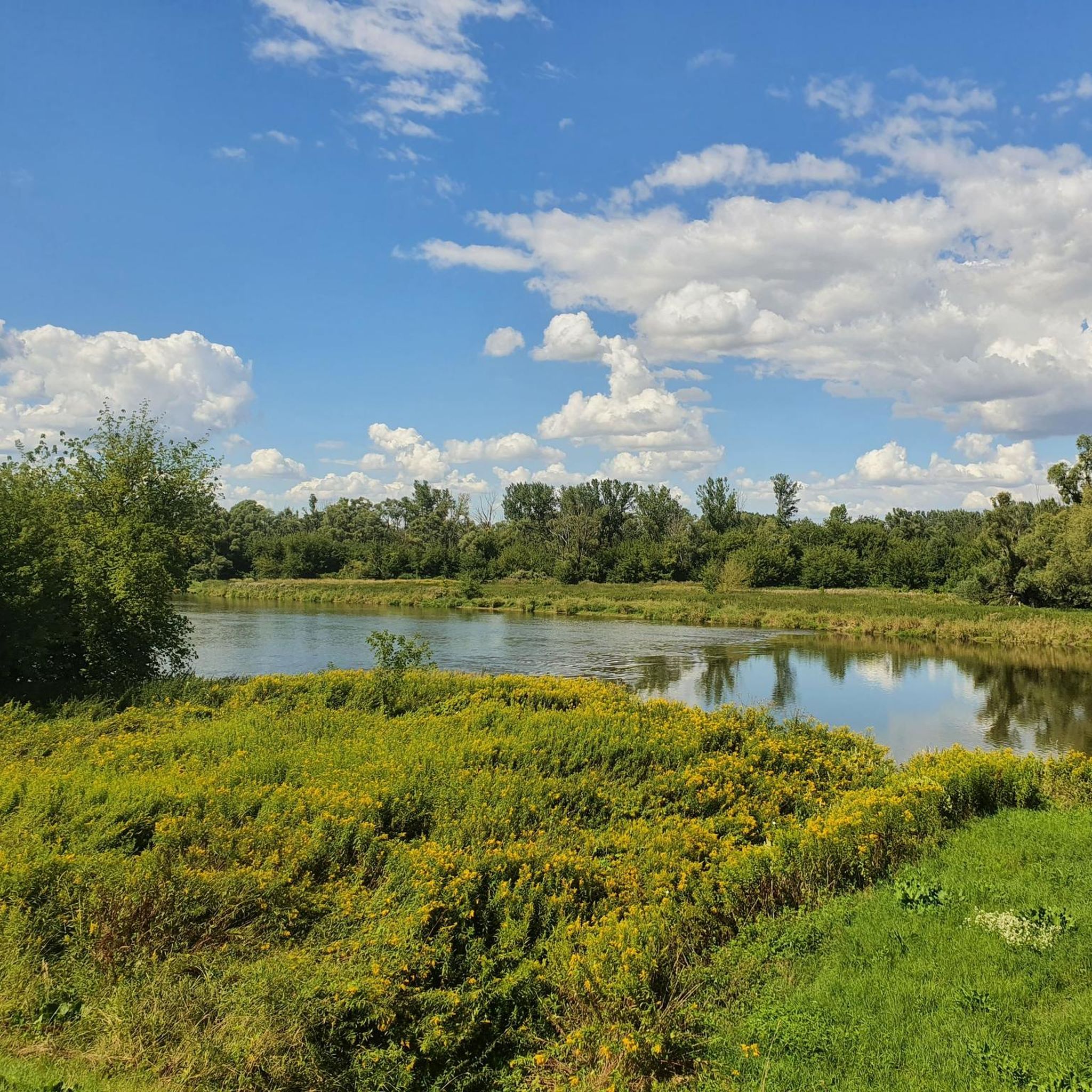
The Vistula River Measurement Station of the Institute of Meteorology and Water Management. A shaded place ideal for rest, and also a great place to observe birds on the Vistula island (they are extremely active in this place).
0
0
Frequently Asked Questions
What historical sites can I explore in Gmina Mała Wieś?
Gmina Mała Wieś is rich in history. You can visit the Mała Wieś Palace, a neoclassical structure with extensive gardens, which now functions as a hotel and event venue. Other notable historical sites include the Holy Trinity Church in Wyszogród, a late Baroque temple, and the Church of St. Michael the Archangel and St. Anne, known for its unique construction story. Additionally, the region has archaeological findings from the Middle Ages in villages like Arciszewo and Dzierżanowo, and earth mounds from medieval strongholds in Orszymowo and Wilkanowo.
Are there any natural attractions or protected areas in Gmina Mała Wieś?
Yes, the gmina boasts significant natural beauty. The southern part lies within the Protected Landscape Area (Nadwiślański Obszar Chronionego Krajobrazu) and is part of the Natura 2000 network, important for bird species. You can explore nature reserves like Kępa Antonińska and Wyspy Zakrzewskie, crucial for wading birds, and the Modrzewina Reserve, a 200-year-old larch forest near the Palace gardens. The Vistula River forms the southern border, offering picturesque landscapes, and the legendary "Korzonek" spring along the Ryksa River is also a point of interest.
What cycling routes are available near Gmina Mała Wieś attractions?
There are several cycling routes to explore in the vicinity. Options range from easy to difficult, including the "Bike loop from Suchodół" (13.1 km, easy), "Old Wooden Cross – Bridge in a beautiful ravine loop from Nowy Reczyn" (11.7 km, easy), and the more challenging "Forest Shelter – Solidarity Bridge in Płock loop from Kępa Polska" (89.6 km, difficult). You can find more details and other routes on the Cycling around gmina Mała Wieś guide.
Are there family-friendly attractions in Gmina Mała Wieś?
Absolutely! Families can enjoy a walk along the Wyszogród Riverside Promenade, which offers views of the Vistula River. The Water Gauge at Kępa Polska provides a shaded area for rest and birdwatching. The Palace Gardens at Mała Wieś Palace, with its French-style garden and English park, are also suitable for family strolls. Many of the natural areas along the Vistula are great for gentle walks and observing wildlife.
Where can I observe birds and wildlife in the area?
The Vistula River and its surrounding protected areas are excellent for birdwatching. The Water Gauge at Kępa Polska is specifically noted as a great spot to observe birds on the Vistula island. The Nadwiślański Obszar Chronionego Krajobrazu (Protected Landscape Area) and Natura 2000 site are known for rare bird species like the black stork, bluethroat, and kingfisher, especially in the Kępa Antonińska and Wyspy Zakrzewskie faunistic reserves.
What is the Mała Wieś Palace and its gardens?
The Mała Wieś Palace is a neoclassical palace built in the late 18th century, which has served various roles, including a residence for Polish prime ministers. Today, it operates as a hotel, restaurant, and event venue, offering guided tours. Surrounding the palace are extensive gardens, including a restored French-style garden with thousands of rose bushes, an English park with ancient trees, and a modern Fountain Garden. The Modrzewina reserve, a larch forest, is also nearby.
Are there any unique bridges or structures to see?
Yes, the Bridge over the Bzura River in Kamion is a notable structure with a rich history of destruction and rebuilding. The current bridge, completed in 2012, is 160.5 meters long and 9 meters wide, designed to withstand the elements. It's also listed as wheelchair accessible.
What is the Winnica Pałac Mała Wieś (Palace Mała Wieś Vineyard)?
Established in 2023, the Winnica Pałac Mała Wieś is a significant attraction as the largest vineyard in Mazovia, covering 30 hectares. It's a modern addition to the region's offerings, located near the historic palace.
Can I find ancient trees or natural monuments in Gmina Mała Wieś?
The gmina is home to several impressive natural monuments. You can find 11 oak trees in Mała Wieś estimated to be around 500 years old. Additionally, there's a large walnut tree known as "Jawor" in Podgórze, with a circumference of approximately 5 meters, showcasing the region's ancient flora.
What is the best time to visit Gmina Mała Wieś for outdoor activities?
The region's attractions, including the Palace Gardens, Vistula River, and vineyard, suggest that spring, summer, and early autumn would be ideal. These seasons offer pleasant weather for walking, cycling, exploring historical sites, and enjoying the natural landscapes and gardens. The Vistula River is particularly appealing for walks and cycling during warmer months.
Are there any viewpoints to enjoy scenic vistas?
The Wyszogród Riverside Promenade offers a well-known walking area with vantage points to observe the Vistula River. The Water Gauge at Kępa Polska also provides views of the Vistula and its island, making it a good spot for scenic observation and birdwatching.
Most popular routes around gmina Mała Wieś

Get inspired with the komoot mobile app


Explore more
Still not found the Highlight you’re looking for? See guides of the top attractions in other regions:
