Attractions and Places To See around Człopa - Top 20
Best attractions and places to see around Człopa encompass historical landmarks and natural features. The region is characterized by its numerous lakes, including Lake Ostrowite, and the Drawa River, which flows through the Drawieński National Park. Człopa, historically a royal city, offers a blend of historical exploration and natural excursions.
Best attractions and places to see around Człopa
- The most popular attractions is Ostrowite Historic Maple Avenue, a historical site that leads through the center of the Ostrowite settlement.…
Last updated: October 4, 2026
Springe Historic Cemetery
Highlight • Historical Site
Translated by Google •
Tip by

Church of the Assumption of the Blessed Virgin Mary
Highlight • Religious Site
More info: de.wikipedia.org/wiki/Tuczno and pl.wikipedia.org/wiki/Ko%C5%9Bci%C3%B3%C5%82_Wniebowzi%C4%99cia_Naj%C5%9Bwi%C4%99tszej_Maryi_Panny_w_Tucznie
Showing Translation
Tip by

Sign up now to discover places like this
Get recommendations on the best single tracks, peaks, & plenty of other exciting outdoor places.
Ostrowite Historic Maple Avenue
Highlight • Historical Site
Two shelters, it's worth taking a break in this place.
Translated by Google •
Tip by

Kamienna Hydroelectric Power Plant
Highlight • Monument
Translated by Google •
Tip by

Ruins of the Church and Cemetery in Ostrowite
Highlight • Historical Site
Translated by Google •
Tip by
Sign up for free to discover even more attractions around Człopa.
Already have an account?
Start today with a free account
Your next adventure awaits.

Tips from the Community

The first church on this site already stood in the 14th century, but it was probably a wooden structure. At the beginning of the 15th century, the construction of the current church began, and it was completed in the 16th century. In 1581, the church burned down, but it was rebuilt. In 1636, the tower collapsed, and a few years later, in 1640, during a great city fire, the church burned down again and was rebuilt again (with a new tower). Since then, the church has stood in almost unchanged form. It even survived World War II without damage.
1
0
Ruins of a church from the 18th century. The church survived the last war and masses were held here until 1962. Later it was abandoned and fell into ruin. Today only the external walls remain. There is no roof and no tower. Next to it are the remains of an old, post-German cemetery. The gravestones are destroyed. The gravestone with blacksmith's insignia draws attention.
3
1
A small settlement of Ostrowite located in the heart of the Drawieński National Park. It was founded in 1588 by a representative of the Wedel-Rüdiger family from Drawno. In 1820, the village became the property of the von Sydow family from Głusk. There was a forge here, and a water mill on the Płociczna. The settlement has preserved 4 half-timbered buildings built for forest workers. A beautiful, historic maple alley leads through the center of the settlement.
5
1

The church in Ostrowite was built in the 18th century. However, the first temple existed here already in the 16th century, as evidenced by the remains of the floor from that period. The last masses were celebrated here in 1962. Inside there was an 18th-century altar with older figures of saints and the Virgin Mary with Child, which was moved to the parish church in Dobiegniew. The remains of the church were subjected to conservation in the early 21st century and secured as a permanent ruin. The brick and stone walls were reinforced with concrete bands.
0
0

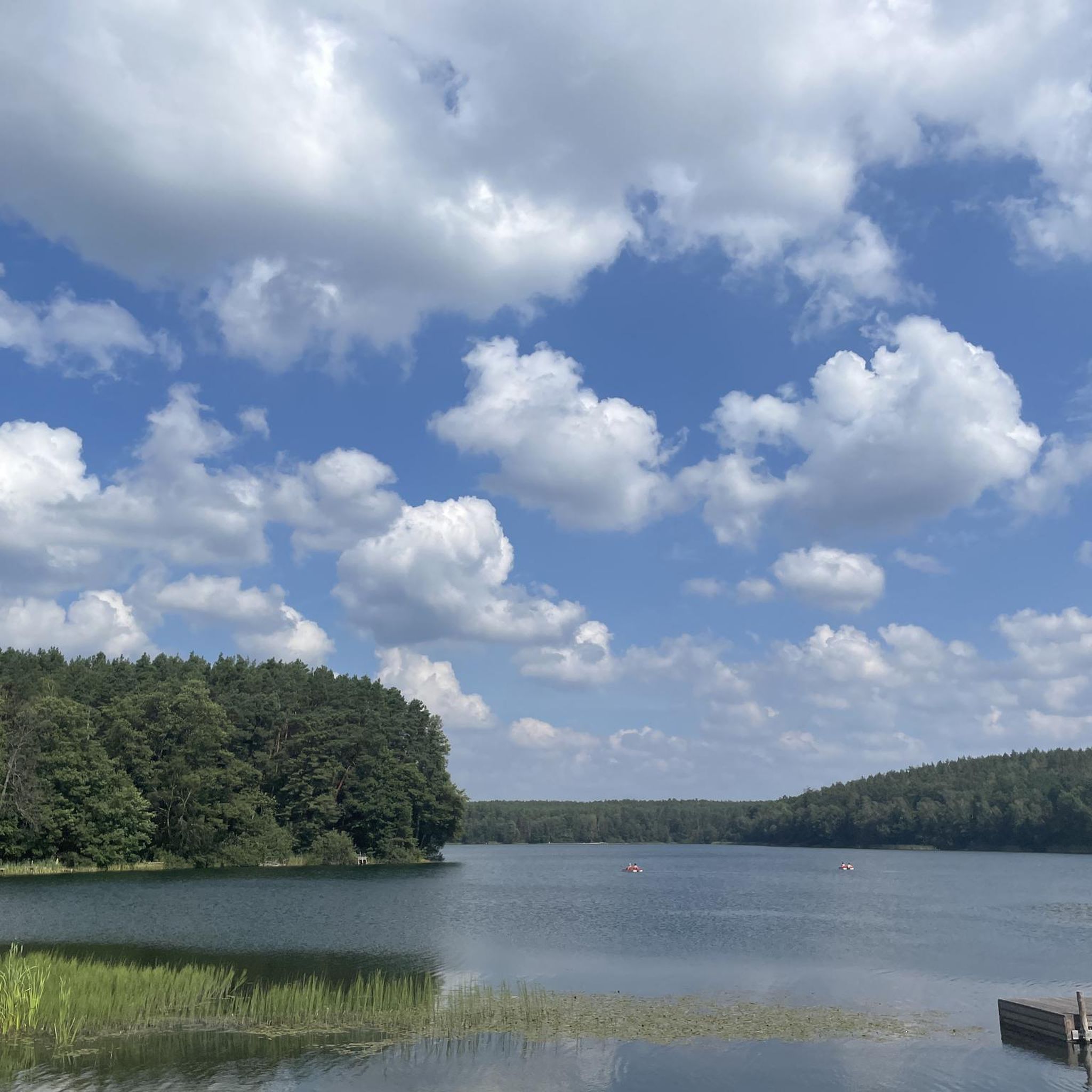
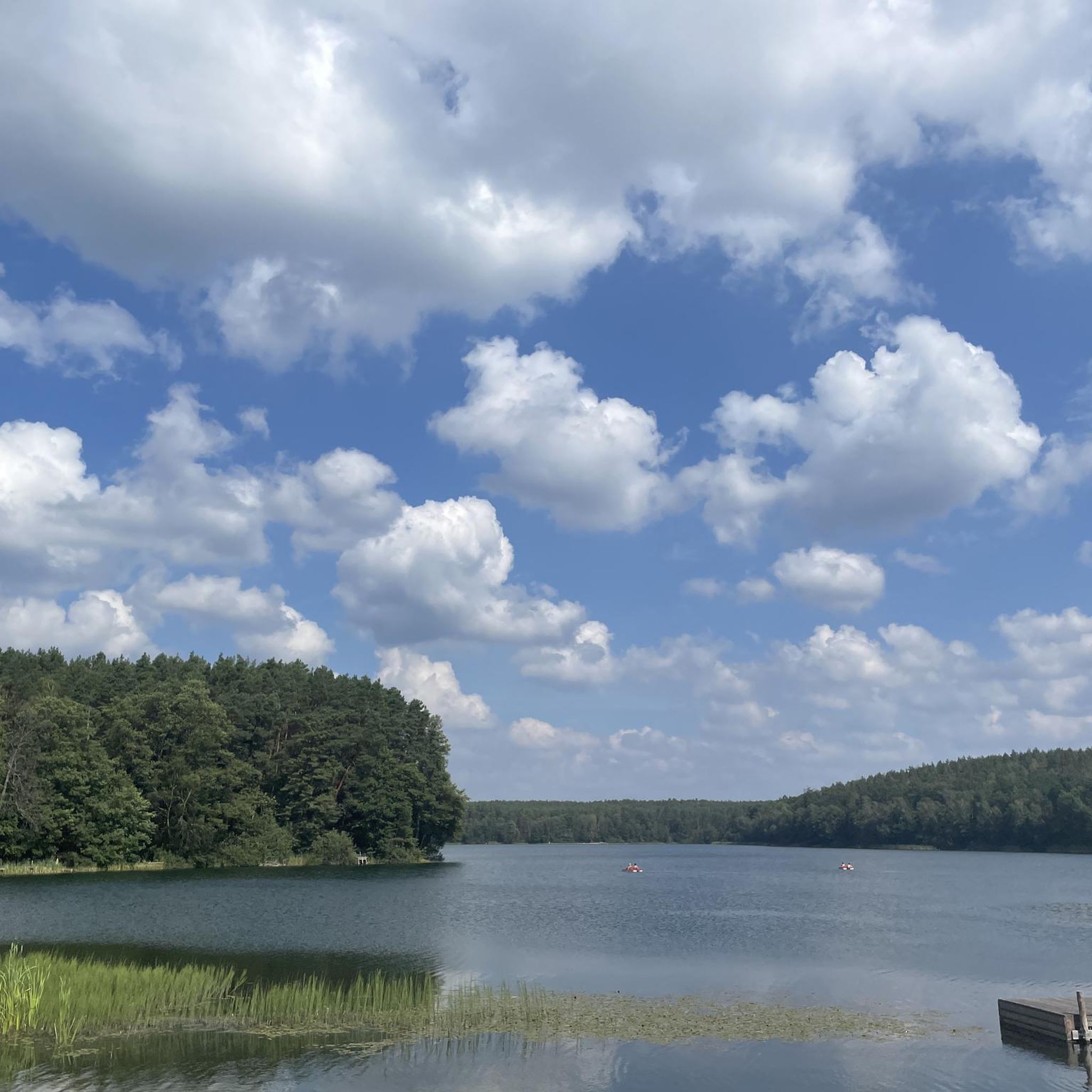
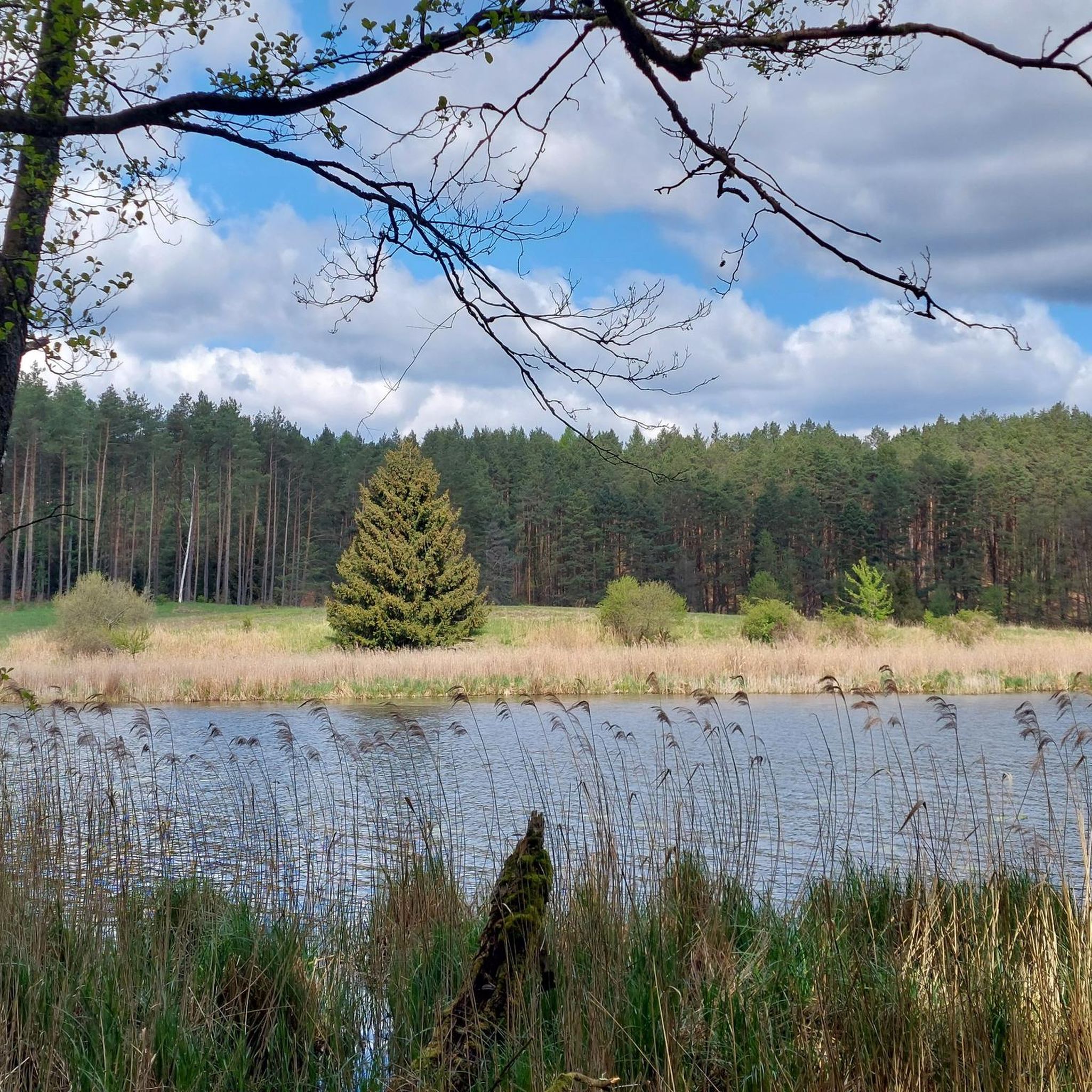
The historic settlement of Ostrowite at the Ostrowite lake (Ostrowskie lake). Charming half-timbered houses, a path, the remains of a church and a church cemetery. Two shelters, it's worth taking a break in this place.
4
0
One of the oldest hydropower plants in Poland and Europe. In 1896, only 5 years after the construction of the first hydroelectric power plant in the world, the first works on the construction of a power plant on the Drawa River were undertaken. The beginning of the industrial operation of the power plant dates back to 1903. In 1921, the hydro power plant was included in the German national network. Until 1941, as part of the "Kaskady Drawa" project, it was planned to expand the existing power plant and build new ones in Barnim, Zatom, the former settlement of Springe (Dąbrowa) and in Mostniki. These plans were not implemented.
3
2

Within the Drawieński National Park, we can find five interesting closed Evangelical cemeteries. They are usually located near non-existent settlements such as Zietenfier (Sitno), Steinbuscher Glashütte (Podszkle), Springe (Dąbrowa), Lüdertswalde bei Mariental and one in still inhabited Ostrowite. They are characterized by unusual stone tombstones in the shape of a tree trunk, symbolizing the cut down tree of life. They are so precisely reproduced that after years, when they are partially covered with lichen, it is difficult to distinguish them from real trunks. In Springe there is also an interesting tombstone in the shape of an open book. Since 2014, the DPN has started to renovate the cemeteries, the area of the necropolis has been cleaned, fenced and information boards have been set up, on which we can read the history of a given place. And so we will learn that the village of Spinge was founded after the Thirty Years' War as a grange and a sheepfold. There was a watermill and a brickyard here. An industrial railway with a length of 22 km was even built here, which was used to transport milk, cheese and bricks from the village. In its heyday, the village was inhabited by 212 people. On the other side of the road, opposite the cemetery, there was a school, and a bit further an inn. The village became depopulated in 1932. Today, the site of the village is located near the hamlet of Moczele.
3
2

The town church dates from the 15th century.
1
0
Frequently Asked Questions
What historical sites can I explore around Człopa?
Człopa and its surroundings are rich in history. You can visit the Ostrowite Historic Maple Avenue, which leads through a settlement with charming half-timbered houses and the remains of an 18th-century church. Don't miss the Springe Historic Cemetery within the Drawieński National Park, known for its unique tree-trunk shaped tombstones. The Kamienna Hydroelectric Power Plant is also a significant historical landmark, being one of the oldest in Poland and Europe.
What natural features are prominent around Człopa?
The region is characterized by its numerous lakes and rivers. Lake Ostrowite is a key natural feature, connected by the 'Vietnamese Bridge'. The Drawa River is also significant, hosting the historic Kamienna Hydroelectric Power Plant. The Drawieński National Park offers extensive natural beauty, including forests and various water bodies.
Are there hiking opportunities near Człopa's attractions?
Yes, there are several hiking opportunities. The Drawieński National Park, where the Springe Historic Cemetery is located, offers trails. You can find routes like the 'Ostrowieckie Lake Educational Trail' or the 'View of Lake Czarne – View of Lake Ostrowite loop'. For more options, explore the hiking guide around Człopa.
Are there easy walking trails suitable for beginners around Człopa?
Absolutely. For easier walks, consider routes like the 'View of Lake Ostrowite – Bridge over Lake Ostrowite loop from Głusko' or the 'Keselek – Załom loop from Załom'. These are generally shorter and less challenging. You can find more easy options in the easy hikes guide around Człopa.
What cycling routes are available near Człopa?
Cyclists can enjoy various routes around Człopa. Options include the 'Węgornia Creek loop from Załom' for a more challenging ride, or the 'Jeleni Róg Bridge – Town Hall of Złocieniec loop' for an easier experience. Discover more routes in the cycling guide around Człopa.
Are there family-friendly attractions in the Człopa region?
Yes, the Ostrowite Historic Maple Avenue is considered family-friendly, offering a pleasant walk through a historic settlement. The area's lakes and natural paths also provide gentle environments for families to explore together.
What is unique about the Springe Historic Cemetery?
The Springe Historic Cemetery is notable for its unique stone tombstones shaped like tree trunks, symbolizing the 'cut down tree of life'. These are so detailed they can be hard to distinguish from real trunks. One tombstone is even shaped like an open book. The Drawieński National Park has undertaken efforts to renovate and preserve these historical sites.
Can I visit the Kamienna Hydroelectric Power Plant?
The Kamienna Hydroelectric Power Plant is one of the oldest in Poland and Europe, with industrial operation starting in 1903. While it's a significant historical and engineering landmark, specific visitor information regarding tours or public access should be checked with local tourist information or the plant's operators.
When is the best time to visit Człopa for outdoor activities?
The best time for outdoor activities around Człopa is typically during the warmer months, from late spring to early autumn (May to September). During this period, the weather is generally pleasant for hiking, cycling, and exploring the natural and historical sites like the lakes and the Drawieński National Park.
Are there any viewpoints or scenic spots around Człopa?
Yes, the Vietnamese Bridge at Lake Ostrowite offers great views of the lake. The numerous lakes and the Drawa River within the Drawieński National Park also provide many scenic spots for enjoying nature and photography.
What are the remains of the church in Ostrowite like?
The Ruins of the Church and Cemetery in Ostrowite are from an 18th-century church. Only the external walls remain, as the roof and tower are gone. Services were held here until 1962 before it fell into ruin. Conservation efforts in the early 21st century secured it as a permanent ruin. Adjacent to it are the remains of an old cemetery with destroyed gravestones.
What is the 'Magiczna Górka' (Magic Hill) near Człopa?
The 'Magiczna Górka' (Magic Hill) is mentioned as a unique natural phenomenon in the region, known for its gravitational anomaly. This site offers an interesting and unusual experience for visitors.
Most popular routes around Człopa
Most popular attractions around Człopa

Get inspired with the komoot mobile app


Explore more
Still not found the Highlight you’re looking for? See guides of the top attractions in other regions:
