Attractions and Places To See around Arcos - Top 20
Best attractions and places to see around Arcos include a variety of historical sites, settlements, and man-made monuments, primarily located within the Alentejo region of Portugal. This area is characterized by its "white cities" with distinctive architecture, significant marble deposits, and a rich history. Visitors can explore ancient castles, charming town squares, and monuments that reflect centuries of cultural heritage. The region offers diverse attractions for those interested in history and local culture.
Best attractions and places to see around…
Last updated: July 1, 2026
Gadanha Fountain, Estremoz
Highlight • Monument
Translated by Google •
Tip by

Estremoz Castle
Highlight • Castle
Translated by Google •
Tip by

Sign up now to discover places like this
Get recommendations on the best single tracks, peaks, & plenty of other exciting outdoor places.
Sign up for free
Statue of Queen Saint Isabel
Highlight • Monument
Translated by Google •
Tip by
Praça da República de Vila Viçosa
Highlight • Monument
Translated by Google •
Tip by

Town of Borba
Highlight • Settlement
Translated by Google •
Tip by

Sign up for free to discover even more attractions around Arcos.
Sign up for free
Already have an account?
Start today with a free account
Your next adventure awaits.
Login or Signup

Tips from the Community

The pousada is a castle built by King Dionysius for Queen Elizabeth of Portugal in the 13th century. It is located in the heart of the old town and is considered one of the most beautiful pousadas in Portugal.
3
0
The view of the castle from the west is particularly impressive. There you can clearly see the fortress character with its protruding walls.
5
0
Unfortunately, access to the viewing platform and the statue will be closed in May 2025.
5
1
Fonte da Gadanha Square is dominated by Lake Gadanha. Next to it is the 13th-century Convento São Francisco, dating from the reign of King Afonso III, which served as a barracks after secularization. From here, you have a magnificent view up to the castle and the castle. The square is surrounded by other interesting monuments and fountains.
4
1
The famous statue of "Gadanha," located in the lake, originates from the Congregados Monastery and was only moved to the center of the lake in the mid-19th century. It originally represented the god Saturn, a symbol of abundance. The inscription on the base reads: "Time passes quickly."
3
0

Queen Saint Isabel of Aragon (1270-1336), wife of King D. Diniz (1261-1325), died in the Castle of Estremoz, at the age of 66, on July 4, 1336, from a sudden illness that occurred while she was heading to the border on a mission to bring peace between her son, D. Afonso IV (1291-1357), and her grandson, Alfonso XI of Castile (1311-1350). Against everyone's advice, D. Afonso wanted to fulfill his mother's purpose of being buried in the Monastery of Santa Clara. The long journey took place under the blazing July sun and, to everyone's amazement, despite the intense heat, the coffin gave off such a pleasant perfume that "no one had ever seen such a noble odour", as can be read in her first anonymous biography, known as “Legend or Relation”, written immediately after her death by someone who had been close to her, probably her confessor, Friar Salvado Martins, Bishop of Lamego, or one of the owners of Santa Clara who looked after her during her widowhood. The virtues of the Queen, later considered a Saint, were the reason for her beatification by Leo X (1475-1521) in 1516, with authorisation for her worship to be restricted to the Diocese of Coimbra. In 1556, Pope Paul IV (1476-1559) extended the Elizabethan devotion to the entire Kingdom of Portugal. It would be Pope Urban VIII (1568-1664), given the incorruption of the body and the report of miracles, who would proclaim in 1625, the canonization of Isabella of Aragon as a Holy Queen.
4
1
The Estremoz Castle was built in a dominant position on a hill to the north of the Serra de Ossa, in the city of Estremoz, in the district of Évora, in Alentejo, Portugal. It is a pentagonal castle with a walled enclosure, reinforced by buttresses that rise around the Torre de Menagem, a spectacular tower built in white marble, 27 metres high. It is believed that the construction of this monumental tower lasted through three reigns: D. Afonso IV, D. Pedro and D. Fernando, and, for this reason, it is known as the Torre das Três Coroas. Beyond the medieval wall, the town of Estremoz has a vast expanse of fortifications from the epic Restoration War, where the towers with battlements and two arched gates stand out, next to which there is a rectangular tower in the Roman-Gothic style, with several windows.
5
1
Estremoz Castle was raised in a dominant position over a hill, up North to the Sierra de Ossa, in the city of Estremoz, inside the district of Évora, in Alentejo, Portugal. It is a castle with a pentagonal floor, with a walled enclosure reinforced with buttress which raises around the Torre de Menagem Keep, an spectacular tower made in white marble and 27 metres height. It is believed that the works for this monumental tower occurred during the reigns D. Alfonso IV, D. Pedro and D. Fernando. That is why it is known as Torres das Três Coroas (The Tower of the Three Crowns). Besides the Medieval fence, the city of Estremoz counts with a vast fortified area from the epic Guerra da Restaruação (Restoration War), where you can distinguish the battlemented towers and two arch doors, and a rectangular tower with Roman-Gothic style with several windows.
5
1
Frequently Asked Questions
What historical sites can I visit around Arcos?
The region around Arcos is rich in history. You can explore the impressive Estremoz Castle, known for its pentagonal floor and 27-meter high white marble keep. Another significant historical site is the Gadanha Fountain, Estremoz, located in a square dominated by Lake Gadanha and a 13th-century convent. Additionally, the Praça da República de Vila Viçosa features a marble palace and a castle, reflecting the region's grandeur.
Are there family-friendly attractions in the Arcos region?
Yes, several attractions are suitable for families. The Town of Borba is noted as family-friendly, offering a charming settlement experience. The Praça da República de Vila Viçosa, with its long square filled with orange trees, marble palace, and castle, also provides an engaging visit for all ages.
What outdoor activities, like hiking, are available near these attractions?
The area around Arcos offers various outdoor activities. For hiking, you can find routes like the 'Estremoz Castle – Gadanha Fountain, Estremoz loop' (moderate, 11.5 km) or the 'Statue of Queen Saint Isabel – Estremoz Castle loop' (easy, 6.4 km). You can find more details and other routes in the Hiking around Arcos guide.
Can I go cycling around the attractions in Arcos?
Yes, there are several cycling routes available. Options include the 'Town of Borba – Estremoz Marble Quarries loop' (moderate, 53 km) or the 'Estremoz – Estremoz Marble Quarries loop' (difficult, 72 km). Explore more cycling tours in the Cycling around Arcos guide.
What is the 'white city' of Estremoz known for?
Estremoz, often called the 'white city,' is renowned for its distinctive white houses and significant deposits of 'Estremoz Marble.' This marble has made the city internationally famous, with Portugal being the second-largest exporter globally, and Estremoz contributing around 90% of the total. You can see this heritage at sites like the Gadanha Fountain, Estremoz and Estremoz Castle, which is built with white marble.
Are there any viewpoints to enjoy scenic views?
Yes, the Estremoz Castle offers impressive views, especially from its Torre de Menagem. From the Gadanha Fountain, Estremoz, you also have a magnificent view up to the castle. Additionally, the Statue of Queen Saint Isabel is located in a spot that typically offers good views, though access to its viewing platform will be closed in May 2025.
What is the significance of the Statue of Queen Saint Isabel?
The Statue of Queen Saint Isabel commemorates Queen Saint Isabel of Aragon, wife of King D. Diniz, who died in Estremoz Castle in 1336. She was canonized in 1625 due to her virtues and reported miracles. The statue is located near the Pousada, a castle built by King Dionysius for Queen Elizabeth of Portugal in the 13th century.
What kind of running trails are available in the Arcos area?
For runners, there are several trails around Arcos. You can find moderate running loops starting from Estremoz (8.8 km) and Vila Viçosa (9.0 km). More options are detailed in the Running Trails around Arcos guide.
Is the Town of Borba worth visiting?
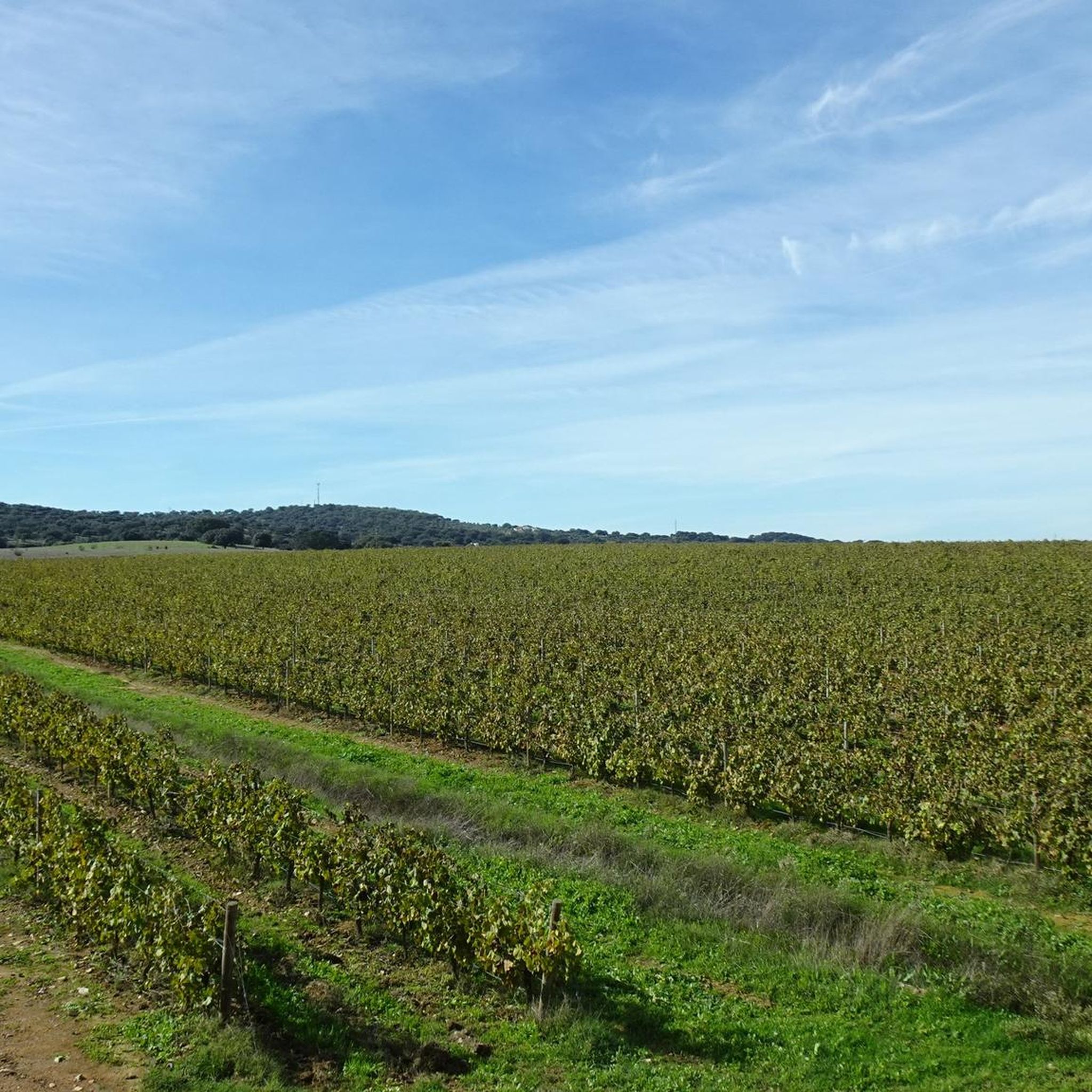
The Town of Borba is a notable wine town in the Alentejo region. It is located on the Alentejo wine route and is known for producing excellent wines that are exported internationally. It's a great stop for those interested in local culture and viticulture.
Are any attractions wheelchair accessible?
Yes, the Gadanha Fountain, Estremoz is listed as wheelchair accessible, making it a suitable option for visitors with mobility needs.
What is the best time to visit the attractions around Arcos?
The Alentejo region, where Arcos is located, experiences hot, dry summers and mild winters. Spring (April-May) and autumn (September-October) generally offer the most pleasant weather for exploring historical sites and engaging in outdoor activities, with comfortable temperatures and less intense sun.
What are some unique features of the Praça da República de Vila Viçosa?
The Praça da República de Vila Viçosa is distinguished by its long, picturesque square adorned with orange trees. It is also home to a magnificent marble palace and a historic castle, offering a glimpse into the region's royal past and architectural beauty.
Most popular attractions around Arcos

Get inspired with the komoot mobile app


Explore more
Still not found the Highlight you’re looking for? See guides of the top attractions in other regions:
