Attractions and Places To See around Alhos Vedros - Top 20
Best attractions and places to see around Alhos Vedros include a variety of historical landmarks, cultural sites, and natural features. This charming town, with its rich history, features many historical treasures located along the riverfront in its oldest part. The area offers insights into its past, from ancient churches to historical mills, alongside natural landscapes. Alhos Vedros attractions provide diverse points of interest for visitors.
Best attractions and places to see around Alhos Vedros
- The most popular attractions is Windmills…
Last updated: July 1, 2026
Santa Apolónia Train Station
Highlight • Rest Area
Translated by Google •
Tip by

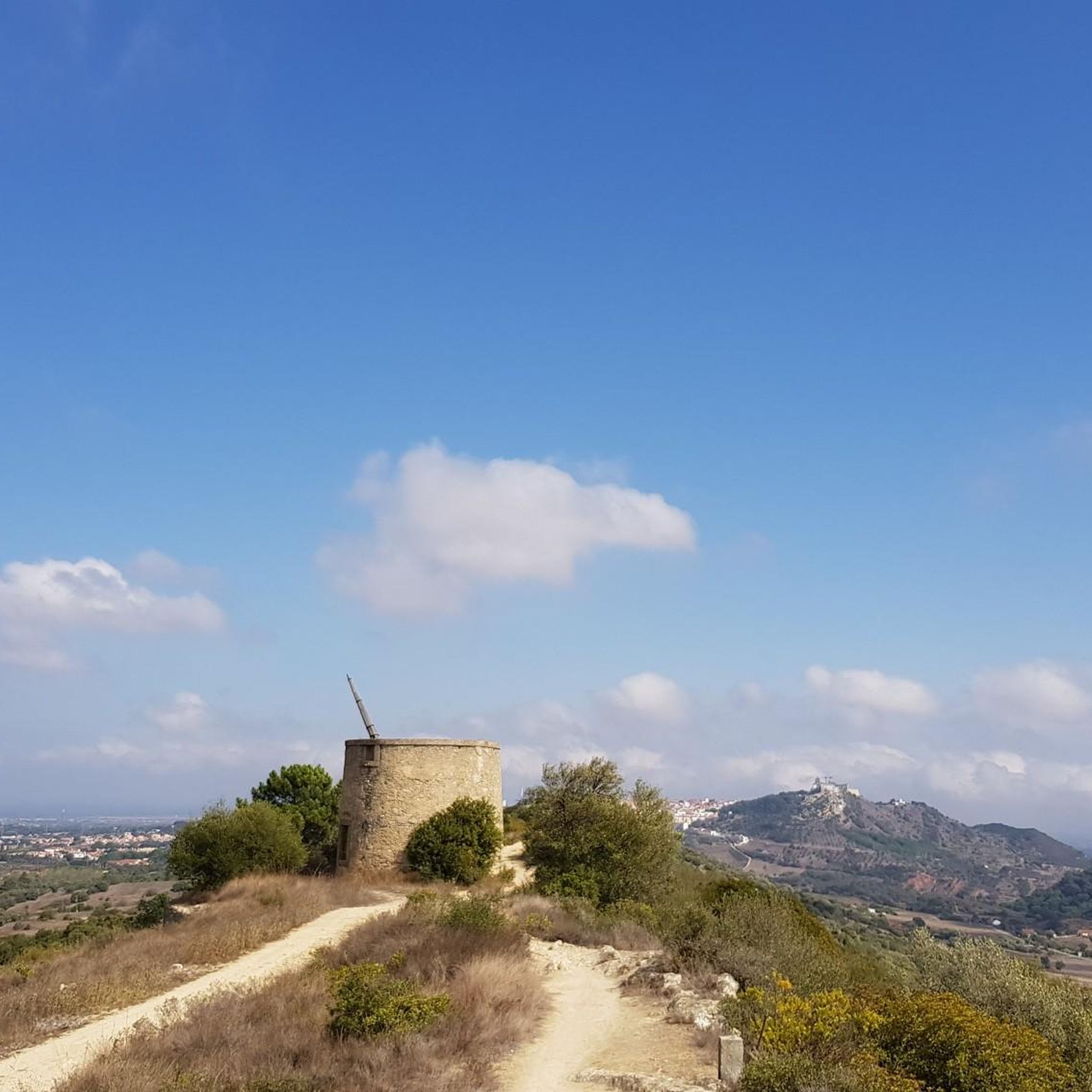
Windmills of Serra do Louro
Highlight (Segment) • Monument
Tip by

Sign up now to discover places like this
Get recommendations on the best single tracks, peaks, & plenty of other exciting outdoor places.
Sign up for free
Castle of Palmela
Highlight • Castle
en.m.wikipedia.org/wiki/Castle_of_Palmela
Translated by Google •
Tip by

TML Multipurpose Terminal of Lisbon 🛳️ Port of Lisbon
Highlight • Structure
Located in Santa Apolónia, this terminal mainly houses ships connecting mainland Portugal to the autonomous regions of Madeira and the Azores.
The TML has a dedicated railway branch with …
Translated by Google •
Tip by

Fountain of the Stunned
Highlight • Monument
Tip by

Sign up for free to discover even more attractions around Alhos Vedros.
Sign up for free
Already have an account?
Start today with a free account
Your next adventure awaits.
Login or Signup

Tips from the Community

In wartime situations, it controlled the space between Lisbon and the South, between the Tagus and Sado rivers. During the Islamic period and the Christian offensive in the 12th and 13th centuries, this geostrategic position was compatible with other fortified sites—Coina, Sesimbra, and the Sado riverbank. In the surrounding area—with good conditions for grazing and a large area of agricultural land—some rural communities settled during the Islamic period, such as the village of Alto da Queimada (Serra do Louro). Inside the wall, the ruins of the Church of Santa Maria do Castelo welcome visitors: Palmela's first parish church, probably from the 12th century (founded by King Afonso Henriques?), subject to interventions mainly in the 16th and 17th centuries and severely damaged by the 1755 earthquake. The walls, the pentagonal Keep—a 16th-century construction—are part of the original structure. The castle dates back to the 14th century, where the Bishop of Évora, D. Garcia de Meneses, was imprisoned in the waterless cistern for conspiring against King John II. The bishop died there from poisoning in 1484. The parade ground and barracks are worth visiting. As it stands, the castle is the result of several construction campaigns—repairs, reconstructions, and expansions—up until the 18th century. Archaeological work has identified some sections of the wall from the Islamic period, and other construction phases are recognized, likely dating from the post-reconquest period and, later, from the reign of King John I. The bastion system that surrounds the first line of fortification was commissioned by King Pedro II. In the house of the Prior-Major of the Order, or the military commander of the fortress—after the abolition of the orders (in 1834)—the explorer of African lands, Hermenegildo Carlos de Brito Capelo, son of the fortress's governor, was born on February 4, 1841. Palmela Castle was classified as a National Monument by Decree-Law of June 16, 1910. Parking outside the walls is recommended.
7
0

These were the "mills" of old, moved by the wind, heavy granite millstones, transformed wheat seeds into flour from which delicious bread was made, which "satisfied" the hunger of those who had little to eat.
1
0

At the top of the Serra do Louro stand the windmills which, in the not so distant past, were an important industry for processing cereals. The force of the wind hits the open sails, turning an axle, which in turn transmits the rotation to a limestone stone that rotates on another fixed one. These stones, called "millstones", receive the cereal grains between them, transforming them into flour.
6
0
It was designed according to the rules of the late Baroque period, between 1764 and 1777. Legend has it that whoever drinks from this water will be forever linked to Azeitão. The Fountain in Vila Nogueira de Azeitão has been classified as a Property of Municipal Interest since 1977. It was built between 1764 and 1777 and bears the Coat of Arms of King José I. It is called Chafariz dos Amazados because, according to legend, when it was finished, visitors were astonished by its grandeur...
9
0
The first one you will see is also probably the most beautiful. It is Pasmados Fountain (Chafariz dos Pasmados) opposite the Igreja de São Lourenço. It was built between 1764 and 1777 as part of a poverty relief scheme. The fountain bears the coat of arms of King José I. The name translates as "Fountain of the Stunned" so-called as visitors are left "stunned" by the fountain's beauty.
9
0

Santa Apolónia Train Station is one of Lisbon's main train stations, located near the historic Alfama district. It opened in 1865 and is an important departure point for trains to national and international destinations, such as Madrid and Paris ¹. The station offers good public transport links, including the metro, buses and boats to the other side of the Tagus River. Taxis and car rental services are also available ¹ ². The National Pantheon is located in the parish of Belém, in Lisbon, and has had the status of National Pantheon since 2016 ³ ⁴. It is not located in the same area as Santa Apolónia Station, but in Belém.
3
0

A few steps from Palmela, I recommend a visit to the Quinta do Piloto winery. From the terrace, with a bottle of red wine in the shade of walnut trees, you have a wonderful view of Lisbon. A stop after the hike is recommended...
6
0
Frequently Asked Questions
What historical landmarks can I explore within Alhos Vedros itself?
Alhos Vedros boasts several historical landmarks. You can visit the S. Lourenço Matriz Church, dating back to 1298, and the Misericordia Church. Another significant site is the Pelourinho de Alhos Vedros, a 16th-century pillory classified as a Public Interest Property. Don't miss the Alhos Vedros Tide Mill, a 15th-century mill now serving as a cultural and museum center.
Are there any natural attractions or scenic viewpoints near Alhos Vedros?
Yes, the Windmills of Serra do Louro offer both historical interest and beautiful views. These windmills, some still operational, are located in the Serra do Louro, which is part of the Arrábida Natural Park. You can also explore the Parque das Salinas in Alhos Vedros, which provides insights into local natural landscapes.
What cultural experiences related to wine can I find nearby?
Just a short distance from Alhos Vedros, in Azeitão, you can visit the Casa Museu José Maria da Fonseca. This historic wine producer, established in 1834, offers tours of its ancient cellars and wine tastings. It's a great way to learn about the region's winemaking heritage. You can find more information on their website: Visit Portugal or Winetourismportugal.
Are there any impressive castles or fortresses in the vicinity?
Absolutely. The Castle of Palmela, situated in the town of Palmela, is an impressive medieval fortress. It offers magnificent panoramic views across the Tagus and Sado estuaries and the Arrábida Natural Park. The castle showcases a mix of architectural styles, including Moorish influences, and has fortifications dating back to Roman times.
What kind of hiking trails are available around Alhos Vedros?
The area around Alhos Vedros offers a variety of hiking trails. You can find routes like the 'Alcaria of Alto da Queimada – Descent of the Cows loop' or the 'Portuguese oak loop'. For more options and details, explore the Hiking around Alhos Vedros guide, which includes easy to moderate trails.
Can I find easy hiking trails suitable for families near Alhos Vedros?
Yes, there are several easy hiking options. The 'Portuguese oak loop from Quinta do Anjo' is an easy 6.3 km trail. Other family-friendly options include the 'Viewpoint loop from Alto do Seixalinho' and the 'Amora Bay, Seixal loop'. You can find more details in the Easy hikes around Alhos Vedros guide.
Are there opportunities for cycling around Alhos Vedros?
Yes, cycling is a popular activity here. You can find routes such as the 'School of Marines – Mata da Machada loop' or the 'Montijo Cycle Path – Cais de Aldeia Galega loop'. For a comprehensive list of routes and their difficulties, check out the Cycling around Alhos Vedros guide.
What do visitors enjoy most about the attractions near Alhos Vedros?
Visitors particularly enjoy the historical depth and scenic beauty. The Windmills of Serra do Louro are appreciated for their interesting views and historical significance, even after forest fires. The Castle of Palmela is highly rated for its magnificent panoramic views, including the 25th of April Bridge. The Casa Museu José Maria da Fonseca is loved for its guided tours and wine tastings.
When is the best time to visit Alhos Vedros attractions?
The region generally enjoys a mild climate, making it pleasant to visit most of the year. Spring (April to June) and early autumn (September to October) offer comfortable temperatures for exploring historical sites and engaging in outdoor activities like hiking and cycling, avoiding the peak summer heat and crowds.
Are there any historical palaces or grand houses to see in Alhos Vedros?
Yes, the Casa da Cova Morgado Palace is an important historical heritage site located along the riverfront in Alhos Vedros. It offers a glimpse into the town's past architectural grandeur.
Are there any attractions that are particularly suitable for families with children?
The Casa Museu José Maria da Fonseca is tagged as family-friendly, offering an engaging tour that can be interesting for older children. Additionally, exploring the historical sites like the Alhos Vedros Tide Mill or walking around the Windmills of Serra do Louro can be enjoyable for families, combining education with outdoor activity.
Most popular attractions around Alhos Vedros

Get inspired with the komoot mobile app


Explore more
Still not found the Highlight you’re looking for? See guides of the top attractions in other regions:
