The best cycling routes around Lebução
4.7
(3)
18
riders
5
rides
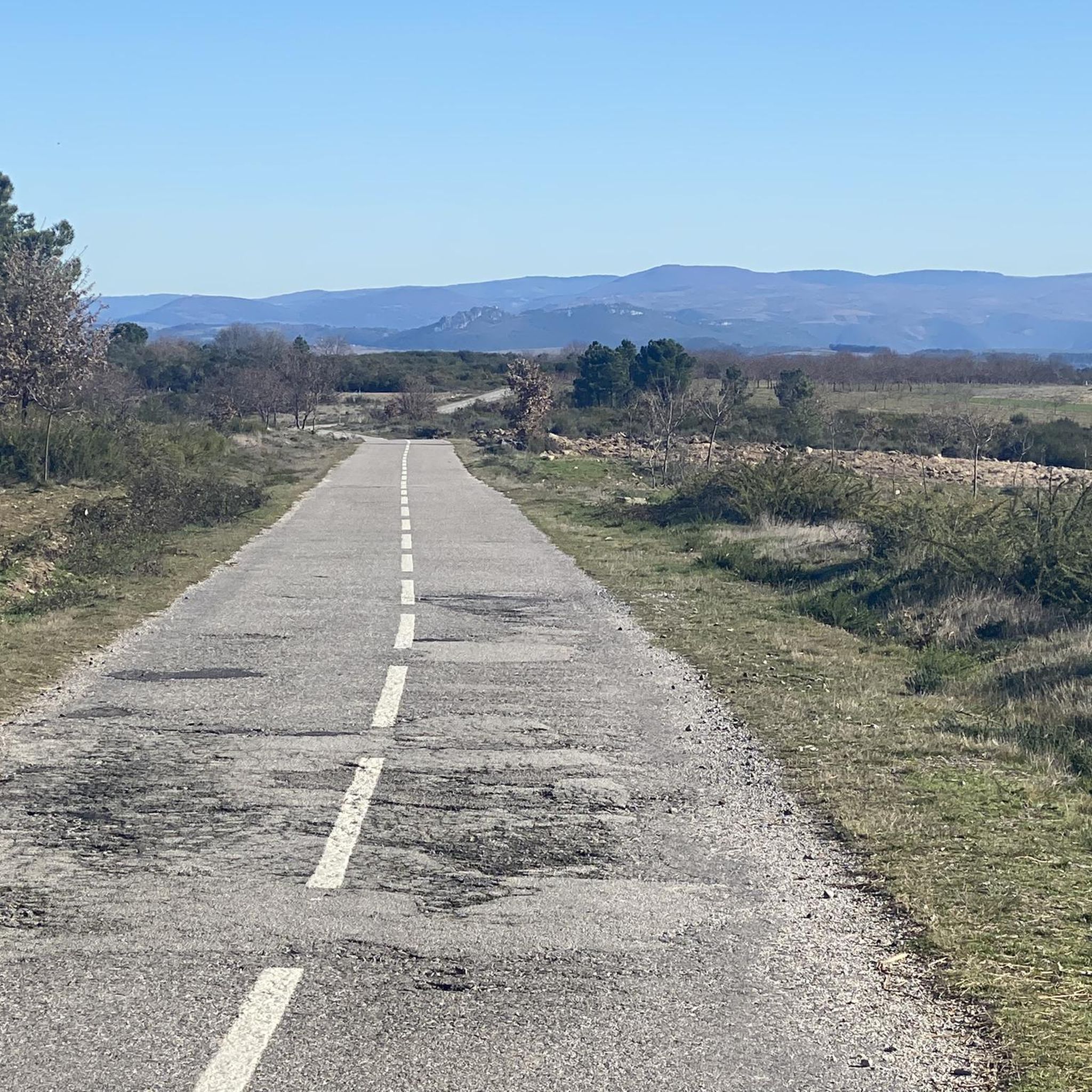
Touring cycling routes around Lebução navigate a landscape characterized by rolling hills and river valleys. The region features varied terrain, including ascents and descents, with several routes passing by historical landmarks. River landscapes, such as the Tâmega River, also contribute to the area's natural features. This combination offers diverse cycling experiences for different skill levels.
Best touring cycling routes around Lebução
- The most popular touring cycling route is Scenic road with valley view loop from Cemitério de Vilartão, a…
Last updated: August 12, 2026
4.7
(3)
6
riders
25.4km
01:44
410m
400m
Moderate bike ride. Good fitness required. Mostly paved surfaces. Suitable for all skill levels.
4
riders
53.0km
03:39
880m
880m
Hard bike ride. Very good fitness required. Mostly paved surfaces. Suitable for all skill levels.

Sign up for free
3
riders
63.0km
04:18
980m
980m
Hard bike ride. Very good fitness required. Mostly paved surfaces. Suitable for all skill levels.
3
riders
28.2km
01:57
470m
470m
Hard bike ride. Very good fitness required. Mostly paved surfaces. Suitable for all skill levels.
2
riders
37.2km
02:37
670m
670m
Hard bike ride. Very good fitness required. Mostly paved surfaces. Suitable for all skill levels.
Our route recommendations are based on thousands of hikes, rides, and runs completed by other people on komoot.
Start today with a free account
Your next adventure awaits.
Login or Signup
Popular around Lebução
Tips from the Community

The Roman Baths Museum, recently opened, is a must-see. It is located in Largo do Arrabalde, very close to the current baths. It is the largest Roman bath complex in the Iberian Peninsula. What makes this museum special is that, after an earthquake in the 4th century, the structures collapsed and remained "frozen" in time until they were rediscovered a few years ago. You can see the huge original stone pools where Roman legionaries bathed 2,000 years ago. The Roman Baths Museum What to see: It is the largest Roman bath complex in the Iberian Peninsula. What makes this museum special is that, following an earthquake in the 4th century, the structures collapsed and remained "frozen" in time until they were rediscovered a few years ago. You can see the huge original stone pools where Roman legionaries bathed 2,000 years ago.
0
0
Visiting the Castle of Chaves is worth it because it is, quite literally, the high point of the city—both in altitude and in history. Although "only" the imposing Keep (Torre de Menagem) and parts of the walls remain from the original grand defensive system, a visit is a must for these 4 reasons: 1. The Best View in the City Climbing to the top of the Keep (about 28 meters high) offers an unmatched reward. The Panorama: From there, you have a 360º view over the old rooftops, the Tâmega River winding below, the Roman Bridge, and the Brunheiro and Larouco mountains in the distance. It is the best place to understand the city's geography. 2. The Military Museum (A Journey Across 4 Floors) The tower is not empty. The interior has been transformed into a very interesting Military Museum (and the ticket is almost symbolic, usually costing around €1). As you climb the stairs, you pass through four themed floors showing the evolution of weaponry, from the Middle Ages to World War I. It is fascinating to see armor, swords, and uniforms in an authentic stone setting, which helps you imagine the lives of the soldiers who defended the border there. 3. The Castle Garden The tower is surrounded by a beautifully kept garden, which functions as an open-air museum. It is a peaceful space, full of flowers, where you can see Roman and medieval archaeological pieces displayed on the lawns. It is the ideal spot for a break in the shade after walking through the city. 4. A History of Resistance This castle is a symbol of Portugal's independence. Given its proximity to Spain (only 10 km away), Chaves was always the "Key to the Kingdom." Visiting the castle means standing on ground where countless battles were fought to keep the border safe against Castilian and French invasions. The climb is done via stairs (there is no elevator), but the view from the top makes up for every step. Try to go near the end of the day, when the setting sun hits the stones of the tower and the city below, creating a spectacular golden color.
3
0
The Bridge of Trajan (often simply called the Roman Bridge) is, without a doubt, the most important monument in Chaves. It is worth visiting because it is not just an "old stone bridge"; it is a masterpiece of engineering that defines the city's identity. Here are the 4 main reasons why: 1. Walking on 2,000 Years of History This is one of the best-preserved Roman bridges in the entire Iberian Peninsula. It was built between the late 1st and early 2nd century AD, during the reign of Emperor Trajan. The Feeling: Crossing it on foot (cars are forbidden) means you are literally walking on the same stones as Roman legions, medieval merchants, and Napoleonic troops. It is an instant trip back in time. 2. Engineering that Defies Time It is worth looking closely at the structure to understand why it is still standing. The Tâmega River is known for its violent floods, yet the bridge has withstood them for two millennia. The Secret: If you go down to the riverbank, notice the cutwaters (the triangular structures at the base of the pillars). They were designed to "cut" the force of the water and prevent the bridge from collapsing. It is a live lesson in ancient architecture. 3. The Stones that "Speak" (Milestones) In the middle of the bridge, you will find two cylindrical stone columns (milestones) with Latin inscriptions. One of them is particularly important: the "Padrão dos Povos" (Standard of the Peoples). The inscription lists the 10 local tribes of the region (the "Aquiflavienses") who contributed to the construction of the bridge. It is a historical document carved in stone that has survived to this day. 4. The Photogenic Scenery The bridge connects the historic center to the Madalena neighborhood and is set within a beautiful public garden (Jardim do Tabolado). It is the perfect spot to watch the sunset, seeing the reflection of the arches in the water with the Castle of Chaves dominating the landscape high above. Visitor Tip: After crossing the bridge coming from the historic center, turn left and walk along the landscaped riverbanks. There are stepping stones (pedras poldras) nearby in the water that allow you to see the grandeur of Trajan's Bridge from an impressive low angle.
2
0
The Historic Centre of Chaves is one of the most fascinating in Northern Portugal because it manages to tell the story of millennia—from the Romans to the Napoleonic invasions—in a compact, walkable area. Here are the 4 main reasons why it is worth visiting: 1. The Roman Bridge of Trajan This is the city's landmark and one of the greatest legacies of Roman engineering in the Iberian Peninsula. Why visit: Crossing this pedestrian bridge over the Tâmega River is literally walking over 2,000 years of history. Built in the 1st century AD, it still maintains its robust stone arches. It is the perfect spot for that classic photo of the city with the river and houses in the background. 2. The Castle Keep (Torre de Menagem) & Views Of the old medieval castle, the imposing Keep (a National Monument) remains, surrounded by a very well-kept garden. The Viewpoint: Climbing to the top offers the best panoramic view over the Chaves valley, the river, and the surrounding mountains. Military Museum: Inside the tower, there is a military museum (symbolic entry fee of ~€1) that explains the strategic importance of Chaves in defending the border against Spain and during the French Invasions. 3. The Colorful Balconies of Rua Direita Rua Direita is the backbone of the historic center. Photogenic Charm: It is famous for its narrow houses with colorful wooden balconies, very typical of this region, creating a picturesque corridor full of traditional shops. Praça de Camões: This street leads to the main square, where the noble buildings are concentrated: the Town Hall, the Main Church (Matriz) with its Romanesque portal, and the Misericórdia Church (Baroque, with beautiful tiles inside). 4. The Thermal Heritage Chaves is the city of water (known as "Aquae Flaviae" to the Romans). Just a short walk away, at Largo do Arrabalde, you will find the Roman Baths Museum, a recently musealized archaeological complex showing how the Romans already utilized these medicinal hot waters. Right next to it, you can see (and taste, with caution!) the water springing out at over 70°C (158°F) at the thermal Buvette. Foodie Tip: Don't leave the historic center without entering a pastry shop to try the authentic Pastel de Chaves (PGI). It is a flaky puff pastry filled with minced veal—the perfect snack while exploring the streets.
2
0

Well-developed even red and yellow colored bicycle and walking paths
3
0

Chaves Castle was built in the 9th century by Alfonso III of León to reinforce the city's defenses during the Christian Reconquest. Over the centuries, it has undergone several renovations. It can be visited for just one euro.
6
0

everything around is beautiful to appreciate
1
0

The 140 metre-long Ponte Trajano (Trajan Bridge) in Chaves in the Trás-os-Montes region of north eastern Portugal dates from the reign of the Emperor Trajan (53-117) in the early second century AD. The Emperor Trajan was known as a great promoter of public works including the Trajan Forum and Trajan Column in Rome.
6
0
Frequently Asked Questions
How many touring cycling routes are available around Lebução?
There are 5 touring cycling routes around Lebução, offering diverse experiences through rolling hills and river valleys.
Are there any easy or beginner-friendly touring cycling routes in Lebução?
While Lebução's terrain is characterized by ascents and descents, there is one moderate route available: the Scenic road with valley view loop from Cemitério de Vilartão. This 15.8-mile (25.4 km) route offers expansive valley views and is a good option for those seeking a less strenuous ride compared to the more difficult trails.
What kind of terrain can I expect on touring cycling routes in Lebução?
Lebução's touring cycling routes feature varied terrain, including rolling hills, significant ascents and descents, and river valleys, particularly along the Tâmega River. You'll encounter a mix of landscapes, from open roads with valley views to paths near historical landmarks.
Are there any circular touring cycling routes in Lebução?
Yes, all the touring cycling routes around Lebução are designed as loops. For example, you can explore the Castle of Chaves – Fort of São Francisco loop from Santa Cruz (Trindade), which is a 39.1-mile (62.9 km) trail through historical sites and scenic countryside.
What historical landmarks can be seen along the touring cycling routes?
Several routes pass by historical landmarks. For instance, the challenging Castle of Santo Estêvão – National Zero Marker 2 loop from Tronco explores historical sites. Another route, the Lagoons of the Tâmega River – Castle of Santo Estêvão loop from Tronco, also features the Castle of Santo Estêvão.
What do other touring cyclists say about cycling in Lebução?
The touring cycling routes in Lebução are highly rated by the komoot community, with an average score of 4.7 stars from over 3 reviews. Cyclists often praise the varied terrain and the opportunity to explore historical sites and scenic river valleys.
Are there any routes with scenic viewpoints in Lebução?
Yes, routes like the Scenic road with valley view loop from Bobadela offer expansive valley views, providing picturesque cycling experiences.
What is the typical duration for touring cycling routes in Lebução?
The duration of routes varies depending on their length and difficulty. For example, the moderate Scenic road with valley view loop from Cemitério de Vilartão typically takes about 1 hour 44 minutes, while longer, more difficult routes can take over 4 hours.
Is public transport available to access bike paths in Lebução?
Information regarding specific public transport access points directly to bike paths is not detailed in the route descriptions. It is advisable to check local transport schedules and options for reaching Lebução and the starting points of the tours.
Are there any advanced touring cycling routes for experienced riders?
Yes, Lebução offers several challenging routes for experienced touring cyclists. Four out of the five available routes are graded as difficult, featuring significant elevation changes and longer distances. These include the Castle of Santo Estêvão – National Zero Marker 2 loop from Tronco and the Castle of Chaves – Fort of São Francisco loop from Santa Cruz (Trindade).
What is the best season for touring cycling in Lebução?
While specific seasonal recommendations are not provided, the varied terrain and historical sites suggest that spring and autumn would offer pleasant temperatures for cycling, avoiding the extremes of summer heat or winter cold. Always check local weather conditions before your ride.
Most popular routes around Lebução

Get inspired with the komoot mobile app


Explore more
Browse the best Cycling routes in other regions.
