Attractions and Places To See around São João De Areias - Top 20
Best attractions and places to see around São João De Areias include historical landmarks, natural features, and cycling routes. This region, located in the municipality of Santa Comba Dão, offers a mix of cultural heritage and outdoor activities. Visitors can explore ancient bridges, dedicated cycle paths, and river beaches. The area is characterized by its tranquil ambiance, pine woods, and proximity to the Dão River.
Best attractions and places to see around São João De Areias
- The most popular attractions…
Last updated: July 15, 2026
Roman Bridge of Sumes
Highlight • Bridge
Translated by Google •
Tip by

Dão River Railway Bridge
Highlight • Bridge
Translated by Google •
Tip by

Sign up now to discover places like this
Get recommendations on the best single tracks, peaks, & plenty of other exciting outdoor places.
Sign up for free
Ecopista do Dão
Highlight (Segment) • Cycleway
Translated by Google •
Tip by

Colorful Boardwalks of the Trilho dos Gaios
Highlight (Segment) • Trail
Translated by Google •
Tip by
Vale de Gaios River Beach
Highlight • Beach
Translated by Google •
Tip by
Sign up for free to discover even more attractions around São João De Areias.
Sign up for free
Already have an account?
Start today with a free account
Your next adventure awaits.
Login or Signup


Tips from the Community

Bridge built over the Cavalos River, with a deck approximately 50 m long and 3 m wide. It probably forms part of the same road link as the Roman road of Pedra da Sé, serving as a connection between the Roman civitas of Bobadela and that of Viseu. It has only one arch with a perfect semicircular span, and the pavement that forms part of the deck is the result of intervention after the time of construction. It has been classified as a Property of Public Interest (IIP) since 1990, by Decree No. 163 of July 17, 1990.
1
0

Along the cycle path, between Viseu and Tondela, you will find three catering establishments. Between Tondela and Santa Comba Dão there are none.
1
0

I also highly recommend this bike path, a real interstate for cyclists, with asphalt all the way and beautiful surroundings!
4
0
Small but very pleasant river beach (without sand) on the course of the Rio de Cavalos.
2
0
The Roman Bridge of Sumes, with its round arch, is a stone masonry structure measuring approximately 6.4 metres. It stands over the Cavalos River, in a natural setting, punctuated by enormous granite rocks and crisscrossed by dirt paths. This is where the fantastic Trilho dos Gaios begins (or ends), winding along the Cavalos River between several waterfalls and lush vegetation.
2
0

The Roman Bridge of Sumes stands over the River des Chevaliers, shrouded in mystery. Although its foundations appear to be Roman, the exact date of its construction remains uncertain. An inscription reading "80 AD" found on a nearby wall suggests its origin, but some historians believe it refers to an ancient spring. In the surrounding area, traces of medieval paving can still be seen. Regardless of the bridge's uncertain age, it is classified as a Property of Public Interest, having witnessed centuries of history.
3
0
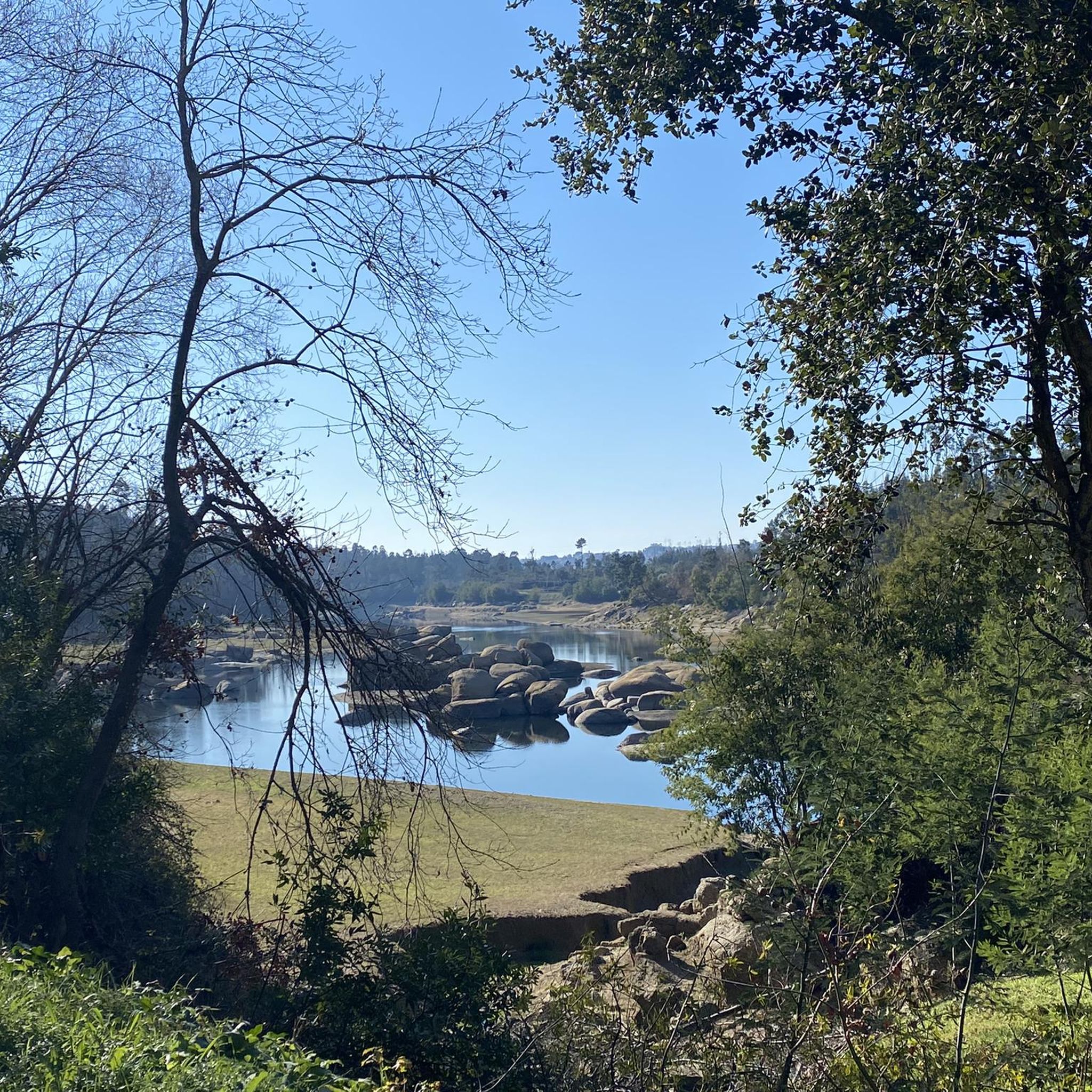
In summer, the river beach of Vale de Gaios becomes a little paradise for those looking to cool off. Its crystal-clear water, formed by the Cavalos River, a tributary of the Mondego, invites you to take a refreshing dip and spend long moments in the sun. On hot days, there is no better place to enjoy nature and recharge your batteries!
6
0
The colourful walkways of the Trilho dos Gaios start at the river beach of Vale de Gaios and lead you to the ancient Roman Bridge of Sumes. Along the way, you will pass by the winding banks of the Cavalos River, a wild tributary of the Mondego, which hides among the lush vegetation and moss-covered rocks, as if it were something out of a fairy tale. In some parts, it disappears completely under gigantic blocks of granite, with only the gentle murmur of the water revealing its presence.
4
0
Frequently Asked Questions
What historical landmarks can I explore in São João de Areias?
São João de Areias is rich in history. You can visit the ancient Roman Bridge of Sumes, a Property of Public Interest with foundations suggesting Roman origins. Another significant site is the Manueline-style Pillory of São João de Areias, likely erected in 1514. The 18th-century Casa das Armas Reais, a beautifully restored Baroque manor, also offers a glimpse into the region's past.
Are there any family-friendly activities or attractions in the area?
Yes, São João de Areias offers several family-friendly options. The Ecopista do Dão is a dedicated cycle path, almost 50 km long, perfect for a safe and enjoyable bike ride. For cooling off on warmer days, the Vale de Gaios River Beach provides crystal-clear waters from the Cavalos River for swimming and relaxation. The Colorful Boardwalks of the Trilho dos Gaios also offer an accessible and scenic walk along the river.
What kind of outdoor activities can I do near São João de Areias?
The region is ideal for various outdoor activities. You can enjoy cycling along the Ecopista do Dão, which includes crossing the scenic Dão River Railway Bridge. There are also numerous routes for mountain biking and jogging. For detailed routes and guides, explore the Cycling around São João De Areias, MTB Trails around São João De Areias, and Running Trails around São João De Areias guides.
Are there any natural swimming spots or river beaches?
Yes, the Vale de Gaios River Beach is a popular spot for swimming. Formed by the crystal-clear waters of the Cavalos River, a tributary of the Mondego, it's a perfect place to cool off and enjoy nature, especially during warmer months.
What are the best places for walking or hiking in São João de Areias?
For walking and hiking, the Colorful Boardwalks of the Trilho dos Gaios offer a scenic path along the Cavalos River, leading to the Roman Bridge of Sumes. This trail winds through lush vegetation and past granite rocks, providing a beautiful natural experience. The surrounding pine woods and countryside also offer many opportunities for exploration.
Can I visit any religious or cultural sites in São João de Areias?
Absolutely. The 18th-century Baroque-style Church of São João Baptista (Igreja Matriz de São João de Areias) is a prominent religious site, known for its gilded carvings. Additionally, several chapels are scattered throughout the area, including the Chapel of Senhora da Graça and the Chapel of Cristo, offering further cultural insights.
What is the Ecopista do Dão and what can I expect there?
The Ecopista do Dão is a renowned cycle path, built on an old railway line. It stretches for almost 50 km, crossing three municipalities, and is celebrated for its smooth asphalt surface and beautiful surroundings. It's a car-free route, offering a peaceful experience for cyclists and walkers, with excellent views, including from the Dão River Railway Bridge.
Are there any unique architectural features to see in the region?
Beyond the Pillory and Casa das Armas Reais, São João de Areias features other notable architectural examples. These include Casa de D.ª Georgina Loureiro and Casa do Dr. José da Silva Carvalho in Vila Dianteira, Solar dos Serpa Pimentel in Guarita, and Casa dos Neves de Lemos in Póvoa dos Mosqueiros, showcasing the Beira style and historical significance.
What is the significance of the Roman Bridge of Sumes?
The Roman Bridge of Sumes is a stone masonry structure over the Cavalos River, classified as a Property of Public Interest. While its exact construction date is debated, its foundations appear Roman, and it's believed to have been part of an ancient road linking Roman civitas. It's also the starting point for the scenic Trilho dos Gaios.
What do visitors particularly enjoy about the attractions around São João de Areias?
Visitors frequently praise the tranquil ambiance and natural beauty of São João de Areias. The Ecopista do Dão is highly recommended for its car-free environment and scenic views, especially from the Dão River Railway Bridge. The Vale de Gaios River Beach is cherished as a 'little paradise' for its clear waters and relaxing atmosphere. The historical sites also offer a deep dive into the region's rich past.
Are there any wine-related activities in São João de Areias?
Yes, the region is part of the renowned Dão wine region. Visiting a local winery is a recommended activity to experience the local viticulture and taste the distinctive Dão wines.
What kind of archaeological traces can be found in São João de Areias?
São João de Areias has a long history with archaeological vestiges. Traces of prehistoric occupation have been found in Costa (Silvares) and Quinta da Castanheira, and Roman occupation in São João de Areias and Vila Dianteira. Rock-cut tombs are also present in various locations, notably in the necropolises near the church and in Regueiras.

Get inspired with the komoot mobile app


Explore more
Still not found the Highlight you’re looking for? See guides of the top attractions in other regions:
