Top 14 Castles around Kirnberg an der Mank
Best castles around Kirnberg an der Mank are situated in a municipality in Lower Austria, known for its historical significance and natural landscapes. The region features historical structures directly within Kirnberg an der Mank and impressive castles nearby. These sites offer insights into centuries of local history and architectural transformation. The area provides opportunities for exploring medieval fortresses and historical buildings set amidst the Austrian countryside.
Best castles around Kirnberg an der Mank
- The most popular castles is Plankenstein Castle…
Last updated: October 16, 2026
Rabenstein Castle Ruins
Highlight • Castle
Translated by Google •
Tip by

Plankenstein Castle
Highlight • Castle
Translated by Google •
Tip by

Sign up now to discover places like this
Get recommendations on the best single tracks, peaks, & plenty of other exciting outdoor places.
Grünbühel Castle
Highlight • Castle
Story:
The place was first mentioned around 1074 by the Hochfrei Adalbert von Kilb. In the 12th century, …
Translated by Google •
Tip by

Sooß Castle and Castle Ruins
Highlight • Castle
Translated by Google •
Tip by
Kälberhart Castle
Highlight • Castle
Translated by Google •
Tip by
Sign up for free to discover even more castles around Kirnberg an der Mank.
Already have an account?
Start today with a free account
Your next adventure awaits.
Tips from the Community

Through the commitment of the ruins committee of the village renewal association and generous donations, the ruin was saved from decay. In 1989, a committee was formed to save the Rabenstein ruin, which has since been working on the preservation and securing of this cultural heritage.
0
0

Kälberhart Castle was first documented in 1389 and belonged to Hertel Kälberharter at the time. According to legend, he was ennobled by Friedrich von Walser for his charitable care of the poor and sick and was allowed to use a calf's head in his coat of arms. This is said to have contributed to the name of the nearby village of Fleischessen. The present castle dates from the second half of the 16th century. It is a two-story, rectangular building with a hipped roof and cylindrical corner turrets. Originally, it was surrounded by a moat, of which only a small pond remains. Over the centuries, the castle changed hands several times and fell into disrepair at times. Today, it is picturesquely situated in the Mostviertel region and is a popular destination for cyclists.
1
0

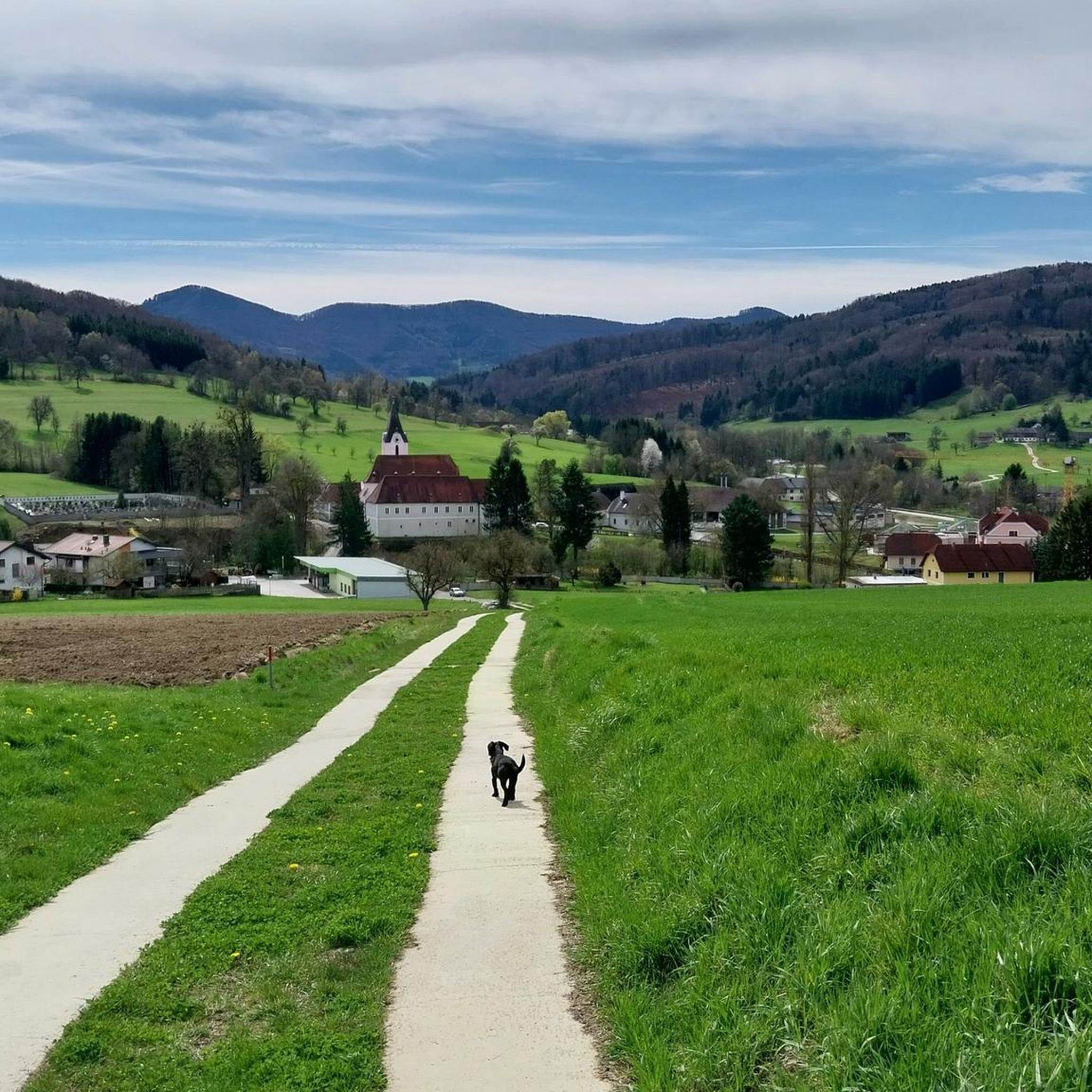
A beautiful little town with a church and a castle. The north-south long-distance hiking trail 05 and the Roman road 651 pass through here.
3
0

The castle ruins date back to the Middle Ages and originally served as a protective and residential castle. Rabenstein an der Pielach is easily accessible via the B39. Parking is available at the fire station and the train station. It is also possible to get there by public transport, as Rabenstein an der Pielach train station serves as the starting point for several hiking trails.
3
1

Privately owned and therefore unfortunately can only be viewed from the outside. Story: The place was first mentioned around 1074 by the Hochfrei Adalbert von Kilb. In the 12th century, the rule came to Rudolf von Perg. Friedrich von Perg was inherited by the Babenberg Duke Leopold V in 1191. In the 13th century, a knightly family again named itself after Kilb. In 1410 a knight from “Sebeck” was named as the owner. In 1460, Jörg von Pottendorf sold his castle in Kilb to Bernhard von Tiernstein, who built an extensive new building and, ten years later, bequeathed it to the brothers Rüdiger and Jörg von Starhemberg, but also promised the defense construction to his grandson Georg von Velderndorf. The latter probably received it, because in 1521 Hans Velderndorfer sold the fortress to Göttweig Abbey. The castle was now called Grünbühel. He bought it back in 1534, but finally sold it to Jakob Gienger in 1549. Jacob's son Nikolaus had the old fortified building converted into a more comfortable Renaissance castle. As a result, the owners usually changed quite quickly. Around the middle of the 17th century, the Barons Ruess von Ruessenstein came into possession of the castle. Only the barons and later Counts of Wickenburg owned Grünbühel for a longer period from 1720 onwards. In 1830, Karl Theodor Graf Wickenburg had major construction work carried out, which gave the building its current appearance. In 1845 the castle came into rapidly changing bourgeois ownership. From 1969 to 2004 it belonged to the Friedel-Klarenberg family. Since then, Dr. Georg Graf Pachta-Reyhofen, lord of the castle at Grünbühel.
0
0

We stayed overnight in the castle on our long-distance hike from Hungary to Switzerland. We were impressed by the stylish room (do you say room in a castle?) and the good dinner. We can highly recommend this castle.
3
0
The name of the castle is probably derived from the Kelberharder family, who came into possession of what was then the moated castle around 1329. The Kelberharders moved to Strannersdorf and Grafenwörth before 1384. Afterwards, the Steinberger family temporarily named themselves after Kälberhart. A Hertel Kälberharter is mentioned in 1389. The Steinbergers lost the residence to Hans Grill in 1420, but soon regained it. In 1470 Jörg Seusenegker sold Kälberhart to Wenzel Stainberger. The small castle was already considered derelict in 1534 and in 1548 it was described as a desolate building. Ownership changed quite frequently over the next few decades. In 1599 Ferdinand von Concin zu Weissenberg and Plankenstein was enfeoffed with Kälberhart. Peter Hofmann von Ankerskron had owned the facility since 1637. Maybe he was the one who gave her the shape she has today. His descendants sold Kälberhart to Leopold Philipp Graf Montecucolli, whose widow passed it on to Johann Ignaz von Albrechtsberg in 1698. His son Jordan united it with his Strannersdorf estate. In 1782 Karl Freiherr von Seldern bought the two properties. In 1876 the Counts Barth von Barthenheim followed, then the knights Mitscha-Märheim and the Reich-Rohrwig family. Today the property is owned by the König family and has been extensively renovated.
1
0

Impressive both the round and the all-round view from the rock
2
2
Frequently Asked Questions
What are some notable castles to visit around Kirnberg an der Mank?
Beyond the historical Schloss Kirnberg, you can explore the magnificent Plankenstein Castle, which offers a unique medieval experience. Another interesting site is Kirchberg an der Pielach, a settlement with a historic moated castle, and the Rabenstein Ruins and Parish Church, offering significant castle ruins and views into the Pielachtal.
Are there family-friendly castles in the Kirnberg an der Mank region?
Yes, Plankenstein Castle is considered family-friendly, offering a playground and a large tournament area. Kirchberg an der Pielach is also noted as family-friendly, with parks next to the castle inviting a break.
Can I find accommodation at any of the castles?
Yes, Plankenstein Castle offers unique accommodation options with approximately 50 hotel rooms, some featuring wood-burning fireplaces and stunning views. You can even 'live like an earl' during your stay.
What kind of historical significance do the castles in this area hold?
The castles around Kirnberg an der Mank, such as Schloss Kirnberg and Plankenstein Castle, represent centuries of local power, religious influence, and architectural transformation. Schloss Kirnberg, for instance, evolved from a noble residence to a monastery and now serves as a rectory, with parts dating back to the 12th century. Kirchberg an der Pielach also features parts from the 11th century.
Are there opportunities for outdoor activities like hiking or cycling near these castles?
Absolutely. The region around Kirnberg an der Mank offers various outdoor activities. You can find numerous road cycling routes, easy hikes, and running trails. For detailed routes, explore the Road Cycling Routes around Kirnberg an der Mank or Easy hikes around Kirnberg an der Mank guides.
What facilities are available at Plankenstein Castle?
Plankenstein Castle features a year-round castle tavern (Burgtaverne) serving Austrian and barbecue grill cuisines. It also offers hotel accommodation, and is a popular venue for events and corporate gatherings. There are beautiful viewing and resting spots, and a playground for children.
What is the best time of year to visit the castles around Kirnberg an der Mank?
The Austrian countryside around Kirnberg an der Mank is beautiful year-round. While specific castle opening hours may vary by season, spring and autumn offer pleasant weather for exploring the historical sites and enjoying outdoor activities like hiking and cycling. Summer is also popular, and some castles like Plankenstein Castle are open year-round.
Are there any castles that are privately owned and can only be viewed from the outside?
Yes, Grünbühel Castle is privately owned and can only be viewed from the outside. Its rich history, however, makes it an interesting sight even from a distance.
What do visitors particularly enjoy about the castles in this region?
Visitors appreciate the immersive historical experience, the well-preserved medieval ambiance, and the scenic views offered by castles like Plankenstein Castle. The opportunity to explore ancient ruins, such as those at Rabenstein, and the blend of history with the beautiful Austrian countryside are also highly valued.
Are there any accessible castles for visitors with mobility needs?
Kirchberg an der Pielach is noted as wheelchair accessible, making it a good option for visitors with mobility needs. The bike path goes right past the castle or even through the grounds, and parks next to it invite a break.
Can I find places to eat near the castles?
Yes, Plankenstein Castle has a year-round castle tavern. In the settlement of Kirchberg an der Pielach, you can find an ice cream parlor, butcher, and a Billa supermarket on the main street.
How long should I plan for a visit to a castle like Plankenstein?
For Plankenstein Castle, tours are typically offered at 10:30 a.m. and 1:30 p.m., suggesting that a guided visit might take a couple of hours. If you plan to dine at the tavern, explore the grounds, or even stay overnight, you could easily spend half a day or more enjoying the castle and its surroundings.
Most popular routes around Kirnberg an der Mank
Most popular attractions around Kirnberg an der Mank

Get inspired with the komoot mobile app


Explore more
Looking for the best castles somewhere else? Discover other guides around Kirnberg an der Mank:
