The best cycling routes in Three Ridges Wilderness
4.8
(4)
22
riders
6
rides
Touring cycling in Three Ridges Wilderness features challenging routes through a landscape characterized by significant elevation changes and forested mountain ridges. This region includes deep valleys, scenic overlooks, and winding roads that traverse the natural contours of the wilderness. The terrain is predominantly mountainous, offering sustained climbs and descents for touring cyclists.
Best touring cycling routes in Three Ridges Wilderness
- The most popular touring cycling route is Rockfish Valley Overlook – Afton Overlook loop from South River Number 27 Dam…
Last updated: June 24, 2026
5.0
(1)
4
riders
72.1km
05:02
1,150m
1,150m
Hard bike ride. Very good fitness required. Mostly paved surfaces. Suitable for all skill levels.
3
riders
Hard bike ride. Very good fitness required. Mostly paved surfaces. Suitable for all skill levels.

Sign up for free
4.7
(3)
5
riders
46.0km
03:21
990m
990m
Hard bike ride. Very good fitness required. Mostly paved surfaces. Suitable for all skill levels.
2
riders
30.6km
02:43
700m
700m
Hard bike ride. Very good fitness required. Mostly paved surfaces. Suitable for all skill levels.
1
riders
42.4km
03:16
1,020m
1,020m
Hard bike ride. Very good fitness required. Mostly paved surfaces. Suitable for all skill levels.
Our route recommendations are based on thousands of hikes, rides, and runs completed by other people on komoot.
Start today with a free account
Your next adventure awaits.
Login or Signup
Popular around Three Ridges Wilderness

Tips from the Community

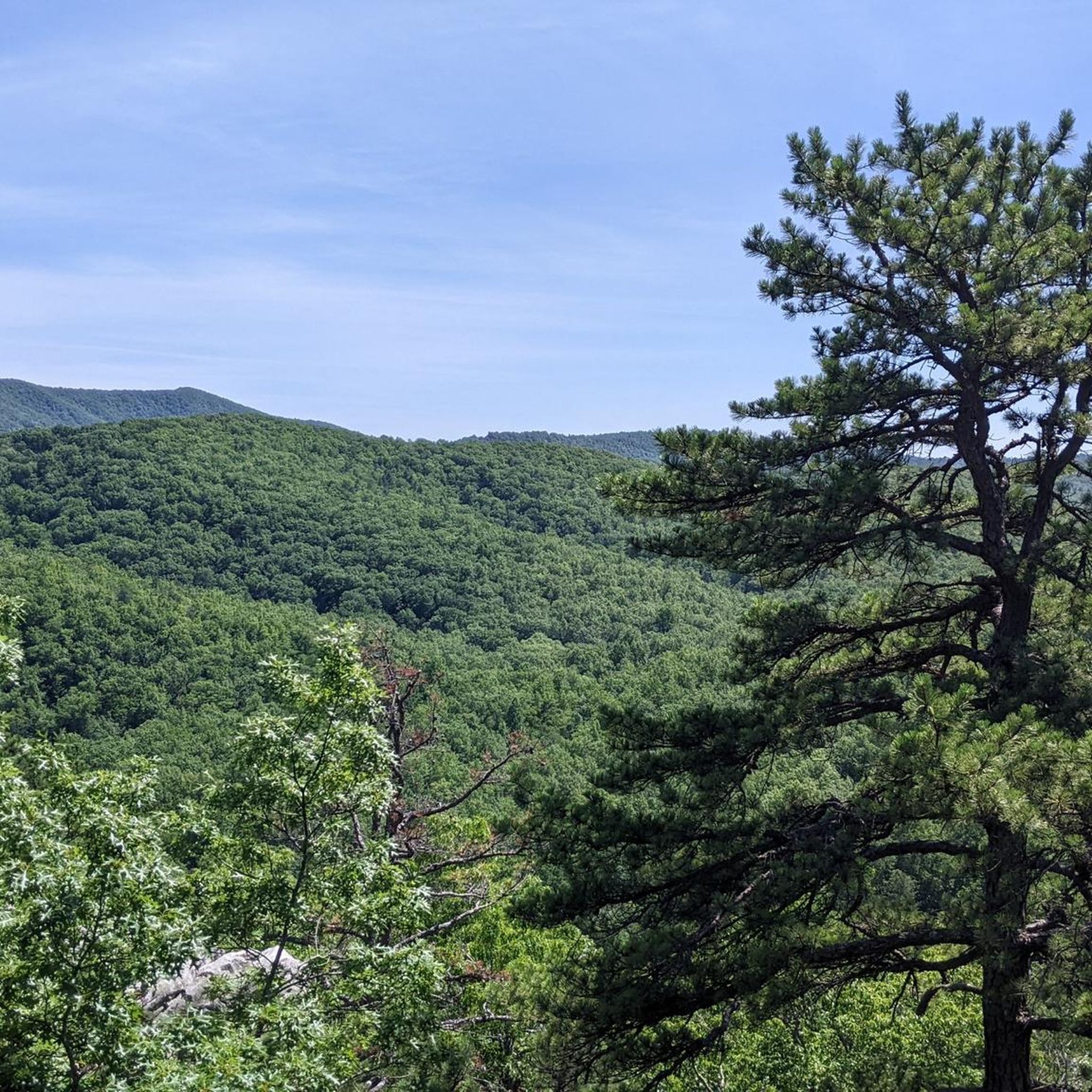
At Milepost 13.1 on the Blue Ridge Parkway is the 3 Ridges Mountain Overlook. You are at an elevation of 2,800 feet at the overlook, but the highest summit you can see from here is 3,900 feet. The Appalachian Trail also crosses the road here, so it can be a sort of busy overlook at times.
0
0
Ravens Roost Overlook is at Milepost 10.7 on the Blue Ridge Parkway and is one of the most popular overlooks in this part of Virginia. From an elevation of 3,200 feet, you can look down into the old farming valley and along mountain ridges running perpendicular to the parkway.
0
0
Located at Milepost 1.5 and at an elevation of 2,148 feet on the Blue Ridge Parkway, Rockfish Valley Overlook is a more popular stop than the nearby Afton Overlook. The Rockfish Valley Overlook is a little more than 200 feet higher in elevation and offers a wide open view of Rockfish Valley with a mountainous backdrop.
0
0
Located just 0.2 miles into the parkway, Afton Overlook is the first official overlook on the Blue Ridge Parkway. Like many of the overlooks of the parkway, this view is of the nearby town. As you climb and descend through the mountains, you get many more views of the network of valleys, rivers, and towns that help make up this unique region of the country. The Blue Ridge Parkway is a 469 mile paved highway through the states of Virginia and North Carolina. The road is extremely popular for cyclists, cars, and motorcycles, so you should always exercise caution biking on the roadways. Being maintained by the National Park Service, the Blue Ridge Parkway is known for its overlooks and access to natural and wilderness areas. Only paved roads (no paths or trails) are open to bikes within the boundaries of the parkway, and you can expect to see other visitors at most overlooks, trailheads, and campgrounds. Biking any section of the Blue Ridge Parkway offers an immersion into Southern Appalachia. Taking on the entire road in a multi-day push is an extreme undertaking for serious cyclists; that being said, any section of the parkway can be doable for cyclists with some road biking experience and the right gear.
1
0
The Sherando Lakes are commonly referred to as "the jewels of the Blue Ridge Mountains." The lower lake is much bigger than the upper lake, but both have their draws. There are a lot of recreational amenities surrounding the lakes, and there are also a number of different hiking trails that you can connect to for longer day hikes and overnight trips.
0
0
The Slacks Overlook Trail peers over the 20-minute Cliff area on the Blue Ridge Parkway. There are great views of the Copelands Rocks to the south and Upper Sherando Lake to the north.
0
0
Located at Milepost 8.8 on the Blue Ridge Parkway, Greenstone Overlook peers over the foothills of Virginia. The overlook is situated at exactly 3,000 feet on an outcrop of the Catoctin Greenstone. The rock in the area was formed from an ancient lava flow, which is unique to this particular area of Virginia.
0
0

Leave your bike at the start of the trail and hike 1.2 miles (1.9 km) to the magnificent White Rock Falls. The views are just as impressive as the falls.
0
0
Frequently Asked Questions
What is the general difficulty level for touring cycling routes in Three Ridges Wilderness?
Touring cycling in Three Ridges Wilderness is characterized by challenging routes. All 8 available routes are rated as difficult, featuring significant elevation changes and sustained climbs and descents through mountainous terrain.
Are there any beginner-friendly touring cycling routes in Three Ridges Wilderness?
Three Ridges Wilderness primarily offers routes for experienced touring cyclists. All 8 routes available in this guide are rated as difficult, involving substantial elevation gain and demanding terrain. There are no routes specifically categorized as easy or moderate.
What is the typical duration for touring cycling routes in Three Ridges Wilderness?
The duration of touring cycling routes in Three Ridges Wilderness varies depending on the specific trail and your pace. For example, the Rockfish Valley Overlook – Afton Overlook loop from South River Number 27 Dam typically takes around 3 hours 35 minutes, while the longer Three Ridges Mountain Overlook – Wigwam Falls loop from Wintergreen can take over 10 hours to complete.
Are there any circular touring cycling routes in Three Ridges Wilderness?
Yes, many of the touring cycling routes in Three Ridges Wilderness are designed as loops. Examples include the Rockfish Valley Overlook – Afton Overlook loop from South River Number 27 Dam, the Three Ridges Mountain Overlook – Wigwam Falls loop from Wintergreen, and the Trout Pond loop from Crabtree Falls Campgound.
What is the best time of year for touring cycling in Three Ridges Wilderness?
The best time for touring cycling in Three Ridges Wilderness is typically during the spring and fall. These seasons offer milder temperatures and vibrant foliage. Summer can be warm and humid, while winter brings colder temperatures and potential for snow or ice, especially at higher elevations, making conditions more challenging.
What are the winter conditions like for touring cycling in Three Ridges Wilderness?
Winter conditions in Three Ridges Wilderness can be challenging for touring cyclists. Temperatures drop significantly, and snow and ice are possible, particularly on higher mountain passes and shaded sections of routes. Some roads may be closed or unmaintained, so it's essential to check local conditions and forecasts before planning a winter ride.
What should I wear for touring cycling in Three Ridges Wilderness?
Given the significant elevation changes and variable weather, layering is key. Wear moisture-wicking base layers, an insulating mid-layer, and a windproof/waterproof outer shell. A helmet, gloves, and appropriate cycling shoes are essential. Always carry extra water, snacks, and repair tools.
Are there any touring cycling routes that feature waterfalls in Three Ridges Wilderness?
Yes, the Three Ridges Mountain Overlook – Wigwam Falls loop from Wintergreen is a notable route that traverses extensive mountain terrain and includes a beautiful waterfall, offering a scenic highlight during your ride.
What do other touring cyclists enjoy most about touring cycling in Three Ridges Wilderness?
The area is highly rated by the komoot community, with an average score of 4.8 stars from over 4 reviews. Touring cyclists often praise the challenging nature of the routes, the stunning scenic overlooks, and the immersive experience of cycling through forested mountain ridges and deep valleys.
Are there any family-friendly touring cycling routes in Three Ridges Wilderness?
Three Ridges Wilderness is known for its challenging terrain, with all touring cycling routes rated as difficult. These routes typically feature significant elevation gains and long distances, making them less suitable for casual family rides with young children. More experienced families might find some sections manageable, but dedicated family-friendly routes are not a primary feature of this area.
What kind of wildlife might I encounter while touring cycling in Three Ridges Wilderness?
Three Ridges Wilderness is home to diverse wildlife. Cyclists might encounter white-tailed deer, black bears, various bird species, and smaller mammals. It's advisable to be aware of your surroundings, especially during dawn and dusk, and to store food properly to avoid attracting animals.
Are there any hidden gem touring cycling routes in Three Ridges Wilderness?
While all routes in Three Ridges Wilderness offer unique challenges and scenic beauty, the Trout Pond – Fork Mountain Overlook loop from South Fork Rockfish River is a less frequently highlighted option that provides a substantial challenge with over 1,495 meters of elevation gain and takes around 5 hours 43 minutes to complete, offering a rewarding experience for those seeking a demanding ride away from the more popular trails.

Get inspired with the komoot mobile app


Explore more
Browse the best Cycling routes in other regions.
