Attractions and Places To See in White Mountains Wilderness - Top 13
Best attractions and places to see in White Mountains Wilderness include high-altitude peaks, ancient forests, and unique geological formations. This rugged and remote area in California is one of the largest and highest desert mountain ranges in North America. It features a diverse landscape ranging from alpine tundra to desert, offering significant natural landmarks and opportunities for solitude. The wilderness is characterized by its triangular fault-block mountain structure and is home to over 1,000 native plant species.
Best attractions and places to see in White Mountains Wilderness
- The most popular attractions is White Mountain Peak, a summit that is the third highest peak in California at 14,252 feet (4344 m). It is considered California's easiest 14,000-foot peak to access, with a gravel road leading to a trailhead at 11,680 feet elevation.
- Another must-see spot is Jeffrey Mine High Camp, a historical site. This area offers a glimpse into the past with an old building, artifacts, and several adits (mine entrances).
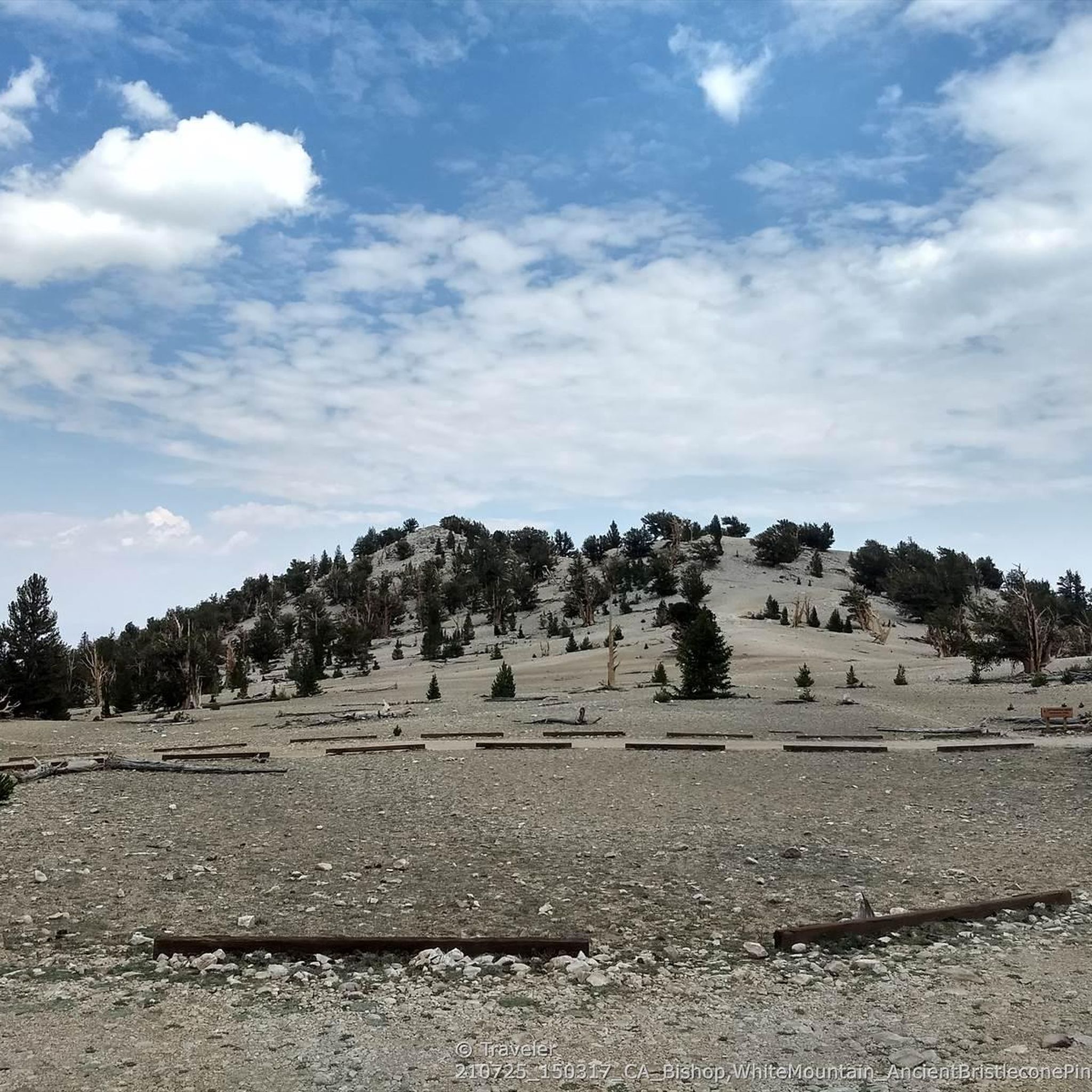
- Visitors also love The 'Patriarch' Tree, a natural monument. This ancient Bristlecone pine is one of the oldest living trees on Earth.
- White Mountains Wilderness is known for its high peaks, ancient forests, and historical sites. Visitors can explore natural landmarks, unique geological formations, and remote wilderness areas.
- The attractions in White Mountains Wilderness are appreciated by the komoot community, with 3 upvotes and 56 photos shared across 10 highlights.
Last updated: July 7, 2026
White Mountain Peak
Highlight • Summit
Tip by

White Mountain Wilderness
Highlight • Natural
Translated by Google •
Tip by

Sign up now to discover places like this
Get recommendations on the best single tracks, peaks, & plenty of other exciting outdoor places.
Sign up for free
Crooked Creek Research Station Turnoff, White Mountain Rd
Highlight • Rest Area
Tip by
The 'Patriarch' Tree
Highlight • Natural Monument
Tip by
Foot of the summit switchbacks
Highlight • Trail
Tip by
Sign up for free to discover even more attractions in White Mountains Wilderness.
Sign up for free
Already have an account?
Start today with a free account
Your next adventure awaits.
Login or Signup
Popular around White Mountains Wilderness
Tips from the Community

A narrow gravel road turns east off the double-wide White Mountain gravel road, winding down and around a hill for about a mile to the lower of two staffed University of California research stations on the mountain. Crooked Creek has more updated comfort, while Barcroft Station, further up toward White Mountain, is higher and offers closer access to the summit observation sites. Past the station, Crooked Creek road descends to the highway which continues into Nevada.
0
0

Here the trail crosses into the White Mountain Wilderness. Before that, the trail is not within the nature reserve.
2
0
Very beautiful and isolated mountain peak in the White Mountains. The view of the Sierra Nevada and towards Death Valley is great. The climb is not particularly difficult, there are no climbing sections or anything similar. However, due to the length of the tour and the altitude, it should not be underestimated.
1
1

you need to know that this is quite challenging , climbing from 11,000 feet at the start to 14,200 feet over six and a half miles of rough, rocky terrain which is often very cold and windy with no shelter, being totally above treeline. DSC 04/27/2024
0
0

The way up to the peak of White Mountain is a challenging one, due to the elevation gain and length. However, the 360 degree view from the top is worth the effort. The road up is also rideable on a bike, so there is a chance you may share the road with cyclists, so make sure you watch out for other trail users.
0
0
Up to this overlook the double-track gravel road is easy biking. Well worth to enjoy the views. The final 800 feet to the summit becomes more technical here above 13000 feet / 4000 meter elevation. The first set of switchbacks are tough but still bikeable by most riders, the last set before the summit are a good challenge for pros. An opportunity to appreciate full suspension.
1
0
The White Mountain Wilderness boundary is actually on both sides of the road to leave a corridor where biking to the summit is legal. Normally in Wilderness areas no mechanical travel is permitted, including biking.
1
0
Probably the highest mountain in California, maybe North America, that is accessible by bike. The last two switchbacks of the service road have very rough rocks on steep terrain, so most bikers would probably just do this part downhill or walk the last 200 yards. The reward is a sweeping 360 degrees view of the Eastern Sierra.
0
0
Frequently Asked Questions
What are the most prominent natural features to explore in the White Mountains Wilderness?
The White Mountains Wilderness is renowned for its high-altitude peaks and ancient forests. Key natural features include White Mountain Peak, the third highest peak in California, and the Ancient Bristlecone Pine Forest, home to some of the oldest living trees on Earth, such as The 'Patriarch' Tree. The region also features unique alpine tundra plateaus and distinctive fault-block mountain structures.
Are there any historical sites or cultural points of interest in the White Mountains Wilderness?
Yes, visitors can explore Jeffrey Mine High Camp, a historical site offering a glimpse into the past with an old building, artifacts, and several mine entrances (adits). While much of the trail to the camp is accessible, some sections are steep and challenging.
What kind of outdoor activities can I do near the attractions in White Mountains Wilderness?
The White Mountains Wilderness offers excellent opportunities for hiking. You can explore trails like the easy Patriarch Grove Trail or the more challenging White Mountain Peak Trail. For more options, including Boundary Peak via Queen Mine Trail and Schulman Grove Discovery Trail, visit the Hiking in White Mountains Wilderness guide.
What is the best time of year to visit the White Mountains Wilderness?
The best time to visit largely depends on your desired activity. Summer and early fall typically offer the most accessible conditions for high-altitude hiking and exploring the Ancient Bristlecone Pine Forest, as roads to higher elevations are usually open. Winter brings snow, making some areas only accessible to experienced winter recreationists.
Are there family-friendly options or trails suitable for beginners in the White Mountains Wilderness?
Yes, the Ancient Bristlecone Pine Forest offers trails suitable for various skill levels. The Schulman Grove Visitor Center provides access to trails like the 1-mile Discovery Trail, which is generally considered easy and family-friendly, allowing visitors to experience the ancient trees without extreme difficulty.
What makes White Mountain Peak a unique destination for hikers?
White Mountain Peak is unique as it's considered California's easiest 14,000-foot peak to access. A gravel road leads to a trailhead at 11,680 feet elevation, and the path to the summit is mostly a gradual, wide gravel road, making it more accessible than many other high peaks. The views of the Sierra Nevada and towards Death Valley are exceptional.
Can I see any unique wildlife in the White Mountains Wilderness?
The White Mountains Wilderness is home to diverse wildlife, including desert bighorn sheep, pronghorn antelope, and mule deer. Cottonwood Creek, a Wild and Scenic River in the area, supports over 70 bird species and rare Paiute cutthroat trout, making it a good spot for wildlife observation.
What kind of geological formations are characteristic of the White Mountains?
The White Mountains are distinctive for their triangular fault-block mountain structure, which was formed by tectonic rifting. This geological characteristic sets them apart from the nearby Sierra Nevada mountains, contributing to their unique climate and landscape.
Are there any specific trails to see the ancient bristlecone pines?
Yes, within the Ancient Bristlecone Pine Forest, you can explore several trails. These include the 1-mile Discovery Trail, the 4.5-mile Methuselah Trail, and the 3.5-mile Bristlecone Cabin Trail, all offering scenic views of these ancient trees. The Schulman Grove Visitor Center is the starting point for these trails.
What should I know about accessing the White Mountains Wilderness?
The White Mountains Wilderness is a rugged and remote area. Access to some higher elevation areas, like the trailhead for White Mountain Peak, involves driving on gravel roads. It's advisable to check road conditions, especially outside of peak summer months, and be prepared for remote conditions as amenities are limited.
What do visitors appreciate most about the White Mountains Wilderness?
Visitors frequently highlight the exceptional natural beauty and the sense of solitude the wilderness offers. The sweeping 360-degree views from high peaks like White Mountain Peak, the ancient wonder of the Bristlecone pines, and the remote, undeveloped nature of the area are often cited as major draws.
Are there other high peaks in the White Mountains Wilderness besides White Mountain Peak?
Yes, beyond White Mountain Peak, the wilderness contains several other peaks exceeding 13,000 feet, including Mount Dubois, The Jumpoff, and Montgomery Peak, offering additional challenges for experienced hikers and mountaineers.
Most popular routes in White Mountains Wilderness
Most popular attractions in White Mountains Wilderness

Get inspired with the komoot mobile app


Explore more
Still not found the Highlight you’re looking for? See guides of the top attractions in other regions:
