Attractions and Places To See around Stoob - Top 20
Best attractions and places to see around Stoob, a market town in Burgenland, Austria, are primarily shaped by its historical pottery tradition. The region features wide plains, rolling hills, and woodlands, providing a landscape distinct from mountainous areas of Austria. Its development was influenced by local clay deposits, which supported a continuous craft culture. Visitors can explore cultural landmarks and historical sites within the town and the broader surrounding area.
Best attractions and places to see around Stoob
- The most popular attractions is Franz Liszt Birthplace, a historical site that is the birthplace of the renowned Hungarian composer Franz Liszt. This site now houses a museum dedicated to his life and work.
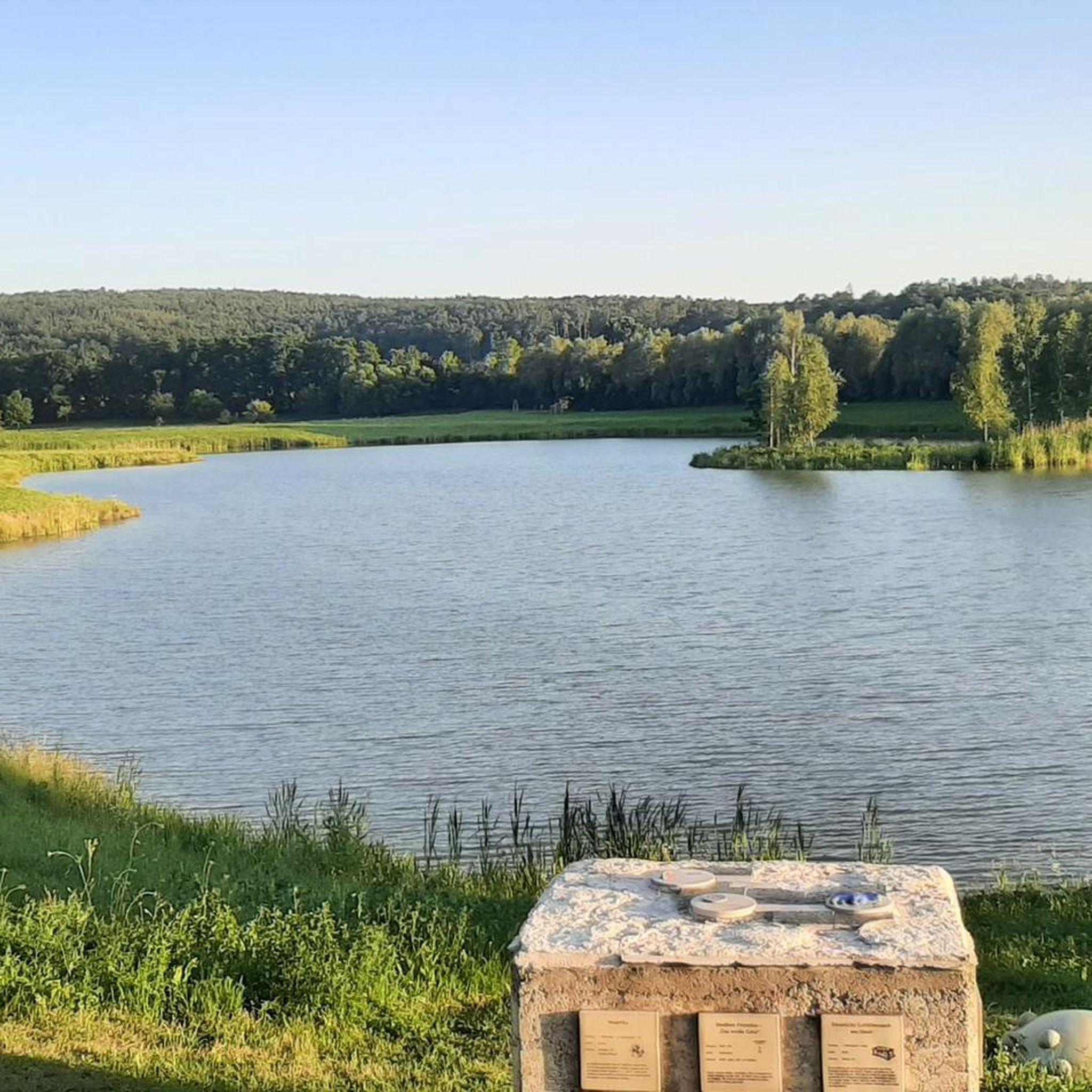
- Another must-see spot is Geographical Center of Burgenland, a man-made monument. This location is marked by a stone displaying the geographical data, signifying the exact center of the region.
- Visitors also love Kobersdorf Castle, a Renaissance castle. Built around 1528 from a medieval complex, it now serves as a venue for concerts, exhibitions, and seminars.
- Stoob is known for its historical sites, castles, and cultural landmarks. The area offers a variety of attractions to see and explore, reflecting its rich history and regional significance.
- The attractions around Stoob are appreciated by the komoot community, with more than 80 upvotes and 30 photos shared.
Last updated: July 6, 2026
Franz Liszt Birthplace
Highlight • Historical Site
Tip by

Geographical Center of Burgenland
Highlight • Monument
Translated by Google •
Tip by

Sign up now to discover places like this
Get recommendations on the best single tracks, peaks, & plenty of other exciting outdoor places.
Sign up for free
Kobersdorf Castle
Highlight • Castle
You can find more information about the castle games at schlossspiele.com.
Translated by Google •
Tip by

Landsee Castle Ruins
Highlight • Castle
Translated by Google •
Tip by

Lackenbach Castle
Highlight • Castle
Translated by Google •
Tip by

Sign up for free to discover even more attractions around Stoob.
Sign up for free
Already have an account?
Start today with a free account
Your next adventure awaits.
Login or Signup
Tips from the Community

The origin of the Landsee ruin cannot be determined at present, but it was first mentioned in the tradition book of the Göttweig Abbey in 1158. Children and parents can still recognize the imposing fortification in this castle ruin today.
0
0
Documented as early as the 13th century, it experienced turbulent times as a Hungarian border fortress before being expanded to its characteristic form in the 16th and 17th centuries: Striking round towers with mighty conical roofs define its exterior today. In addition to the well-known festivals, the castle is also a venue for concerts, exhibitions, and seminars. Parts of the castle, along with the garden, can be rented for conferences, celebrations, and weddings. Guided tours are also possible by appointment.
0
0

The castle was built around 1528 from a medieval castle complex. Today, the Renaissance castle is a venue for concerts, exhibitions and seminars. You can also rent parts of the castle for your celebrations. Guided tours are also possible by arrangement.
0
0

I didn't think that it would be so steeply uphill at the end. It's a great way to rediscover the area you thought you knew well.
2
0

Kobersdorf Castle was built around 1528 from a medieval castle. In 1683 the complex was taken by the Turks and partially destroyed. After years of decay, the castle was bought and renovated by an architect in 1963. Today it is owned by her daughter and can only be viewed during events. You can find more information about the castle games at https://www.schlossspiele.com/.
2
0

The Landsee castle ruins are one of the largest castle ruins in Central Europe. The castle was first mentioned in 1158 and was destroyed by fire around 1790. From a viewing platform you can enjoy a wonderful panoramic view over Central Burgenland, Lake Neusiedl and the Bucklige Welt. More about the story: https://de.wikipedia.org/wiki/Burgruine_Landsee
0
0

This largest fortification in Central Europe was built in the 12th century and served as an arsenal and protective castle for the population during the Turkish wars, but fell into disrepair after 1710. Visitation is subject to payment.
1
0

The castle originally dates back to the 13th century. After it burned down in the 18th century, it was never rebuilt.
5
0
Frequently Asked Questions
What cultural and historical sites can I visit in Stoob and the surrounding region?
Stoob is rich in history, particularly its pottery tradition. You can explore the Töpfermuseum Stoob, which showcases centuries of this craft and features a restored ancient kiln. The village is also home to the Bergkirche, one of Burgenland's oldest churches with Romanesque frescoes. In the broader region, consider visiting the Franz Liszt Birthplace, a museum dedicated to the renowned composer, or the historic Kobersdorf Castle, a Renaissance castle that hosts events.
Are there any castles or ruins to explore near Stoob?
Yes, the region around Stoob features several impressive castles and ruins. You can visit Kobersdorf Castle, a Renaissance castle built around 1528, which serves as a venue for concerts and exhibitions. Another significant site is the Ruins of Landsee Castle, one of the largest castle ruins in Central Europe, offering panoramic views over Mittelburgenland.
What outdoor activities are available around Stoob?
The area around Stoob offers various outdoor activities, particularly hiking and cycling. You can find numerous routes for different skill levels. For hiking, consider easy loops like the "Stoobar Activity Course loop from Stoob" or the "Marian Column – Markt St. Martin Bathing Pond loop from Neutal." Cyclists can enjoy routes such as the "Stoober Retention Basin – Stoober Plutzer loop from Oberpullendorf/Felsőpulya" or the longer "Artworks at Stoober Bach – Sunny Café & Patisserie loop." For more options, explore the hiking guide or cycling guide for Stoob.
Are there family-friendly attractions in the Stoob area?
Absolutely! Many attractions around Stoob are suitable for families. The Franz Liszt Birthplace and Kobersdorf Castle are both considered family-friendly historical sites. The Geographical Center of Burgenland is also a fun, educational stop. Additionally, the Ruins of Landsee Castle offers an engaging experience for children to explore its imposing fortifications.
What is the significance of Stoob's pottery tradition?
Stoob is renowned for its deep-rooted pottery tradition, which dates back to the 17th century. The presence of local clay deposits and iron ore supported this craft for millennia. The Töpfermuseum Stoob highlights this history, showcasing the craft of "Hafner" (potters) and notable pieces like the "Stoober Plutzer," a traditional unglazed cider jug. Stoob is also home to Austria's only State Technical School for Ceramics and Stove Construction, underscoring its ongoing connection to pottery.
Where can I find a unique geographical landmark in the region?
You can visit the Geographical Center of Burgenland. This unique landmark is marked by a stone displaying geographical data, signifying the exact center of the region. It's a notable spot for a quick stop and photo opportunity.
What kind of natural landscape can I expect around Stoob?
While Stoob itself doesn't feature dramatic mountains or large lakes, its historical development was influenced by natural resources like clay deposits. The surrounding Burgenland region offers a landscape of wide plains, rolling hills, woodlands, wetlands, and vineyards. This provides a distinct natural setting for walks and cycling, different from the mountainous terrain typically associated with Austria.
Are there any viewpoints or scenic spots near Stoob?
Yes, the Geographical Center of Burgenland offers a pleasant spot, and the Ruins of Landsee Castle provides an observation deck with a wonderful panoramic view over the Mittelburgenland to the Bucklige Welt.
What is the 'Stoober Plutzer' and where can I learn about it?
The 'Stoober Plutzer' is a traditional unglazed cider jug from Stoob, known for its ability to keep liquids cool through evaporation. You can learn more about this unique pottery piece and the broader history of pottery in the region at the Töpfermuseum Stoob.
What is the 'Flag Waver Statue' in Neckenmarkt?
The Flag Waver Statue in Neckenmarkt commemorates the intangible UNESCO cultural heritage of flag waving in Neckenmarkt. This tradition, which takes place on the Sunday after Corpus Christi, dates back to 1622 and celebrates the historical loyalty and assistance of the Neckenmarkt farmers.
Can I find gravel biking routes near Stoob?
Yes, the area around Stoob offers several gravel biking routes. Options range from moderate to difficult, such as the "Artworks at Stoober Bach – Lutzmannsburg Weir loop from Bezirk Oberpullendorf" or the "Kaisersdorf Church – Idyllic fishing lake loop from Oberpullendorf/Felsőpulya." For a comprehensive list, refer to the gravel biking guide for Stoob.
What do visitors particularly enjoy about the attractions around Stoob?
Visitors appreciate the rich history and cultural significance of the area. Highlights like the Franz Liszt Birthplace and Kobersdorf Castle are highly rated for their historical value. The Geographical Center of Burgenland is noted as a very nice place to stay and visit, and the Ruins of Landsee Castle is praised for its impressive scale and panoramic views.
Most popular attractions around Stoob

Get inspired with the komoot mobile app


Explore more
Still not found the Highlight you’re looking for? See guides of the top attractions in other regions:
