Top 16 Castles around Frankfurt am Main
Castles around Frankfurt am Main offer a glimpse into Germany's rich history and architectural heritage. The city itself, situated on the Main River, features historical buildings, while the surrounding region provides numerous castles and palaces. These historical sites are often found within a short drive or train ride, making them accessible for day trips. The area combines urban settings with natural landscapes, providing diverse backdrops for exploring these landmarks.
Best castles around Frankfurt am Main
- The most popular castles is Old Höchst Castle, a castle that was built between the 14th and 16th centuries. It houses the museums for Höchst History and Hoechst AG and hosts an annual festival.
- Another must-see spot is Holzhausen Little Palace, a Baroque moated castle. Surrounded by a pond and Holzhausenpark, it serves as the seat of the Frankfurt Community Foundation.
- Visitors also love Bolongaro Palace, a large Baroque palace. Built between 1772 and 1774, its magnificent facades and garden can be admired.
- Frankfurt am Main is known for medieval fortresses, Baroque palaces, and historical watchtowers. Visitors can explore a variety of architectural styles and historical periods across these sites.
- The castles around Frankfurt am Main are appreciated by the komoot community, with more than 1800 upvotes and over 700 photos shared across 17 highlights.
Last updated: October 9, 2026
Bolongaro Palace
Highlight • Historical Site
Showing Translation
Tip by

Friedberger Warte
Highlight • Historical Site
From 2015 to 2017, the place at the waiting room was redesigned so that the cycle path along Friedberger Landstrasse out of town is now safe and usable again.
Translated by Google •
Tip by

Sign up now to discover places like this
Get recommendations on the best single tracks, peaks, & plenty of other exciting outdoor places.
Bronze model of Rödelheim Castle
Highlight • Monument
Translated by Google •
Tip by
Heiligenstock Transmitter Ruins
Highlight • Monument
A place where not many people are, where you can just sit down, relax and think.
(not necessarily just a mountain bike highlight, but I ride a mountain bike ;-))
Translated by Google •
Tip by

Holzhausen Little Palace
Highlight • Castle
Translated by Google •
Tip by
Schelmenburg Castle
Highlight • Castle
de.wikipedia.org/wiki/Schelm_von_Bergen
Translated by Google •
Tip by

The Schelmenburg - Bergen-Enkheim 🚴
Highlight • Castle
frankfurt-interaktiv.de/stadtteile/bergen-enkheim
Translated by Google •
Tip by

Heiligenstock viewpoint and ruins of the former radio station
Highlight • Viewpoint
Translated by Google •
Tip by

Evangelical Church Nieder-Erlenbach
Highlight • Religious Site
de.wikipedia.org/wiki/Evangelische_Kirche_Nieder-Erlenbach
Translated by Google •
Tip by

Main Riverside Route: Views of Frankfurt Skyline, Old Harbor Crane, and Rumpenheim Castle
Highlight (Segment) • Cycleway
Translated by Google •
Tip by

Sign up for free to discover even more castles around Frankfurt am Main.
Already have an account?
Start today with a free account
Your next adventure awaits.
Popular around Frankfurt am Main
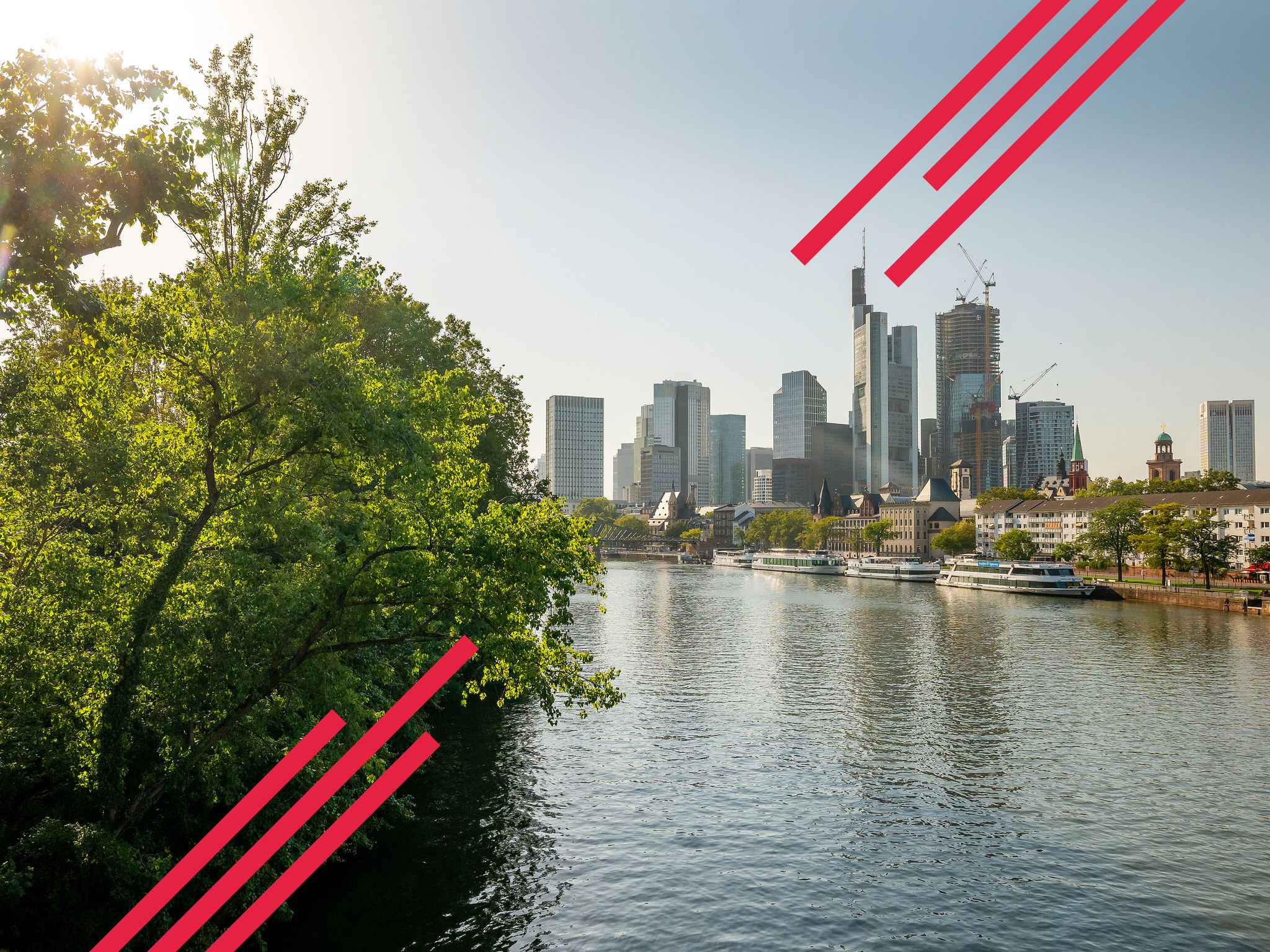
Goethe, GrünGürtel & big city flair – culture & nature in Frankfurt
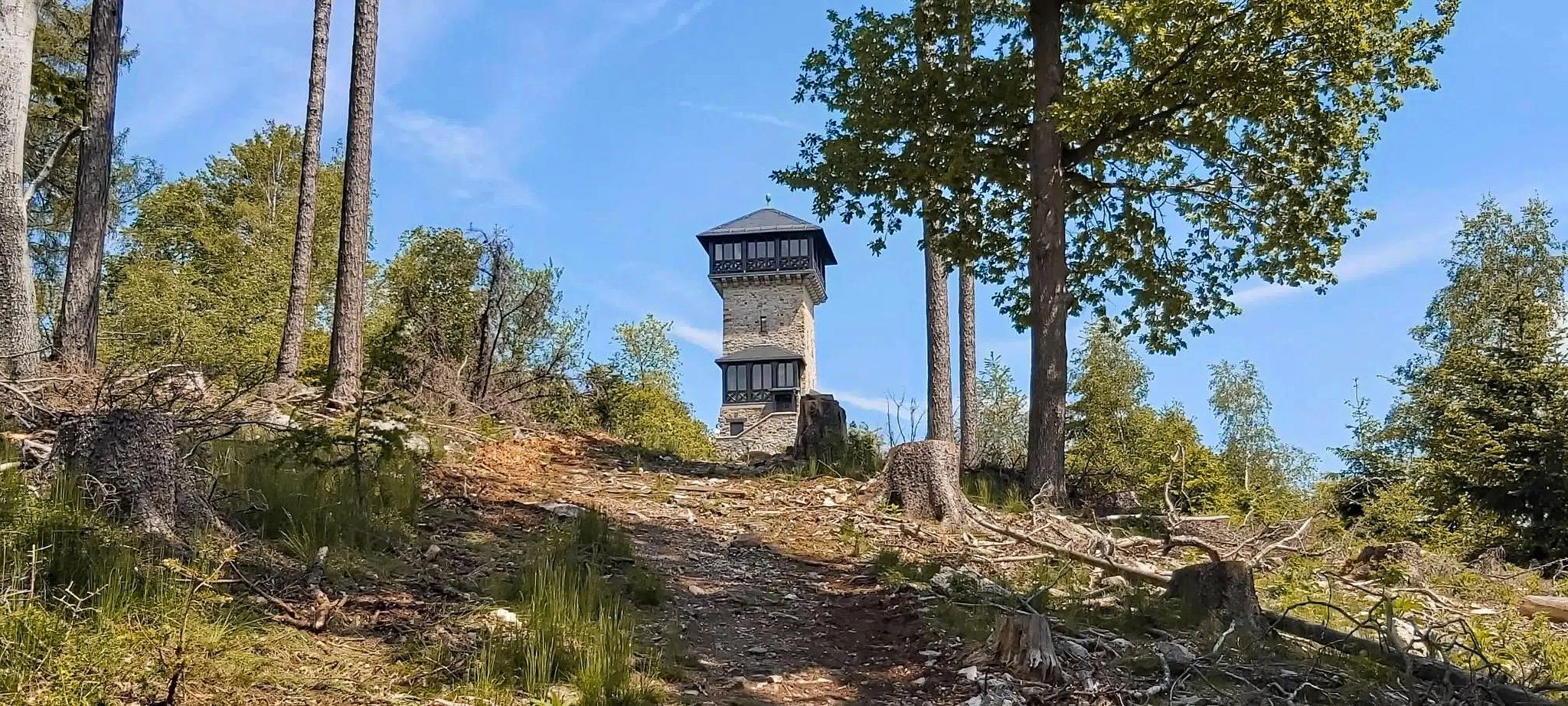
Autumn views: to the most beautiful vantage points in the RMV area

By bike and train into the green - cycling Tours around the EUROBIKE

Orchards, vineyards, taverns – hikes in the RMV area

Out into spring – glorious hikes with the RMV
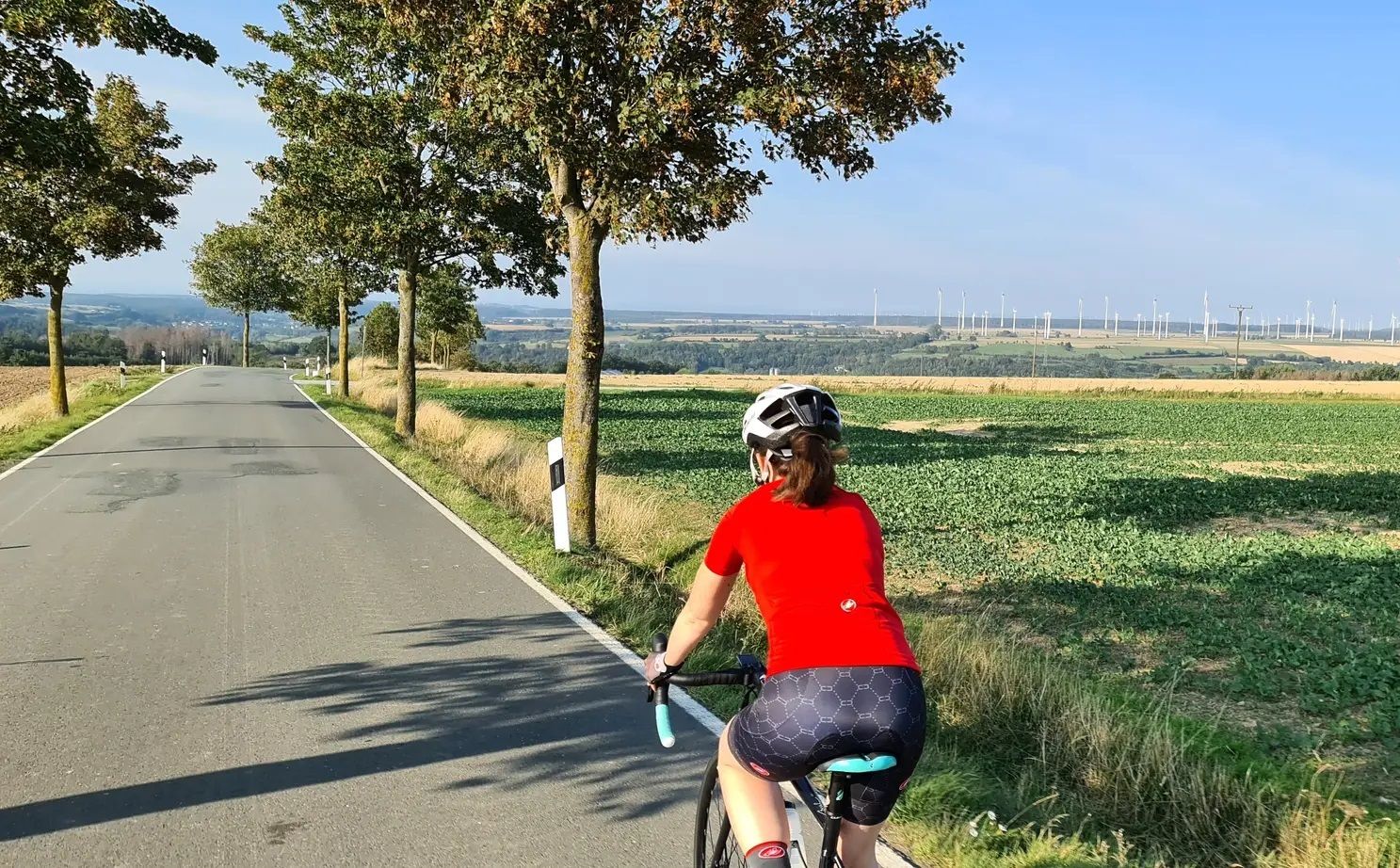
The skyline to half-timbered buildings – Frankfurt to Bielefeld
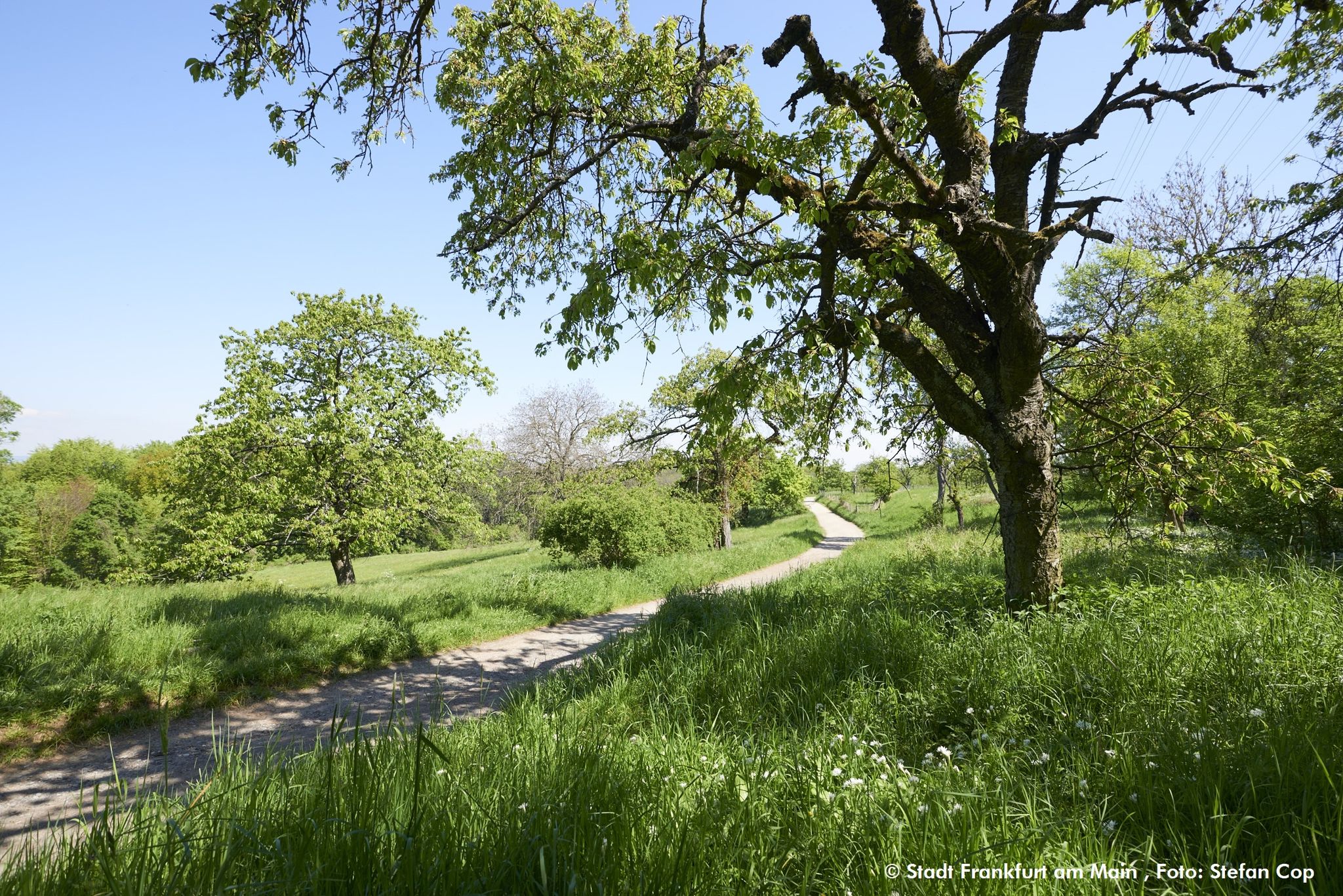
The GrünGürtel circular HIKING trail Frankfurt am Main

Bikepacking to road cycling to MTB – on Tour with RMV
Spring is here – hiking with family by bus & train in Rhine-Main

Discover the wintry Rhine-Main region
Other adventures around Frankfurt am Main


Tips from the Community

The Schelmenburg in Bergen-Enkheim is the oldest preserved structure in the district and was for centuries the ancestral seat of the knightly family of the „Schelme von Bergen“. Originally built in the 12th century as an imperial castle surrounded by water, the complex was fundamentally redesigned around 1700 after its destruction in the 14th century and subsequent decay. On the medieval foundations of the core castle, the still visible baroque water chateau arose, a square, two-story building with a distinctive mansard roof and a baroque entrance portal. After the Schelme family died out in the 18th century, the castle changed owners several times until it passed into the ownership of the then town of Bergen-Enkheim in 1942. Extensively renovated in the 1960s, it temporarily served as a community library and social services center. Today, the Schelmenburg is a vibrant center of local community life and is used as a „House of Associations“. In addition to various club rooms, the listed building houses, among other things, a music school and is a venue for cultural events such as the annual Schelmenmarkt.
5
1
Holzhausen Castle (formerly also Holzhausen Oed) is a Baroque moated castle in Frankfurt am Main, surrounded on three sides by Holzhausen Park. It was built by the Frankfurt patrician family Holzhausen on an estate they owned, which at the time lay north of Frankfurt's city limits. Due to the city's growth in the 19th century, it is now located in the Nordend district of Frankfurt.
9
0

Information panel Bonifatius Route Nieder Erlenbach Church.
1
0
The Bolongaro Palace is a large Baroque palace in Frankfurt-Höchst, built between 1772 and 80. It is located on the south side of Bolongarostraße, and the south-facing garden lies on the high bank above the mouth of the Nidda into the Main. This is the south side and is used as a registry office
10
0

In 1155, at a masked ball, Emperor Barbarossa called the disgraced Schinder the Rogue of Bergen.
0
0

Between the entrances to the current Friedberger Warte restaurant and the Wehrhof there is a walled-in draw well. Its base is made of natural stone, its body and the arch that covers it are made of red sandstone. The well opening is protected by a conical wooden roof.
1
0
In what is now Rödelheim's Solmspark, there has been a castle since 1250, and it is suspected that it existed since 1150, directly on the ford through the Nidda. The ford was part of the trade route between Frankfurt and Cologne, and the castle lords may have collected tolls for crossing it. After its eventful history spanning many centuries, the castle fell into disrepair and was therefore demolished in 1802. The owners, the counts of Solms-Rödelheim and Assenheim, built a classicist castle on the site of the castle core by 1859. This burned down in a bombing raid in 1944. The ruins were demolished in 1956, the area was leveled and laid out as a park meadow. In 2003, the Rödelheim Local History and Heritage Association set itself the task of giving the population an impression of the castle's appearance and dimensions. Finally, in 2007, the bronze model was erected, an information board was installed and the course of the castle walls was re-paved. The paving allows walkers and visitors to actually visualize the dimensions of the castle. The entire complex was designed by the Frankfurt architect Horst Günter Kroneisen. The bronze model itself represents the L-shaped castle building on a scale of 1:40. The covered entrance area can be seen in the inner corner of the L, and on the back the two-flight open staircase leading down to the garden. There is a stair tower at each of the three corners of the castle complex, with the eastern tower being striking due to its height and diameter. It stands on the site of the castle's old keep. The model was created after averaging the dimensions based on the existing photographs and drawings of the castle. The foundation stone for the foundation of the heavy model base was laid in 2007 by the then mayor Petra Roth. A capsule was also sealed, which contains the foundation stone certificate, some Frankfurt daily newspapers, the Rödelheimer Main-Nidda-Boten and some euro coins.
3
0
Frequently Asked Questions
What are some notable castles within Frankfurt am Main itself?
Within Frankfurt, you can visit Old Höchst Castle, a 14th-16th century structure that houses museums and hosts an annual festival. Another option is Holzhausen Little Palace, a Baroque moated castle surrounded by a pond and Holzhausenpark. Bolongaro Palace, a large Baroque palace from the 18th century, also offers magnificent facades and gardens to admire.
Which castles near Frankfurt am Main are good for a day trip?
For a day trip, consider castles like Kronberg Castle, an 11th-century fortress with guided tours and panoramic views. Bad Homburg Castle, a 17th-century Baroque palace, offers original furnishings and large English-style gardens. Further afield, the picturesque Eltz Castle, untouched by conflicts, and the majestic Heidelberg Castle ruins are highly recommended for their historical significance and beauty.
Are there family-friendly castles to visit around Frankfurt am Main?
Many castles in the region are family-friendly. Old Höchst Castle and Holzhausen Little Palace within Frankfurt are good options. Outside the city, Ronneburg Castle offers a museum with furnished living areas, a medieval kitchen, and falconry shows, which can be engaging for families. Most castles provide open spaces for children to explore, and some, like Bad Homburg Castle, have expansive gardens.
Can I reach castles near Frankfurt am Main using public transport?
Yes, several castles are accessible by public transport. For example, Old Höchst Castle is easily reached by train within Frankfurt. Many of the castles in the surrounding region, such as Kronberg Castle and Bad Homburg Castle, are also well-connected by regional trains and buses, making them convenient for day trips without a car.
What kind of outdoor activities can I do near these castles?
The region around Frankfurt offers various outdoor activities. You can find numerous hiking trails, such as those mentioned in the Hiking around Frankfurt am Main guide, which include routes like 'Schwanheimer Dune Boardwalk' near Höchst. For cycling enthusiasts, the Gravel biking around Frankfurt am Main guide features routes like 'Frankfurt to Gravelbike on the Lohrberg' that pass through scenic areas, potentially near historical sites.
Are there castles suitable for history beginners or those interested in specific historical periods?
Absolutely. For a glimpse into medieval and Renaissance history, Old Höchst Castle is a great start. Kronberg Castle, an 11th-century fortress, offers a deep dive into medieval times. For Baroque architecture, Bolongaro Palace and Bad Homburg Castle are excellent examples. Heidelberg Castle, though a ruin, showcases different periods of German architecture due to its multiple destructions and rebuilds.
What is the best time of year to visit castles around Frankfurt?
Spring and autumn are generally ideal for visiting castles around Frankfurt. The weather is pleasant for exploring castle grounds and nearby trails, and the landscapes are beautiful with blooming flowers or vibrant fall foliage. Summer can also be good, but it might be busier, especially at popular sites. Winter visits offer a different, often quieter, atmosphere, though some outdoor areas or specific attractions might have reduced hours.
Are there any less crowded or 'hidden gem' castles for a more tranquil experience?
While many castles are popular, you might find a more tranquil experience at places like Schelmenburg Castle. Ronneburg Castle, though well-preserved, might offer a less bustling atmosphere compared to the major tourist magnets. Exploring the smaller, local castles mentioned in the region research, such as Rüsselsheim Fortress, can also provide a quieter historical experience.
Are there castles with cafes or restaurants nearby?
Yes, several castles offer amenities like cafes or restaurants. Old Höchst Castle has a café, and Holzhausen Little Palace also features a café. The Friedberger Warte highlight specifically mentions a restaurant with a surprisingly quiet courtyard and fair prices, making it a good spot for a break.
Are there any castles that offer good viewpoints or natural features?
Many castles are situated in scenic locations. Kronberg Castle provides panoramic views of the city and expansive gardens. Bad Homburg Castle offers picturesque countryside views from its terrace and large English-style gardens. Eltz Castle is famously nestled in a picturesque valley, and Schloss Johannisburg Palace overlooks the Main River, providing beautiful natural backdrops and viewpoints.
Are there castles that are dog-friendly?
While specific rules vary, many castle grounds and outdoor areas are often dog-friendly, especially if dogs are kept on a leash. It's always best to check the individual castle's website for their specific pet policies before visiting, as indoor areas or museums typically do not allow dogs. However, exploring the surrounding parks and trails with your dog is usually possible.
What are some of the oldest or most historically significant castles in the region?
The region boasts several historically significant castles. Kronberg Castle dates back to the 11th century. Eltz Castle began construction in the 12th century and is remarkable for remaining untouched by conflicts, preserving its original state. Friedberg Castle is one of Germany's largest castle complexes with a rich 2,000-year history, including fortifications from the 14th to 16th centuries and a Roman bathing complex.
Most popular routes around Frankfurt am Main
Most popular attractions around Frankfurt am Main

Get inspired with the komoot mobile app


Explore more
Looking for the best castles somewhere else? Discover other guides around Frankfurt am Main:
