The best walks and hikes around Hallerbos
4.4
(5069)
25,041
hikers
106
hikes
Hiking around Hallerbos, an ancient forest covering 552 hectares, offers diverse natural features. The terrain is characterized by an undulating landscape with four deep valleys, providing varied topography for hikers. It features a mix of both young and old trees, including significant beech and European oak, alongside impressive giant sequoia trees. This ecological network provides a range of hiking trails.
Best hiking trails around Hallerbos
- The most popular hiking route is Reebok hike - Hallerbos, a 4.4 miles (7.2 km) trail that takes 1 hour 55 minutes to complete. This route traverses three of the forest's valleys and covers a significant portion of the bluebell area.
- Another top favourite among local hikers is Hyacinth walk (6.3 km) - Hallerbos, an easy 3.9 miles (6.3 km) path. This trail guides visitors through areas known for their bluebell displays.
- Local hikers also love the Hyacinth walk (4.8 km) - Hallerbos, a 3.1 miles (5.0 km) trail leading through dense bluebell carpets, often completed in about 1 hour 21 minutes.
- Hiking around Hallerbos is defined by ancient woodlands, undulating terrain with deep valleys, and impressive giant sequoia trees. The network of routes offers options for various ability levels, from easy walks to moderate trails.
- The routes in Hallerbos are highly rated by the komoot community with an average score of 4.4 stars from over 800 reviews. More than 4000 hikers have used komoot to explore Hallerbos's varied terrain.
Last updated: June 29, 2026
4.8
(176)
730
hikers
7.15km
01:55
80m
80m
Easy hike. Great for any fitness level. Easily-accessible paths. Suitable for all skill levels.
4.7
(51)
240
hikers
6.26km
01:38
40m
40m
Easy hike. Great for any fitness level. Easily-accessible paths. Suitable for all skill levels.

Sign up for free
4.7
(46)
247
hikers
4.95km
01:21
70m
70m
Easy hike. Great for any fitness level. Easily-accessible paths. Suitable for all skill levels.
4.8
(118)
522
hikers
Moderate hike. Good fitness required. Easily-accessible paths. Suitable for all skill levels.
4.6
(45)
194
hikers
Moderate hike. Good fitness required. Easily-accessible paths. Suitable for all skill levels.
Get access to more routes and recommendations from other explorers.
Sign up for free
Already have an account?
Our route recommendations are based on thousands of hikes, rides, and runs completed by other people on komoot.
Start today with a free account
Your next adventure awaits.
Login or Signup

Tips from the Community


enjoy
1
0

In 1648, King Philip IV of Spain gave the city of Halle and the Hallerbos to the Duke of Arenberg as collateral for a loan. When the king was unable to repay his debt in time, the duke acquired two thirds of the forest in 1655, which together amounted to 900 acres (i.e. approximately 1,125 ha). The Sint-Waltrudis chapter of Bergen remained the owner of one third. After a period of joint management, difficulties arose between the two owners. In order to put an end to the endless quarrels, they decided to withdraw from joint ownership, and to that end they had the forest measured in 1779. They placed 24 pyramid-shaped "meerstenen" or boundary posts with the inscription SW ("of Sint-Waltrudis") on one side and AR ("for Arenberg") on the other. Nineteen of these still stand on the original dividing line in the forest. Source: Wikipedia.
1
0

Fairly well marked, one or two nice climbs.
0
0

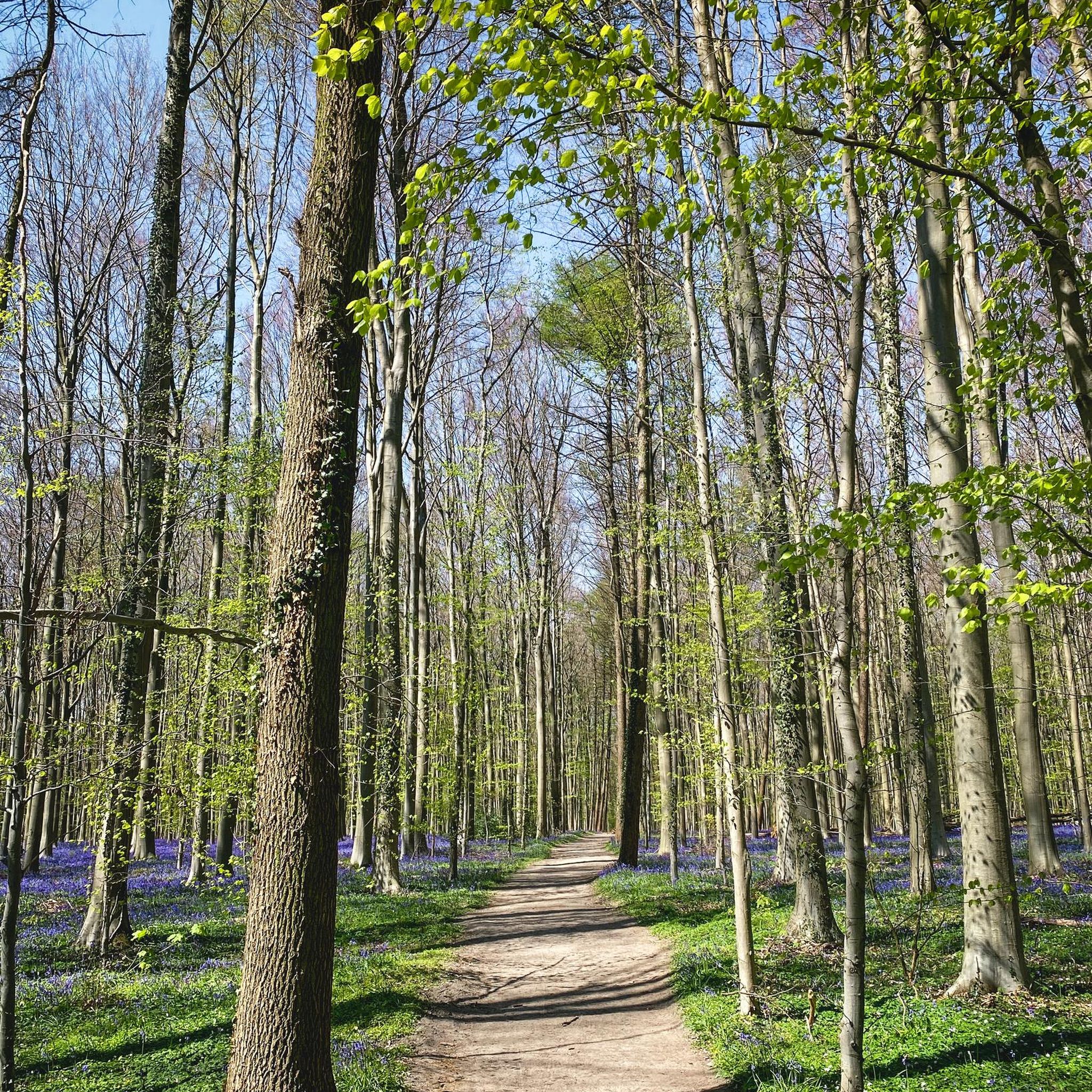
The Hallerbos (French: Bois de Hal) is a forest with an area of 552 ha southeast of Halle (511 ha on Halle territory). The forest is largely owned by the Flemish Region and a small part by the Walloon Region and private properties. The Hallerbos is a quiet recreation area, which is highly appreciated by the population of the surrounding highly urbanized areas. It is very accessible thanks to the many paths, and for an introduction there are three hiking trails. The forest is part of the Flemish Ecological Network, has been a Flemish nature reserve since 2021 and is protected in Europe as a Natura 2000 area 'Hallerbos and nearby forest complexes with source areas and heaths' (BE2400009) (together with other sub-areas such as the Markvallei, Zuunvallei with the Gaasbeek domain, De Wolfsputten, Kesterbeekvallei, Kesterheide, the Terrijst forest reserve, Lembeekbos, Zevenbronnen, Gasthuisbos, Begijnenbos). Since 2023, the forest has been part of the Brabantse Wouden National Park.
0
0
The Hallerbos (French: Bois de Hal) is a forest with an area of 552 ha southeast of Halle (511 ha on Halle territory). The forest is largely owned by the Flemish Region and a small part by the Walloon Region and private properties. The Hallerbos is a quiet recreation area, which is highly appreciated by the population of the surrounding highly urbanized areas. It is very accessible thanks to the many paths, and for an introduction there are three hiking trails. The forest is part of the Flemish Ecological Network, has been a Flemish nature reserve since 2021 and is protected in Europe as a Natura 2000 area 'Hallerbos and nearby forest complexes with source areas and heaths' (BE2400009) (together with other sub-areas such as the Markvallei, Zuunvallei with the Gaasbeek domain, De Wolfsputten, Kesterbeekvallei, Kesterheide, the Terrijst forest reserve, Lembeekbos, Zevenbronnen, Gasthuisbos, Begijnenbos). Since 2023, the forest has been part of the Brabantse Wouden National Park.
1
0

It is a beautiful area that is definitely worth the strenuous walk to admire!
2
0

Frequently Asked Questions
How many hiking trails are available in Hallerbos?
Hallerbos offers a wide variety of hiking experiences, with over 100 trails available. Most of these, around 83, are considered easy, making the forest accessible to many visitors.
What is the best time of year to hike in Hallerbos?
The most iconic time to visit Hallerbos is during the bluebell bloom, typically from mid-April to early May, when the forest floor is covered in a stunning purple-blue carpet. However, the forest offers natural beauty year-round, from early spring blooms of daffodils and primroses, to vibrant autumn colors, and the quiet solitude of winter.
What do other hikers enjoy most about Hallerbos?
The komoot community highly rates Hallerbos, with an average score of 4.4 stars from over 850 reviews. Hikers often praise the enchanting bluebell displays, the diverse ancient woodlands, and the well-maintained trails that cater to various ability levels.
Are there any unique natural features to look out for in Hallerbos?
Yes, Hallerbos is home to several unique natural features. Besides the famous bluebell carpet, you can discover impressive giant sequoia trees, some standing at 40 meters tall. The forest also features an undulating landscape with four deep valleys, and is part of a significant ecological network. You can find the Sequoias in Hallerbos and explore the Steenputbeek Valley.
Can I see the famous bluebell carpet on a hike?
Absolutely! Hallerbos is renowned for its bluebell carpet. Several routes are specifically designed to guide you through the densest patches. Consider the Hyacinth walk (6.3 km) - Hallerbos or the Hyacinth walk (4.8 km) - Hallerbos, which lead through these beautiful areas. Remember to stay on designated paths to protect the delicate flowers.
Are there family-friendly hiking options in Hallerbos?
Yes, Hallerbos offers several family-friendly options. The Plateau Walk, a 4 km route starting at Parking 4, is designed for visitors with limited mobility, featuring adapted paving and rest points. Many of the 83 easy trails in the forest are suitable for families, providing gentle paths through the beautiful woodlands.
Are dogs allowed on the trails in Hallerbos?
Yes, dogs are generally allowed in Hallerbos. However, during the bluebell season, it is especially important to keep dogs on a leash and ensure they stay on the designated paths to protect the delicate flowers and the forest ecosystem.
What are the parking options for Hallerbos?
Hallerbos has several designated parking areas. During the peak bluebell season, special traffic and parking regulations are often in place to manage the large influx of visitors. It's advisable to check local information closer to your visit for the most current parking guidance.
How can I reach Hallerbos using public transport?
While the guide data doesn't specify exact public transport routes, Hallerbos is accessible. For detailed information on bus routes or train connections to Halle, which is the nearest town, and then onward transport to the forest, it's best to consult local public transport websites or Visit Halle's official website.
Are there any circular hiking routes in Hallerbos?
Yes, Hallerbos features several circular hiking routes. For example, the Picnic spot in Hallerbos – Hallerbos — The Bluebell Forest loop from Les Fonds is a moderate 15 km circular trail. Another option is the Bluebell Woods of Hallerbos – Hallerbos — The Bluebell Forest loop from Ligne KW, a moderate 7.5 km loop.
What kind of terrain can I expect when hiking in Hallerbos?
Hallerbos features an undulating landscape with four deep valleys, offering varied topography. While many trails are easy, some routes, like the 7 km Roebuck Walk, traverse these valleys, providing a more adventurous experience with gentle ascents and descents through the diverse woodland.
Are there any specific regulations I should be aware of when hiking in Hallerbos?
Hallerbos is a protected nature reserve, so it's crucial to stay on marked paths to protect the delicate flora, especially during the bluebell season. Dogs should be kept on a leash. The forest is public property with free entry and is accessible 24/7, but respecting the natural environment is paramount.
Most popular routes around Hallerbos
Most popular attractions around Hallerbos

Get inspired with the komoot mobile app


Explore more
Browse the best Hikes in other regions.
