The best cycling routes around Forêt Domaniale du Mort-Homme
4.6
(117)
808
riders
45
rides
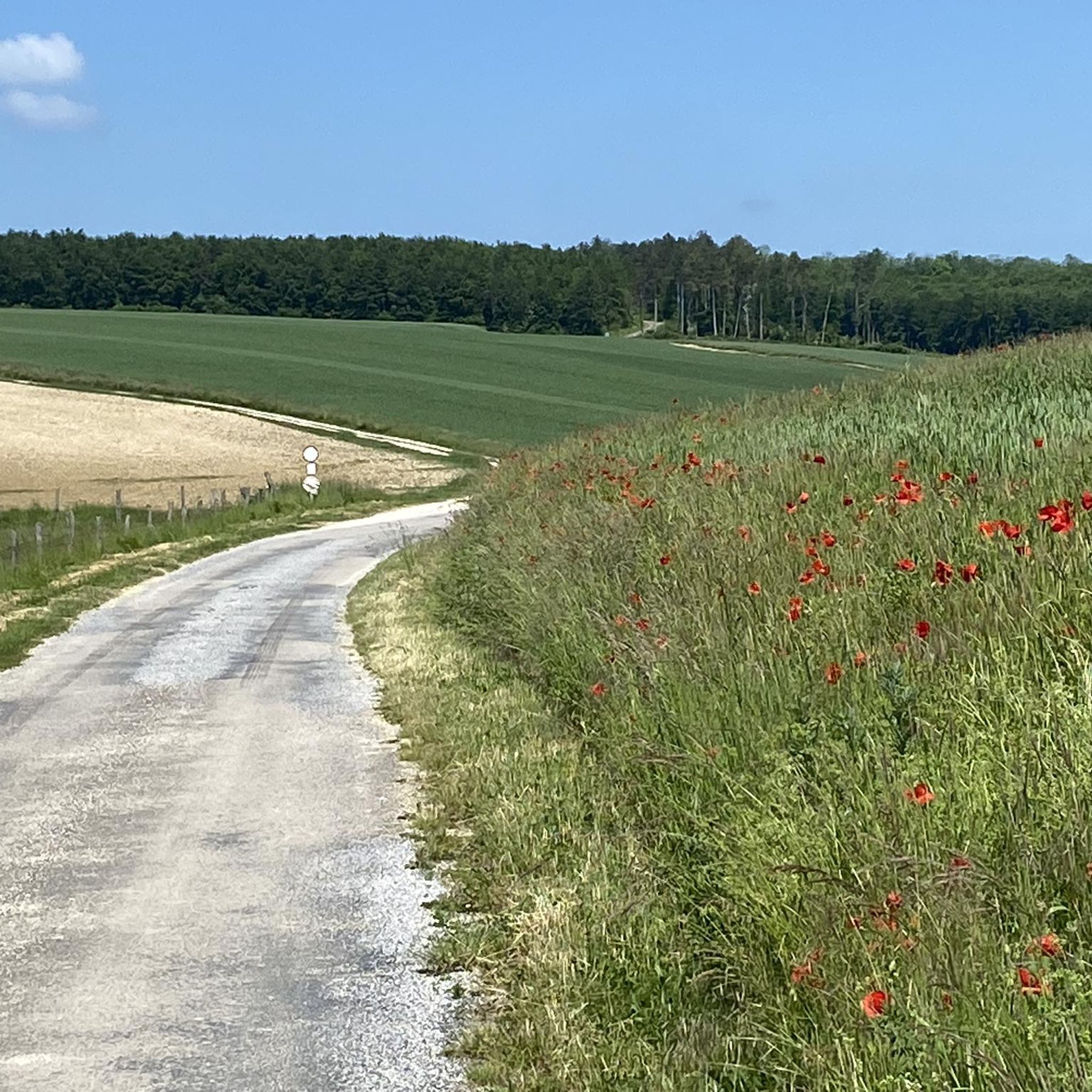
Touring cycling routes around Forêt Domaniale du Mort-Homme traverse a landscape deeply marked by history, yet largely reclaimed by nature. The region is characterized by dense forest, undulating terrain with gentle climbs and descents, and a network of quiet roads. This area, part of a limestone plateau, offers a unique blend of natural beauty and historical significance, making for compelling cycling routes through a reforested battlefield.
Best touring cycling routes around Forêt Domaniale du Mort-Homme
- The most popular touring cycling…
Last updated: July 16, 2026
4.2
(12)
88
riders
85.4km
05:25
490m
490m
Hard bike ride. Very good fitness required. Mostly paved surfaces. Suitable for all skill levels.
3
riders
40.9km
02:44
410m
410m
Moderate bike ride. Good fitness required. Mostly paved surfaces. Suitable for all skill levels.

Sign up for free
5.0
(1)
6
riders
78.9km
04:46
640m
640m
Hard bike ride. Very good fitness required. Mostly paved surfaces. Suitable for all skill levels.
5.0
(1)
23
riders
Easy bike ride. Great for any fitness level. Mostly paved surfaces. Suitable for all skill levels.
3.3
(3)
23
riders
Hard bike ride. Very good fitness required. Mostly paved surfaces. Suitable for all skill levels.
Get access to more routes and recommendations from other explorers.
Sign up for free
Already have an account?
Our route recommendations are based on thousands of hikes, rides, and runs completed by other people on komoot.
Start today with a free account
Your next adventure awaits.
Login or Signup




Tips from the Community

Verdun is a very beautiful city that has been very important since the Middle Ages. It's lovely to walk through the place and admire it.
1
0

Tevens stands at the church's image: The Cross of the Hunters of Briant Cross of the Hunters of Driant in Vacherauville (Meuse) after the First World War. At the end of 1915, the monument in the form of a statue of France, sword in hand, imploring the heavens for victory was erected, but destroyed by the Germans in February 1916. At the end of the conflict, the former hunters erected a new, identical statue, but this time with the sword in its sheath, as shown on the Bleujonquille website.
7
0
Notice how the water level of the canal is higher than the water level of the Meuse.
6
0
This impressive American WWI memorial was dedicated in 1937 to commemorate the victory of the American First Army during the Meuse-Argonne Offensive (26 September – 11 November 1918). The 54-metre-high Doric granite column, designed by John Russell Pope, is topped by a statue symbolising liberty. The monument stands on the hill of Montfaucon, where a medieval monastery once stood and where the Americans achieved a strategic victory in 1918.
9
0
Église Notre-Dame – Varennes-en-Argonne Originally built in the 12th and 13th centuries, this church was destroyed during World War I and carefully rebuilt with its distinctive neoclassical tower and 18th-century façade2. Inside, you’ll find a mix of ancient art and more modern elements, including a 12th-century Vierge à l’Enfant, colourful stained glass windows by Jacques Grüber and a 20th-century organ.
9
0
This bell tower, also called the "Tour Louis XVI", marks a key historical moment: it was here that King Louis XVI was arrested on 21 June 1791 during his failed attempt to escape from revolutionary France. Built in 1793 on the site of the choir of the old Saint-Gengoult church, the tower has been listed as a historical monument since 1989. A silent witness to a turning point in French history.
6
0
Located near the Porte Chaussée and the Verdun War Memorial, this contemporary metal sculpture was designed by the artist Jean-No and created by students from the Lycée Professionnel Eugène Freyssinet. Created to mark the centenary of the Battle of Verdun, it symbolises the living memory of the conflict. The installation connects the past and the future through education and art.
8
0
Inaugurated in 1928, this war memorial in Verdun honours the city’s inhabitants who died for France in both world wars. It was built on the remains of a military butcher’s shop, on the crescent of the Chaussée, a 17th-century fortification. The sculpture depicts five soldiers – a cavalier, an engineer, an infantryman (poilu), an artilleryman and a territorial – forming a symbolic wall under the motto of Verdun: “On ne passe pas”.
8
0
Frequently Asked Questions
How many touring cycling routes are available in Forêt Domaniale du Mort-Homme?
There are over 45 touring cycling routes in the Forêt Domaniale du Mort-Homme region. These routes cater to various fitness levels, with 10 easy, 24 moderate, and 13 difficult options available.
What is the typical terrain like for touring cyclists in Forêt Domaniale du Mort-Homme?
The terrain in Forêt Domaniale du Mort-Homme is characterized by undulating landscapes with gentle climbs and descents, making for an engaging ride without being overly strenuous. You'll primarily cycle on quiet, scenic roads winding through dense forest, often on paved surfaces.
Are there any family-friendly touring cycling routes in Forêt Domaniale du Mort-Homme?
Yes, there are 10 easy touring cycling routes suitable for families in Forêt Domaniale du Mort-Homme. These routes offer a more relaxed experience through the forest. An example is the Rest stop by the waterfront – Wood sculpture Fish on dry land loop from Samogneux, which is 13.0 miles (20.9 km) long and leads through varied forest scenery.
What kind of historical landmarks can I expect to see along the cycling routes?
The Forêt Domaniale du Mort-Homme is rich in history, particularly from World War I. Cycling routes often incorporate poignant memorials and sites. You can expect to see the iconic Monument du Mort-Homme, a skeleton sculpture, and other war memorials. The landscape itself, with subtle shell craters and trenches, serves as a testament to its past. Informative signposts along the trails provide historical context.
Are there any circular touring cycling routes in the area?
Yes, many of the touring cycling routes in Forêt Domaniale du Mort-Homme are designed as loops, allowing you to start and finish at the same point. For example, the popular War monument – Clock Tower loop from Esnes-en-Argonne is a moderate 25.5 miles (41.0 km) circular route that connects historical sites.
What natural features can be observed while cycling through the forest?
Beyond its historical significance, the Forêt Domaniale du Mort-Homme is a vibrant natural space. It's a Natura 2000 site, indicating its ecological importance. You'll cycle through dense woodlands, which are gradually being converted from conifer to mixed deciduous stands. The presence of wetlands and streams like the Ruiseau de Forges also creates diverse habitats for flora and fauna.
What do other touring cyclists enjoy most about cycling in Forêt Domaniale du Mort-Homme?
The area is highly rated by the komoot community, with an average score of 4.6 stars from over 130 reviews. Reviewers often praise the unique blend of historical immersion and serene natural beauty, highlighting the quiet, reforested landscapes and the well-maintained roads that make for a reflective and enjoyable cycling experience.
Is it possible to access the cycling routes using public transport?
While direct public transport to the heart of Forêt Domaniale du Mort-Homme might be limited, the nearest major town is Verdun. From Verdun, you may find local bus services or taxis that can get you closer to the forest's access points. Cyclists often travel to Verdun by train and then cycle to the starting points of the routes.
Where can I park my car when visiting Forêt Domaniale du Mort-Homme for cycling?
Parking is generally available at various access points and near key historical sites or villages bordering the forest. For example, you might find parking in villages like Esnes-en-Argonne or Consenvoye, which serve as starting points for several touring cycling routes. Look for designated parking areas near trailheads or visitor information centers.
Are there any challenging routes for experienced touring cyclists?
Yes, for experienced touring cyclists seeking a challenge, there are 13 difficult routes available. An example is the Cumières-le-Mort-Homme – Verdun Memorials and Monuments loop from Consenvoye, a demanding 49.5 miles (79.6 km) path that offers extensive views and passes numerous memorials, requiring good endurance.
What is the best time of year to go touring cycling in Forêt Domaniale du Mort-Homme?
The best time for touring cycling in Forêt Domaniale du Mort-Homme is typically from spring to autumn (April to October). During these months, the weather is generally mild and pleasant, and the forest is in full bloom or displaying vibrant autumn colors. The sub-Atlantic humid climate means conditions are usually favorable, though checking local weather forecasts is always recommended.
Can I combine cycling with exploring other nearby attractions?
Absolutely. The region around Forêt Domaniale du Mort-Homme is deeply intertwined with the history of Verdun. Many cycling routes are designed to pass through or near significant historical sites and memorials. You can easily extend your trip to explore the city of Verdun itself, with its museums and monuments, or other related battlefields and remembrance sites in the wider Meuse area.
Most popular routes around Forêt Domaniale du Mort-Homme

Get inspired with the komoot mobile app


Explore more
Browse the best Cycling routes in other regions.
