The best walks and hikes around Forêt de Quatre Vaux
4.4
(49)
194
hikers
46
hikes
Hiking around Forêt de Quatre Vaux offers diverse terrain across a 398-hectare deciduous forest in the Charente department. The area is characterized by a broad plate of tertiary clay covering a Jurassic limestone plateau, with altitudes ranging from 80 to 139 meters. Notable natural features include dry valleys, known as combes, which give the forest its name, and the deep valley of the Bellonne. The forest is predominantly composed of oak, beech, and chestnut trees.
Best hiking trails around Forêt…
Last updated: July 11, 2026
3.4
(13)
28
hikers
Easy hike. Great for any fitness level. Easily-accessible paths. Suitable for all skill levels.
4.8
(4)
8
hikers
10.7km
02:46
50m
50m
Moderate hike. Good fitness required. Easily-accessible paths. Suitable for all skill levels.

Sign up for free
5.0
(1)
8
hikers
Easy hike. Great for any fitness level. Easily-accessible paths. Suitable for all skill levels.
1
hikers
21.4km
05:34
130m
130m
Hard hike. Very good fitness required. Easily-accessible paths. Suitable for all skill levels.
4.02km
01:03
30m
30m
Easy hike. Great for any fitness level. Easily-accessible paths. Suitable for all skill levels.
Get access to more routes and recommendations from other explorers.
Sign up for free
Already have an account?
Our route recommendations are based on thousands of hikes, rides, and runs completed by other people on komoot.
Start today with a free account
Your next adventure awaits.
Login or Signup

Tips from the Community

15th century stone bridge known as that of the Château de la Rochefoucauld. From the building, there is a superb view of the imposing castle and the waters of the Tardoire. It has been listed as a Historic Monument since 1935. The castle, renowned for being one of the most beautiful and oldest in Charente, can be visited all year round. It is the only castle in France that has been inhabited by the same family for more than 1,000 years. Do not miss !
2
0

In the heart of Charente, the Château de la Rochefoucauld stands like a page of history mixed with an enchanted tale. Built around the 16th century on the site of an 11th century fortress, this gem has been cherished by the same family since its earliest days. And that’s something! Strolling through its rooms or admiring the landscape from its towers, you feel the weight of history. It's as if the castle whispers to us both history lessons and stories of adventure.
0
0

This magical 16th century Renaissance castle is built on an 11th century fortress whose towers have been preserved. The castle and its gardens have been classified as a historical monument since 1955. Definitely worth the short detour!
0
0

Dedicated to Saint-Didier, bishop of Langres (Haute-Marne) in the 5th century, this Romanesque church has been listed on the additional list of Historic Monuments since 1925. Its nave, probably built as early as the 11th century, is covered with a modern paneled frame lower than the original covering. The transept under the bell tower is vaulted with a dome on pendentives and the semi-circular sanctuary has a cul-de-four. These spaces date from the beginning of the 12th century. The Romanesque transept arms have disappeared in favor of side chapels rebuilt at the end of the 19th century. To the west, the two-level screen facade is punctuated in its lower part by flat buttresses. The portal, in a slightly broken arch with triple rollers, is confined by four small columns. Above, a small window illuminates the nave.
1
0

Appearing in 1019 with Foucauld, lord of La Roche, the La Rochefoucauld family has long been considered a branch of the Lusignan, due to the similarity of their arms. It seems, in reality, that Foucauld was a close relative of the Viscount of Limoges, descendant of a Grand of the court of Charlemagne. Only four other families in France (including that of the Capetians) can claim such seniority. The history of the castle is inseparable from the history of the La Rochefoucauld family which, itself, is part of the political life of its time, century after century. The castle of La Rochefoucauld provides a remarkable illustration of the interweaving of politics and architecture through the life of a family which has continuously owned the castle since Fucaldus laid the first fortification around 980. With the history of the La Rochefoucauld family, the use of architecture for social and political purposes finds one of its most spectacular manifestations. This earned it the justified title of “pearl of Angoumois”. The castle is an anthology of seven centuries of architecture and the home of the La Rochefoucauld family, still present for over a thousand years. To see: the monumental Renaissance staircase (108 steps!), the boudoir of Marguerite de Valois, the kitchens dug into the karst, the state rooms, guards, the 18th century libraries, the main courtyard and its galleries from the 16th.
3
0
Appeared in 1019 with Foucauld, Lord of La Roche, the family of La Rochefoucauld has long been considered a branch of the Lusignan, due to the similarity of their weapons. It seems, in fact, that Foucauld was a close relative of the Viscount of Limoges, descended from a Grand of the court of Charlemagne. Only four other families in France (including that of the Capetians) can claim such seniority. The history of the castle is inseparable from the history of the La Rochefoucauld family, which itself, century after century, is part of the political life of its time. The castle of La Rochefoucauld gives a remarkable illustration of the interweaving of politics and architecture through the life of a family which has owned the castle without interruption since Fucaldus laid the first fortification around 980. With the history of the La Rochefoucauld family, the use of architecture for social and political ends finds one of its most spectacular manifestations. This earned it the justified title of "Pearl of Angoumois". The castle is an anthology of seven centuries of architecture and the residence of La Rochefoucauld, still present, for more than a thousand years. To see: the monumental Renaissance staircase (108 steps!), Marguerite de Valois' boudoir, the kitchens dug into the karst, the ceremonial rooms, the guards, the 18th century libraries, the main courtyard and its galleries 16th century. Visit sheet translated into 17 languages.
1
0

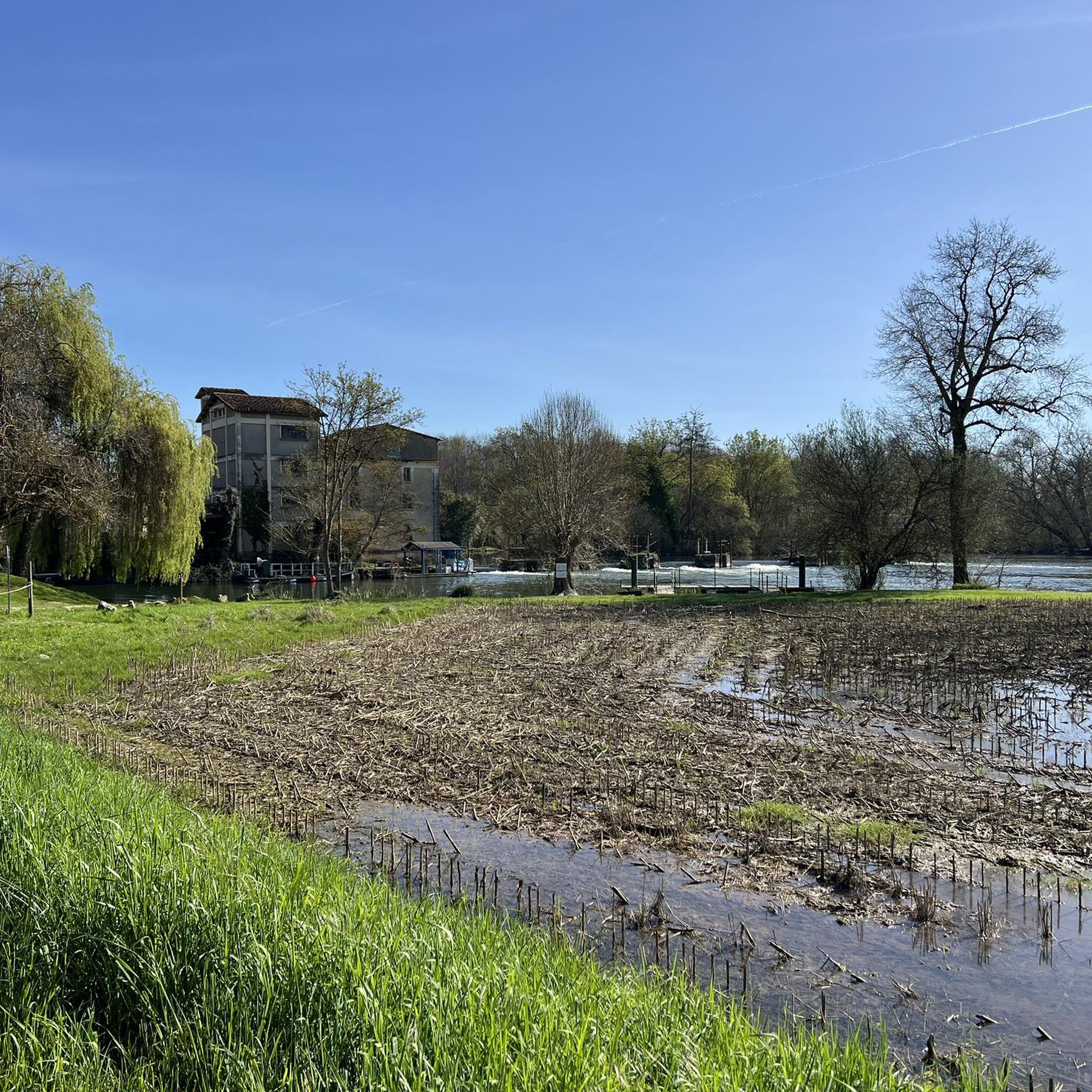
The weir system directly below is in need of renovation. The water gushes out from under the weir!
0
1
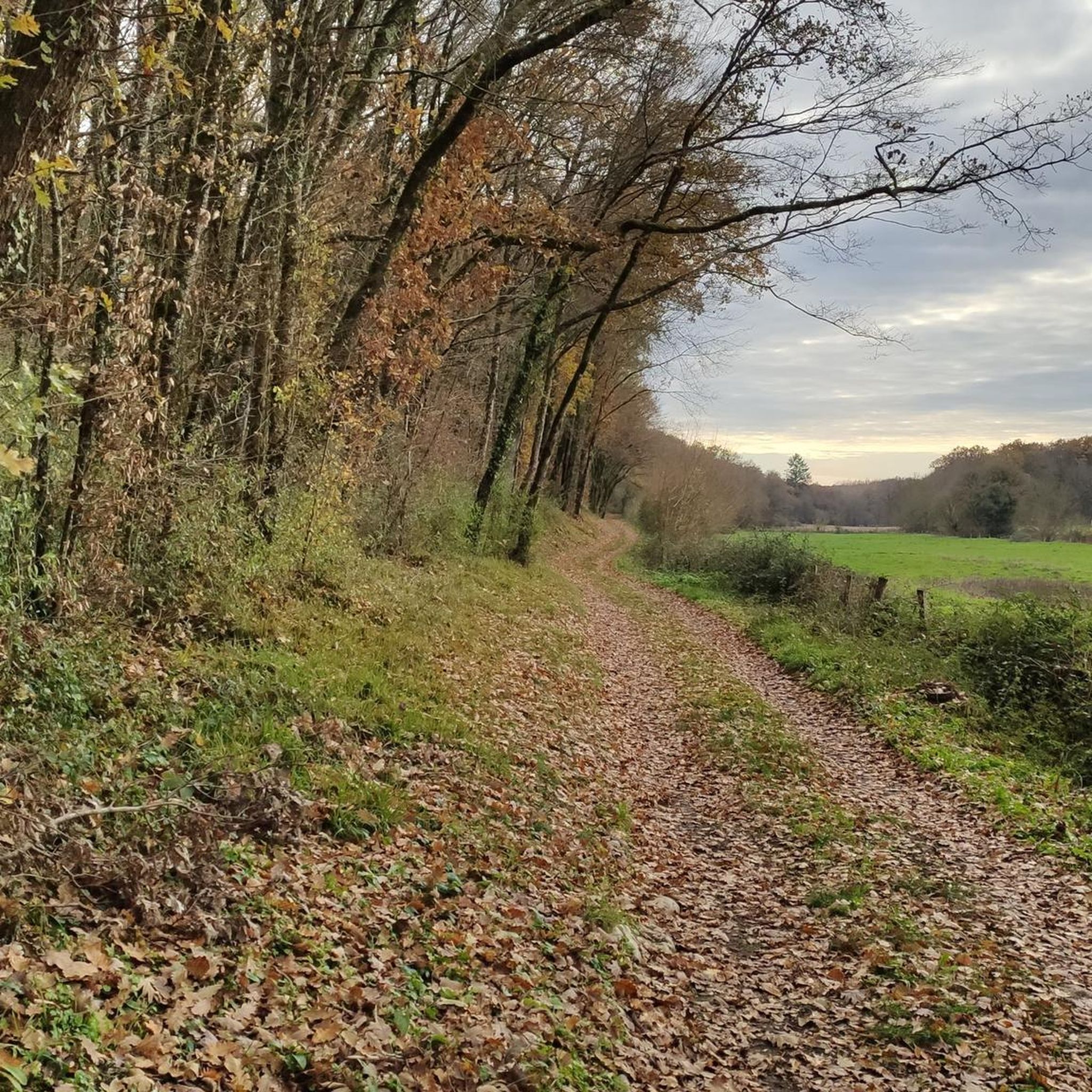
Quaint castle forest with a fitness trail! It is worth taking a walk here.
0
0
Frequently Asked Questions
How many hiking trails are available in Forêt de Quatre Vaux?
There are over 45 hiking routes available in Forêt de Quatre Vaux, catering to various preferences and skill levels. These trails explore the forest's diverse terrain, from its dry valleys to its deciduous woodlands.
What kind of terrain can I expect when hiking in Forêt de Quatre Vaux?
Hikers in Forêt de Quatre Vaux will encounter varied terrain. The forest sits on a broad plate of tertiary clay covering a Jurassic limestone plateau, with altitudes ranging from 80 to 139 meters. A defining feature is its 'four valleys' or combes, which are dry valleys. The trails predominantly wind through deciduous woodlands of oak, beech, and chestnut trees.
Are there any family-friendly hiking options in Forêt de Quatre Vaux?
Yes, Forêt de Quatre Vaux offers several easy routes suitable for families. For example, the Château Forest – La Rochefoucauld Castle loop from La Rochefoucauld is an easy 7.1 km (4.4 miles) trail that takes about 1 hour 50 minutes to complete, exploring the forest surroundings near the historic castle.
Can I bring my dog on the trails in Forêt de Quatre Vaux?
While specific regulations for dogs are not detailed, generally, dogs are welcome on trails in French forests, often on a leash. It's always advisable to ensure your dog is under control and to respect local signage regarding pet access.
What are the best times of year to hike in Forêt de Quatre Vaux?
Forêt de Quatre Vaux, with its predominantly deciduous trees like oak, beech, and chestnut, offers beautiful scenery throughout the seasons. Spring brings fresh greenery, while autumn transforms the forest with vibrant colors, making both seasons particularly appealing for hiking. Summer offers shaded trails, and winter can provide a tranquil, crisp experience.
Are there any circular hiking routes in Forêt de Quatre Vaux?
Yes, many of the trails in Forêt de Quatre Vaux are designed as circular routes, allowing you to start and end at the same point. An example is the Saint-Didier Church loop from La Rochefoucauld, a moderate 12.5 km (7.8 miles) path offering varied scenery.
What is the difficulty level of hikes in Forêt de Quatre Vaux?
The hiking trails in Forêt de Quatre Vaux cater to a range of abilities. Out of 45 routes, there are 16 easy trails, 27 moderate trails, and 2 more challenging routes. This variety ensures options for casual walkers and more experienced hikers alike.
Are there any notable natural features or landmarks to look out for?
The forest itself is a significant natural feature, known for its 'four valleys' (Quatre Vaux), which are dry combes traversing the area. The deep valley of the Bellonne is one such feature. The diverse deciduous woodlands of oak, beech, and chestnut trees also contribute to its scenic beauty throughout the seasons. While there are no specific natural landmarks listed, the forest's ecological importance is recognized as a ZNIEFF type 2.
What do other hikers enjoy the most about hiking in Forêt de Quatre Vaux?
The area is highly rated by the komoot community, with an average score of 4.3 stars from over 30 reviews. Hikers often praise the tranquil atmosphere of the deciduous woodlands, the varied terrain, and the well-maintained paths that allow for immersive experiences in nature.
Is there parking available for hikers at the trailheads?
While specific parking locations are not detailed, most hiking areas in France, especially those near towns like La Rochefoucauld, typically offer designated parking areas close to popular trailheads or access points. It's recommended to check the starting point of your chosen route on komoot for specific parking information.
Are there any long-distance hiking options in the forest?
Yes, for those seeking a longer adventure, there are more extensive routes available. The La Rochefoucauld Castle loop from La Rochefoucauld is a challenging 21.4 km (13.3 miles) trail that typically takes over 5 hours to complete, offering a comprehensive exploration of the forest landscape.
What types of trees can I expect to see in Forêt de Quatre Vaux?
The Forêt de Quatre Vaux is predominantly a deciduous forest. You can expect to see a rich array of oak, beech, and chestnut trees, which contribute to its vibrant colors, especially during spring and autumn.
Most popular routes around Forêt de Quatre Vaux

Get inspired with the komoot mobile app


Explore more
Browse the best Hikes in other regions.
