The best walks and hikes around Levers Water
4.6
(6178)
56,235
hikers
747
hikes
Hikes around Levers Water explore a landscape shaped by its industrial past, situated in the fells above Coniston. The area is characterized by a large reservoir, the surrounding peaks of Wetherlam and the Old Man of Coniston, and the historic Coppermines Valley. Trails often follow rocky paths with steady ascents, passing old mine workings and waterfalls along Church Beck.
Best hiking trails around Levers Water
- The most popular hiking route is the Old Man of Coniston, Swirl How & Wetherlam loop from Walna Scar, a 8.4 mile (13.5 km) trail that takes around 4 hours 55 minutes to complete. This challenging route summits multiple fells with significant elevation gain.
- Another top favourite among local hiking enthusiasts is the Summit of the Old Man of Coniston – Old Man of Coniston summit loop from Coniston, a difficult 9.5 mile (15.3 km) path. The trail involves a long ascent to the summit before looping back towards Levers Water.
- Local hiking enthusiasts also love the Old Man of Coniston summit – Summit of the Old Man of Coniston loop from Coniston, a 3.4 mile (5.4 km) trail leading to the summit, often completed in about 2 hours 30 minutes.
- Hiking around Levers Water is defined by high fell ascents, rocky mountain paths, and views across the Coppermines Valley. The network of trails provides options for moderate hikes to the reservoir as well as more strenuous mountain circulars.
- The routes in Levers Water are highly rated by the komoot community with an average score of 4.6 stars from over 5,600 reviews. More than 52,000 hikers have used komoot to explore Levers Water's varied terrain.
Last updated: June 25, 2026
4.4
(48)
242
hikers
Moderate hike. Good fitness required. Easily-accessible paths. Suitable for all skill levels.
4.8
(26)
533
hikers
5.78km
02:48
410m
410m
Moderate hike. Good fitness required. Mostly accessible paths. Sure-footedness required.

Sign up for free
4.7
(15)
61
hikers
5.41km
02:32
540m
540m
Moderate hike. Good fitness required. Mostly accessible paths. Sure-footedness required.
4.6
(5)
96
hikers
3.98km
01:48
240m
240m
Moderate hike. Great for any fitness level. Mostly accessible paths. Sure-footedness required.
4.8
(313)
1,318
hikers
10.5km
04:23
730m
730m
Moderate hike. Good fitness required. Mostly accessible paths. Sure-footedness required.
Get access to more routes and recommendations from other explorers.
Sign up for free
Already have an account?
Our route recommendations are based on thousands of hikes, rides, and runs completed by other people on komoot.
Start today with a free account
Your next adventure awaits.
Login or Signup

Tips from the Community

Around 1590, the Company of Mines Royal began extracting copper from the Coniston copper veins. The first work was carried out entirely by hand. With brute force, the rock face was broken and tunnels were excavated very slowly. Only enough rock was removed to allow one person to pass through the tunnel, and these access tunnels are called 'coffin levels' because of their characteristic coffin shape. Excavating a 17th-century tunnel like Cobbler's Level could still take three years. The Elizabethan Company of Mines Royal was led by German experts from the Tyrol and Bavaria. Their mines penetrated more than 55 metres into the earth. Work continued after the English Civil War, but perhaps not to a great extent. At the end of the 17th century, gunpowder was introduced, which changed everything. Work went much faster and mines could go much deeper than before, up to more than 90 metres below the surface. The charges were placed in a hole drilled into the rock using 'jumpers', iron rods made on site. You can still see hand-drilled shot holes. Gunpowder was replaced by dynamite in 1877 and jumpers by compressed air drills in 1883. (Lake district national park)
5
0
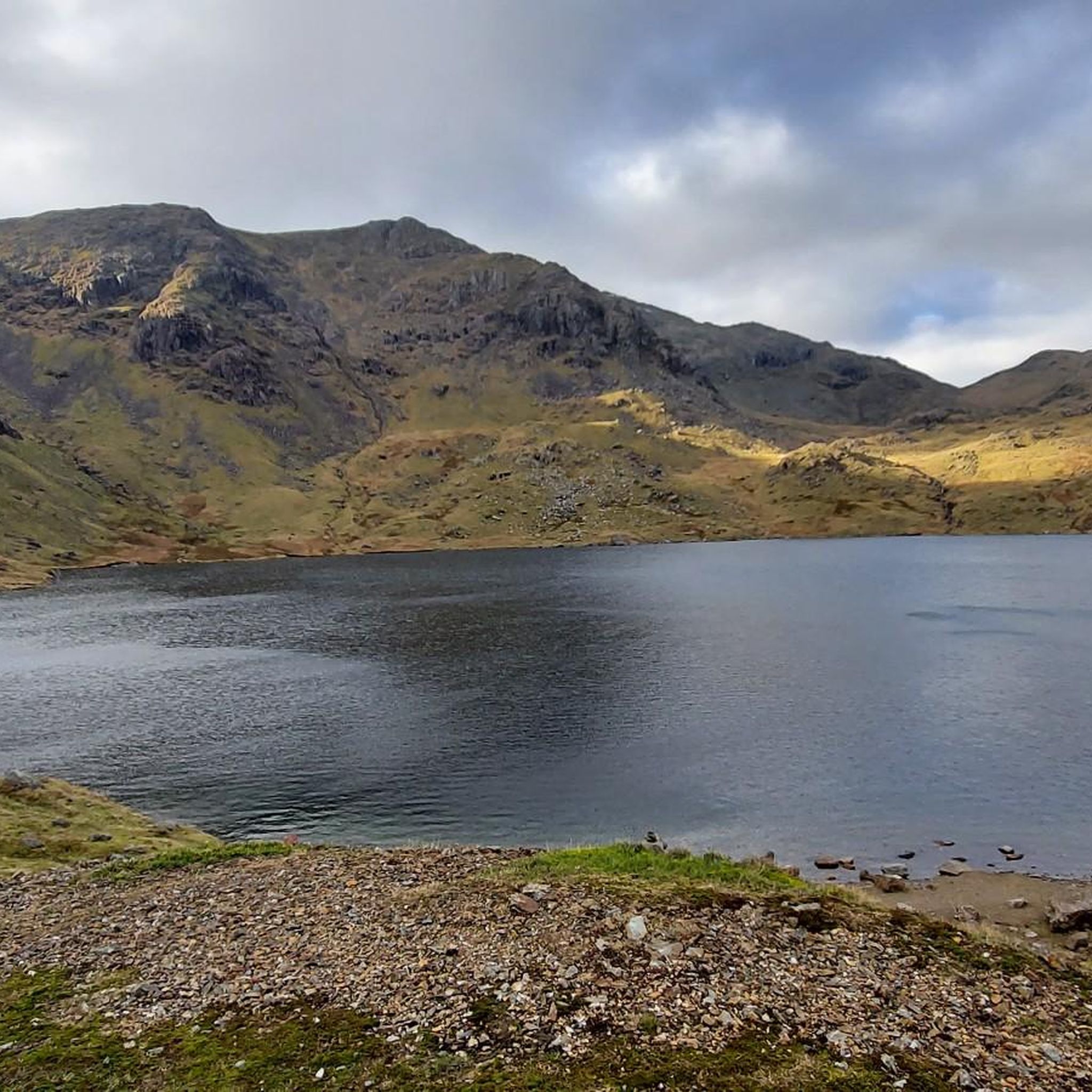
During the descent, you get a good view of Levers Water, a beautiful mountain lake.
6
0
Brim Fell connects Coniston Old Man with Swirl How, the two main fells of the Coniston group. Its disadvantage is that it is very close to the Old Man, only a short walk away.
6
0
To describe this mountain, here is a quote: "Although cruelly scarred and disfigured by the quarries, the Old Man has retained a dignified bearing and still lifts his proud and venerable head to the sky. His tears flow quietly into Low Water and Goats Water, two beautiful mountain tarns, whence they eventually... find their way to Coniston Water, bathing his ancient feet." Alfred Wainwright, "A Pictorial Guide to the Lakeland Fells, Book Four: The Southern Fells"
5
0
The most spectacular angles for photographing Low Water are from above: it can be seen from the ridge between Brim Fell Rake and the Old Man, but also from the steep, rugged path between the Old Man and the village of Coniston. The shores of the Tarn can also be reached via this latter path. (Lakes, Meres, Tarns & Waters)
6
0
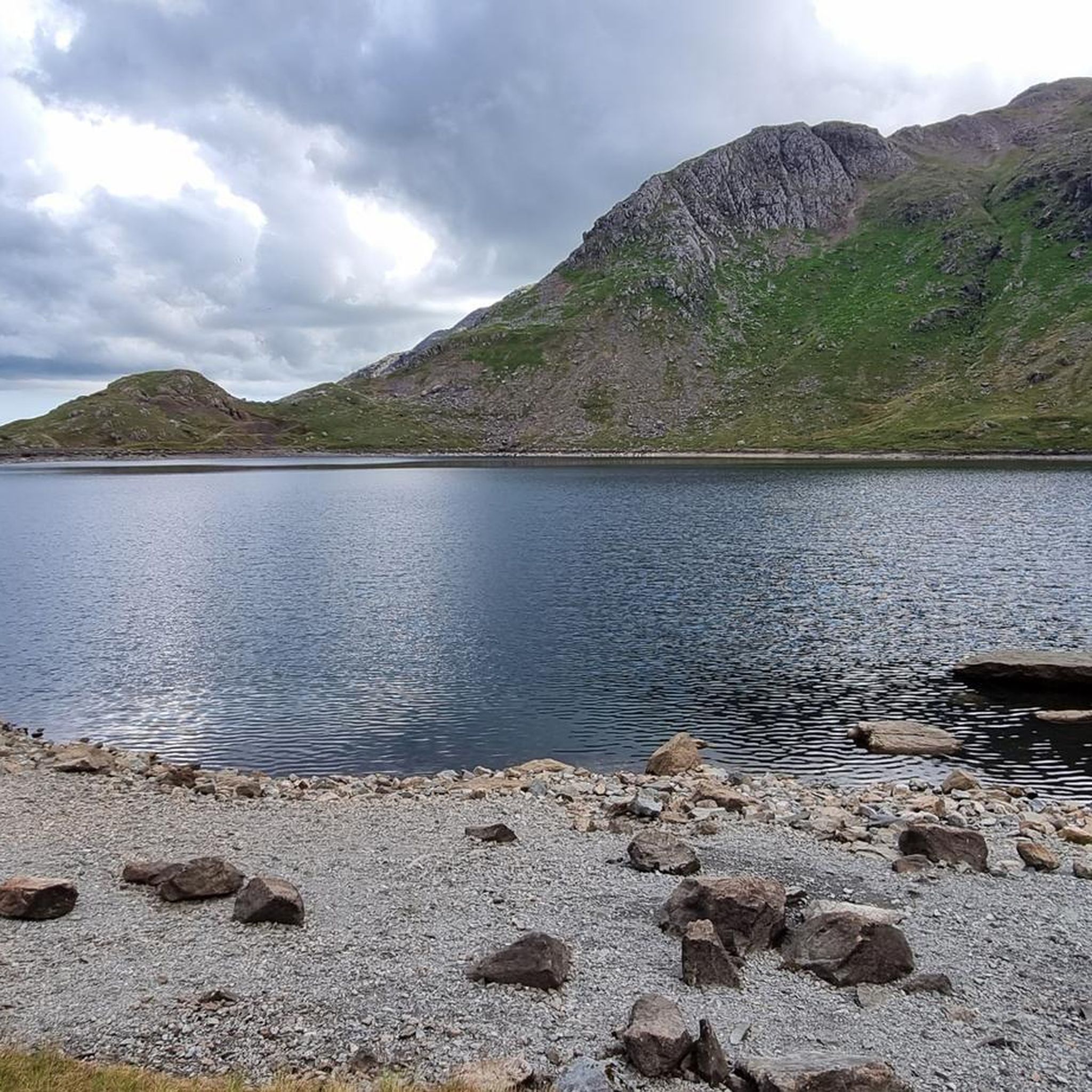
Low Water is a spectacular mountain lake at an altitude of 550 metres, directly below the steep north-western rock faces of the Old Man of Coniston. Surrounded by an impressive mountain landscape, it is a popular stopping point for hikers and wild swimmers.
6
0
The ruins of Saddlestone Mill are fascinating, derelict remnants of the old "Coniston slate and copper mines" on the northeastern flank of the Old Man of Coniston. The site is located approximately 2 km west of the village of Coniston and includes huge steel cables, old railway tracks, winding gear, buildings, and abandoned quarry tunnels.
6
0
A beautiful waterfall, but difficult to view in the summer due to dense vegetation.
6
0
Frequently Asked Questions
Where can I park to hike around Levers Water?
Parking for hikes into the Coppermines Valley and up to Levers Water is available in Coniston village. There is also limited parking along the Walna Scar Road, which serves as a popular trailhead for routes heading up to the fells. Arrive early, especially on weekends and holidays, as these spots fill up quickly.
Are there any family-friendly walks near Levers Water?
Yes, the lower Coppermines Valley offers fascinating, less strenuous walks suitable for families. These routes explore the area's rich industrial past. For a shorter loop that still gives a great sense of the area, consider the Crowberry Haws – Saddlestone Mill Ruins loop from Coniston, which is about 4 km and allows you to see some of the historic mine ruins without a major mountain ascent.
What is the hiking like in the Levers Water area?
Hiking around Levers Water is defined by its dramatic fell-side scenery and industrial heritage. Trails range from steady ascents alongside Church Beck in the Coppermines Valley to challenging, rocky mountain paths leading to summits like Wetherlam and the Old Man of Coniston. Expect rugged terrain and spectacular views.
Are dogs allowed on the trails around Levers Water?
Dogs are welcome on the public footpaths around Levers Water. However, the area is surrounded by active farmland with livestock, so it's crucial to keep your dog on a lead, especially during lambing season (typically spring). The terrain can be rocky and steep, so ensure your dog is fit enough for a mountain environment.
Can you recommend a challenging circular hike in the area?
For a demanding but rewarding day on the fells, the Old Man of Coniston, Swirl How & Wetherlam loop from Walna Scar is an excellent choice. This 13.5 km route involves significant elevation gain and summits multiple iconic peaks, offering panoramic views of the Lake District.
Are there any waterfalls on the hikes to Levers Water?
Yes, the main path from Coniston up to Levers Water follows Church Beck through the Coppermines Valley. Along this route, you'll pass several picturesque waterfalls as the beck tumbles down the mountainside, providing a beautiful soundtrack to your ascent.
How many hiking trails are there around Levers Water?
There are over 750 hiking routes to explore around Levers Water on komoot. These range from easy walks in the lower valley to difficult multi-peak mountain expeditions, offering options for all fitness levels.
Can you go wild swimming in Levers Water?
Yes, Levers Water is a popular spot for wild swimming, offering a chance for a refreshing dip in a spectacular mountain setting. The water is very cold year-round, so be prepared with appropriate gear like a wetsuit and warm layers for after your swim. Always assess conditions and your own ability before entering the water.
What do other hikers enjoy most about the Levers Water area?
The area is highly regarded by the komoot community, with an average rating of 4.6 stars. Hikers frequently praise the stunning combination of natural beauty and industrial history, from the dramatic views from the high fells to the fascinating ruins scattered throughout the Coppermines Valley.
Can you access the old copper mines from the main trail?
The main trails through the Coppermines Valley pass directly by many of the historic mine workings. You can see the ruins of old buildings, spoil heaps, and sealed-off mine entrances from the path. For safety, you should not attempt to enter any of the old mine shafts or buildings.
What should I pack for a hike to Levers Water?
For any hike in the Levers Water fells, you should pack waterproof clothing, extra warm layers, sturdy hiking boots, and plenty of food and water. The weather can change very quickly in the mountains. A map and compass (and knowing how to use them) are also essential, as phone signal can be unreliable.
Where is the plane crash site near Swirl How?
The crash site of the 1944 Halifax bomber is located on the north side of Great Carrs, near the summit. It is accessible on routes that include both Swirl How and Great Carrs. The site is marked by a memorial cairn and wreckage from the aircraft, serving as a poignant landmark on the fells.
Most popular routes around Levers Water

Get inspired with the komoot mobile app


Explore more
Browse the best Hikes in other regions.
