Attractions and Places To See around West Bishop - Top 18
Best attractions and places to see around West Bishop include a rich tapestry of natural beauty and cultural heritage. Situated in the Eastern Sierra region, West Bishop offers access to diverse landscapes, from high-altitude canyons to desert formations. The area is known for its prominent natural landmarks and historical sites, reflecting both geological wonders and the history of the Owens Valley. Visitors can explore a variety of outdoor activities and cultural experiences within this scenic region.
Best attractions and places…
Last updated: July 8, 2026
Bishop
Highlight • Settlement
Tip by

Waganobe Trail (32E01)
Highlight (Segment) • Trail
Tip by

Sign up now to discover places like this
Get recommendations on the best single tracks, peaks, & plenty of other exciting outdoor places.
Sign up for free
Druid Stones
Highlight • Natural Monument
Tip by

Buttermilk Boulders
Highlight • Climb
Translated by Google •
Tip by
Chalk Bluff
Highlight • Natural Monument
Tip by
Sign up for free to discover even more attractions around West Bishop.
Sign up for free
Already have an account?
Start today with a free account
Your next adventure awaits.
Login or Signup
Popular around West Bishop

Tips from the Community

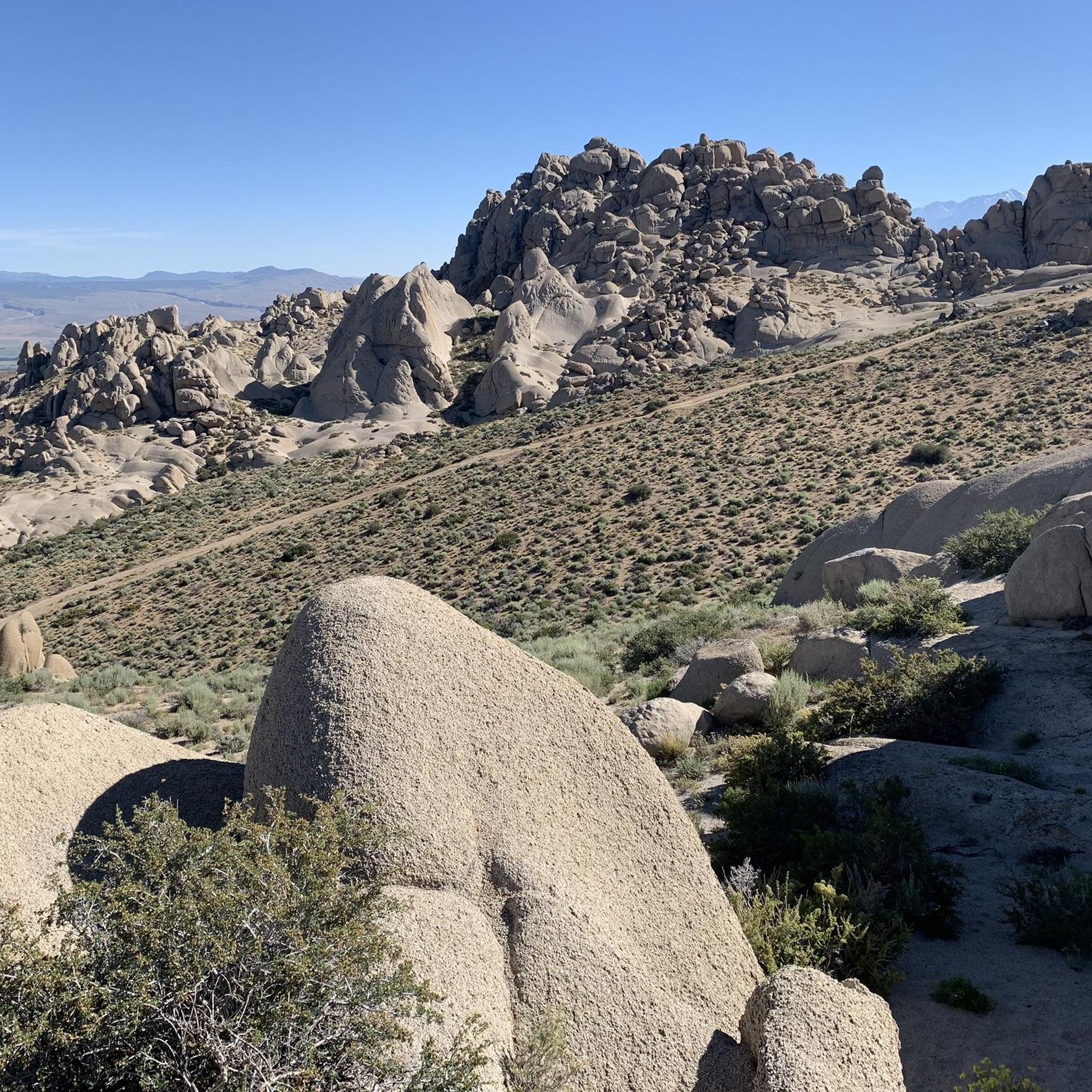
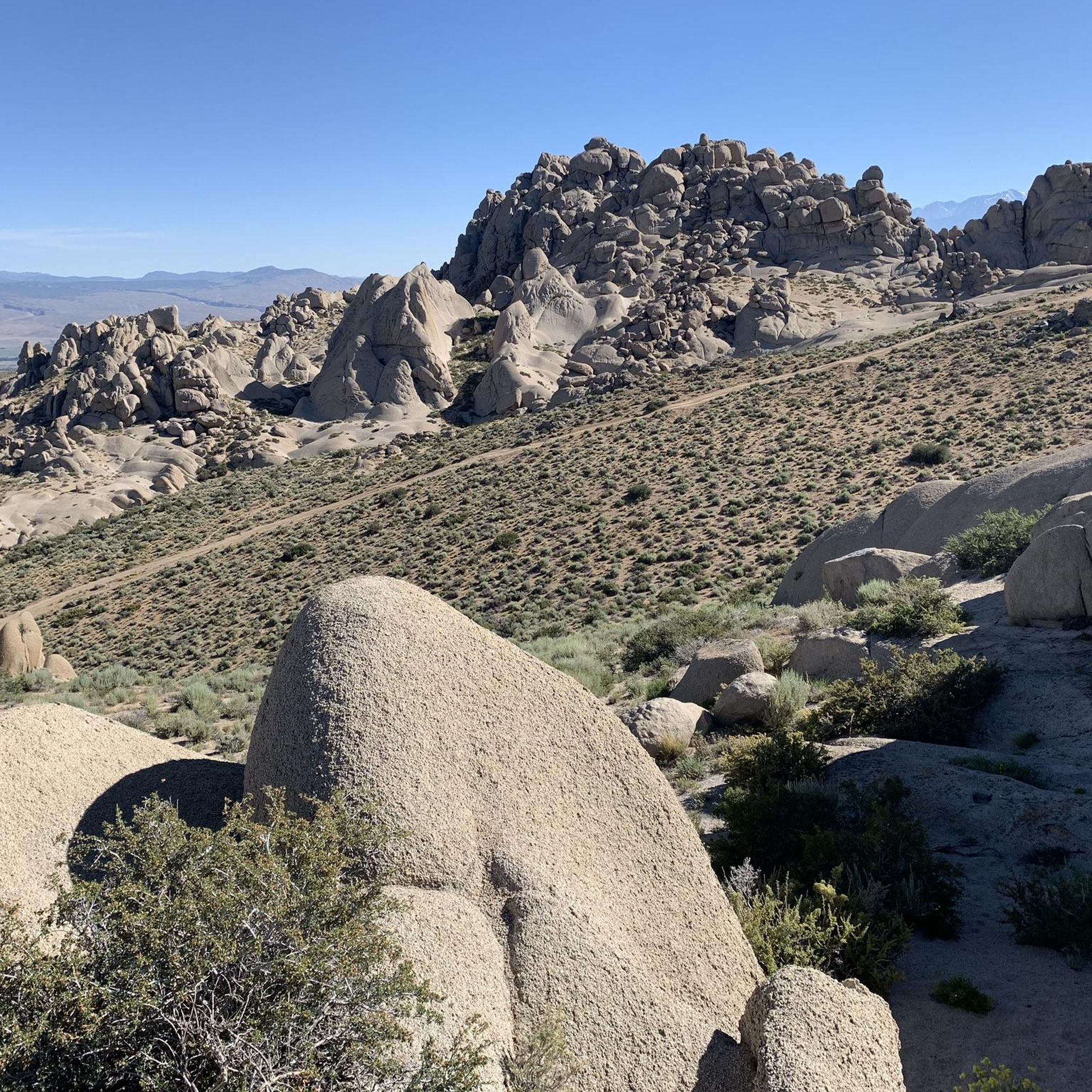
Rock formations similar to those in Joshua Tree National Park, but with the snow-capped Sierra Nevada in the background. The boulders are a popular climbing area. All around there are many dispersed campsites.
0
0

Formerly known as the Druid Stones Trail, the Waganobe Trail has been renamed by the local Paiute Tribe. This challenging downhill trail can be reached a few different ways, but for folks looking for a very full day you can climb the Coyote Valley Road (7S10) with a 4,500-foot elevation gain. Alternatively, you can shuttle cars and complete a shorter 2,600-foot climb up Habegger Road to about 11,000 feet that offers stunning views and fun descents on dirt roads leading to the singletrack portion. The start of the Waganobe Trail is about half a mile south of where Coyote Valley Road (7S10) crosses the West Fork of Coyote Creek. After taking the Coyote Flat Connector to the Waganobe Trail, and after a brief climb, you descend along a doubletrack, and complete another climb. The road then transitions into a steep, overgrown singletrack that opens into a meadow. Cross the meadow and find the trail in a stand of aspen trees until you reach a road, turning right to an open meadow. From here, a faint trail heads east through sagebrush. Watch your pedals in this section. Eventually, a left-hand turn across a creek appears. If missed (which is easy to do), the trail dead-ends shortly after anyway, s you can just backtrack to find the faint path up the hill on your right. This segment is technical if overgrown. As the brush clears, the trail becomes loose, but still super fun. The descent includes a few short, steep climbs, leading to a saddle where another trail splits left. Continuing straight, the landscape changes to open desert with large boulders and you'll eventually encounter plenty of hikers (so be respectful) as the trail becomes increasingly steep and technical over rocks. You continue the steep descent until you reach the trailhead.
0
0
Chalk Bluff, for which the road is named for, is remarkably a straight, ~5-mile-long, escarpment that forms the south edge of the Volcanic Tableland. Named Chalk Bluff for its light tan-to-white colored, chalk-like rocks, they stand in contrast to the darker, volcanic Bishop tuff boulders that stand atop the escarpment and are popular with rock climbers. The Owens River flows below the Chalk Bluff with the gravel road running between, all making for a truly unique riding experience.
0
0

These are some interesting rock formations, with the trailhead located just 5 miles from downtown Bishop. The trail to the stones has a considerable elevation gain in a few miles, delivering panoramic views of the Sierra Nevada, Bishop Valley, and the White Mountains. The Druid Stones are a popular destination for climbers due to the boulders, but it can also be an interesting hike, offering a different landscape than the alpine trails in the Sierra. Trekking poles are going to be very useful for balance.
1
0

Bishop is the largest town along 395 in California's Eastern Sierra region. It's a great place to stop for a resupply or overnight stay. Due to its central location you can reach a number of National Parks & Monuments as well as mountain resorts and desert hot springs.
0
0

Bishop sits at 4,140 feet near the northern end of the Owens Valley. The town, situated near the Eastern Sierra Mountains, offers an abundance of outdoor activities such as bouldering, fishing, hiking, and camping.
0
0
Bishop is a lovely town in the Eastern Sierras with everything a hiker could need: restaurants, some affordable motels, laundromat, grocery stores, some outfitters for ultralight gear and even a small old-fashioned cinema with great atmosphere. If you are hiking the Pacific Crest Trail, it is a nice place to spend a zero day. Hiking northbound, there are two options to get to Bishop. At Bishop Pass Trail, hike 12 miles to South Lake and hitchhike 19 miles to Bishop. Or take the Piute Pass Trail 24 miles farther, hike for 18 miles to North Lake and hitchhike 18 miles to Bishop.
4
0
Rock formations similar to those in Joshua Tree National Park, but with the snow-capped Sierra Nevada in the background. The boulders are a popular climbing area. All around there are many dispersed campsites.
3
0
Frequently Asked Questions
What natural landmarks or scenic viewpoints can I explore near West Bishop?
West Bishop is surrounded by stunning natural beauty. You can visit the Druid Stones, known for their interesting rock formations and panoramic views of the Sierra Nevada, Bishop Valley, and the White Mountains. Another notable feature is Chalk Bluff, a distinctive escarpment forming the southern edge of the Volcanic Tableland, offering unique views where the Owens River flows below. The Buttermilks are also famous for their dramatic rock formations.
Are there any unique geological features to see around West Bishop?
Yes, the area boasts several unique geological features. The Chalk Bluff is a prime example, characterized by its light tan-to-white colored, chalk-like rocks contrasting with the darker volcanic Bishop tuff boulders. Bishop Creek Canyon, with its glaciated topography, including cirques, tarns, and moraines around lakes like Sabrina Lake, also offers fascinating geological insights.
What cultural or historical sites are there to visit in the West Bishop area?
For a glimpse into the region's heritage, you can visit the Paiute-Shoshone Cultural Center on West Line Street, which showcases the history and culture of the Nuumu (Paiute) and Newe (Shoshone) people. The Laws Railroad Museum & Historical Site, located about five miles northeast of Bishop, is another significant historical attraction, preserving the history of the Owens Valley with its 1883 depot, locomotive, and historical buildings.
Are there family-friendly attractions or activities in West Bishop?
Yes, West Bishop offers several family-friendly options. The town of Bishop itself is considered family-friendly, providing amenities and a welcoming atmosphere. The Millpond Recreation Area offers accessible piers for activities like fishing, which can be enjoyable for families. Additionally, the Eastern Sierra Tri-County Fair is an annual attraction that provides entertainment for all ages.
Are there any wheelchair-accessible attractions in the area?
The town of Bishop is noted for having wheelchair-accessible facilities. The Millpond Recreation Area also features accessible piers, making it a good option for those seeking accessible outdoor activities like fishing.
What kind of outdoor activities and trails are available near West Bishop?
West Bishop is a hub for outdoor enthusiasts. You can find a variety of activities, including gravel biking, mountain biking, and road cycling. For gravel biking, explore routes like Chalk Bluff Road or the Fish Slough Road loop. Mountain bikers can tackle trails such as Coyote Valley Road and Rawson Creek Trail Loop. Road cyclists might enjoy the scenic Millpond to Paradise route or the challenging Lake Sabrina ride. You can find more details on these activities in the Gravel biking around West Bishop, MTB Trails around West Bishop, and Road Cycling Routes around West Bishop guides.
Where can I find bouldering or climbing opportunities near West Bishop?
The Buttermilk Boulders are a world-renowned destination for bouldering, offering rock formations set against the stunning backdrop of the snow-capped Sierra Nevada. The Druid Stones are also popular among climbers due to their unique rock formations.
Are there easy hiking options around West Bishop?
While some trails can be challenging, the area around West Bishop offers diverse hiking experiences. For a less strenuous option, you can explore the general vicinity of the Druid Stones for an interesting hike with a different landscape than the alpine trails. The Millpond Recreation Area also provides accessible paths suitable for easy walks.
What lakes or water features are accessible for recreation near West Bishop?
Bishop Creek Canyon is home to several beautiful lakes, including North Lake, South Lake, and Sabrina Lake, all easily accessible from Bishop. These lakes offer opportunities for camping, fishing, and enjoying picturesque landscapes. The Owens River is also a world-class, year-round fishing destination.
What is the best time to visit West Bishop for outdoor activities?
The Eastern Sierra region, including West Bishop, is particularly vibrant in the fall, especially Bishop Creek Canyon, where the foliage is stunning. However, the area offers year-round activities. The Owens River is a world-class, year-round fishing destination. For bouldering, the Buttermilk Boulders are popular across seasons, though conditions vary.
Are there any hot springs for relaxation near West Bishop?
Yes, Keough's Hot Springs, a rustic resort located just south of Bishop, has been welcoming visitors since 1919. It offers a chance to soak and relax in natural hot springs.
What do visitors enjoy the most about West Bishop?
Visitors frequently appreciate the diverse outdoor activities, from bouldering at the Buttermilk Boulders to exploring scenic trails like the Druid Stones. The town of Bishop itself is valued as a convenient base with amenities for hikers and outdoor enthusiasts. The stunning natural landscapes, including the Sierra Nevada views and unique geological formations, are also highly praised.
Can I find scenic drives around West Bishop?
Absolutely. Bishop Creek Canyon, accessed via Highway 168 W from Bishop, offers a highly scenic drive, especially vibrant in the fall. You can also enjoy views of Mount Tom, a prominent natural landmark, as part of an auto tour of Bishop and its surroundings.
Most popular routes around West Bishop

Get inspired with the komoot mobile app


Explore more
Still not found the Highlight you’re looking for? See guides of the top attractions in other regions:
