The best MTB trails around Döllnitzsee
4.8
(29)
82
riders
35
rides
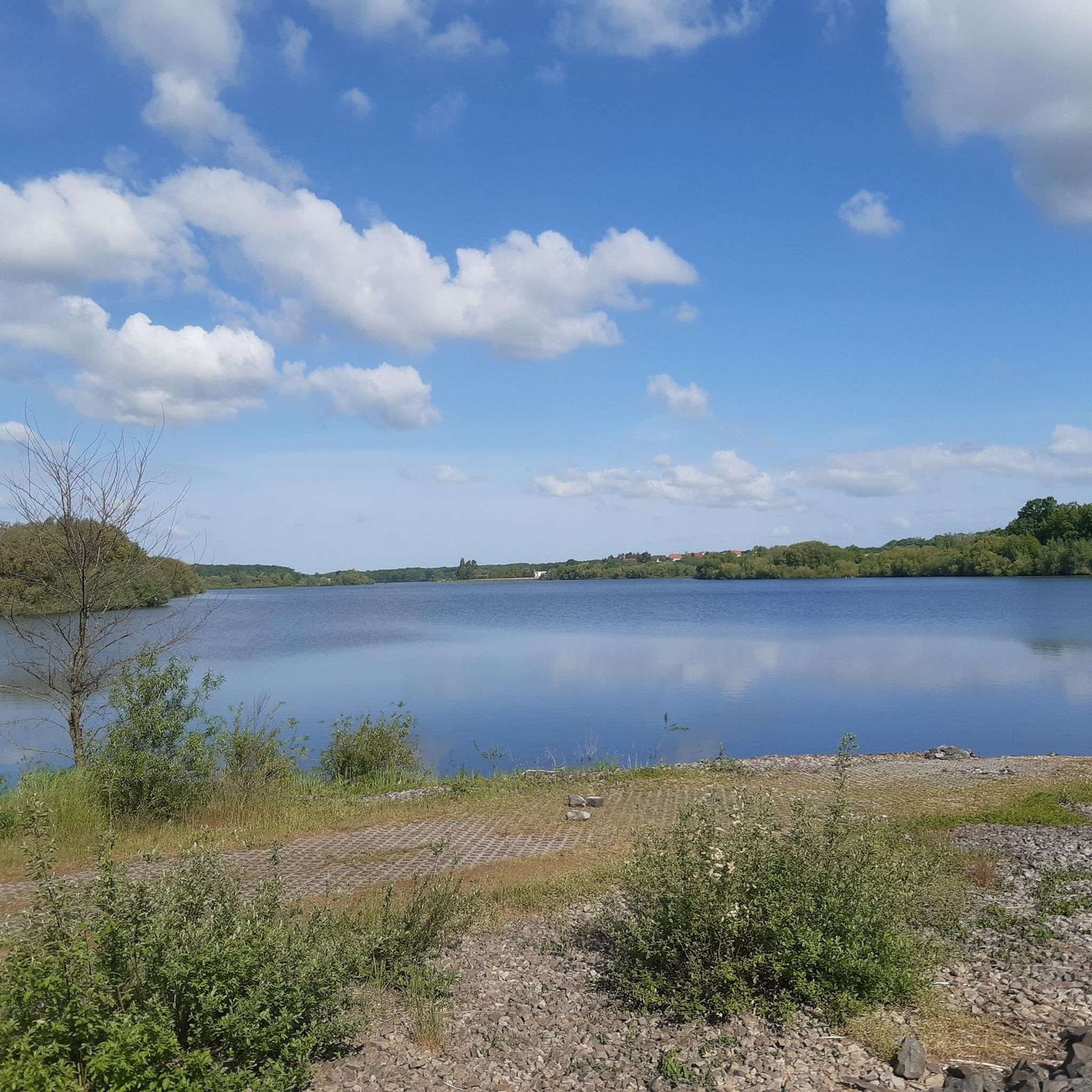
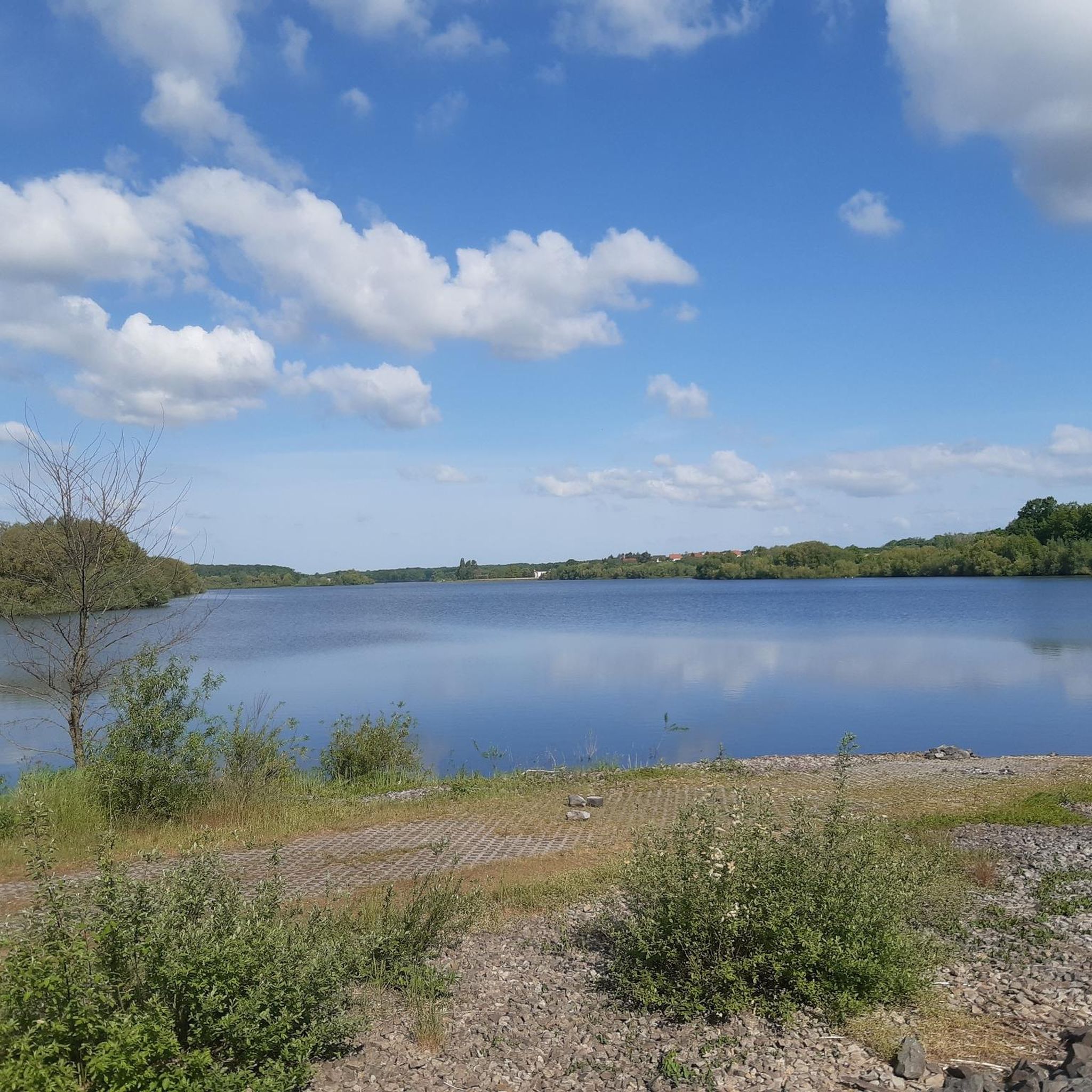
Mountain biking around Döllnitzsee offers routes through the gently rolling landscape of Nordsachsen, characterized by its numerous lakes, ponds, and forested areas. The region provides a mix of open paths and shaded trails, with minimal significant elevation changes. This area is well-suited for exploring the natural surroundings on two wheels, often following waterways and through rural settings.
Best mountain bike trails around Döllnitzsee
- The most popular mountain bike trail is Gattersburg Suspension Bridge – Höfgen Ship Mill Museum loop from…
Last updated: August 18, 2026
5.0
(4)
6
riders
42.3km
02:38
280m
280m
Moderate mountain bike ride. Good fitness required. Suitable for all skill levels.
5.0
(1)
5
riders
29.0km
02:01
270m
270m
Moderate mountain bike ride. Good fitness required. Advanced riding skills necessary.

Sign up for free
4.0
(1)
5
riders
39.0km
02:59
340m
340m
Moderate mountain bike ride. Good fitness required. Advanced riding skills necessary.
5.0
(1)
3
riders
64.4km
05:00
530m
530m
Hard mountain bike ride. Good fitness required. Advanced riding skills necessary. Some portions of the route may require you to push your bike.
5.0
(1)
14
riders
Moderate mountain bike ride. Good fitness required. Suitable for all skill levels.
Get access to more routes and recommendations from other explorers.
Sign up for free
Already have an account?
Our route recommendations are based on thousands of hikes, rides, and runs completed by other people on komoot.
Start today with a free account
Your next adventure awaits.
Login or Signup
Other adventures around Döllnitzsee

Tips from the Community

The places along the Mulde are particularly threatened by floods. During the August 2002 flood, Grimma was one of the most severely affected municipalities in Saxony, with damage totaling 250 million euros. The June 2013 flood also left behind millions in damages. In 2002, the first plans for flood protection, such as those that occur statistically every 100 years, began in Grimma. In total, the Free State of Saxony and the European Union are investing around 60 million euros in flood protection. The new flood protection facility for Grimma is technically and aesthetically very demanding. The goal was to skillfully combine flood protection, monument protection, and urban development. To find a suitable construction variant, the city was rebuilt on a 1:50 scale, and the model was flooded to simulate water currents. An underground sealing wall, reaching twelve meters deep, influences the natural groundwater flow. Eight wells control groundwater communication.
0
0

The coat of arms stone on the Pöppelmann Bridge is one of the most striking decorative elements of the baroque stone bridge over the Mulde in Grimma. It shows the royal Polish and electoral Saxon coat of arms of Augustus the Strong, who commissioned the construction of the bridge. The richly decorated coat of arms stone with a crown and baroque decor underscores the importance of the bridge as a representative structure and a vital traffic link between Dresden and Leipzig. The coat of arms stone was placed on its pedestal on the bridge on August 5, 1724. A Dresden sculptor had already been working on it since 1718; in 1725 the coat of arms was finally polished and gilded. This essentially completed the construction of the Pöppelmann Bridge. The coat of arms stone visible on the bridge today is a faithful replica. The historical original was moved to the Grimma town hall to protect it from weathering and flood damage. The coat of arms stone is now a popular photo motif and a reminder of the baroque architecture of the master builder Matthäus Daniel Pöppelmann, the architect of the Dresden Zwinger, who also designed the Grimma Mulde Bridge.
4
0
Gattersburg Castle in Grimma is one of the most romantic structures in the city. Strictly speaking, it is not a medieval castle, but a historicist villa in the Neo-Renaissance style with an artificial castle ruin, which is commonly referred to today as "Gattersburg Castle" due to its fairytale appearance. It rises on a rock directly above the Mulde river, immediately next to the historic suspension bridge. The current building was constructed in the 1880s on behalf of the Grimma paper manufacturer Max Schroeder. It replaced an older country house that had been built at the end of the 18th century by Johann Christian Gattert – the name "Gattersburg" is also derived from him. Today, the Gattersburg is used as a hotel and is one of Grimma's most popular photo opportunities. Together with the suspension bridge and the Mulde river, it forms one of the city's most famous panoramas.
4
0
The view of the suspension bridge in Grimma is one of the city's most famous photo motifs. The suspension bridge, built in 1924, spans the Mulde river for a length of 80 meters and connects the old town with the city forest. From the bridge, you can enjoy a wide view of the Mulde, the historic city silhouette, and the Gattersburg located above. Schloss Püchau, on the other hand, is located about 10 kilometers northwest of Grimma in the village of Püchau, directly on the Mulde river. The historic castle with its park is situated in a quiet river landscape and also offers beautiful views of the Mulde valley. However, it is not visible from the Grimma suspension bridge, as the two locations are several kilometers apart.
4
0

More information is available here: https://www.grimma.de/info/poi/steinerne-muldenbruecke-poeppelmannbruecke-grimma-900010794-27290.html
1
0
In front of the old hunting lodge.
0
1

7 stone dwarves in the Dahlener Heide. Seven Dwarfs rest stop bench. Info: Debris from a boulder that was blown up during the straightening of the Dahle stream in 1937. The stone remains of white and red granite were incorporated around the rest stop bench.
3
0

Beautiful view from here.
0
0
Frequently Asked Questions
How many mountain bike trails are available around Döllnitzsee?
There are nearly 40 mountain bike trails recorded on komoot for the Döllnitzsee region, offering a wide variety of options for different skill levels and preferences.
What is the general difficulty level of mountain bike trails in Döllnitzsee?
The majority of mountain bike trails around Döllnitzsee are rated as moderate, with 27 such routes. There are also 9 easy trails suitable for beginners or families, and 2 more difficult options for experienced riders.
Are there family-friendly mountain bike trails around Döllnitzsee?
Yes, Döllnitzsee offers several family-friendly mountain bike trails. With 9 easy routes, the gently rolling landscape and minimal elevation changes make it suitable for a relaxed ride with children. An example of an easy route is the Allee No. 8 – Ablaß Village Pond loop from Ablaß.
When is the best time of year to go mountain biking around Döllnitzsee?
The best time to go mountain biking around Döllnitzsee is generally from spring through autumn. During these seasons, the weather is usually pleasant, and the trails through forested areas and along lakesides are most enjoyable. While some trails may be accessible in winter, conditions can be muddy or icy, so it's advisable to check local weather before heading out.
Are there many loop trails for mountain biking in the Döllnitzsee area?
Yes, many of the mountain bike trails around Döllnitzsee are designed as loops, allowing you to start and finish at the same point. For instance, the popular Gattersburg Suspension Bridge – Höfgen Ship Mill Museum loop from Göttwitz and the Carl Pond (Silver Lake) – Allee No. 8 loop from Wermsdorf are excellent examples of circular routes.
What kind of natural scenery and wildlife can I expect to see while mountain biking?
The Döllnitzsee region is characterized by its numerous lakes, ponds, and forested areas. You'll often ride along waterways and through rural settings, encountering diverse flora. Keep an eye out for local birdlife near the lakes and various forest animals in the wooded sections.
What are some interesting landmarks or attractions along the mountain bike trails?
Many trails pass by notable points of interest. You might encounter the Döllnitzsee Dam, the Former Wermsdorf Train Station, or enjoy views of Döllnitzsee itself. The region also features the Albert Tower on Collmberg, which offers panoramic views.
Is parking available near the mountain bike trails around Döllnitzsee?
Yes, parking is generally available in the towns and villages that serve as starting points for the trails, such as Göttwitz, Wermsdorf, Ablaß, or Mutzschen. It's always a good idea to check specific route descriptions on komoot for detailed parking information.
Can I access the mountain bike trails around Döllnitzsee using public transport?
While some villages in the Döllnitzsee region are served by local bus lines, direct public transport access to all trailheads might be limited. We recommend checking local bus schedules and connections to plan your journey. The Former Wermsdorf Train Station is a historical site, but the area is not extensively covered by train services for direct trail access.
Are there places to eat or drink near the mountain bike trails?
Yes, you can find places to eat and drink in the towns and villages surrounding Döllnitzsee. For example, the Hotel Seehof at Lake Döllnitz offers dining options. Many routes also pass through or near small communities where you might find local cafes or restaurants.
What do other mountain bikers enjoy most about the Döllnitzsee area?
The mountain bike trails around Döllnitzsee are highly rated by the komoot community, with an average score of 4.8 stars from over 20 reviews. Riders often praise the diverse landscape of lakes, ponds, and forests, the well-maintained paths, and the opportunity to explore the natural surroundings on two wheels without significant elevation challenges.
Are there any longer or more challenging mountain bike routes for experienced riders?
Yes, for experienced riders looking for a longer challenge, there are routes like the Wittes Quarry – Schildberg Tower loop from Mutzschen. This route is rated as difficult, covering over 64 kilometers and featuring more significant elevation changes compared to the easier trails in the region.
Most popular routes around Döllnitzsee
Most popular attractions around Döllnitzsee

Get inspired with the komoot mobile app


Explore more
Browse the best MTB trails in other regions.
