The best walks and hikes around Handelsdok
4.2
(5978)
42,246
hikers
1,178
hikes
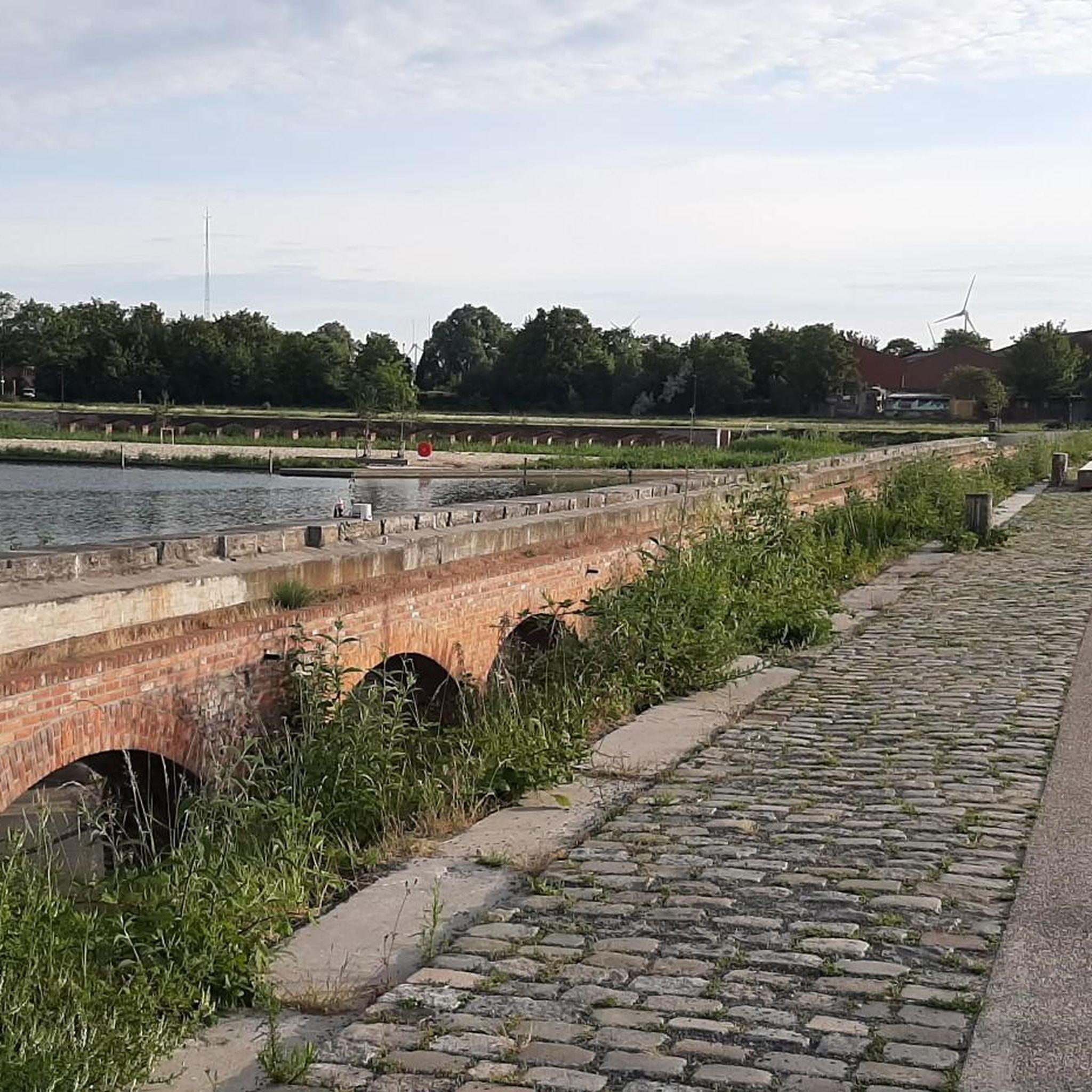
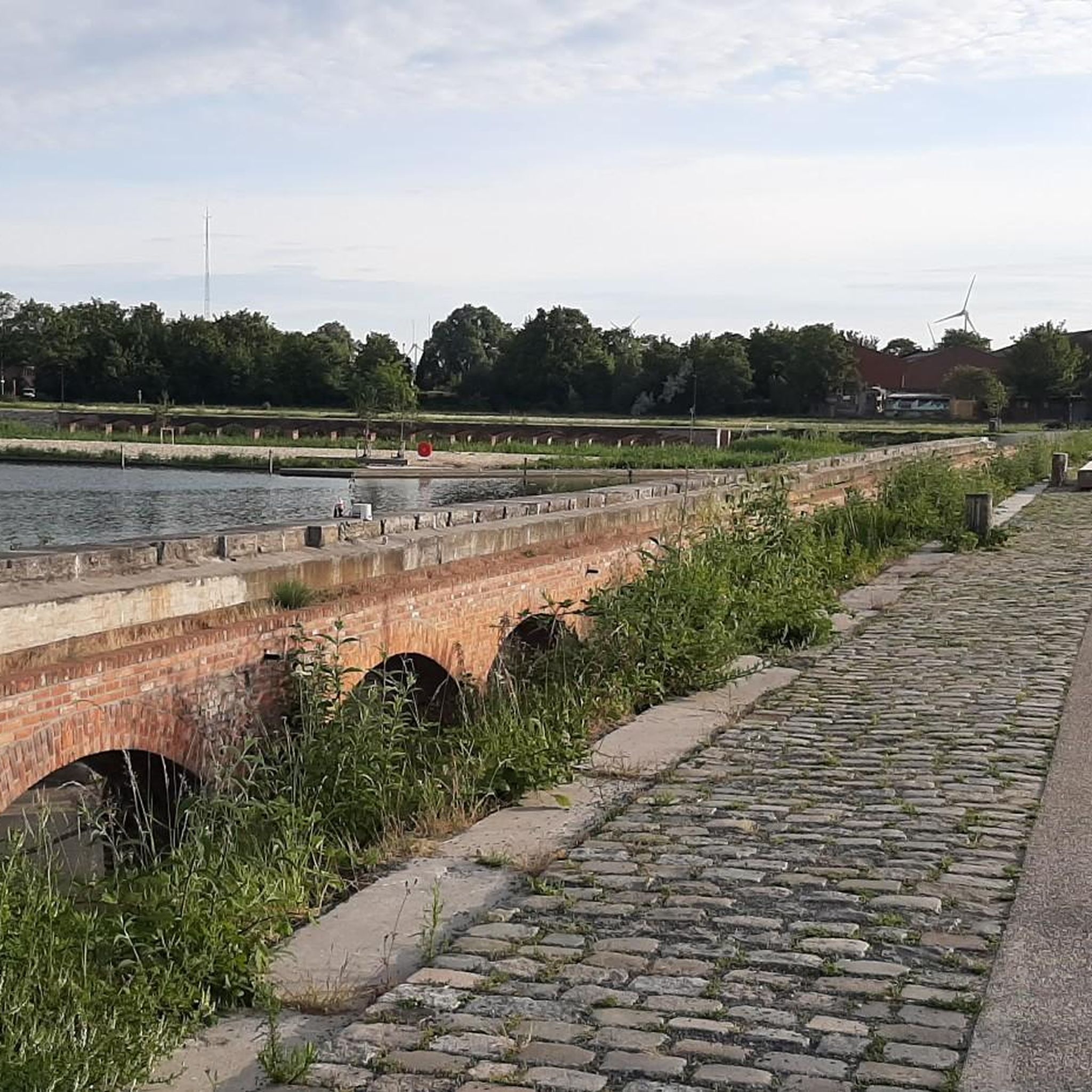
Hiking around Handelsdok offers urban exploration through a redeveloped docklands district in Ghent, Belgium. The area is characterized by its vibrant waterfront, wide concrete paths, and a blend of modern architecture with historical industrial relics. These routes provide opportunities to experience Ghent's maritime past and dynamic urban environment, focusing on urban strolls rather than traditional natural landscapes.
Best hiking trails around Handelsdok
- The most popular hiking route is Graffiti Alley – Ghent Town Hall loop from Groot Begijnhof Sint-Elisabeth,…
Last updated: July 1, 2026
4.2
(30)
825
hikers
Moderate hike. Good fitness required. Easily-accessible paths. Suitable for all skill levels.
4.8
(16)
391
hikers
Easy hike. Great for any fitness level. Easily-accessible paths. Suitable for all skill levels.

Sign up for free
15
hikers
5.35km
01:21
10m
10m
Easy hike. Great for any fitness level. Easily-accessible paths. Suitable for all skill levels.
4.0
(2)
19
hikers
7.00km
01:46
20m
20m
Easy hike. Great for any fitness level. Easily-accessible paths. Suitable for all skill levels.
30
hikers
3.91km
00:59
10m
10m
Easy hike. Great for any fitness level. Easily-accessible paths. Suitable for all skill levels.
Get access to more routes and recommendations from other explorers.
Sign up for free
Already have an account?
Our route recommendations are based on thousands of hikes, rides, and runs completed by other people on komoot.
Start today with a free account
Your next adventure awaits.
Login or Signup
Tips from the Community

The history of the 1898 The Post hotel begins at the end of the 19th century in the city of Ghent, Belgium. In 1898, the architect Louis Cloquet brought to life an imposing neo-Gothic building that was to serve as the city's new central post office. Located between the historic quays of Ghent and the Korenmarkt, this 4* houses the city's former central post office, a neo-Gothic architectural gem designed at the end of the 19th century by Louis Cloquet. Source: https://www.hotels-insolites.com/de/1898-the-post.hotel
3
0
Old Post Office (Ghent) It is richly decorated - the building of the old post office on the Korenmarkt in Ghent. Once, post coachmen used to stop here - today it is a luxury hotel and offers numerous shopping opportunities. Both continue to carry the name "Post" within them: the shopping center "De Post" and the hotel "1898 ThePost", which is furnished with elegant antique furniture and thus fits wonderfully with the magnificent building itself. Source: https://lion-tours.de/reiseservice/wissenswertes/europa/belgien/gent/
2
0
Fleischhaus aan de Leie, built from 1406–10 by city architect Gilles de Suttere The connection between the Groentenmarkt and the Pensenmarkt is dominated by the large Meat Hall. This medieval covered market hall was the only place where meat was allowed to be sold until the 19th century. Outside, in the small "panshuizen" (meat houses), the meat scraps were sold. Two of these "panshuizen" house the smallest pub and the smallest chip shop in Ghent. Source: https://visit.gent.be/de/staunen-erleben/groentenmarkt
2
0
On the Groentenmarkt, the ›Groot Vleeshuis‹ has stood since 1410 with its long row of gabled windows, emphasizing the enormous dimensions of the hall. Inside, the ornate roof timbers are impressive. Today, the culinary delights of East Flanders are offered here.
2
0
The Hoofdbrug was, as the name suggests, the main bridge of 's Gravenburg, a fortification with land around the count's castle, surrounded by gates, surrounded by moats, and equipped with its own administration. On one side lay the Leie, on the other the Lieve, which was connected to the Schipgracht by a moat. This connecting canal eventually received the name "Plotersgracht" because the leather tanners were allowed to set up their field planning there. Several stone bridges were built over this moat. Mentions of this bridge date back to 1274. At that time, there was a wooden drawbridge here at the defense gate of 's Gravenburg, which was replaced by a stone bridge in 1371. On the parapet side of the counts' castle stood a statue of Our Lady with Child in an iron house. The iconoclasm led to the destruction of this statue in 1566. In 1602, a new statue illuminated the bridge. On the other side stands a statue of the executioner with the sword in the air, ready to strike down the condemned. A symbolic representation of the high jurisdiction of the Ghent City Council's bank. In 1855, a wooden swing bridge was built. In 1874, a fixed stone bridge was built, and in 1898, the road over the bridge was widened by the construction of a tram line towards Brugse Poort. A final radical change took place in 1950 to renew the reinforced concrete road surface. Source: https://gentdekuip.com/hoofdbrug/
1
0
The Zuivelbrug is the elegant bridge over the Leie, which allows passage between two historically valuable districts. On the one hand, the Oudburg with the Patershol district, which belonged to the county property of the Grafenburg, and on the other hand, the Vrijdagmarkt. From the 13th century until 1476, this bridge was also known by the name Boudinsbrug, after a resident of the "Suvelsteghe". Initially, it was made of wood, then it was built of stone between 1363 and 1426. To allow the passage of seagoing vessels, a swing bridge was built between 1751 and 1754, which was renewed several times over time. On July 1, 1987, a completely renovated metal swing bridge was installed to replace the outdated bridge, which had been out of operation since 1968. Source: https://gentdekuip.com/zuivelbrug/
3
0
The Leie is a river that flows through France and Belgium. It originates in the municipality of Lisbourg, in the French department of Pas-de-Calais, generally flows in a northeasterly direction and, after a total of around 202 kilometers, flows into the Scheldt as a left tributary in the city area of Ghent, in the Belgian province of East Flanders. Of the total length of the Leie, around 109 kilometers flow through Belgian territory, and for a length of around 24 kilometers, the river now forms the border between Belgium and France.
2
0
Sint Baafsplein The St. Bavo Square is a spacious rectangular square situated between the west facade of the Gothic St. Bavo Cathedral (to the east) and the belfry with the Cloth Hall (to the west). This square originated in 1897 during the reconstruction work at the foot of the belfry, with the disappearance of the Regnessestraat and the Sint-Jansstraat, which led from the belfry to the Nederpolder and the current St. Bavo Cathedral, respectively. The demolition of these streets was part of the project by Mayor Baron E. Braun to clear part of the old city center and thus create the famous sight with the three famous towers of Ghent. In 1899, the Royal Dutch Theatre was founded on the site of the Regnessestraat. Furthermore, the north side of the current square is occupied by a row of colorful bourgeois houses in the eclectic style from the first quarter of the 20th century. The other side (south side), the preserved street side of the disappeared Sint-Jansstraat, is built with spacious 18th-century mansions and bourgeois houses, among which the so-called Hotel Hamelinck stands out. Additionally, between them are heavily modified facades from the 18th and 19th centuries, behind which old cores are presumably hidden. Directly opposite the Royal Dutch Theatre, in the middle of Sint-Baafsplein, is a rectangular lawn with a monument dedicated to Jan Frans Willems (1798–1846), created by Isidoor De Rudder and inaugurated in 1899: a granite pedestal with a relief bust of J.F. Willems, depictions of his most important works, and mentions of his collaborators. On top of the pedestal stands a group of white marble symbolizing the awakening Flanders: a young man, symbolizing Flemish genius, awakens a maiden representing Flanders. Source: https://www.gent-geprent.com/straten-van-gent/straten-n-z/straten-s/st-baafsplein
2
0
Frequently Asked Questions
What kind of walking experience can I expect in Handelsdok?
Handelsdok offers a unique urban exploration experience rather than traditional wilderness hiking. You'll discover a redeveloped docklands district in Ghent, Belgium, characterized by its vibrant waterfront, wide paths, and a blend of modern architecture with historical industrial relics. The routes focus on urban strolls, showcasing Ghent's maritime past and dynamic urban environment.
How many walking routes are available around Handelsdok?
There are over 1000 walking routes available in the Handelsdok area. The majority, more than 760, are classified as easy, while over 250 are moderate, and a smaller number are more challenging.
Are there any easy walking routes suitable for families or beginners?
Yes, Handelsdok has over 760 easy walking routes. A great option for families or those seeking a relaxed stroll is the Graslei and Korenlei, Ghent – St. Michael's Bridge loop from Heilig Kerst. This easy 7.5 km path offers picturesque views of Ghent's iconic canals and historic buildings.
Can I find circular walks in the Handelsdok area?
Yes, many of the routes in Handelsdok are circular, allowing you to start and end at the same point. An example is the Wiedauw Bridge – Packet Boat Path loop from Castle of the Counts, an easy 5.3 km walk that takes you through the redeveloped waterfront.
What interesting landmarks or attractions can I see along the walking trails?
The Handelsdok area is rich in urban attractions. You can explore historical and industrial relics like former quays and harbor cranes, or admire urban art. Notable highlights include Street Art at Oude Dokken, Ghent, the StreetArt Feminism in Ghent, and the iconic Blue Crane at Dok Noord, Ghent. You'll also encounter the Houtdok, a historic dock.
What do other hikers enjoy most about walking in Handelsdok?
The area is highly rated by the komoot community, with an average score of 4.2 stars from over 5300 reviews. Hikers often praise the unique blend of urban exploration, the historical insights into Ghent's maritime past, and the vibrant atmosphere of the redeveloped docklands.
Are there any dog-friendly walking options in Handelsdok?
Many of the urban paths and redeveloped quays in Handelsdok are suitable for walking with dogs, provided they are kept on a leash. The wide concrete paths along the waterfront offer ample space for you and your canine companion to enjoy an urban stroll. Always check local regulations for specific areas.
Is public transport available to access the walking routes in Handelsdok?
Yes, Handelsdok is well-integrated into Ghent's public transport network. Various tram and bus lines serve the area, making it easy to reach the starting points of many walking routes without needing a car. Check local transport schedules for the most convenient connections.
Where can I park if I drive to Handelsdok for a walk?
As an urban area, Handelsdok has several parking facilities, including underground car parks and designated street parking zones. It's advisable to check for current parking regulations and availability, especially during peak times, as some areas may require payment or have time limits.
Are there any less crowded walking routes in Handelsdok?
While popular areas like Graslei and Korenlei can be busy, you can often find quieter sections along the redeveloped quays, especially further away from the city center. Exploring routes like the Muidebrug – De Stokerij loop from Sint-Amandsberg might offer a more tranquil experience, particularly during off-peak hours.
What is the best time of year to visit Handelsdok for walking?
Handelsdok can be enjoyed year-round. Spring and autumn offer pleasant temperatures for walking, with fewer crowds than the peak summer months. Winter walks can be atmospheric, especially with the city lights. Summer is vibrant but can be warmer and busier. The urban nature of the walks means they are less dependent on specific weather conditions than natural trails.
Are there any routes that focus on the street art scene?
Absolutely! Handelsdok is known for its urban art. You can explore routes that specifically highlight the vibrant street art. For example, the StreetArt Feminism in Ghent – Hal 16 loop from Ghent is an easy 5.3 km trail that leads through urban art zones and redeveloped industrial areas, offering a unique cultural experience.
Most popular routes around Handelsdok
Most popular attractions around Handelsdok

Get inspired with the komoot mobile app


Explore more
Browse the best Hikes in other regions.
