Attractions and Places To See in Guadalupe Mountains National Park - Top 20
Best attractions and places to see in Guadalupe Mountains National Park include rugged wilderness, geological formations, and cultural history. The park features the highest peaks in Texas, significant natural features, and historical sites. It preserves an ancient marine fossil reef formed about 265 million years ago. This region offers a diverse range of attractions for visitors exploring West Texas.
Best attractions and places to see in Guadalupe Mountains National Park
- The most popular attractions is Devil's Hall, a canyon…
Last updated: October 18, 2026
Pine Springs Trailhead with Picnic Area
Highlight • Trail
Tip by

Devil's Hall
Highlight • Canyon
Tip by

Sign up now to discover places like this
Get recommendations on the best single tracks, peaks, & plenty of other exciting outdoor places.
Merge with wash
Highlight • Trail
Tip by
Guadalupe Peak
Highlight • Summit
Tip by
Smith Spring
Highlight • Natural Monument
Tip by
Sign up for free to discover even more attractions in Guadalupe Mountains National Park.
Already have an account?
Start today with a free account
Your next adventure awaits.
Popular around Guadalupe Mountains National Park
Tips from the Community

Must do if the weather is right. Mid fall to early spring is the best time. Can take as little as 5 hours if you are reasonably fit (like 9 minute mile).
0
0

The Pine Springs Area and Trailhead is where many trails in the National Park begin and is by far the most heavily used day-use area in the park. Despite this, however, the parking lot is rather small so either plan to arrive early to get a spot or just park in the much larger Visitor Center lot. It is just a short distance away and there is a short trail connecting the two areas.
1
0
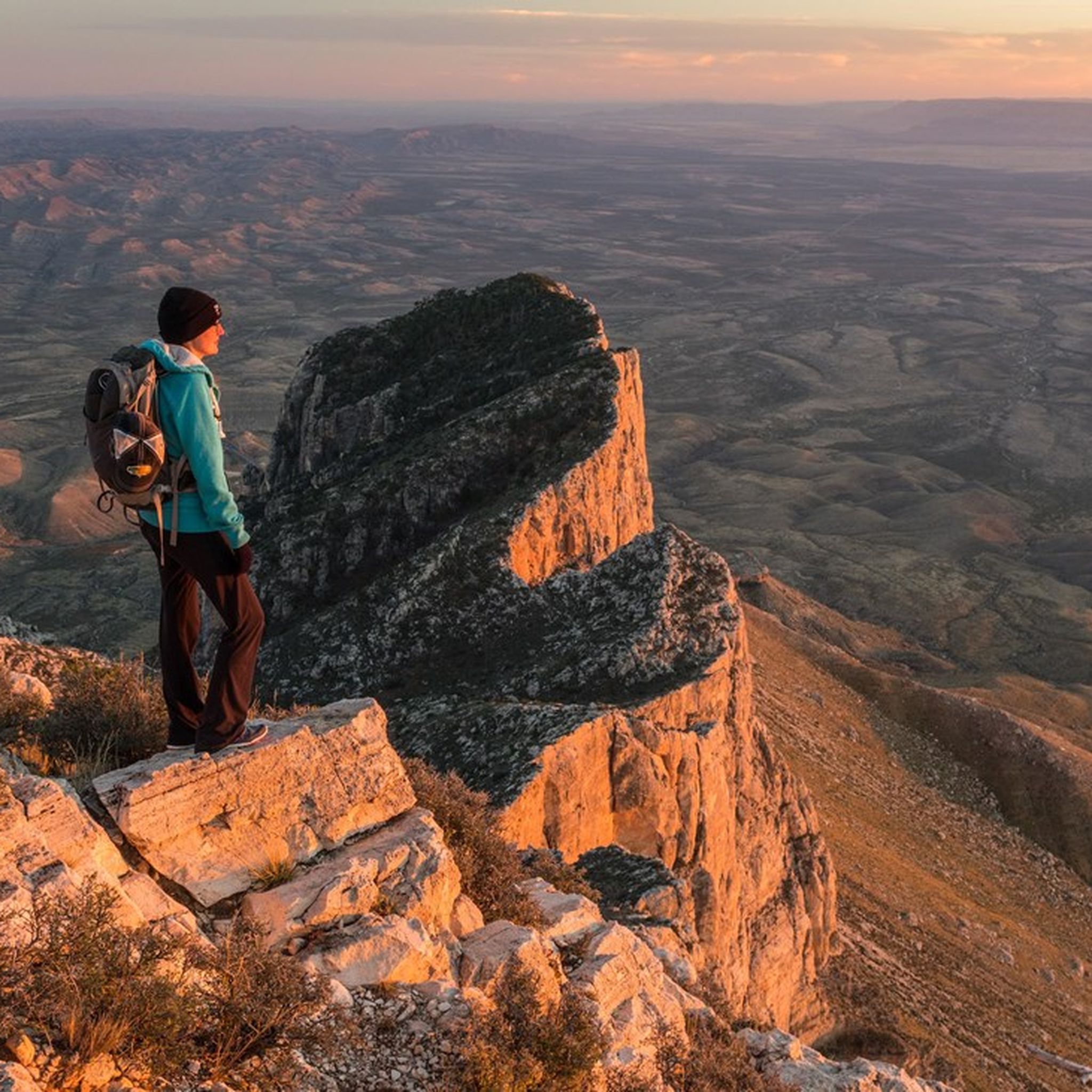
Also known as the "Top of Texas," Guadalupe Peak stands at 8,751 feet and is the highest point in the state of Texas. The summit hosts not only spectacular, panoramic views of the surrounding mountains, including the sheer cliffs of El Capitan, and the expansive desert, but it also has a monument marking its status as Texas's highest peak. This is a great place to eat a snack, snap some photographs, and relax after the strenuous hike.
1
0
Smith Spring is an oasis in the desert. Surrounded by plants, the heavily vegetated Smith Spring stands in stark contrast to the surrounding dry, rocky desert. This is a fantastic spot in the foothills of the mountains to relax in the shade, take some photographs, and be on the lookout for the many animals that rely on this important source of water in the desert.
1
0

Nice gorge, also suitable as a photo motif.
0
0
From here it continues in the creek bed. Often a few stones in the way, good shoes recommended.
0
0

The parking lot is small so may need to park down nearer the visitor's center. Don't forget to record your hike starting and ending in the log book at the trailhead.
0
0
This is an important milestone going both directions. When returning to the trailhead it's easier to get off the trail and follow what looks like a path someone else incorrectly made.
0
0
Frequently Asked Questions
What are some of the most challenging hikes in Guadalupe Mountains National Park?
For experienced hikers seeking a challenge, the park offers several strenuous trails. The hike to Guadalupe Peak, the highest point in Texas, is an 8.5-mile round-trip with significant elevation gain, rewarding hikers with spectacular panoramic views. Another challenging option is the trail to Devil's Hall, which involves scrambling over an old watershed and navigating unique rock formations in a narrow canyon. Other difficult routes include The Bowl Loop and the Bush Mountain Trail, both offering extensive distances and elevation changes.
What unique natural features can I explore in Guadalupe Mountains National Park?
The park is renowned for its diverse natural features. You can explore the ancient Capitan Reef, one of the finest examples of a Permian-era marine fossil reef on Earth. McKittrick Canyon is known for its vibrant fall foliage, especially the bigtooth maples, and a year-round spring-fed stream. The Salt Basin Dunes, located in a separate section of the park, present a unique gypsum dune ecosystem. Additionally, lush oases like Smith Spring and Manzanita Spring offer a refreshing contrast to the arid desert landscape.
When is the best time to visit Guadalupe Mountains National Park?
The best time to visit Guadalupe Mountains National Park is generally from mid-fall to early spring. During these months, temperatures are milder and more pleasant for hiking and exploring. Summers can be extremely hot, especially in the lower elevations, making strenuous activities more challenging. Fall is particularly popular for the vibrant autumn colors in McKittrick Canyon.
What historical sites can I explore in Guadalupe Mountains National Park?
Guadalupe Mountains National Park is rich in history. You can visit the Pratt Cabin in McKittrick Canyon, a historic stone cabin built in the 1930s by petroleum geologist Wallace Pratt. The restored Frijole Ranch Cultural Museum provides insights into early ranching life. Near the Pine Springs Visitor Center, you can explore the ruins of the Pinery Station, a stagecoach station from the Butterfield Overland Mail route. The park also contains cultural artifacts of the Mescalero Apache, including agave roasting pits.
Are there any family-friendly activities or trails in Guadalupe Mountains National Park?
While many trails are challenging, there are options for families. Easy hikes like the Smith & Manzanita Springs loop (4 km) or the Frijole Ranch Museum – Manzanita Spring loop (1.2 km) offer accessible ways to experience the park's beauty. These trails are generally shorter and have less elevation gain, providing opportunities for birdwatching and enjoying the springs without extreme difficulty. The Frijole Ranch Cultural Museum also offers an educational experience for all ages.
Where can I find panoramic views in Guadalupe Mountains National Park?
For breathtaking panoramic views, the summit of Guadalupe Peak is unparalleled, offering expansive vistas of the surrounding mountains and the Chihuahuan Desert. The prominent limestone formation of El Capitan also provides a striking landmark view. Many of the higher elevation trails, such as those in Dog Canyon, also offer scenic overlooks.
What is the policy for dogs in Guadalupe Mountains National Park?
Dogs are generally permitted on leash in developed areas such as campgrounds, picnic areas, and along roads. However, they are not allowed on any of the park's hiking trails, in the backcountry, or inside park buildings. Service animals are an exception to this policy. It's always best to check the official National Park Service website for the most current regulations before your visit.
Are there any easy hiking trails for beginners in Guadalupe Mountains National Park?
Yes, there are several easy hiking trails suitable for beginners. The Pine Springs Visitor Center – Ruins of Pinery Station loop is a short, easy walk (2 km) near the main visitor center. The Smith & Manzanita Springs loop (4 km) from Frijole Ranch offers a pleasant walk to lush springs. These trails provide a good introduction to the park's natural beauty without requiring extensive hiking experience. You can find more options in the Easy hikes in Guadalupe Mountains National Park guide.
What should I know about parking at trailheads in Guadalupe Mountains National Park?
Parking at popular trailheads, especially at Pine Springs Trailhead with Picnic Area, can be limited. The parking lot at Pine Springs is rather small, so it's advisable to arrive early to secure a spot. Alternatively, you can park in the larger Visitor Center lot, which is just a short distance away and connected by a trail. Always remember to record your hike in the log book at the trailhead.
Are permits or reservations required for any activities in Guadalupe Mountains National Park?
While general entry to the park does not typically require advance reservations, backcountry camping does require a permit, which can be obtained at the Pine Springs Visitor Center or Dog Canyon Visitor Center. For specific activities or during peak seasons, it's always recommended to check the official National Park Service website for any updated permit or reservation requirements, especially for popular trails or overnight stays.
What hiking opportunities are available in Guadalupe Mountains National Park?
Guadalupe Mountains National Park offers a wide range of hiking opportunities, from easy strolls to strenuous climbs. Popular trails include the challenging Guadalupe Peak Trail, the unique Devil's Hall hike, and the scenic trails within McKittrick Canyon. For a comprehensive overview of routes and their difficulties, explore the Hiking in Guadalupe Mountains National Park guide.
What do visitors say about hiking to Guadalupe Peak?
Visitors describe the hike to Guadalupe Peak as a must-do if the weather is right, with mid-fall to early spring being the best time. It's a strenuous climb, but the summit, known as the 'Top of Texas,' offers spectacular, panoramic views of the surrounding mountains and the expansive desert. Hikers appreciate the monument at the peak and find it a great place to relax, eat a snack, and take photographs after the challenging ascent.
What is the experience like hiking to Devil's Hall?
Hiking to Devil's Hall is described as a challenging adventure up an old watershed, involving some scrambling. The 'Hiker's Staircase' can be easier to ascend than descend. Despite the difficulty, the destination is well worth the effort. The Devil's Hall itself is a narrow canyon that acts as a wind tunnel, offering a cool respite. Visitors recommend bringing plenty of water and a snack to recharge for the return journey.
What can I expect when visiting Pratt Cabin?
When visiting Pratt Cabin in McKittrick Canyon, you'll find a historic stone cabin built in the 1930s by Wallace Pratt. It served as his family's summer home and later hosted geologists. Today, it's listed on the National Register of Historic Places. While you typically cannot enter the cabin without a volunteer or ranger present, you can appreciate its charm and beautiful setting. The grounds around the cabin and an adjacent garage offer a picnic and rest area with interpretive signage about the Pratt family's contribution to the park.
Most popular routes in Guadalupe Mountains National Park
Most popular attractions in Guadalupe Mountains National Park

Get inspired with the komoot mobile app


Explore more
Still not found the Highlight you’re looking for? See guides of the top attractions in other regions:
