Attractions and Places To See in Torrance County - Top 10
Best attractions and places to see in Torrance County include a blend of historical depth and unique natural landscapes. Located near the geographical center of New Mexico, the county features rolling plains, the mountainous western Manzano Mountains, and significant cultural sites. Visitors can explore ancient Pueblo villages and Spanish mission ruins, alongside diverse natural features like the Estancia Valley. The region offers a variety of landmarks Torrance County New Mexico for exploration.
Best attractions and places to see in Torrance…
Last updated: July 8, 2026
Abó
Highlight • Historical Site
Tip by

Gran Quivira Ruins
Highlight • Historical Site
Tip by
Sign up now to discover places like this
Get recommendations on the best single tracks, peaks, & plenty of other exciting outdoor places.
Sign up for free
Quarai Church and Ruins
Highlight • Historical Site
Tip by
Spanish Corral Trail
Highlight (Segment) • Trail
Tip by
Gavilan Trail
Highlight (Segment) • Trail
Tip by
New Canyon Trail
Highlight (Segment) • Trail
Tip by
Abo Ruins ⛪ Salinas Missions National Monument
Highlight • Historical Site
Ruins of a large church and mission village are still preserved in the park. Nearby some impressive …
Tip by

4th of July Canyon
Highlight (Segment) • Canyon
Tip by
Quarai Ruins ⛪ Salinas Pueblo Missions National Monument
Highlight • Historical Site
nps.gov/sapu/learn/historyculture/quarai.htm
Tip by
Outer Loop
Highlight (Segment) • Trail
Tip by
Start today with a free account
Your next adventure awaits.
Login or Signup
Popular around Torrance County

Other adventures in Torrance County

Tips from the Community

4th of July Canyon is one of the most famous spots in the whole of the Manzano Mountains. Known for the abundance of maple trees, 4th of July Canyon in the fall is a must-visit; as the leaves change from green to orange, gold, and especially vibrant red, the canyon is truly awash with color.
0
0
New Canyon Trail winds its way up New Canyon from the New Canyon Campground. This is a great trail through a steep-walled canyon of tan and orange rock. The trail ends at a junction with the Manzano Crest Trail and the Trigo Canyon Trail. You can pop on to the Manzano Crest Trail and tag Osha Peak if you're looking to add a little extra elevation to your hike.
0
0
Gavilan Trail is a relatively short (.8 miles one way) but incredibly scenic out-and-back trail by the trailhead for the southern Manzano Crest Trail and the Capilla Peak Campground. The trail climbs steadily through the trees, with increasingly good views of the surrounding mountains as you draw closer to the top. The trail ends at a HawkWatch Observation Point, where migrating raptors and other birds are tracked, making this trail popular with bird enthusiasts.
0
0
The Abó Unit of Salinas Pueblo Missions National Monument, located west of Mountainair, New Mexico, spans approximately 370 acres and showcases a rich history dating back to around 800 AD. The site was initially occupied by the Pueblo people, who built rectangular red sandstone masonry pueblos and engaged in farming, hunting, and trading. When the Spanish arrived in 1581, they found a thriving community. The mission of San Gregorio de Abó was established in 1622, with the first church completed by 1626. Due to a growing population, a larger church was built by 1651, the remnants of which can still be seen today. Abó was abandoned in 1673 due to disease, drought, famine, and Apache raids, but Spanish settlers briefly returned in the 1800s. Visitors to Abó can explore the .75-mile interpretive loop trail through the 17th-century mission ruins, photograph 1820s Spanish resettlement structures, enjoy the natural surroundings, picnic in the designated area, and participate in ranger-led programs and special events. The site offers a unique glimpse into the region's history and cultural heritage.
0
0
The Outer Loop is one of many trails in a small network of trails in the Manzano Mountains State Park, a small, peaceful state park with camping and hiking. You can connect this well-maintained trail with several others to make pleasant hiking loops of any size through tall pine trees with mountain views.
0
0
The 1-mile Spanish Corral Trail, an offshoot from the main Quarai Ruins Trail, offers a gentle, well-maintained hike with gradual climbs leading to beautiful views of the ruins and surrounding mountains. The trail provides a glimpse into the area's natural wilderness and features red sandstone "veins" believed to be the source of the stone used for the historic structures. Named for its use as a horse corral by the Spanish, the trail is lined with fragrant rose bushes and a variety of wildflowers, making it a scenic and easy hike.
0
0
The famous Quarai Church and Ruins are located nine miles north of Mountainair, New Mexico, and lie at the base of the Manzano Mountains. The area has a rich history tied to its natural spring, which drew the ancestral Pueblo people to settle and cultivate the land around 1300. The Tiwa-speaking inhabitants were primarily farmers who also traded, crafted tools, and produced intricate pottery. Quarai remained an isolated settlement until the establishment of the Mission Nuestra Señora de la Purísima Concepción de Quarai in 1626. The mission became a center for religious and cultural exchange between the Pueblo people and the Spanish. The church, constructed from locally quarried red sandstone, was an architectural marvel, designed to impress and inspire. Its ruins, which still stand today, glow a vivid red in the sunlight. Quarai remained an active mission and pueblo until 1677, when the community migrated north due to drought and pressures from raids.
0
0
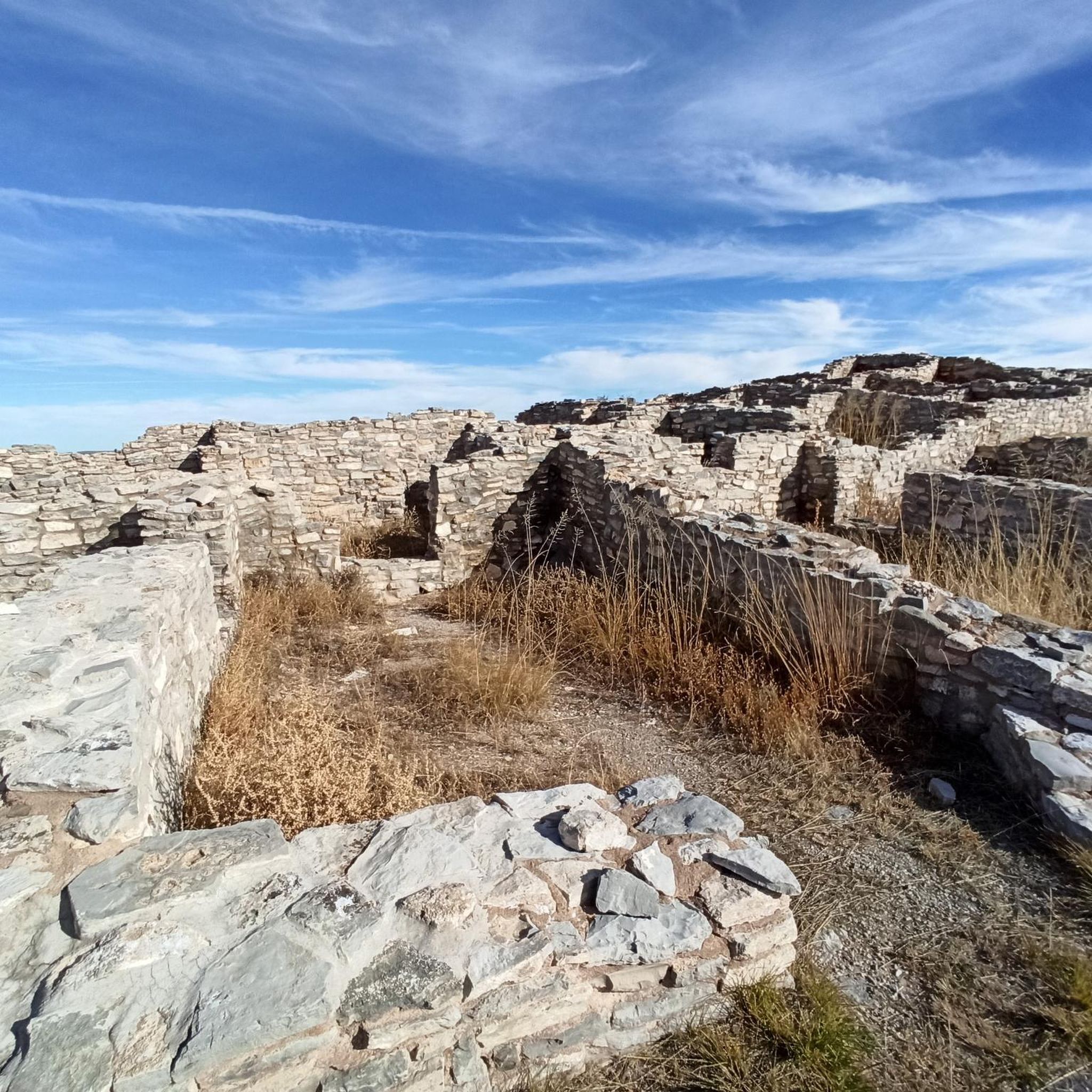
The Gran Quivira Ruins, located about 25 miles south of Mountainair, sit at an elevation of 6,500 feet. Visitors can explore the historic site via a 0.5-mile trail that winds through partially excavated pueblo ruins and the remnants of an unfinished mission church. Known as the best-preserved of the Salinas pueblos, Gran Quivira is one of the most celebrated archaeological sites in the Southwest. The ruins are steeped in mystery and romance, often linked to the legendary "Gran Quivira," a mythical city of wealth and splendor. This connection likely arose when early explorers, encountering the abandoned site, associated it with tales of a grand, lost city. The Gran Quivira Historic District was recognized on the National Register of Historic Places in 2015.
1
0
Frequently Asked Questions
What historical sites can I visit in Torrance County?
Torrance County is rich in history, particularly with the Salinas Pueblo Missions National Monument. You can explore the ruins of 17th-century Spanish missions and ancestral Pueblo villages at sites like Abó, Gran Quivira Ruins, and Quarai Church and Ruins. These sites offer a glimpse into the region's deep cultural heritage.
Are there any natural attractions or features to explore?
Absolutely. The western part of Torrance County is dominated by the Manzano Mountains, offering significant topographic relief and diverse timber belts. The Estancia Valley provides a gently rolling prairie landscape, and you can also find unique geographical features like the playas and seasonal salt lakes of Laguna del Perro.
What kind of outdoor activities can I do in Torrance County?
Torrance County offers various outdoor activities, especially hiking and mountain biking. You can find numerous trails, including the scenic Gavilan Trail, Spanish Corral Trail, and New Canyon Trail. For more detailed hiking options, check out the Hiking in Torrance County guide, or for mountain biking, see the MTB Trails in Torrance County guide.
Are there family-friendly attractions in Torrance County?
Yes, several attractions are suitable for families. The interpretive loop trails at historical sites like Abó and Quarai Church and Ruins are generally family-friendly. Additionally, natural areas like 4th of July Canyon and the Outer Loop trail offer accessible outdoor experiences for all ages.
What is the best time of year to visit Torrance County for outdoor activities?
The region experiences distinct seasons. Spring and fall generally offer pleasant temperatures for hiking and exploring historical sites. Summers can be hot, especially in the open plains, while winters can bring cold temperatures and occasional snow, particularly in the Manzano Mountains. Always check local weather conditions before your visit.
Can I find easy hiking trails in Torrance County?
Yes, there are several easy hiking options available. Trails like the Red Canyon Trail, Spring Loop Trail, and Spanish Corral Loop Trail are considered easy. You can find more details and routes in the Easy hikes in Torrance County guide.
What are some unique features of the historical sites in Torrance County?
The historical sites are unique for preserving the ruins of 17th-century Spanish missions built alongside ancestral Pueblo villages. For instance, Quarai Church and Ruins features a mission church constructed from locally quarried red sandstone that glows vividly in the sunlight. Gran Quivira Ruins is recognized as one of the most celebrated archaeological sites in the Southwest, with a 0.5-mile trail winding through partially excavated pueblo ruins.
Are there opportunities for wildlife spotting or bird watching?
Yes, particularly along trails in the Manzano Mountains. The Gavilan Trail leads to a HawkWatch Observation Point, making it a popular spot for bird enthusiasts to track migrating raptors and other birds.
What are the main towns in Torrance County and what do they offer?
Torrance County has several historic towns. Estancia is the county seat. Mountainair is known for its proximity to the Abo and Quarai ruins. Manzano is notable for its historic apple trees. Willard was a historic trading point, and Pinos Wells is recognized as the oldest settlement in the Estancia Valley outside of the mountain towns. These towns offer local services and a glimpse into the region's past.
How long should I plan for visiting the historical sites?
To fully appreciate the historical sites like Abó, Gran Quivira, and Quarai, it's recommended to allocate at least 1-2 hours for each site. This allows time to walk the interpretive trails, read the informational displays, and soak in the atmosphere of these ancient ruins. If you plan to visit multiple sites, consider dedicating a full day.
Are there any scenic drives in Torrance County?
While not explicitly designated scenic byways, driving through the Estancia Valley offers views of rolling prairie landscapes. The roads leading to the Salinas Pueblo Missions National Monument sites, particularly towards Quarai at the base of the Manzano Mountains, also provide picturesque scenery.
Most popular routes in Torrance County

Get inspired with the komoot mobile app


Didn’t find what you were looking for?
Are you keen on exploring more awesome places nearby? Browse our guides:
Explore more
Still not found the Highlight you’re looking for? See guides of the top attractions in other regions:
