The best road cycling routes around Castuera
109
riders
16
rides
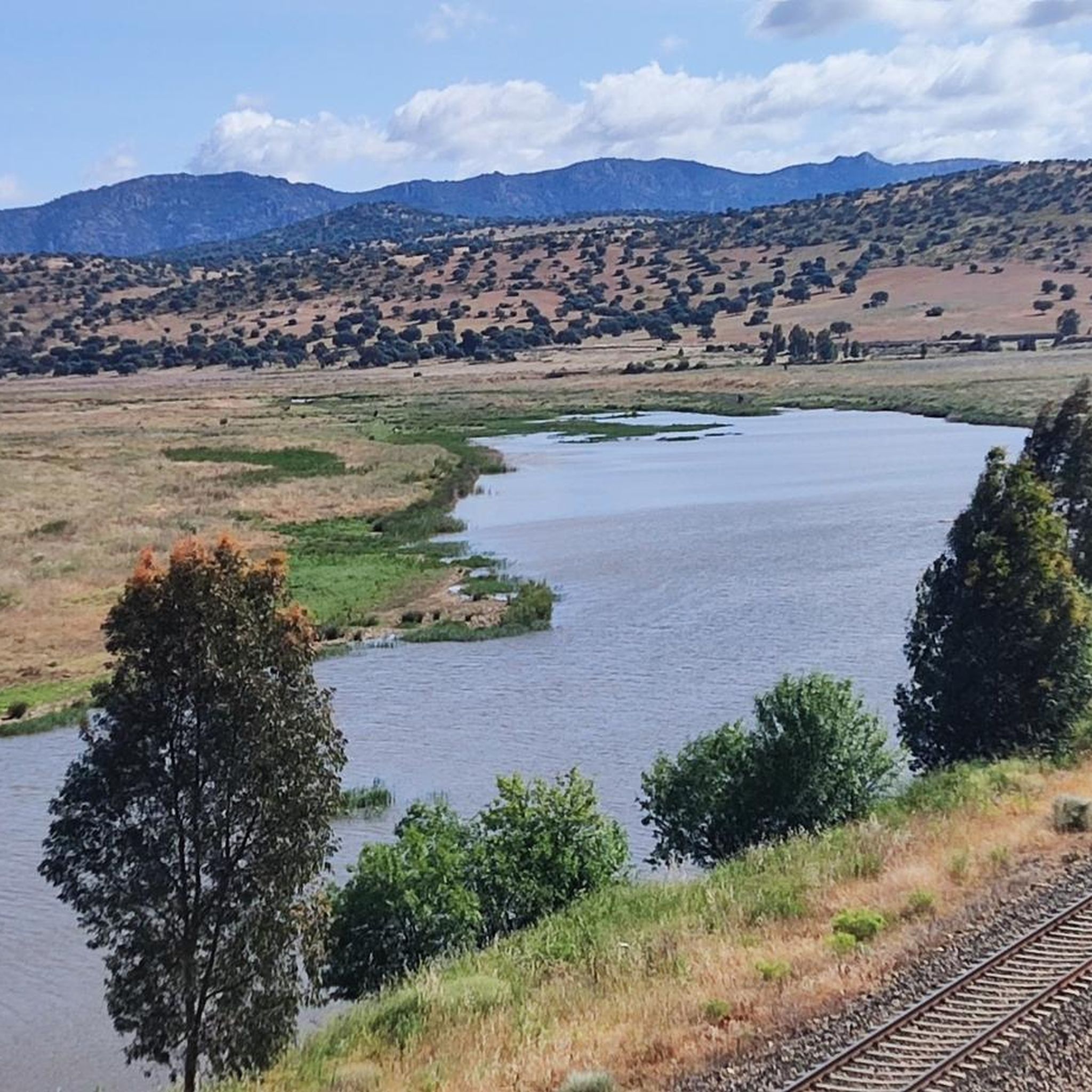
Road cycling around Castuera, located in the province of Badajoz, Extremadura, features expansive natural landscapes and varied terrain. The region is characterized by rolling hills and open spaces, offering a mix of challenging climbs and scenic stretches. Notable features include the vast La Serena Dam on the Zújar River and panoramic viewpoints such as the Alto de la Cabra Observation Tower. Most road cycling routes in this area are on paved surfaces, making them suitable for road cyclists.
Best road…
Last updated: October 10, 2026
10
riders
Moderate road ride. Good fitness required. Mostly well-paved surfaces and easy to ride.
96.7km
04:23
1,060m
1,060m
Hard road ride. Very good fitness required. Some segments of this route may be unpaved and difficult to ride.

100km
03:29
890m
890m
Cycle the Camino Mozarabe from Monterrubio de la Serena to Hinojos del Duque, a 62.3-mile route through dehesa and olive groves.
16
riders
Moderate road ride. Good fitness required. Some segments of this route may be unpaved and difficult to ride.
13
riders
Moderate road ride. Good fitness required. Some segments of this route may be unpaved and difficult to ride.
10
riders
53.2km
02:25
520m
520m
Moderate road ride. Good fitness required. Mostly well-paved surfaces and easy to ride.
9
riders
75.0km
03:39
990m
990m
Hard road ride. Very good fitness required. Mostly well-paved surfaces and easy to ride.
6
riders
54.9km
02:25
470m
470m
Moderate road ride. Good fitness required. Mostly well-paved surfaces and easy to ride.
7
riders
49.4km
02:09
420m
420m
Moderate road ride. Good fitness required. Mostly well-paved surfaces and easy to ride.
3
riders
27.9km
01:20
330m
330m
Moderate road ride. Good fitness required. Mostly well-paved surfaces and easy to ride.
Get access to more routes and recommendations from other explorers.
Already have an account?
Our route recommendations are based on thousands of hikes, rides, and runs completed by other people on komoot.
Start today with a free account
Your next adventure awaits.
Popular around Castuera

Road Cycling Routes around Monterrubio De La Serena

Road Cycling Routes around Benquerencia De La Serena

Road Cycling Routes around Peñalsordo

Road Cycling Routes around Zalamea De La Serena

Road Cycling Routes around Quintana De La Serena

Road Cycling Routes around Castuera

Road Cycling Routes around Malpartida De La Serena

Road Cycling Routes around Esparragosa De La Serena
Road Cycling Routes around Cabeza Del Buey

Road Cycling Routes around Capilla
Other adventures around Castuera

Tips from the Community

The Plaza de Toros de Almadén, also known as Plaza Nueva, is a historical monument located in Almadén (Ciudad Real, Spain) and is famous worldwide for its characteristic and unique hexagonal floor plan. Built between 1752 and 1752 for the famous mercury mines in the area
0
0
The Almadén Mining Park (Ciudad Real, Spain) is the largest mercury deposit in the world, declared a [UNESCO](0.5.4, 0.5.5) World Heritage Site. It offers an underground journey into mining history, starting from Roman times up to 2003, the year the activity closed.
1
0

A hexagonal shape, unique in the world. A complex of 24 two-story houses surrounds the bullring, forming a single block. Built between 1752 and 1765 at the initiative of Superintendent Francisco Javier de Villegas. Purpose: to provide employment for miners during forced work stoppages and to raise funds for the Royal Miners' Hospital of San Rafael through bullfights and the rental of houses. First bullfights: October 1752, with 21 bulls fought. Declared a Site of Cultural Interest in 1979 and a World Heritage Site by UNESCO in 2012 as part of the "Mercury Heritage: Almadén and Idrija."
9
0
It is a tribute to the miners who worked in the Almadén mercury mines, protagonists of more than 2,000 years of mining history. The idea arose in 1953, but it did not materialize until 1996, thanks to a public subscription and institutional contributions. It was inaugurated on September 8, 1996, coinciding with the feast day of Our Lady of the Mines.
7
0
Today it houses the Mining Museum and the Historical Archive of the Almadén Mines, with documents dating back to the 17th century. The visit includes: Room 1: History of the hospital and its role in occupational health. Room 2: The mercury metallurgy process and its technological evolution. Room 3: Life and customs of the region. Audiovisual displays, dioramas, and panels on diseases such as hydrargyrism and innovative treatments (the sauna-box, "the beach"). Dungeons where sick prisoners were treated. Exhibition of mining tools, machinery, and artifacts.
8
0

In the Alcudia Valley lies Almadén, a town linked to mining since ancient times, dyed with the reddish cinnabar of its cave paintings. The Romans opened up this land to extract the precious metal coveted in the empire as a dye, cosmetic or ointment. Since those times and despite the vagaries of exploitation or demand, Almadén has produced a third of the mercury consumed by humanity. The Almadén Mining Park offers us a trip to the interior of one of the oldest mines in the world. The park is completed with museums, interpretation centres and interesting displays of industrial archaeology. The Old School of Mine Foremen, created in the 18th century for the Study of Subterranean Geometry and Mineralogy. The House of the Superintendence located next to the mine allowed for greater control of it, of Baroque style only the enclosure remains. The San Rafael Miners' Hospital houses the historical archive of the Almadén Mines.
5
0
Cancho Roano is located three kilometers from Zalamea, in the direction of Quintana de la Serena, in a small valley next to the Cagancha stream. Although it was initially attributed to Tartessos, later research suggests a Phoenician architectural character. Cancho Roano invites us to explore its mystery and reflect on the ancient civilizations that left their mark on this place. 🏛️🌿
2
0
Frequently Asked Questions
How many road cycling routes are available around Castuera?
There are over 10 road cycling routes around Castuera, offering a variety of distances and difficulty levels to explore the expansive natural landscapes of the region.
What kind of terrain can I expect when road cycling in Castuera?
Road cycling in Castuera features varied terrain, from rolling hills to open plains. Most routes are on paved surfaces, making them ideal for road bikes. You'll encounter both challenging climbs and scenic stretches, characteristic of the Extremaduran landscape.
Are there road cycling routes suitable for beginners or less experienced riders?
Yes, Castuera offers routes suitable for various fitness levels. While many routes are moderate to difficult, you can find easier options. For example, the Cancho Roano – Quintana de la Serena loop from Centro de Interpretación de Cancho Roano is a moderate route that can be a good starting point.
Are there challenging road cycling routes for experienced riders?
Absolutely. For experienced road cyclists seeking a challenge, routes like the Villages of La Serena: Peñalsordo and Capilla — circular from Cabeza Del Buey offer significant elevation gains and longer distances. Another demanding option is the Cabeza de Buey – Capilla and its Castle loop from Cabeza Del Buey, which includes substantial climbing.
What natural features or landmarks can I see while road cycling in Castuera?
The region is rich in natural beauty and historical sites. You can cycle past the impressive La Serena Dam, known for its vast reservoir and inland islands. Many routes also offer views of the expansive Extremaduran landscapes.
Are there routes that offer panoramic views?
Yes, several routes provide breathtaking panoramic views. The Alto de la Cabra Observation Tower is a notable viewpoint that can be incorporated into a challenging ride, offering extensive vistas of the surrounding area. The Ermita del Calvario (viewpoint) also provides excellent scenic overlooks.
Can I cycle past historical sites in Castuera?
Yes, Castuera's road cycling routes often incorporate historical elements. You can find routes that pass by ancient fortifications and castles, such as the Castillo de Capilla and the Castle of Benquerencia de la Serena, allowing you to combine your ride with cultural exploration.
Are there circular road cycling routes in Castuera?
Many of the road cycling routes around Castuera are circular, providing convenient starting and ending points. Examples include the popular La Serena: Quintana, Zalamea and Esparragosa de la Serena — circular from Castuera and the longer Monterrubio de la Serena and Hinojosa del Duque Loop.
What is the best time of year for road cycling in Castuera?
The best time for road cycling in Castuera, located in Extremadura, is typically during the spring (March to May) and autumn (September to November) months. During these periods, temperatures are milder and more comfortable for cycling, avoiding the intense heat of summer and the cooler, potentially wetter days of winter.
Are there any routes that explore the La Serena area specifically?
Yes, the La Serena area is a prominent feature for road cycling. The La Serena: Quintana, Zalamea and Esparragosa de la Serena — circular from Castuera route is an excellent option to explore this region, known for its vast reservoir and unique landscapes.
Most popular routes around Castuera
Most popular attractions around Castuera

Get inspired with the komoot mobile app


Didn’t find what you were looking for?
Check out more Road cycling routes throughout Castuera below and find the perfect route in your destination.
Explore more
Browse the best Road cycling routes in other regions.
