The best cycling routes around Ballymenagh
5
riders
5
rides
Touring cycling around Ballymenagh offers routes through varied landscapes, including the Antrim Plateau and areas near Slemish Mountain. The region features woodlands, wetlands, and meadows, particularly around Glenariff Forest Park and ECOS Nature Park. Trails often follow quiet minor roads, providing views of natural landmarks and river systems. The terrain includes gentle gradients along lough shores and more challenging ascents into higher ground.
Best touring cycling routes around Ballymenagh
- The most popular touring cycling route is Loughshore Trail: Ardboe Loop…
Last updated: June 28, 2026
2
riders
28.1km
01:43
140m
140m
Easy bike ride. Great for any fitness level. Mostly paved surfaces. Suitable for all skill levels.
53.9km
04:03
560m
560m
Hard bike ride. Very good fitness required. Mostly paved surfaces. Suitable for all skill levels.

Sign up for free
20.8km
01:15
140m
140m
Easy bike ride. Great for any fitness level. Mostly paved surfaces. Suitable for all skill levels.
72.0km
04:22
540m
530m
Hard bike ride. Very good fitness required. Mostly paved surfaces. Suitable for all skill levels.
4
riders
45.2km
02:43
330m
330m
Moderate bike ride. Good fitness required. Mostly paved surfaces. Suitable for all skill levels.
Our route recommendations are based on thousands of hikes, rides, and runs completed by other people on komoot.
Start today with a free account
Your next adventure awaits.
Login or Signup
Popular around Ballymenagh


Tips from the Community

For cyclists following the 'Lough Neagh Cycle Way' (National Cycle Route 94), the Maghery footbridge is an iconic resting point and an essential link. This elegant, modern bridge spans the mouth of the Upper Bann as it enters the lough.
8
0
As you cycle through the rolling landscape of County Tyrone, the Wellbrook Beetling Mill is an absolute must for a stopover. Situated in an idyllic, wooded stream valley along the Ballinderry River, this 19th-century water mill provides a stark contrast to the tranquility of its surroundings. This is the last working 'beetling mill' in the United Kingdom. "Beetling" was the final step in traditional Irish linen production: using enormous wooden hammers (beetles), powered by a water wheel nearly five metres high, the linen was processed for hours until it acquired its characteristic sheen. When the mill is running, you can hear the rhythmic thudding from afar – an impressive sound that takes you straight back to the industrial heyday of Northern Ireland.
8
0
High above Cookstown, at the foot of the impressive Sperrin Mountains, you will find the Beaghmore Stone Circles. This is one of Ireland's most fascinating archaeological sites. Only rediscovered in the 1940s during peat cutting, the bog revealed a complex of seven stone circles, ten stone rows, and numerous Bronze Age burial mounds. For a cyclist, the road to Beaghmore is an experience in itself. The route takes you away from the inhabited world into a vast, quiet landscape where the wind has free rein. The complex itself exudes an enormous sense of peace and is the perfect place to get off your bike and soak up the prehistoric atmosphere.
10
0

The Maghery Footbridge on the edge of Lough Neagh offers a small moment of peace in the midst of the expansive landscape. As you cross the bridge, your gaze glides over the gentle waters of the largest lake in the British Isles. In good weather, the clouds are impressively reflected on the surface of the water, making the scene look almost like a painting. Even when the sky is cloudy, the lake has a special atmosphere that invites you to linger rather than to quickly pass by. The paths around the bridge are mostly flat, but you should be prepared for occasional sections with unpaved surfaces. This could be a bit slippery, especially in wet weather, but this is not a problem. The connection to the National Cycle Network, Route 94, also offers you many other opportunities to explore the area. A little tip: Maghery itself does not have much to offer apart from the bridge, but a short detour to the nearby Oxford Island nature reserve is definitely worth it. This means you can easily combine a visit to the bridge with a larger circular tour.
4
0

Beaghmore (Bheitheach Mhór), meaning ‘big place of birch trees’. The stones speak of ancient rituals and to a people who understood astronomy. When you visit this ancient site look up in wonder at the sky and reflect, that the people that built these monuments observed the same sky, sun, moon and stars.
2
0

The church ruins date from the early 16th century but include stones from a much earlier pre 11th century church. After a new church was built, this one fell into disrepair, but the graveyard remains in use.
0
0
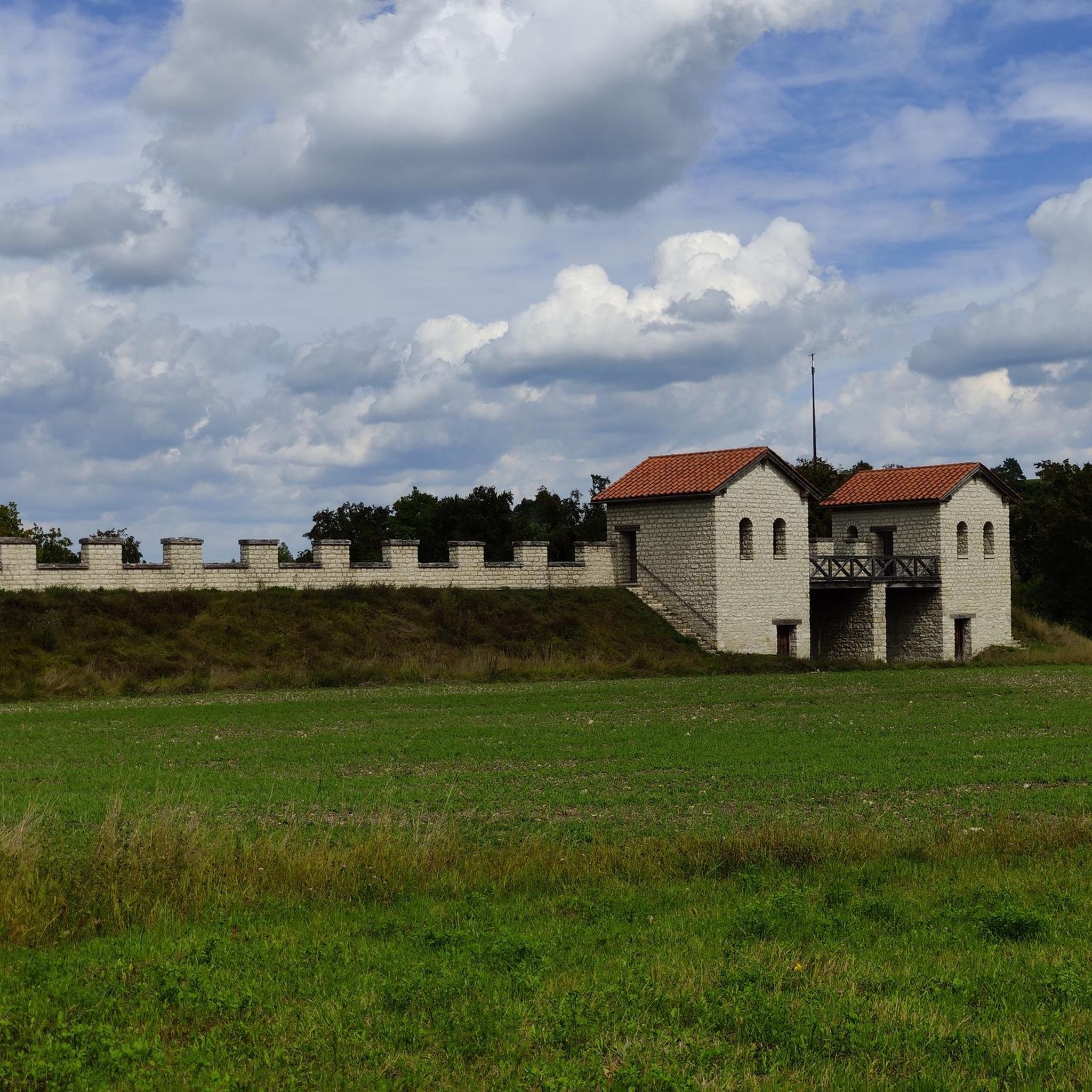
An important historic site, Tullyhogue Fort is where the O'Neills were crowned the Chiefs of Ulster. It is now planted with trees and you can enjoy views across the countryside of County Tyrone.
0
0
Built in 1802, Killymoon Castle was built to replace a 17th century castle which was destroyed by fire in 1801. James Nash was the designer, who also designed Buckingham Palace in London. Tours are available but must be pre-booked, as is afternoon tea in the castle tea rooms. See the website for more details https://killymooncastle.com/
0
0
Frequently Asked Questions
How many touring cycling routes are available around Ballymenagh?
There are 5 touring cycling routes available around Ballymenagh on komoot, offering a variety of experiences for different skill levels.
What kind of terrain can I expect on touring cycling routes around Ballymenagh?
The terrain around Ballymenagh is quite varied. You'll find routes along tranquil lough shores, through rural roads, and into the foothills of the Sperrins. The wider region, as described in the Ballymenagh touring cycling guide, also features the dramatic formations of the Antrim Plateau and areas near Slemish Mountain, offering a mix of gentle gradients and more challenging ascents.
Are there any easy touring cycling routes suitable for beginners or families?
Yes, there are several easy routes. For instance, the Loughshore Trail: Ardboe Loop is an easy 17.4-mile (28.1 km) trail that follows the lough shore with minimal elevation gain. Another great option is the Cookstown loop to Killymoon Castle & Tullyhogue Fort, an easy 12.9-mile (20.8 km) path exploring historical landmarks and rural scenery.
What are some challenging touring cycling routes in the Ballymenagh area?
For those seeking a challenge, the The Sperrins loop from Cookstown is a difficult 33.5-mile (53.9 km) trail leading through the Sperrins foothills. Another demanding option is the Maghery loop from Cookstown, which is a difficult 71.9-mile (115.7 km) route with significant elevation gain.
Are there any circular touring cycling routes around Ballymenagh?
Yes, many of the touring cycling routes in the area are circular. Examples include the Loughshore Trail: Ardboe Loop, the Cookstown loop to Killymoon Castle & Tullyhogue Fort, and the Bike loop from Cookstown, all designed as loops for convenient exploration.
What natural features or landmarks can I see along the touring cycling routes?
The routes offer views of various natural features and landmarks. You can explore areas near Slemish Mountain, a prominent extinct volcano, and enjoy the serene landscapes of Glenariff Forest Park with its woodlands and waterfalls. The Cookstown loop to Killymoon Castle & Tullyhogue Fort specifically passes by historical sites like Tullyhogue Fort. Other nearby attractions include Lough Fea and Slieve Gallion NE Top Summit.
Are there any specific cycling trails or paths in the Ballymenagh area?
While many routes use quiet minor roads, the region is known for trails like the Ecos Cycle Trail, which connects Ballymena to Glenarm. This trail offers opportunities to detour and climb Slemish Mountain. Additionally, ECOS Nature Park on the outskirts of Ballymena provides over 8km of dedicated walking and cycling paths along the Braid River.
What kind of public transport options are available to access cycling routes around Ballymenagh?
Ballymena, the larger town nearby, serves as a transport hub. While specific public transport links directly to the start of every cycling route might vary, local bus services often connect to towns like Cookstown, from where many of the listed routes begin. It's advisable to check local bus schedules for connections to specific starting points.
Are there any proposed cycling infrastructure developments in the Ballymena area?
Yes, there are plans for enhancing cycling infrastructure in the wider Ballymena area. These proposals include two-way shared cycle tracks on various roads and roundabouts within Ballymena, aiming to improve safety and accessibility for cyclists. More details can often be found on local government transport websites, such as infrastructure-ni.gov.uk.
What is the best time of year for touring cycling in Ballymenagh?
The best time for touring cycling in Ballymenagh generally aligns with milder weather conditions, typically from late spring through early autumn (May to September). During these months, you can expect more pleasant temperatures and less rainfall, making for more enjoyable rides through the diverse landscapes.
Can I find places to eat or drink along the cycling routes?
Many routes pass through or near charming villages and towns like Cookstown, Broughshane, and Buckna, where you can often find local cafes and pubs. Glenarm, at the end of the Ecos Cycle Trail, also offers options. It's a good idea to plan your route and check for establishments along your chosen path beforehand.
What are some historical sites or points of interest near the cycling routes?
Beyond the routes themselves, the region is rich in history. The Cookstown loop to Killymoon Castle & Tullyhogue Fort specifically highlights Tullyhogue Fort and Killymoon Castle. Other notable sites in the broader area include Carrickfergus Castle, Glenarm Castle, and the Gracehill Moravian Settlement, a UNESCO World Heritage Site.
Most popular routes around Ballymenagh
Most popular attractions around Ballymenagh

Get inspired with the komoot mobile app


Explore more
Browse the best Cycling routes in other regions.
