The best walks and hikes around Gussage St. Michael
4.6
(418)
2,461
hikers
208
hikes
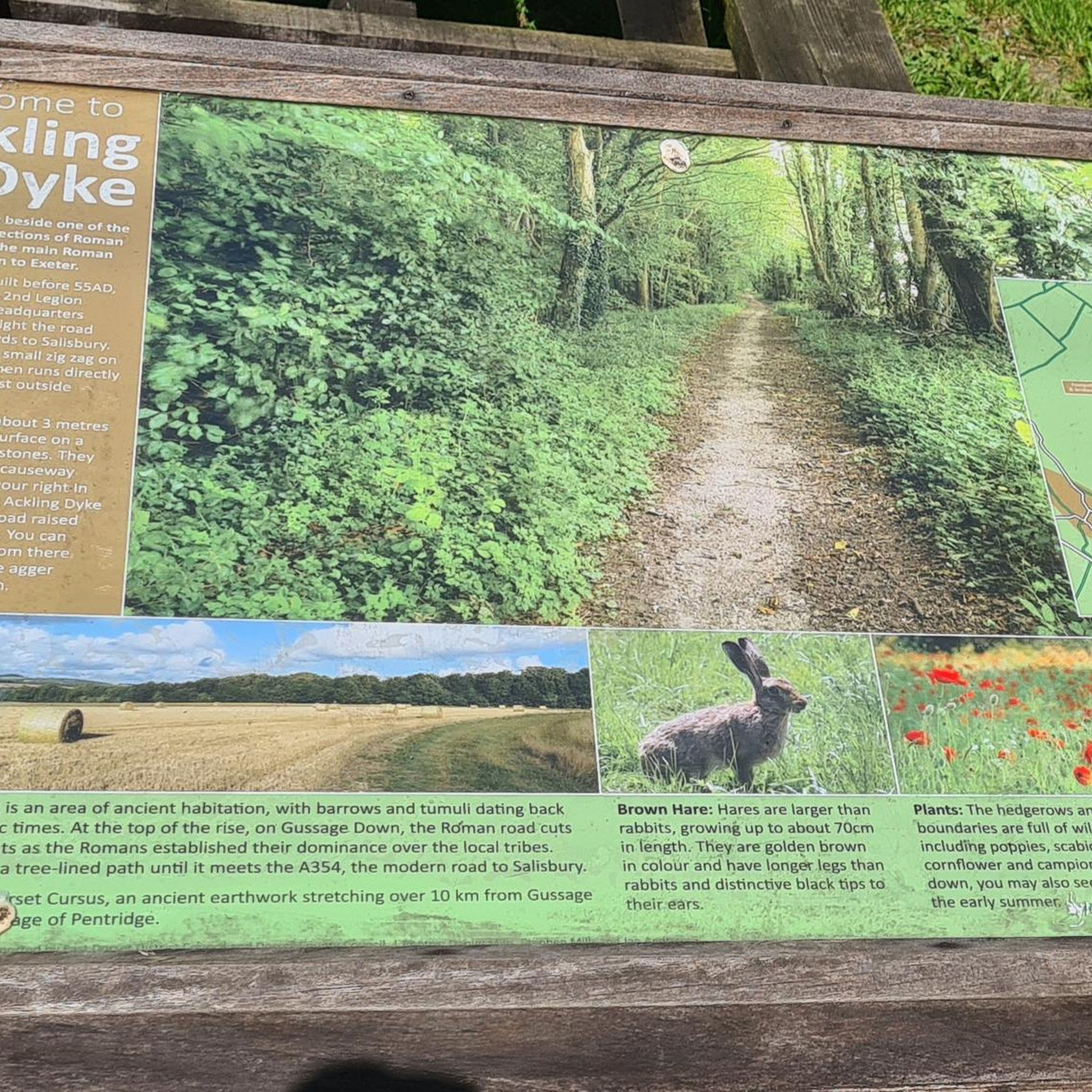
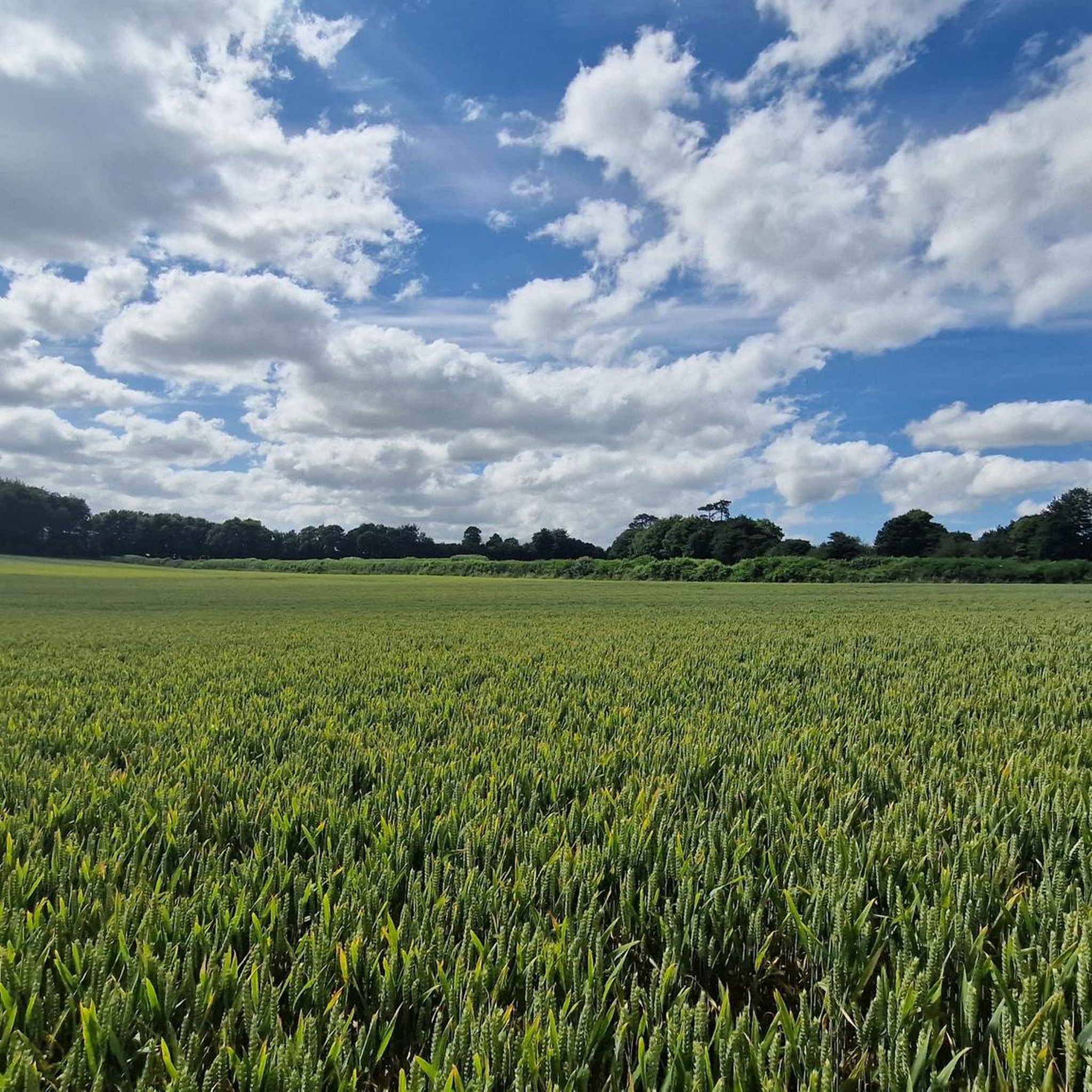
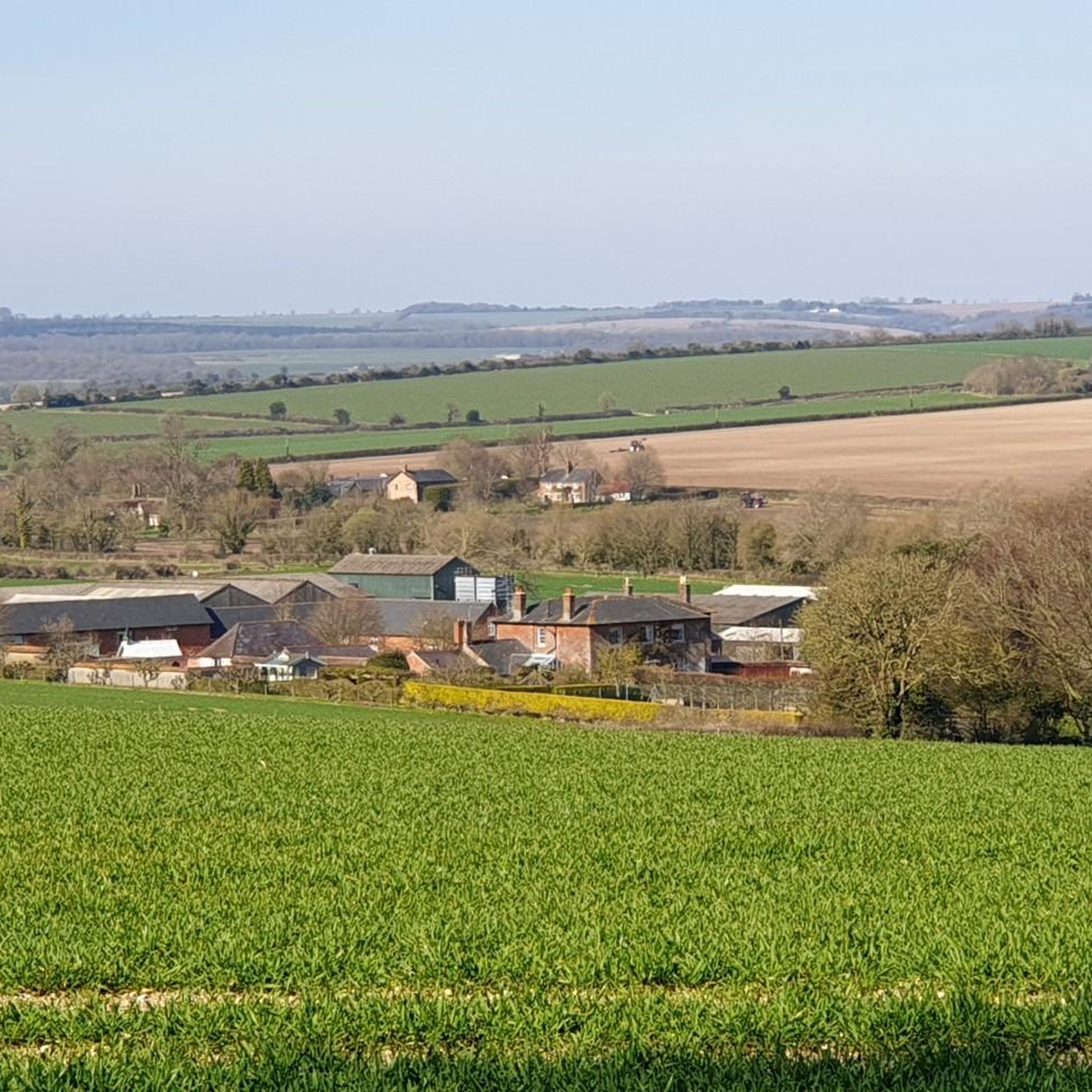
Hikes around Gussage St Michael explore the rolling chalk downlands of Cranborne Chase, an Area of Outstanding Natural Beauty. The landscape is characterized by high chalk hills, arable farmland, and pockets of woodland. Many Gussage St Michael walking routes follow ancient paths, passing historical features such as the Neolithic Dorset Cursus, the Ackling Dyke Roman road, and Bronze Age burial mounds.
Best hiking trails around Gussage St. Michael
- The most popular hiking route is Gussage Hill Trig Point loop from…
Last updated: June 26, 2026
4.5
(6)
16
hikers
Moderate hike. Good fitness required. Easily-accessible paths. Suitable for all skill levels.
4.4
(5)
15
hikers
Moderate hike. Good fitness required. Easily-accessible paths. Suitable for all skill levels.

Sign up for free
4.0
(3)
13
hikers
6.30km
01:41
60m
60m
Easy hike. Great for any fitness level. Easily-accessible paths. Suitable for all skill levels.
5.0
(1)
15
hikers
10.8km
02:50
90m
100m
Moderate hike. Good fitness required. Easily-accessible paths. Suitable for all skill levels.
4.5
(4)
10
hikers
8.47km
02:13
70m
70m
Moderate hike. Good fitness required. Easily-accessible paths. Suitable for all skill levels.
Get access to more routes and recommendations from other explorers.
Sign up for free
Already have an account?
Our route recommendations are based on thousands of hikes, rides, and runs completed by other people on komoot.
Start today with a free account
Your next adventure awaits.
Login or Signup
Tips from the Community

If you enjoy a bit of architectural time-travel with a spooky twist, Knowlton Church & EarthworksClick to open side panel for more information is one of the most atmospheric spots in Dorset. It is essentially a "history sandwich" where a 12th-century Christian church was built directly inside a much older Neolithic henge. The Ultimate Mash-up: It is a rare example of "reusing" a sacred site. The Normans built their church right in the middle of a pagan ceremonial circle, creating a visual timeline that spans thousands of years. Ghostly Vibes: Because of its lonely location and ruined state, it is a legendary hotspot for local ghost stories. Whether you believe in the "Face in the Window" or not, the silence of the surrounding fields makes it feel incredibly mysterious. The Henge High-Ground: You can still walk along the massive circular earthwork banks. From the top, you get a great view of the ruined flint walls of the church standing defiantly in the center of the ring. Picnic with the Past: Unlike many tourist spots, it is completely open and free to wander. It’s a perfect place to spread a blanket, grab a sandwich, and wonder what the original builders were thinking 4,000 years ago.
0
0
St. Giles Church is known for its numerous monuments, particularly those dedicated to the Earls of Shaftesbury. Sir Anthony Ashley's Tomb: A historic highlight is the spectacular gilded tomb of Sir Anthony Ashley, dating to 1628. The tomb features intricate classical columns and symbolism. A curious detail is a sphere at his feet, which has been the subject of various theories, including that it represents a globe, a jewel, or even a cabbage. Ashley-Cooper Family Memorials: The church houses several other memorials to the Ashley-Cooper family, including tombs for the 1st, 3rd, 4th, 7th, and 9th Earls. The 1st Earl's memorial includes a bust by Rysbrack, and the 3rd Earl's is a grand wall monument by Scheemakers. Crusader Effigy: There is a much-restored 14th-century effigy of a crusading knight, believed to be Sir John de Plecy. Comper's Work: The interior is almost entirely a result of Sir Ninian Comper's restoration. This includes the highly decorated screen separating the nave and chancel, new stained glass windows, and the gilded tester over the altar.
1
0
19th-Century Gothic Revival: In the 19th century, the church was remodeled twice. The most significant work was in 1887, a Gothic Revival-style memorial to the 8th Earl of Shaftesbury. The 1908 Fire and Comper's Restoration: A catastrophic fire in 1908 destroyed most of the church's interior, leaving only the walls standing. The 9th Earl of Shaftesbury commissioned the renowned Gothic Revival architect Sir Ninian Comper to restore and rebuild the church. Comper's work, completed between 1908 and 1910, is considered one of his masterpieces. He kept the 18th-century external walls but completely redesigned the interior, adding a new north aisle and a lady chapel. His intricate work, including stained glass, a wooden screen, and numerous sculptures, makes the church a "treasure-house of Comper work," as described by Sir John Betjeman.
1
0
St. Giles Church is the parish church for the village of Wimborne St Giles in Dorset. It has a rich and complex history, marked by several rebuilds, a major fire, and the patronage of the Ashley-Cooper family, the Earls of Shaftesbury. The church's origins date back to at least the 13th century, with the first recorded rector in 1207. The current building is a fascinating mix of architectural styles due to its turbulent history. 18th-Century Georgian: The church was almost entirely rebuilt in 1732 by the Dorset architects John and William Bastard, who were also responsible for much of the reconstruction of the town of Blandford Forum after a fire. The exterior of the church, with its greensand and flint walls, still largely reflects this Early Georgian design.
1
0

I would highly recommend popping in the village store it’s excellent
0
0
Knowlton Circles/earthworks The henge enclosing Knowlton Church is only one of three henges (known as Knowlton Circles) and associated earthworks. However, Church Henge is the best preserved, and is maintained by English Heritage. Nearby is Great Barrow, the largest round barrow in Dorset. Aerial photographs reveal a large number of ploughed-out barrows in the immediate vicinity.
0
0
The Paranormal occurrences of Knowlton Chruch Today, despite the picturesque surroundings, a certain aura of melancholy hangs heavy over the site and the spirits of some who have passed this way in the last 4,000 years are still said to linger here. A phantom horse and rider are said to gallop across the site in the dead of night. They then proceed to pass straight through the church as though it wasn’t there. Elsewhere, a ghostly face has been witnessed peering from the top window of the tower. Then there is the shade of a weeping woman, whom some accounts describe as a nun, that has been seen kneeling outside the church, although what sin or transgression she is trying to purge herself of is not known. Paranormal groups investigating the site have found themselves enveloped in swirling white mists and have heard ethereal voices chattering around them, although no source of for voices can ever be traced. A lady and her two children who were visiting the site during daylight hours were startled by a tall figure dressed in black that suddenly appeared from nowhere. It proceeded to walk right across their path and then promptly vanished. Others have reported sightings of the same figure in the dead of night and have commented on a truly menacing aura that seems to emanate from it.
0
0
Knowlton Church is a ruined building of unknown dedication standing near the centre of Church Henge. The earliest parts of the building are the 12th-century chancel and nave and there are 15th and 18th century additions and alterations. The church was in use in 1550, however lack of use led to calls to demolish it in 1659. But it saw a revival after this time, and a north aisle was built in 1730. Later in the 18th century the roof fell in and the church was abandoned.[2] The church is a Grade II* listed building. The nearby Victorian-built Church of the Ascension at Woodlands has a 12th-century circular stone font originally from Knowlton Church. Early Christian activity at Knowlton is indicated by a mid-to-late Anglo-Saxon inhumation cemetery which was discovered to the east of Church Henge in 1958. Excavations located sixteen burials within chalk-cut graves, some aligned east-west. Knowlton is recorded in the Domesday Book of 1086–87 as Chenoltone. Winfrith Newburgh, East or West Lulworth, "Wintreborne" and Knowlton were held by King William; they were previously held by King Edward. The Domesday Book also records two hides of the land of the Count of Mortain in Knowlton, named as Chenoltune in the book, held by Ansgar, which was held by Æthelmær in the time of King Edward. This land paid geld, was enough for one plough with one slave and one bordar, a mill paying 12s6d, and was worth 25s. The site of the ancient village of Knowlton (as opposed to the present day hamlet) is located 500 metres west of Knowlton Church along Lumber Lane at the banks of the River Allen. There is little to be seen on the ground, but aerial photos do show the village layout.
0
0
Frequently Asked Questions
Are there many circular walks starting from Gussage St. Michael?
Yes, the area is well-suited for circular hikes. Many trails are designed as loops that bring you back to your starting point, exploring the chalk hills and historical sites of Cranborne Chase. A good example is the Little Village Store loop from Chettle, which takes you through the scenic downlands.
What are the trail conditions like around Gussage St. Michael?
Most trails follow a mix of firm tracks, ancient green lanes, and some quiet country roads. The fast-draining chalk soil generally makes for good walking conditions. However, be aware that some grassy paths and tracks through woodland can become muddy, especially after periods of heavy rain.
Can I bring my dog on the hiking trails?
Dogs are generally welcome on the public footpaths around Gussage St. Michael. However, the routes often cross arable farmland where livestock may be grazing. It is essential to keep your dog on a lead and under close control in these areas to ensure the safety of the animals and your pet.
Are there any family-friendly walks in the area?
Yes, there are several easier walks suitable for families. The Hiking loop from Gussage All Saints is a relatively short and gentle trail of about 6.3 km (3.9 miles) that explores the quiet countryside, making it a manageable option for an outing with children.
What historical sites can I see while hiking?
The trails are rich with history. You can walk alongside the massive Neolithic Dorset Cursus and follow the path of Ackling Dyke, a raised Roman road. The landscape is also dotted with Bronze Age burial mounds (tumuli) and the earthwork remains of an Iron Age settlement on Gussage Hill.
Where is the best place to park for walks around Gussage St. Michael?
There is no large, dedicated car park in Gussage St. Michael itself. Most hikers find considerate on-street parking within the village. Please be mindful of residents and do not block driveways or access points. Some routes may also start from nearby villages like Chettle or Gussage All Saints, which have similar on-street parking situations.
Can I get to the trailheads using public transport?
Public transport options to Gussage St. Michael are very limited as it is a small, rural village. Reaching the trailheads is most conveniently done by car. If you rely on public transport, you may need to plan for a bus to a larger nearby town and then arrange for a taxi.
Are there any walks with good views?
Many hikes in the area reward you with expansive views across the Cranborne Chase AONB. Routes that ascend the chalk hills, such as the one leading to the Gussage Hill trig point, offer some of the best panoramic vistas of the rolling downlands and vast farmland.
How many hiking trails are there around Gussage St. Michael?
There are over 200 hiking routes to explore in the region. These range from short, easy loops of around 6 km to more challenging moderate hikes over 10 km, offering plenty of options for all ability levels.
Are there any pubs or cafes on the walking routes?
The villages in this rural area are quite small, and amenities are limited directly on the trails. It's best to bring your own water and snacks. For refreshments before or after your hike, you may find a pub in one of the surrounding villages, but it's wise to check their opening times in advance.
What do other hikers think of the trails in Gussage St. Michael?
The area is highly regarded by the komoot community, with an average rating of 4.6 stars. Hikers frequently praise the profound sense of tranquility, the wide-open spaces, and the unique opportunity to walk through thousands of years of history.
Can I see wildlife in the area?
Yes, the Sovell Down Nature Reserve, accessible via a track just outside the village, is a great place to experience local flora and fauna. The mix of arable land, chalk grassland, and small woodlands throughout the region provides habitats for various bird species, deer, and other wildlife.
Most popular routes around Gussage St. Michael
Most popular attractions around Gussage St. Michael

Get inspired with the komoot mobile app


Explore more
Browse the best Hikes in other regions.
