The best walks and hikes around Burmington
4.5
(846)
4,820
hikers
267
hikes
Hikes around Burmington explore the gentle countryside of Warwickshire. The landscape is characterized by rolling fields, quiet country lanes, and footpaths connecting small villages like Shipston-on-Stour. Most routes feature minimal elevation change, making it an accessible region for walking and exploring the rural scenery.
Best hiking trails around Burmington
- The most popular hiking route is Shipston Cemetery Chapel – St Martin's Church, Barcheston loop from Burmington, a 4.2 mile (6.8 km) trail that takes about 1 hour 45 minutes…
Last updated: August 15, 2026
4.7
(10)
32
hikers
Easy hike. Great for any fitness level. Easily-accessible paths. Suitable for all skill levels.
4.0
(2)
34
hikers
4.34km
01:07
20m
20m
Easy hike. Great for any fitness level. Easily-accessible paths. Suitable for all skill levels.

Sign up for free
4.7
(10)
33
hikers
Easy hike. Great for any fitness level. Easily-accessible paths. Suitable for all skill levels.
4.8
(4)
14
hikers
10.2km
02:49
170m
170m
Moderate hike. Good fitness required. Easily-accessible paths. Suitable for all skill levels.
4.5
(2)
23
hikers
7.13km
02:00
140m
140m
Easy hike. Great for any fitness level. Easily-accessible paths. Suitable for all skill levels.
Get access to more routes and recommendations from other explorers.
Sign up for free
Already have an account?
Our route recommendations are based on thousands of hikes, rides, and runs completed by other people on komoot.
Start today with a free account
Your next adventure awaits.
Login or Signup
Tips from the Community

"The name "Brailes" is thought to originate either from the Old Welsh breg-lis - "hill court" - or the Old English byrgels - "burial place". Castle Hill Motte in the middle of the village is a natural knoll that was made higher in the Norman era to form the motte of a motte-and-bailey castle. Its construction may have been ordered by Roger de Beaumont, who was Earl of Warwick from 1123–53. Earthworks of both the motte and the bailey survive, and the site is a Scheduled Monument. Brailes was the home of William de Brailes, a 13th-century medieval painter of illuminated manuscripts. Of the many artists who painted such manuscripts, William is one of only two whose name has been recorded. It was also the birthplace of Thomas de Brayles (died c.1340), a senior judge and Crown official of the early fourteenth century, whose highest office was Chancellor of the Irish Exchequer. On the other side of Stocks Hill is Brailes House, the former home to the Sheldon family. The Sheldons have held the manor of Brailes since 1547." Source: Wikipedia https://en.wikipedia.org/wiki/Brailes
1
0
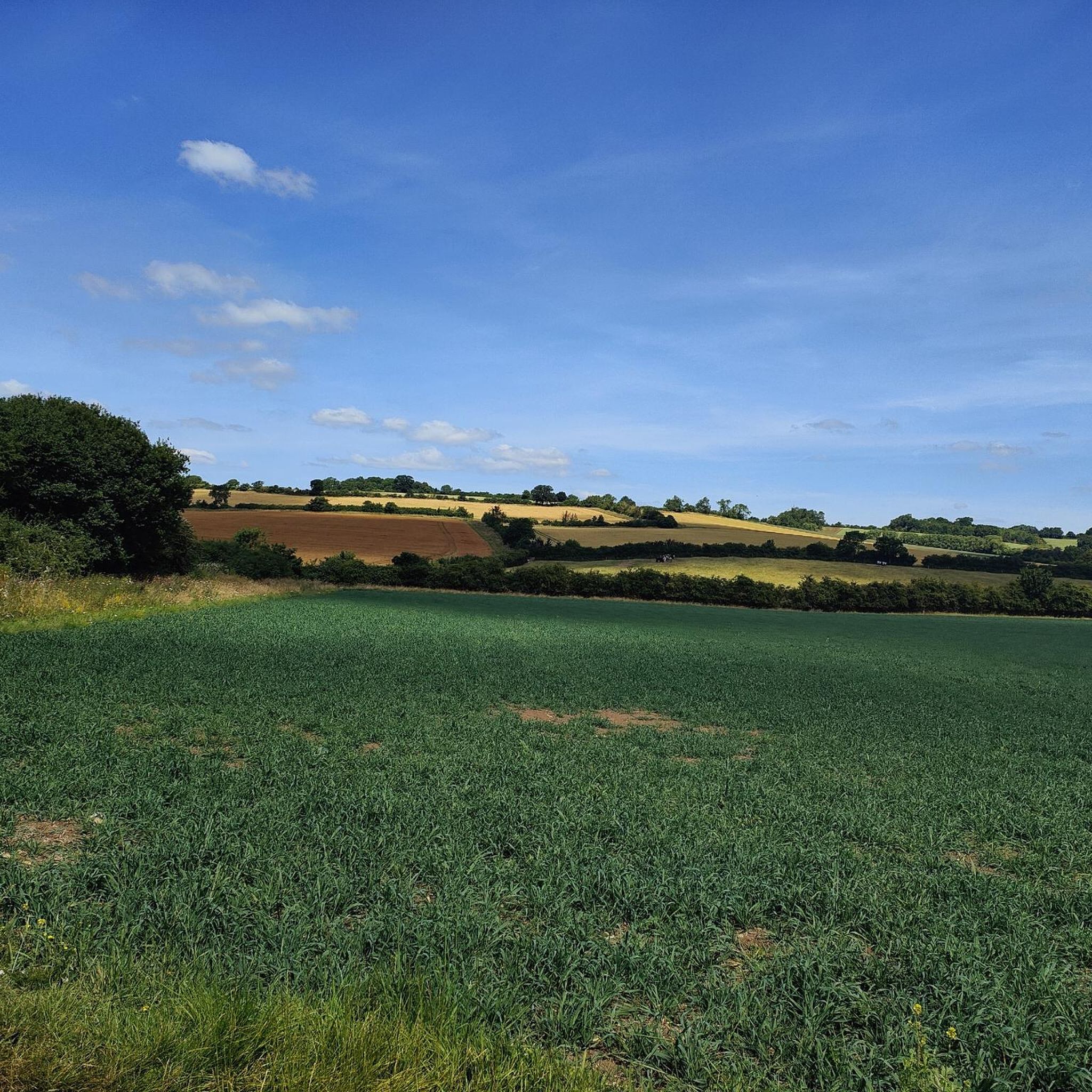
This was a damp, drizzly, mizzly evening so the view was a bit limited. However, I imagine that on a sunny, summer evening or a crisp, clear winters morning the views will be spectacular.
1
0
"The small market town of Shipston-on-Stour is situated in South Warwickshire and ideally located for visitors to the North Cotswolds and Stratford-upon-Avon. It is surrounded by places of interest including Chipping Campden, Broadway, and Moreton-in-Marsh. The towns name derives from being known in ancient times as 'Sheep-wash-Town'. Shipston was for a long time an important sheep market town and after the demand for local wool began to diminish the town continued to flourish thanks to the opening in 1836 of a branch line from the horse-powered tramway built a decade before to link Stratford with Moreton-in-Marsh. The line became a modern railway in 1889. The town was also an important coaching town and many of the inns from that era surviving in the area of the High Street. Shipston today is a charming historic and thriving town with interesting and unusual features.. It is becoming increasingly popular with tourists due to its wonderful mixture of shops, pubs, restaurants and hotels. Shipston was a working Wool Town and developed many woolen skills, including those for making tapestries including the famous Sheldon Tapestries in neighbouring farming hamlet of Barcheston. which became central to the history of English tapestry making. It is today officially commemorated by the 'Wool Fair' which takes place on Spring Bank Holiday Monday. In the Tudor period the little hamlet of Barcheston on the outskirts of Shipston was the first manufacturing home in England for the weaving of magnificent woollen tapestries. They are also known as the Sheldon Tapestries. They are profusely decorated with flowers and mythological motifs and often highlighted in silk. Technically, for that period, they were unrivalled throughout the land. Unfortunately very few have survived." Source: https://www.cotswolds.info/places/shipston-on-stour.shtml
1
0
Shipston Cemetery Chapel was built and consecrated in the mid 19th century. It is a Grade II Listed Building consisting of two mortuary chapels - one for members of the Church of England and one for Nonconformists. The cemetery itself is also a Commonwealth War Graves Commission site. Source: https://wikimapia.org/23796671/Cemetery-Chapel
1
0
"Barcheston church is a delightful largely fifteenth century building in a secluded spot close to Shipston on Stour. It's most distinguishing feature externally is the leaning north west tower, which inclines dramatically to the west (and is sometimes referred to as 'Warwickshire's Pisa'!). The effect is somewhat alarming, but it has been this way for some centuries, having settled soon after it was built, as witnessed by the additional buttress propping up the west face; hopefully it will be staying put for the foreseeable future. The church has more of a Cotswold appearance than one is normally used to seeing in Warwickshire, and would perhaps seem more at home if it stood over the Gloucestershire or Oxfordshire borders, very much a sign of how far south we are in the county. The layout is quite irregular, the chancel is off centre and the south aisle is more of a seperate chapel only half the length of the nave. The first glimpse upon entering via the lean-to south porch is the view looking across to the north aisle, with it's very domestic looking windows (a post Reformation alteration, possibly to admit more light) and an arcade that seems to be leaning even more dramatically than the tower (where the arcade meets the tower wall there is a bracket 'propped up' by a carved 'helping hand', very apt and much needed assitance judging by the angle!)." Copyright: Aidan McRae Thomson 2012 Source: https://warwickshirechurches.weebly.com/barcheston---st-martin.html
1
0
This was the start/finish point of this walk. "The Church of St Barnabas and St Nicholas was built in the Imperial period, replacing a Medieval church on the same site. The bell turret was added in the 19th Century, during renovation. The church is situated north east of the Manor House, Burmington. There is a fair amount of Medieval masonry in the church walls perhaps dating from as early as the 13th century, but the only ancient architectural detail surviving is part of the chancel arch of c1200. The church had fallen into decay and the nave was rebuilt in 1693; it formerly had a central tower, 4.9m square, but this was then abolished and the chancel reduced in size. A further very complete restoration was also carried out in the 19th century when all the windows, doorways, and roofs were renewed, the bell-turret added, and other work done. In 1311 Burmington was a chapel annexed to the church at Wolford. The chancel arch has two big re-used late 12th century corbels and the NW tower has a pyramid roof." Source: https://www.ourwarwickshire.org.uk/content/catalogue_her/church-of-st-barnabas-and-st-nicholas-burmington
1
0

The George Inn at Brailes is a traditional 16th century Cotswold pub that serves up a delicious range of traditional and continental food and local Hooky beers. The pub has a number of cosy rooms as well as a large beer garden and pool table.
2
0
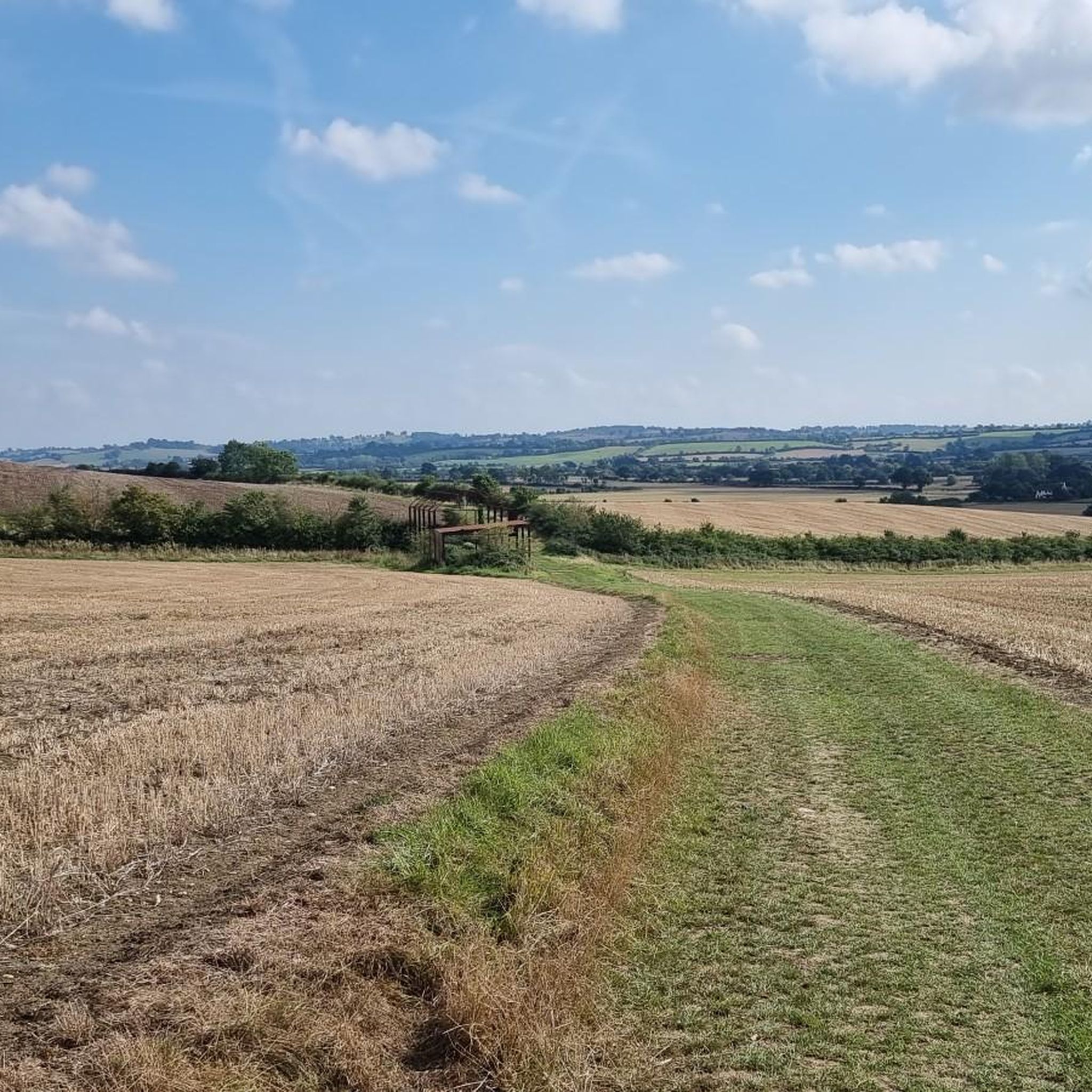
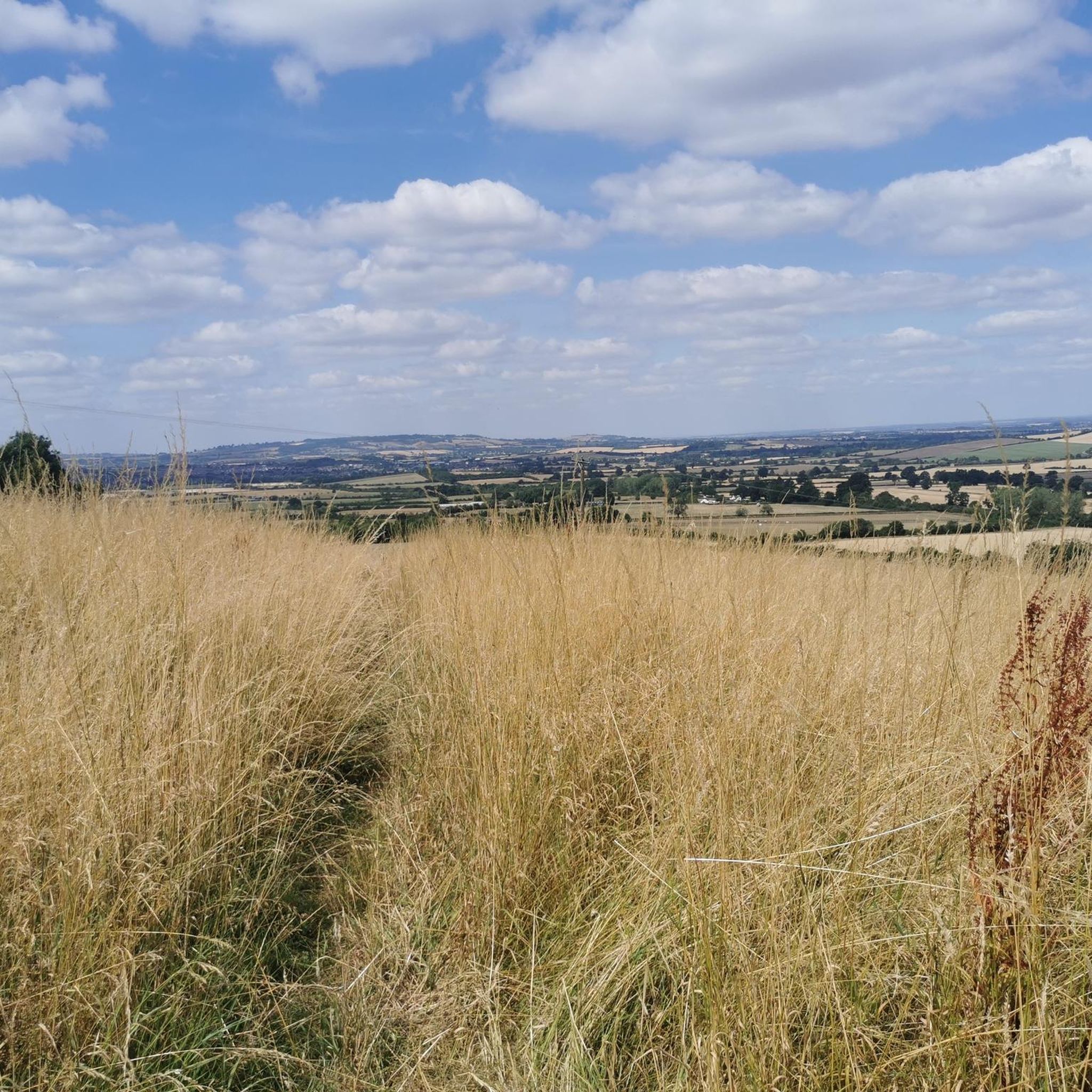
From this elevated position on the side of Brailes Hill, you can enjoy sweeping views across the beautiful Warwickshire countryside.
2
0
Frequently Asked Questions
Are there many walking routes to choose from around Burmington?
Yes, there is a wide selection of over 260 walking routes in the Burmington area. The trails range from easy strolls to more moderate countryside hikes, so you can easily find one that suits your fitness level and how much time you have.
What do other walkers think of the trails in Burmington?
The hiking routes around Burmington are highly regarded by the komoot community. With an average rating of 4.5 stars from hundreds of reviews, walkers frequently praise the quiet, well-marked footpaths and the charming rural scenery.
Are the walks around Burmington generally difficult?
Most walks in this area are not difficult. The landscape is defined by gentle, rolling fields with minimal elevation change. Out of more than 260 routes, the vast majority are rated as easy or moderate, making it a very accessible region for hiking.
Can I find circular walks that start and end in the same place?
Absolutely. Many trails in the area are loops. For a pleasant, moderate-length circular walk, consider the The George Inn, Brailes – Historic Church and Cemetery loop from Cherington. It offers a great way to explore the countryside and return to your starting point.
Are there any good walks for beginners or families?
Yes, the region is perfect for beginners and families. There are over 100 easy-rated walks to choose from. These routes typically follow clear footpaths through fields and along quiet country lanes with very little climbing.
Can I bring my dog on the trails?
Dogs are welcome on most public footpaths in the Warwickshire countryside. However, you will likely be walking through fields with livestock, so always keep your dog on a lead and under control in these areas. Be sure to respect the Countryside Code.
Are there any walks that pass by a pub or café?
Yes, several routes connect local villages and pass by traditional pubs or cafés. A good option is the Feldon Valley Golf Club – The George Inn, Brailes loop from Sutton under Brailes, which provides an opportunity for refreshments as part of your walk.
What is the best time of year to hike in Burmington?
You can enjoy walking around Burmington year-round. Spring and summer offer lush green fields and pleasant weather. Autumn provides beautiful colours in the woodlands and hedgerows, while crisp winter days can be perfect for a quiet, frosty walk.
How do I get to the trailheads? Is parking available?
Most trails start from the small villages in the area, such as Burmington, Shipston-on-Stour, or Cherington. You can typically find on-street parking in these villages, but be sure to park considerately. Some routes may also start near local pubs or churches which might have parking available for patrons.
What kind of scenery can I expect on a typical walk?
The scenery is classic English countryside. Expect to walk across rolling open fields, along quiet country lanes, and on footpaths that follow hedgerows and small streams. You'll also pass through charming, historic villages with features like old stone churches.
Are there any hikes with waterfalls in the Burmington area?
The landscape around Burmington is characterized by gentle hills and farmland rather than dramatic gorges or mountains. As a result, you won't find any significant waterfalls on the local hiking trails.
What should I pack for a hike in Burmington?
Even for a short walk, it's wise to be prepared. We recommend:
Footwear: Sturdy walking shoes or boots are essential, as footpaths can be muddy, especially after rain.
Clothing: Wear layers and bring a waterproof jacket, as the weather can change quickly.
Navigation: Have your route saved on the komoot app for easy navigation.
Refreshments: Carry water and some snacks, particularly on longer routes between villages.
Most popular attractions around Burmington

Get inspired with the komoot mobile app


Explore more
Browse the best Hikes in other regions.
