The best cycling routes around Castronuño
3.5
(7)
69
riders
7
rides
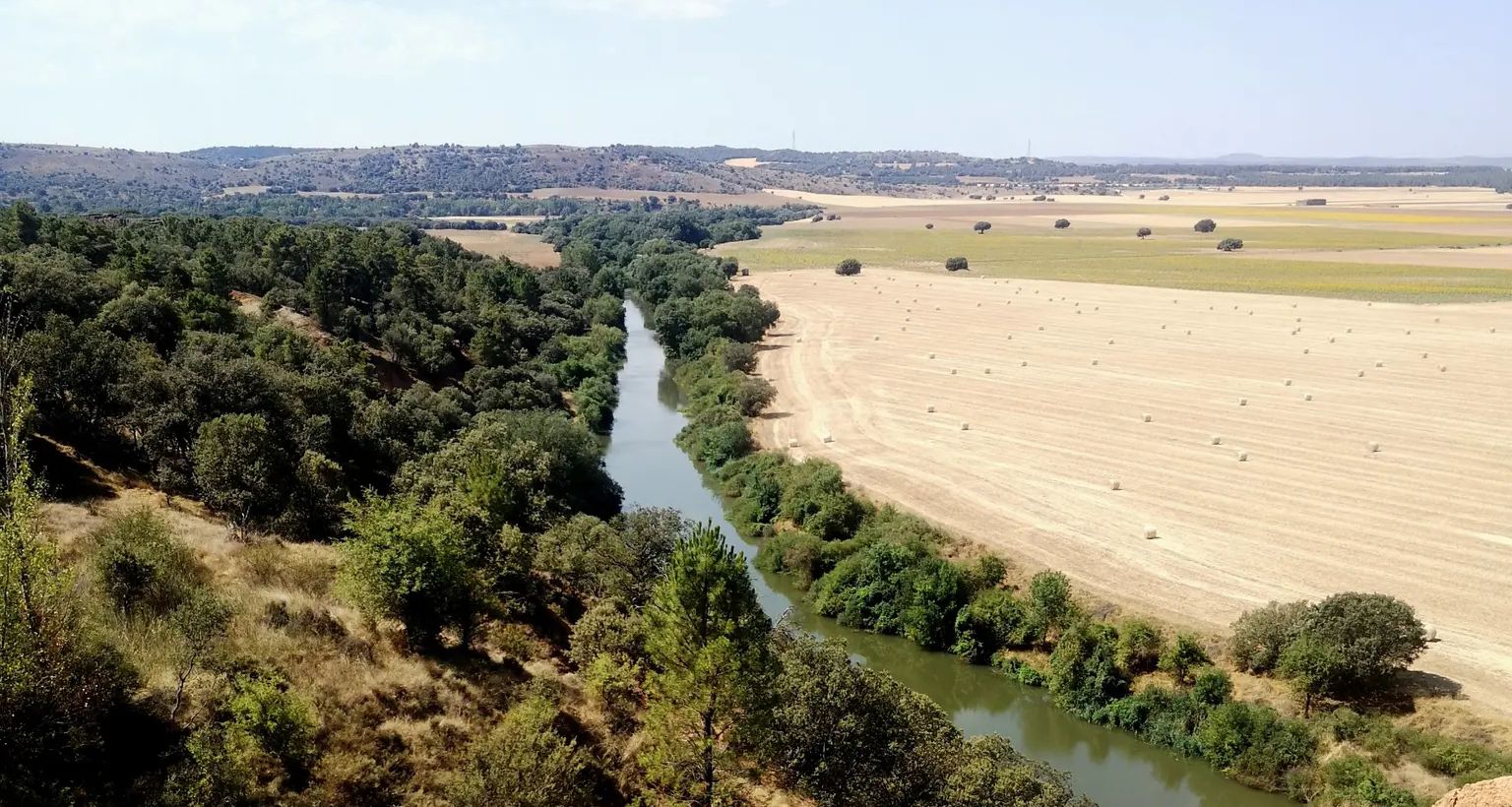
Touring cycling routes around Castronuño are primarily shaped by the Duero River, which carves meanders through the landscape, creating fertile plains and terraced banks. The region is home to the Riberas de Castronuño-Vega del Duero Natural Reserve, featuring the San José Dam and its associated marsh ecosystem. Cyclists can expect routes that traverse riverine forests of poplars and willows, transition to drier moors and holm oak groves, and occasionally pass through stone pine forests.
Best touring cycling routes around Castronuño
…Last updated: October 14, 2026
5.0
(2)
17
riders
Moderate bike ride. Good fitness required. Mostly paved surfaces. Suitable for all skill levels.
5.0
(1)
14
riders
Moderate bike ride. Good fitness required. Mostly paved surfaces. Suitable for all skill levels.

6
riders
45.1km
03:42
190m
190m
Moderate bike ride. Good fitness required. Mostly paved surfaces. Suitable for all skill levels.
4.0
(1)
5
riders
49.8km
04:11
390m
390m
Moderate bike ride. Good fitness required. Mostly paved surfaces. Suitable for all skill levels.
4
riders
Hard bike ride. Very good fitness required. Mostly paved surfaces. Suitable for all skill levels.
Get access to more routes and recommendations from other explorers.
Already have an account?
Our route recommendations are based on thousands of hikes, rides, and runs completed by other people on komoot.
Start today with a free account
Your next adventure awaits.

Other adventures around Castronuño

Tips from the Community

Declared a Site of Cultural Interest (BIC) on December 7, 1983, this church is located in the heart of Tordesillas (Valladolid), one of the town's most iconic landmarks and the largest in the entire municipality. It is believed to have been built on the site of the former Tordesillas mosque. The main construction took place between the 16th and 17th centuries, with additions continuing into the 18th century. The church combines Gothic elements (the apse and the lower sections of the tower) with Neoclassical renovations inspired by El Escorial. Today, it serves as the headquarters for several Holy Week brotherhoods, housing processional floats such as the Virgin of Solitude and the Christ of Mercy.
5
0
It was built between the late 12th and early 13th centuries by Commander Fernán (Hernán) Rodríguez de Valbuena, becoming a funerary chapel for the Order. For centuries, it served as a fortified church overlooking the Duero River, and was linked to the now-vanished castle and other medieval chapels in the town. It suffered several collapses in the 19th and 20th centuries, until the original ruins had practically disappeared; the current structure is the one dedicated to Santa María del Castillo (Saint Mary of the Castle).
4
0
Hermitage of Santa María del Castillo (also known as the Hermitage of Santo Cristo or the Church of the Order of Saint John) in Castronuño: Located on Alto de la Muela, on the banks of the Duero River in Castronuño (Valladolid). A medieval building originally linked to the Military and Hospitaller Order of Saint John of Jerusalem, which established a commandery here.
4
0

This church-museum houses a large part of the artwork that once existed in the original church, most notably the tomb of the Alderete family, an important family in the city. This church was built on the site of another dating back to the 10th century and, after several modifications, was completed in 1644 by the architect Gil de Reynalto.
7
0
This church-museum houses a large part of the artwork that once existed in the church itself, most notably the tomb of the Alderete family, an important family in the city. This church was built on the site of another dating from the 10th century and, after several modifications, was completed in 1644 by the architect Gil de Reynalto.
7
0
The building, constructed between the 16th and 18th centuries, began in the Gothic style and finished in the Neoclassical. Another striking feature is its tower, the tallest in the city. The Baroque-era organ is considered one of the finest in the region, both for its design and its state of preservation.
6
0
The Alcázar of Toro is a historic fortification located in the town of Toro (Zamora, Castile and León), with great heritage and scenic value. It was built in the 10th century during the Christian repopulation, as part of the defensive system against Muslim incursions. It was reinforced in subsequent centuries, especially in the Middle Ages, when Toro acquired strategic importance in the Kingdom of León and later in Castile. It played a prominent role in the War of the Castilian Succession (1475), in the famous Battle of Toro between supporters of Isabella I of Castile and Joanna la Beltraneja.
2
0
The medieval bridge over the Duero River, with its perfectly aligned arches, connects the historic center to the opposite bank. The monumental skyline of Tordesillas, highlighting the Plaza Mayor, the Casas del Tratado (Houses of the Treaty), and the Monastery of Santa Clara, all framed by reddish rooftops and the silhouette of the Church of San Antolín. The Duero River winds beneath the bridge, its reflections shifting with the changing light, creating a highly photogenic scene. Natural surroundings: riverside vegetation and, in autumn, golden hues that enhance the scenery.
6
0
Frequently Asked Questions
How many touring cycling routes are available in Castronuño?
Castronuño offers a selection of 6 touring cycling routes, catering to various preferences. Most of these routes are of moderate difficulty, with one more challenging option available.
What are the typical distances and elevations for touring cycling routes in Castronuño?
The touring cycling routes in Castronuño vary in length, generally ranging from around 35 km to nearly 98 km. Elevation gains typically fall between 175 meters and 423 meters, with routes like the Historic Center of Tordesillas – Tordesillas Historic Center loop from Castile and León featuring the most significant climbs.
What kind of landscapes can I expect to see while cycling in Castronuño?
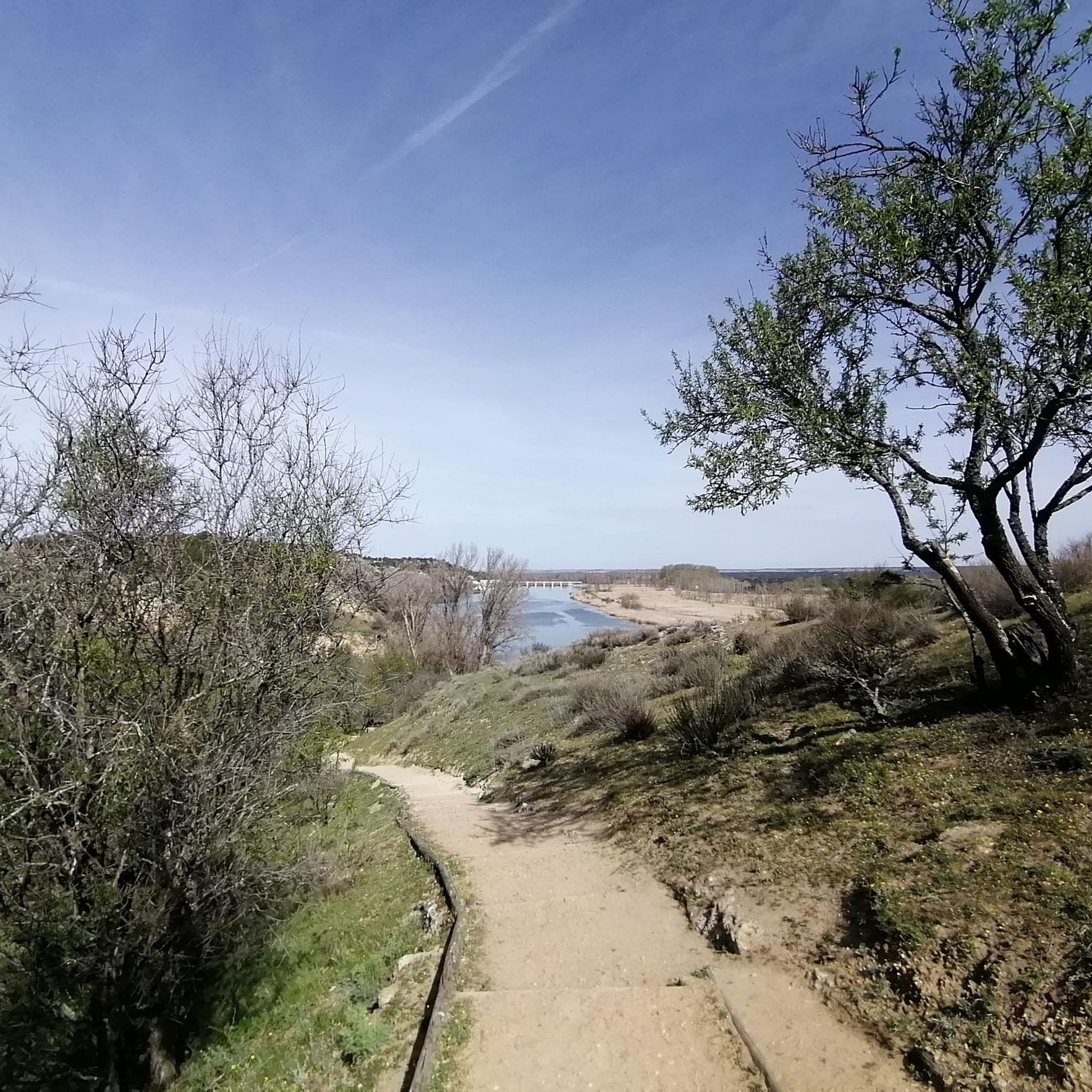
Cycling in Castronuño offers a diverse landscape shaped by the Duero River. You'll traverse fertile plains, terraced banks, and riverine forests of poplars and willows. The scenery transitions to drier moors, holm oak groves, and stone pine forests, with occasional reed beds and remnants of traditional almond orchards. The contrast between lush riverbanks and the Castilian steppe is particularly striking.
Are there any circular touring cycling routes in the area?
Yes, many of the touring cycling routes in Castronuño are designed as loops. For example, you can explore the San José Dam – Plaza Mayor de Toro loop from Castronuño or the Viewpoint – San José Dam loop from Castronuño, both offering varied terrain and scenic views.
What are some notable sights or attractions along the touring cycling routes?
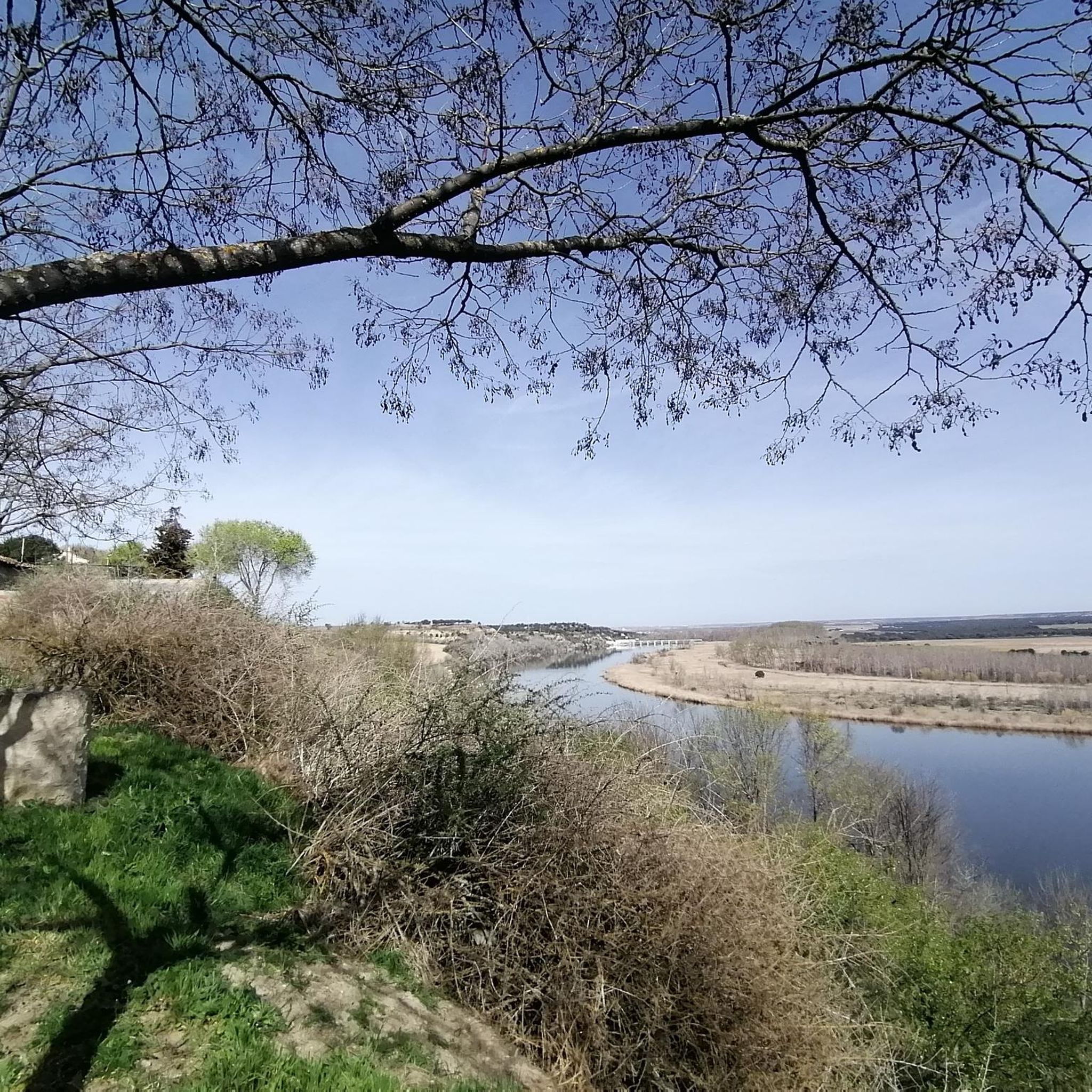
Along the routes, you can encounter several points of interest. The San José Dam is a prominent feature, creating an important marsh ecosystem. You might also pass by the Hermitage of the Holy Christ of La Muela, which offers panoramic views of the Duero River, or enjoy the View of the Duero River Meander from La Muela Park.
Is Castronuño suitable for beginner touring cyclists?
While most routes are rated moderate, beginners with some cycling experience should find options suitable for them. The region's terrain, characterized by river plains and gentle ascents, makes it accessible. It's always recommended to check the specific route details for distance and elevation before setting out.
What is the best time of year to go touring cycling in Castronuño?
The spring and autumn months are generally ideal for touring cycling in Castronuño. The weather is typically milder, and the natural reserve is vibrant with migratory birds. Summer can be quite warm, while winter might bring colder temperatures, though cycling is possible year-round with appropriate gear.
Can I find routes with good viewpoints in Castronuño?
Absolutely. The region is known for its scenic vistas, particularly overlooking the Duero River. The Viewpoint – San José Dam loop from Castronuño is specifically designed to highlight panoramic viewpoints. The Hermitage of the Holy Christ of La Muela also offers incredible views.
What do other cyclists say about touring cycling in Castronuño?
The touring cycling routes in Castronuño are highly regarded by the komoot community, with an average rating of 3.8 stars from over 6 reviews. Cyclists often appreciate the unique natural features of the Riberas de Castronuño-Vega del Duero Natural Reserve and the varied landscapes along the Duero River.
Are there opportunities for birdwatching along the cycling routes?
Yes, the Riberas de Castronuño-Vega del Duero Natural Reserve is a Special Protection Area for Birds, making it an excellent spot for birdwatching. Many routes, especially those near the San José Dam and marsh ecosystems, offer chances to see aquatic birds like grey herons, egrets, mallards, and even marsh harriers. The Senda de los Almendros, a local trail, specifically features an aquatic bird observatory.
Where can I park my car when starting a touring cycling route in Castronuño?
Castronuño, as a town within a natural reserve, typically offers parking options within or near the town center, close to trailheads. Specific parking information for individual routes might be available on their respective komoot pages or local signage.
Are there any longer or more challenging touring cycling routes for experienced riders?
For experienced riders seeking a greater challenge, the Historic Center of Tordesillas – Tordesillas Historic Center loop from Castile and León is a difficult 97.5 km route with over 420 meters of elevation gain, providing a more demanding touring cycling experience.
What unique natural features define the cycling experience in Castronuño?
The cycling experience in Castronuño is uniquely defined by the Duero River's striking meanders and the Riberas de Castronuño-Vega del Duero Natural Reserve. Key features include the San José Dam and its marsh ecosystem, extensive riverine forests, and the transition to moors, holm oak groves, and stone pine forests. The area's status as a Special Protection Area for Birds also adds to its distinct natural appeal.
Most popular attractions around Castronuño

Get inspired with the komoot mobile app


Explore more
Browse the best Cycling routes in other regions.
