Attractions and Places To See around Santa María De Los Llanos - Top 20
Best attractions and places to see around Santa María De Los Llanos include cultural sites, historical landmarks, and natural features within the tranquil La Mancha region of Cuenca. The area is characterized by its agricultural landscape, including vineyards, and offers historical and natural appeal. Santa María De Los Llanos also lies on the "Ruta de Don Quijote," providing access to associated historical sites and landscapes. This region offers a variety of points of interest for exploration.
Best attractions and places…
Last updated: July 12, 2026
Ermita de Santa Rita (Mota del Cuervo)
Highlight • Religious Site
Translated by Google •
Tip by

Manjavacas Lagoon
Highlight • Lake
Translated by Google •
Tip by
Sign up now to discover places like this
Get recommendations on the best single tracks, peaks, & plenty of other exciting outdoor places.
Sign up for free
Windmills
Highlight • Monument
Translated by Google •
Tip by
Castillo de Belmonte
Highlight • Castle
Its architectural style combines Gothic and Mudejar elements.
It has …
Translated by Google •
Tip by
La Tercia Real
Highlight • Historical Site
Translated by Google •
Tip by
Sign up for free to discover even more attractions around Santa María De Los Llanos.
Sign up for free
Already have an account?
Start today with a free account
Your next adventure awaits.
Login or Signup


Tips from the Community

This complex is made up of four lagoons: Manjavacas, Sánchez Gómez, La Dehesilla (in Mota del Cuervo), and Alcahozo (in Pedro Muñoz). It is a key point on the migratory routes of birds between Europe and Africa, which gives it international importance.
2
0
The Manjavacas Lagoon, located in the municipality of Mota del Cuervo (Cuenca), is part of the Manjavacas Lagoon Complex, a nature reserve of great ecological and scenic value.
2
0
Built in the 15th century by order of Don Juan Pacheco, first Marquis of Villena, the castle is a notable example of Gothic-Mudejar architecture. The castle has been restored and turned into a museum, and is now considered a Site of Cultural Interest. In addition to its rich history, the castle is known for events such as the National Medieval Combat Championship, which is held annually.
3
0
The Tercia Real de Mota del Cuervo, also known as Casa de Bastimento, is one of the oldest buildings in the town, along with the parish church of San Miguel. Built at the beginning of the 16th century, this building was used to store the tithes of the Mesa Maestral of the Order of Santiago. The building has a rectangular floor plan and is covered with four sides. It is built of masonry with ashlars in the corners and in the two entrance doors. One of the doors is finished with a segmental arch and the other with a semicircular arch on which a coat of arms is placed. Currently, the Tercia Real is used as a cultural centre, where various temporary exhibitions and cultural events are held.
31
0
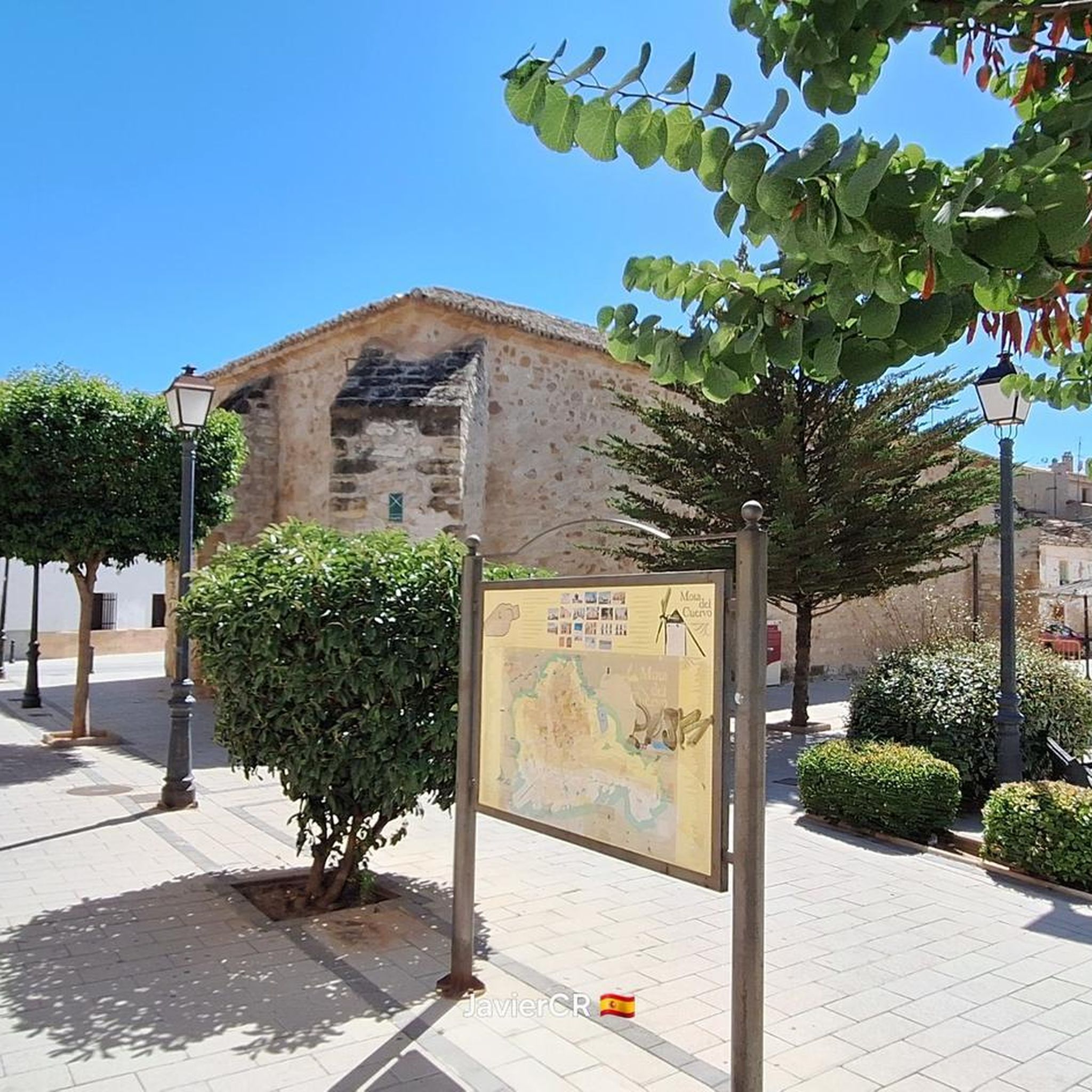
The Hermitage of Santa Rita in Mota del Cuervo is a relatively modern building, built in the fifties. It is located in the center of the city, presiding over the square that bears its name. The hermitage stands out for its stone bell gable that contrasts with the white plaster of its ground floor. The structure has a hall plan and a wooden roof. The main entrance is a semicircular arch preceded by a portico with three arches, the central one being wider than the side ones.⛪
31
0
The castle was built in 1456 by order of Juan Pacheco, a prominent nobleman during the reign of Henry IV. Its architectural style combines Gothic and Mudejar elements. It has a peculiar triangular plan and a strategic location on the top of a hill. Over the centuries, the castle has witnessed historical events, from visits by the Catholic Monarchs to restorations and cultural events. Today, the castle hosts exhibitions, dramatized tours, medieval combat tournaments and the impressive Trebuchet Park, which displays full-scale siege engines. 😊🏰
4
0

Unfortunately, nowadays they are often only monuments to a long tradition of craftsmanship: the heavy millstones were moved using the power of the wind alone to grind grains into flour (grain mills) or press oil from olives (oil mills). Sometimes - although rarely - the windmills also had the function of a pumping station and transported water to a higher level. But Miguel de CERVANTES (1547 to 1616) also created a literary monument to the technical monument of the mills: the most famous figure of the author, who is considered Spain's national poet and whose work can certainly be valued as world literature: "Don QUIXOTE", also known as the "Knight of the Sorrowful Countenance" and always accompanied by his loyal squire Sancho Panza, fights a - of course hopeless - battle against windmills in one of the fictional stories, in which he believes he recognizes four-armed giants.
1
0

This mountain where the Mota del Cuervo mills are located is known by the name "Balcón de La Mancha", as it has fabulous views wherever you look.
0
0
Frequently Asked Questions
What natural attractions can I explore near Santa María de los Llanos?
Just 5 km from the locality, you can visit the Manjavacas Lagoon Complex. This nature reserve is formed by four lagoons—Manjavacas, Sánchez Gómez, La Dehesilla, and Alcahozo—and is recognized for its significant landscape interest and as a protected area within the Natura 2000 network. It's a crucial stopping point for migratory birds.
What historical sites are there to visit in and around Santa María de los Llanos?
The area boasts several historical gems. In Santa María de los Llanos itself, you can see the Iglesia de Nuestra Señora de la Asunción, an architectural marvel dating back to the late 13th century. Nearby, approximately 15 km away, is the majestic Castillo de Belmonte, built in 1456 with a distinctive triangular plan and a blend of Gothic and Mudejar styles. In Mota del Cuervo, explore La Tercia Real, an early 16th-century building that once stored tithes and now serves as a cultural center.
Are there any significant religious buildings to see?
Yes, within Santa María de los Llanos, the Iglesia de Nuestra Señora de la Asunción is a notable parish church with a Romanesque vault. In nearby Mota del Cuervo, you can visit the Iglesia Parroquial de San Miguel Arcángel and the relatively modern Ermita de Santa Rita, built in the 1950s and known for its unique stone bell gable.
What is the significance of the windmills near Mota del Cuervo?
The Windmills of Mota del Cuervo are an outstanding regional set of seven windmills, recognized as the 'Balcón de La Mancha' since 1967 due to the extensive views they offer. These iconic structures are also famously associated with Miguel de Cervantes' 'Don Quijote,' where the protagonist famously battles them, mistaking them for giants.
Are there family-friendly attractions in the area?
Many attractions around Santa María de los Llanos are suitable for families. The Castillo de Belmonte offers exhibitions, dramatized tours, and even medieval combat tournaments, along with a Trebuchet Park. The Windmills of Mota del Cuervo provide a scenic and historical experience, often with recreations of the Don Quijote story. The Manjavacas Lagoon Complex is also a great spot for nature observation with children.
What outdoor activities can I do near Santa María de los Llanos?
The region offers various outdoor activities, especially cycling and mountain biking. You can explore routes like the 'Circuito de los Humedales de la Mancha' or the 'Windmills in Mota del Cuervo – Windmills loop from Santa María de los Llanos'. For more options, check out the MTB Trails around Santa María De Los Llanos guide.
Are there cycling routes available around Santa María de los Llanos?
Yes, there are several cycling routes, including the 'Lagunar de Manjavacas — circular desde Mota del Cuervo' and the 'Mota del Cuervo - Castillo de Belmonte Loop'. These routes range from easy to moderate difficulty. For a comprehensive list, refer to the Cycling around Santa María De Los Llanos guide.
Can I find hiking or running trails in the vicinity?
While the area is more known for cycling, there are running trails available. For example, you can find routes like the 'Collegiate Church of San Bartolomé loop from Belmonte' or longer loops around Mota del Cuervo. Discover more options in the Running Trails around Santa María De Los Llanos guide.
Is Santa María de los Llanos part of the Ruta de Don Quijote?
Yes, Santa María de los Llanos is conveniently situated on the 'Ruta de Don Quijote.' This makes it an excellent base for exploring historical sites and natural landscapes that are associated with this famous literary route, offering a deeper dive into the cultural heritage of La Mancha.
When is the best time of year to visit Santa María de los Llanos for outdoor activities?
The La Mancha region generally experiences hot, dry summers and mild winters. Spring (April-May) and autumn (September-October) are often considered the best times for outdoor activities like cycling, hiking, and exploring historical sites, as the weather is more temperate and comfortable.
Are any attractions wheelchair accessible?
Based on available information, La Tercia Real in Mota del Cuervo is noted as wheelchair accessible, offering cultural events and exhibitions. For other attractions, it is advisable to check their specific accessibility details directly before your visit.
Where can I find local dining options near the attractions?
Santa María de los Llanos and nearby towns like Mota del Cuervo and Belmonte offer local restaurants and cafes where you can enjoy traditional La Mancha cuisine. These establishments often feature regional specialties, providing a taste of the local culture after a day of exploring.

Get inspired with the komoot mobile app


Explore more
Still not found the Highlight you’re looking for? See guides of the top attractions in other regions:
