Attractions and Places To See around Guirguillano - Top 20
Best attractions and places to see around Guirguillano include a blend of historical sites, cultural heritage, and natural beauty within Navarra. The municipality is situated in rugged hilly terrain that descends towards the Arga River, featuring forests of oaks, junipers, and pine plantations. Its proximity to the Camino de Santiago route makes it a base for exploring significant landmarks. Visitors can find medieval churches, palaces, and natural features in the immediate vicinity and wider region.
Best attractions and places to…
Last updated: October 9, 2026
Pilgrim Monument at Alto del Perdón
Highlight • Monument
Translated by Google •
Tip by

Puente la Reina Romanesque Bridge
Highlight • Bridge
Translated by Google •
Tip by

Sign up now to discover places like this
Get recommendations on the best single tracks, peaks, & plenty of other exciting outdoor places.
Church of Saint John the Baptist, Obanos
Highlight • Religious Site
Translated by Google •
Tip by

Church of Santa María de Eunate
Highlight • Religious Site
Translated by Google •
Tip by

Church of the Crucifix (Iglesia del Crucifijo)
Highlight • Religious Site
Translated by Google •
Tip by
Sign up for free to discover even more attractions around Guirguillano.
Already have an account?
Start today with a free account
Your next adventure awaits.
Tips from the Community

Santa María de Eunate is a Romanesque church on the Aragonese branch of the Way of St. James in Navarre. The church was built at the end of the 12th century in the Romanesque style with Mozarabic influences. The octagonal design is a reference to the Templars. There used to be a hospice here that belonged to the Order of St. John and today it is a hostel for pilgrims.
0
0

The Iglesia del Crucifijo in Puente la Reina is a fascinating historical monument deeply rooted in the history of the Camino de Santiago. Originally built in the 12th century by the Knights Templar, the church was later taken over by the Order of St. John of Jerusalem. The church consists of two different naves: a Romanesque one from the 12th century and a Gothic one that was added later. What makes this church really special is the impressive Gothic crucifix in the shape of a “Y”, one of the most remarkable Gothic sculptures in Spain.
2
0
The Church of San Juan Bautista in Obanos, located in the Plaza de los Fueros, is a beautiful example of neo-Gothic architecture. Built in 1912, this church exudes an impressive historical charm. The church’s façade features a portico and a square tower, which contribute to the building’s majestic appearance. Inside, the church exudes a serene and sacred atmosphere, with beautiful stained glass windows and detailed decorations that reflect the church’s rich history.
1
0

This room allows every pilgrim to write down intercessions and prayers to place at the Jesus statue or write them in the prayer book. A simple, beautiful room that has preserved much of the old spirituality. Pilgrim station.
1
1

One of the few octagonal churches in the world, belonging to the Templars.
1
0

There is something magical about this place
2
0

A nice detour on the Camino.
1
0

At the entrance to Puente la Reina is the Crucifix Church, an originally Romanesque church from the 12th century that once served as a place of worship for the Templar Order. Only the Romanesque portal was preserved when the current church was built in its place in the 15th century.
3
0
Frequently Asked Questions
What historical and cultural sites can I explore in Guirguillano itself?
In Guirguillano, you can visit the medieval Parish Church of San Pedro Apóstol, which dates back to the 13th century and features a 16th-century Romanist altarpiece. The municipality also has hermitages dedicated to San Bartolomé and San Cristóbal. Nearby, in Echarren de Guirguillano, you'll find a Fortified Medieval Palace with cylindrical turrets and the late 12th-century Proto-Gothic Church of San Román.
Are there significant historical landmarks related to the Camino de Santiago near Guirguillano?
Yes, the area is rich with Camino de Santiago landmarks. You can visit the Puente la Reina Romanesque Bridge, where the Aragonese and Navarrese branches of the Camino converge. Another notable site is the Pilgrim Monument at Alto del Perdón, featuring rusty iron silhouettes of pilgrims. The 12th-century octagonal Church of Santa María de Eunate, with its Mozarabic influences, is also a key stop on the Aragonese Way.
What kind of natural landscapes can I expect to see around Guirguillano?
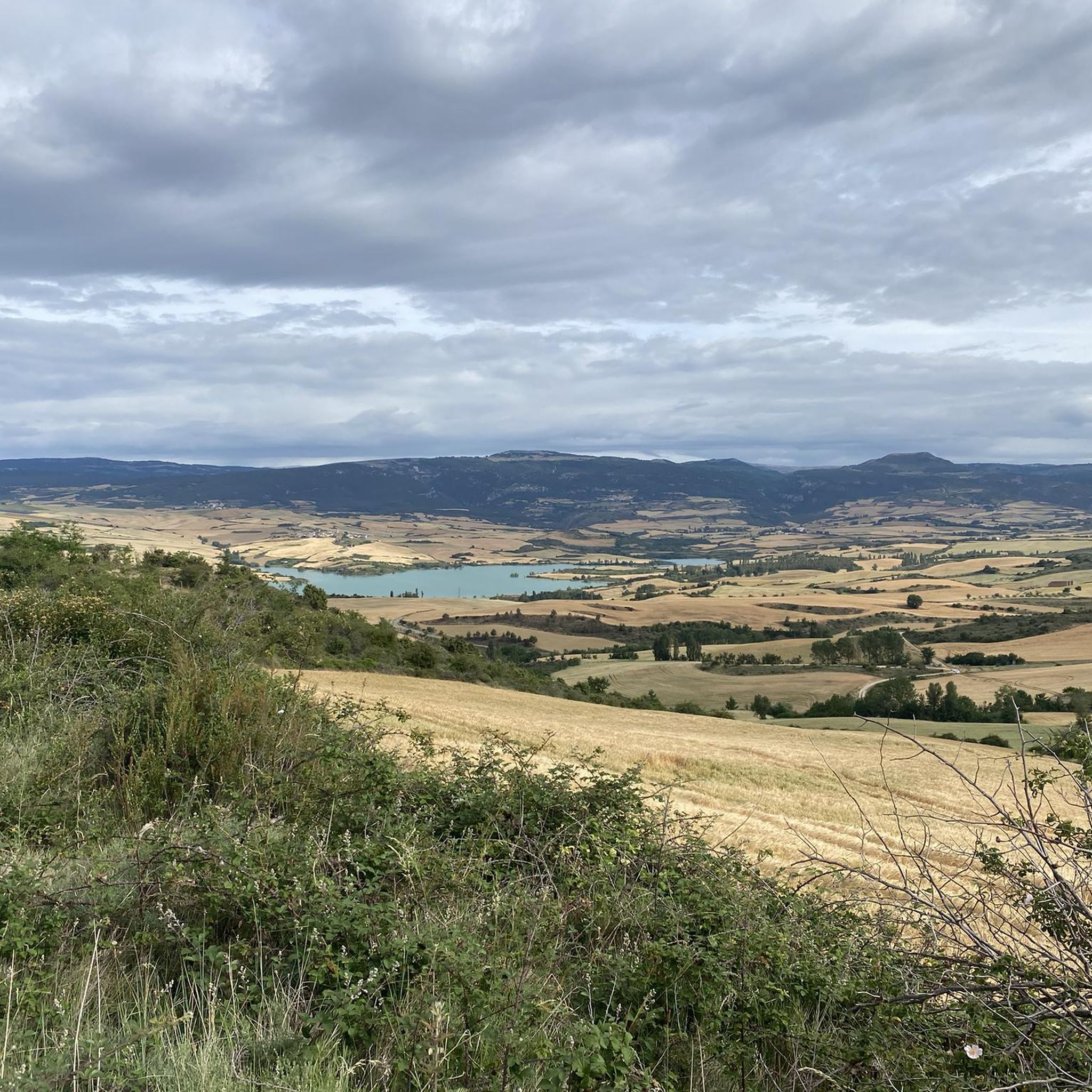
Guirguillano is set in rugged hilly terrain that slopes down towards the Arga River. The landscape is characterized by lush forests of oaks, junipers, and extensive pine plantations, especially in less populated areas. It's an ideal setting for those who appreciate natural beauty and outdoor exploration.
Are there opportunities for running near Guirguillano?
Yes, there are several running trails in the vicinity. You can find routes like the 'Running loop from 44. fazeria' (8.7 km, moderate) or the 'Puente la Reina – Arnotegi Hermitage loop' (12.6 km, moderate). For more options, explore the Running Trails around Guirguillano guide.
What cycling routes are available around Guirguillano?
The region offers diverse cycling experiences. For road cycling, consider routes like 'Embalse de Alloz – return from Puente la Reina' (35.6 km, moderate) or more challenging options like 'Alto de Arlegi – Puente la Reina loop' (86 km, difficult). Gravel biking enthusiasts can explore routes such as 'Puerto de Arradia – Muzki Frontón loop' (44.2 km, difficult). You can find detailed information in the Road Cycling Routes around Guirguillano and Gravel biking around Guirguillano guides.
Are there family-friendly attractions suitable for children near Guirguillano?
Many historical sites are suitable for families. The Puente la Reina Romanesque Bridge is a great spot for a walk and to learn about the Camino. The Church of Saint John the Baptist, Obanos, and the Church of the Crucifix are also considered family-friendly and offer insights into local history and architecture.
What do visitors particularly enjoy about the attractions around Guirguillano?
Visitors appreciate the blend of historical significance and natural beauty. The Camino de Santiago landmarks, like the Puente la Reina Romanesque Bridge and the Pilgrim Monument at Alto del Perdón, are highly rated for their cultural importance and scenic views. The community has shared over 300 photos and given more than 400 upvotes, highlighting the visual appeal and engaging nature of the sites.
Can I visit any ancient Roman sites near Guirguillano?
Yes, near Zirauki, you can explore the Roman Bridge and Road of Andelos. This site is particularly interesting as it showcases three generations of roads, including a 2000-year-old Roman road and bridge, offering a glimpse into ancient engineering and history.
Are there any unique points of interest for those interested in astronomy?
The Astronomical Observatory of Guirguillano is mentioned in the context of public astronomical events. While specific visitor details are not provided, it suggests a potential point of interest for those with an interest in the night sky and celestial observation.
What is the Church of Santa María de Eunate known for?
The Church of Santa María de Eunate, a 12th-century Romanesque church on the Aragonese branch of the Way of St. James, is renowned for its distinctive octagonal design and Mozarabic influences. It has historical connections to the Templars and once served as a hospice for pilgrims.
Where can I find more information about the municipality of Guirguillano?
For additional information about the municipality of Guirguillano, including local details and context, you can visit the official tourism resources such as visitnavarramedia.com.
Most popular routes around Guirguillano
Most popular attractions around Guirguillano

Get inspired with the komoot mobile app


Explore more
Still not found the Highlight you’re looking for? See guides of the top attractions in other regions:
