The best walks and hikes around Parco agricolo Sud Milano
4.3
(431)
9,953
hikers
345
hikes
Hiking around Parco agricolo Sud Milano offers diverse landscapes, from extensive cultivated fields and water meadows to sparse woodlands. This vast protected area acts as a crucial green belt around Milan, featuring an intricate network of natural rivers and historic artificial canals, known as Navigli. The terrain is generally flat, with minimal elevation changes, making it accessible for various activity levels. It connects to other major protected areas like Ticino Park and Adda Park, forming a significant ecological corridor.
Best…
Last updated: October 12, 2026
4.8
(6)
12
hikers
25.7km
06:33
80m
80m
Hard hike. Very good fitness required. Easily-accessible paths. Suitable for all skill levels.
6
hikers
Moderate hike. Good fitness required. Easily-accessible paths. Suitable for all skill levels.

3.3
(3)
35
hikers
Moderate hike. Good fitness required. Easily-accessible paths. Suitable for all skill levels.
4.4
(9)
176
hikers
9.71km
02:27
20m
20m
Moderate hike. Good fitness required. Easily-accessible paths. Suitable for all skill levels.
5.0
(1)
32
hikers
Moderate hike. Good fitness required. Easily-accessible paths. Suitable for all skill levels.
Get access to more routes and recommendations from other explorers.
Already have an account?
Our route recommendations are based on thousands of hikes, rides, and runs completed by other people on komoot.
Start today with a free account
Your next adventure awaits.

Tips from the Community

Chiesa di Santo Stefano di Gudo Gambaredo member of Romano” is the original name of the building as found indicated on the sheet that transmits the oldest drawing of the Church and which is part of the aforementioned collection “Moduli et delineationes Ecclesiarum Plebis Cesani”, (spiritual archive sec. x, vol. 2°). This is the oldest and most precious source that offers a complete image of the initial form of the church. In truth, the oldest mention, which testifies to the origin of the Church, dates back to the famous “Liber ....” by Goffredo da Bussero (1200) which cites the church of S. Stefano in Gudo Gambaredo. The drawing in question essentially offers the elements that allow us to plausibly hypothesize the original structure of the church building; from this hypothesis, we can identify, as far as possible, the transformations that have led to the current form of the church. (to be continued) Note by Giovanni Carminati
0
0
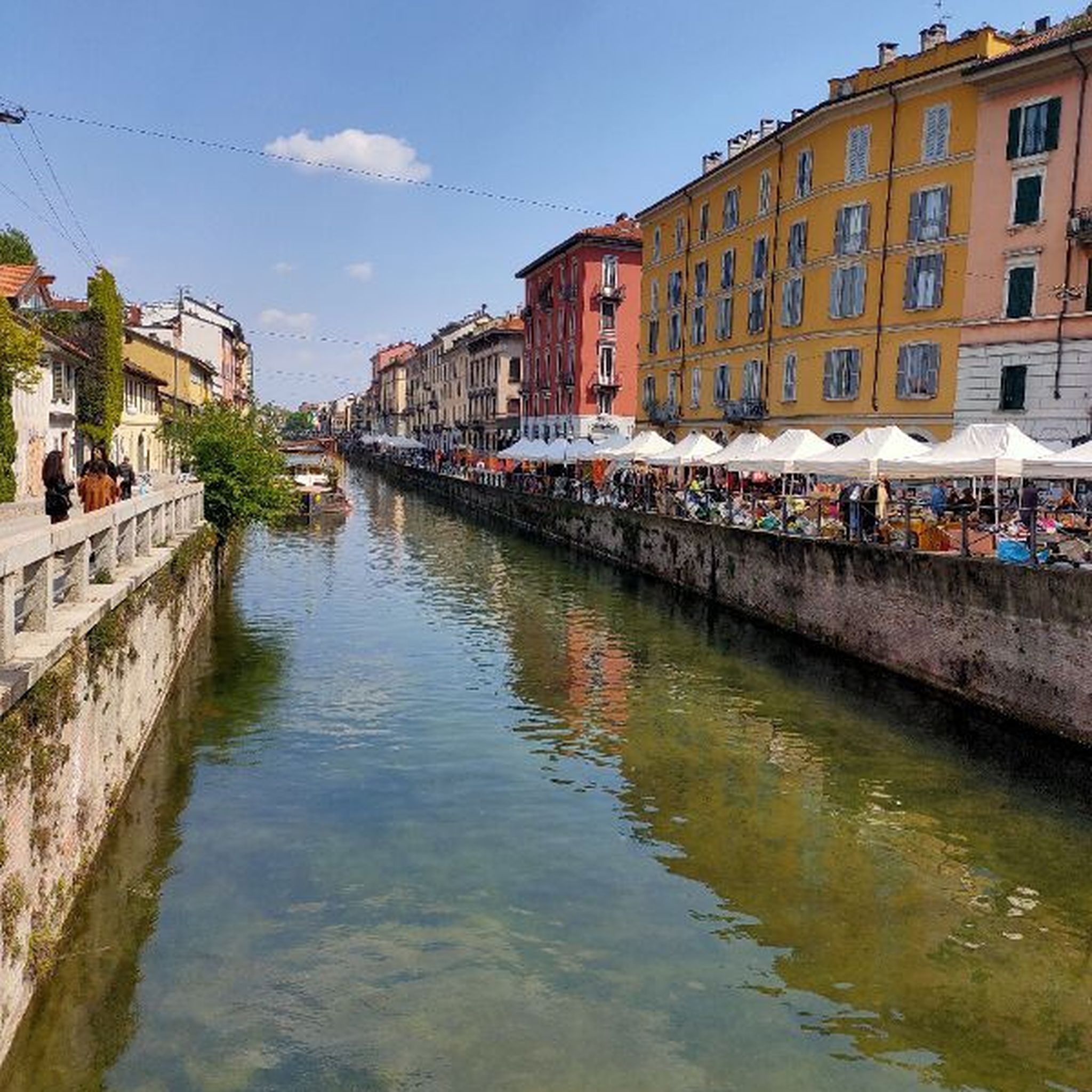
The Scodellino bridge is the last bridge of the Naviglio Grande in Milan. It is located between Viale Gorizia and Piazza XXIV Maggio, at the point where the canal enters the Darsena. The name derives from the ancient habits of the bargemen or from the toll paid with a coin called scudo.
0
0
The image shows the famous wall of Via Pontano in Milan, located between the NoLo and Turro districts, historically known as one of the "hall of fame" for graffiti and street art along the railway walls. The area is located in Milan, along the railway near Viale Padova, a reference point for writing and urban regeneration projects like the Tunnel Boulevard. The wall is authorized as a free space ("muro libero") for artists and writers, hosting over the years works by different historical crews and different styles.
0
0
The Mulino di Gudo Gambaredo is a historic 18th-century rural architecture complex located in via De Amicis in Gudo Gambaredo, a protected hamlet with a rustic appearance in the municipality of Buccinasco (Milan). Entirely immersed in the unspoiled nature of the Parco Agricolo Sud Milano, it represents a historical reference point for the territory.
0
0
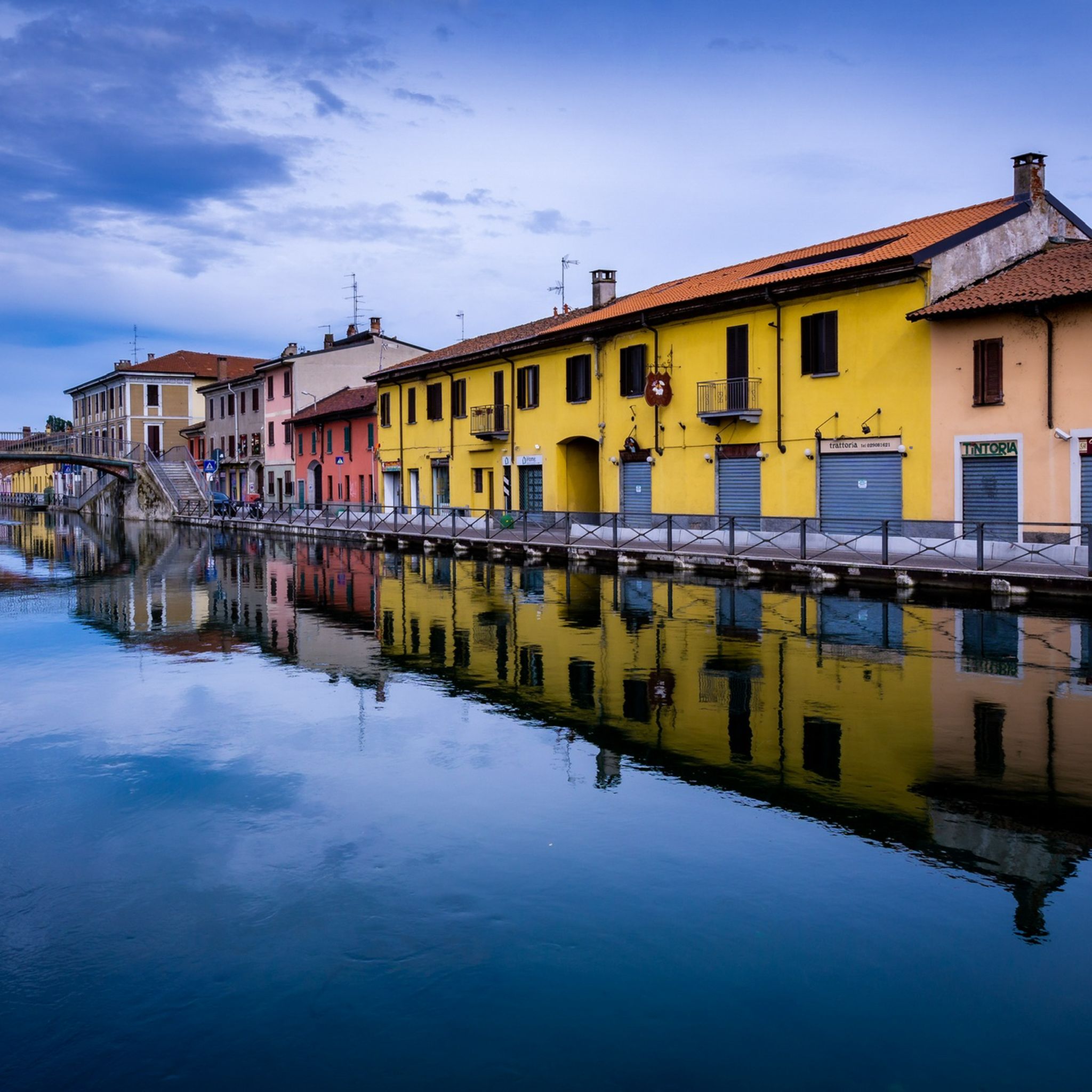
The Naviglio Grande riverside in Gaggiano offers a picturesque cycle and pedestrian path immersed in the Parco Agricolo Sud Milano. It is easily reachable from Milan via the Naviglio Grande Cycle Path, is about 15 km from the centre, and is known for its historic villas, such as Palazzo Venini Uboldi and the characteristic Ponte Vecchio.
1
0

The Church of San Cristoforo sul Naviglio is one of Milan's most evocative and historic corners. Located directly on the alzaia of the Naviglio Grande, it is famous for being a rare "double church" formed by two small religious buildings side-by-side, unified in the 17th century. The Left Church (Romanesque): It is the oldest structure, rebuilt in 1192 on a previous chapel and remodeled in the 14th century. It served as a stopping point and protection for pilgrims and travelers entering Milan by water. The Right Church (Ducal Chapel): It was erected at the end of the 14th century at the behest of Duke Gian Galeazzo Visconti as an ex voto for the end of a violent plague epidemic. On the facade, the Visconti coats of arms with the famous biscione can be seen. In 1625, the two interiors were joined by demolishing the dividing wall and opening two large arches. The fifteenth-century bell tower is historically nicknamed "the Meneghino lighthouse".
1
0
The Fontana di Piazza Castello, affectionately called "turta di spus" (wedding cake) by Milanese people for its shape, is located right in front of the Filarete Tower of the Sforzesco Castle. Initially built in 1936, it features a circular layout in Vicenza stone with cascading basins and spouts. Le fontane di Milano - La Tua Italia, Fontana – Piazza Castello (Torta degli Sposi) – Fontane di Milano
0
0
The Sanctuary of Sant'Invenzio is the main church of Gaggiano, located in the metropolitan city of Milan, along the picturesque bank of the Naviglio Grande. It is the only sanctuary in the world dedicated to Sant'Invenzio, an ancient bishop of Pavia. The building is distinguished by its elegant baroque facade and represents the historical and religious heart of the local community.
0
0
Frequently Asked Questions
How many hiking trails are available in Parco Agricolo Sud Milano?
Parco Agricolo Sud Milano offers a wide variety of hiking experiences, with over 300 routes available. These range from easy strolls through cultivated fields to more challenging excursions along historic canals.
What is the typical terrain like for hiking in Parco Agricolo Sud Milano?
The terrain in Parco Agricolo Sud Milano is generally flat, characterized by extensive cultivated fields, water meadows, and an intricate network of natural rivers and historic artificial canals, known as Navigli. You'll also find sparse woodlands, offering shaded paths and a contrast to the open fields. The minimal elevation changes make it accessible for various activity levels.
What are the difficulty levels of hikes in Parco Agricolo Sud Milano?
The park caters to all skill levels. You'll find a significant number of easy routes, with nearly 200 options perfect for a relaxed walk. There are also about 96 moderate trails for those seeking a bit more challenge, and 8 difficult routes for experienced hikers looking for longer excursions.
Are there any family-friendly hiking options in Parco Agricolo Sud Milano?
Yes, Parco Agricolo Sud Milano is very family-friendly, especially given its generally flat terrain and numerous easy paths. Many routes are suitable for all ages, offering pleasant walks through agricultural landscapes and along waterways. An example of an easy route is the Heron Mural – Guardia di Sopra Farmstead loop from Corsico, which is just 2.7 miles (4.3 km) long.
Can I hike with my dog in Parco Agricolo Sud Milano?
Yes, dogs are generally welcome on the hiking trails in Parco Agricolo Sud Milano. It's a great place to explore with your canine companion, with plenty of open spaces and natural paths. Always ensure your dog is kept under control, especially when passing through agricultural areas or near wildlife, and remember to clean up after them.
Are there circular hiking routes in Parco Agricolo Sud Milano?
Yes, many of the hiking routes in Parco Agricolo Sud Milano are designed as loops, allowing you to start and end at the same point. For example, the Fountain – Gudo Gambaredo Water Mill loop from Buccinasco is an 8.2 miles (13.1 km) circular trail that takes you past historic water mills.
What natural features or wildlife can I expect to see while hiking?
Parco Agricolo Sud Milano is rich in natural features, including an intricate network of rivers and historic canals (Navigli), active springs, and naturalistic oases. These water features support diverse flora and fauna, making it an excellent spot for birdwatching. You might also encounter various species in the sparse woodlands and along the cultivated fields.
Are there historical or cultural landmarks to explore along the trails?
Absolutely. Beyond its natural beauty, the park is dotted with historical and cultural attractions. You can explore ancient farms known as 'cascine,' charming rural villages, and significant historical monuments like the Chiaravalle Abbey. The park also features channels reportedly designed by Leonardo da Vinci, adding a unique historical engineering marvel to your hike.
How long do hikes typically take in Parco Agricolo Sud Milano?
Hike durations vary widely depending on the route and your pace. Many easy walks can be completed in under two hours, while moderate trails might take 3-4 hours. For instance, the Gaggiano Bridge – Naviglio Grande in Gaggiano loop from Trezzano sul Naviglio is an 8.1 km route typically completed in about 2 hours. Longer routes, up to five hours or more, are also available for those seeking more extensive treks.
When is the best time of year to go hiking in Parco Agricolo Sud Milano?
The park is enjoyable year-round, but spring and autumn offer particularly pleasant conditions with mild temperatures and beautiful scenery. Spring brings blooming fields, while autumn showcases vibrant foliage. Summer can be warm, but the sparse woodlands and canal-side paths offer some shade. Winter hikes are also possible, providing a different, serene perspective of the landscape.
Are there places to eat or rest near the hiking trails?
Yes, the park integrates well with local life. You'll find numerous ancient farms ('cascine') and rural villages that often host restaurants and trattorias within agricultural settings. These provide excellent opportunities for a meal or a rest, allowing you to experience local gastronomy and culture during your hike.
What do other hikers say about the trails in Parco Agricolo Sud Milano?
The hiking experience in Parco Agricolo Sud Milano is highly rated by the komoot community, with an average score of 4.3 stars from nearly 400 reviews. Hikers often praise the peaceful atmosphere, the well-maintained paths along the Navigli, and the opportunity to explore both natural landscapes and historical sites.
Most popular routes around Parco agricolo Sud Milano

Get inspired with the komoot mobile app


Explore more
Browse the best Hikes in other regions.
