Attractions and Places To See around Olivares De Júcar - Top 11
Best attractions and places to see around Olivares De Júcar, a municipality in the province of Cuenca, Castilla-La Mancha, offers a blend of religious heritage, natural beauty, and historical points of interest. The area is characterized by its proximity to the Alarcón reservoir, where the Tagus-Segura transfer merges the waters of both rivers. Visitors can explore various sites, from 17th-century churches and hermitages to natural gorges and historical monuments. The landscape includes agricultural areas and elevated points providing views of…
Last updated: July 8, 2026
Castillo de Garcimuñoz
Highlight • Castle
Translated by Google •
Tip by

Gritos River Gorge
Highlight (Segment) • Gorge
Translated by Google •
Tip by
Sign up now to discover places like this
Get recommendations on the best single tracks, peaks, & plenty of other exciting outdoor places.
Sign up for free
Monument to Jorge Manrique
Highlight • Monument
Translated by Google •
Tip by

Hontecillas
Highlight • Settlement
Translated by Google •
Tip by

Telegraph Tower (views)
Highlight • Monument
Translated by Google •
Tip by
Sign up for free to discover even more attractions around Olivares De Júcar.
Sign up for free
Already have an account?
Start today with a free account
Your next adventure awaits.
Login or Signup
Tips from the Community

In 1941, at the initiative of the poet Federico Muelas, this monument was built to replace the old iron cross. It is a monolith located 3 kilometers from the town on the way to La Nava, where the poet Jorge Manrique was mortally wounded (1479). It is constructed from stone belonging to the Giraldo of Cuenca Cathedral. The monument has two coats of arms on each side and a central iron cross. It bears an inscription that reads: "Here Jorge Manrique fell mortally wounded fighting for the unity of Spain." At the foot of the monolith, you can see a space intended for a casket containing Jorge Manrique's verses, including the famous "A la Muerte de su Padre" (On the Death of his Father). In 2021, the monument was restored, consisting of cleaning the stone, refurbishing the stairs, and replacing the bollards.
0
0

The Castillo de Garcimuñoz gives its name to the town itself and is the most impressive element in the center at the point you reach the town. Basically since it sticks out from the rest of the houses in the village!
1
0
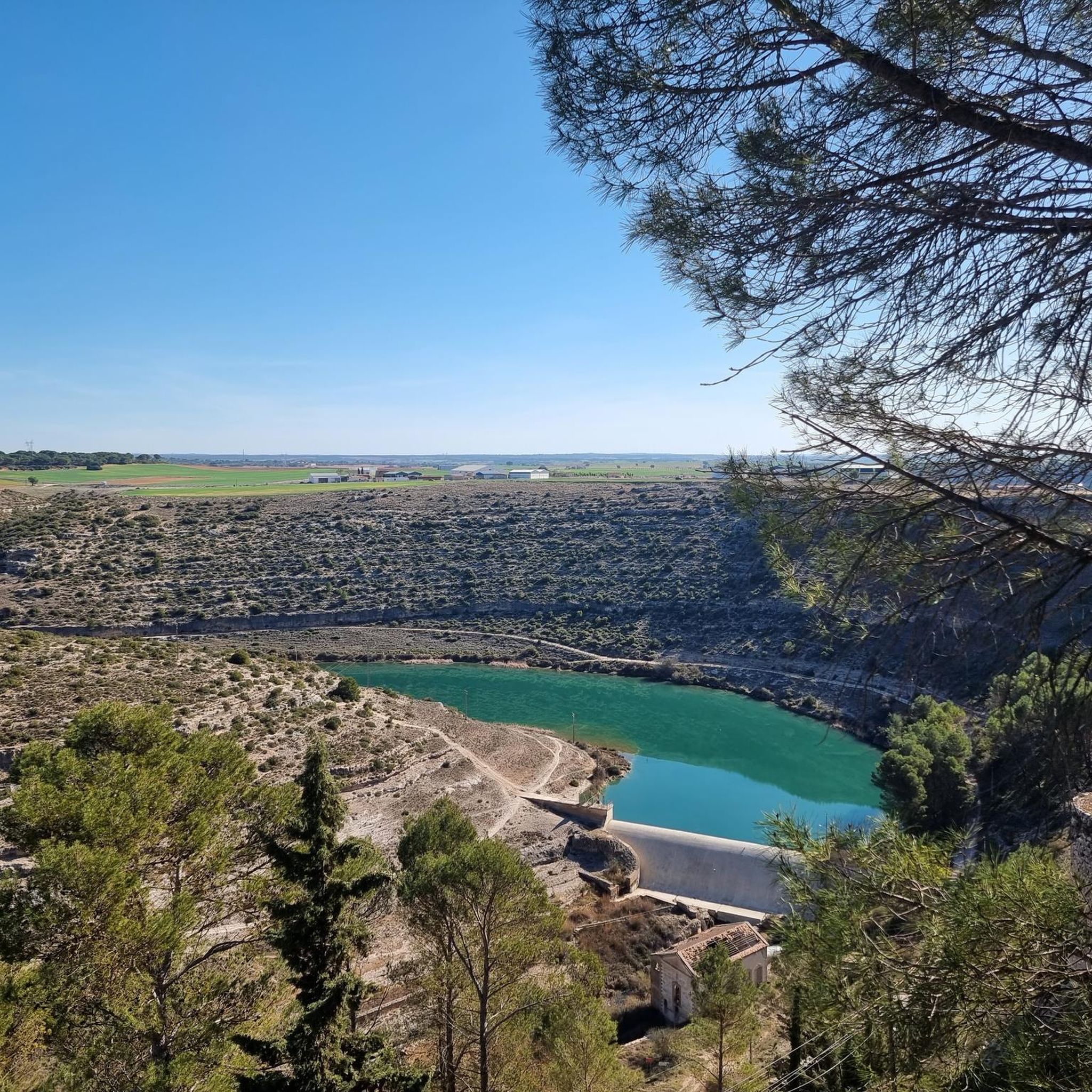
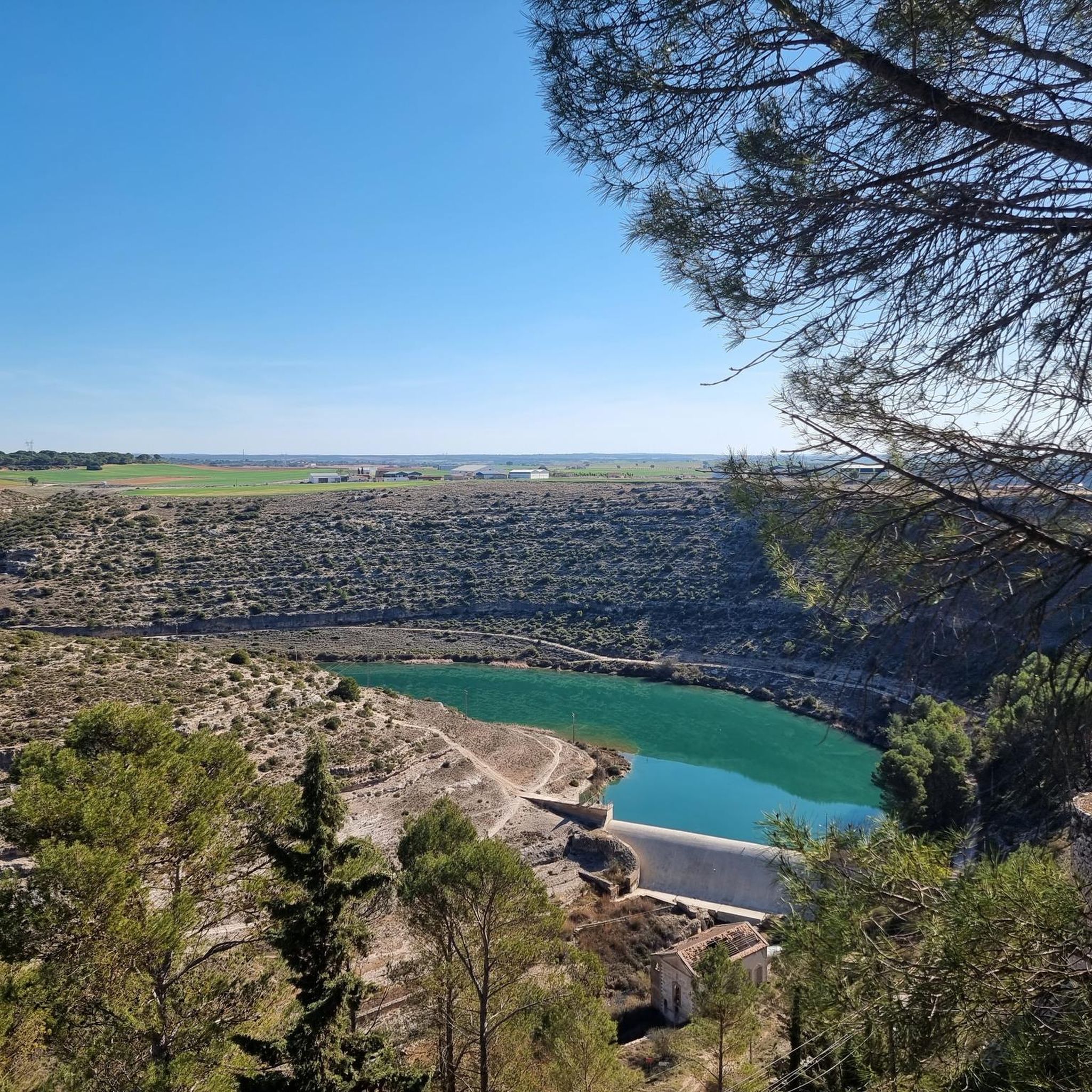
Small town that is in the vicinity of the Alarcón Reservoir and that is surrounded by farmland, in a landscape of hills before touching the waters of the swamp.
0
0

Joining the towns of Valeria and Valera de Abajo, this marvelous path runs along the gorge of the Gritos river through a dreamlike landscape. With a total length of about 7 km, you can choose to start at either end and cover the distance that you most want, without a doubt the complete route is the most picturesque.
3
0
Built under the order of Garcimuñoz, a knight who accompanied King Alfonso VIII on his conquering crusade, the castle has passed through various owners in the following centuries until, in the 18th century, the Church of San Juan Bautista was built within its walls and use as a graveyard. It has recently been restored to enable it to be visited by the public and a sample of very picturesque sculptural structures that were inspired by nature has been inaugurated inside the parade ground.
3
0
Between 1850 and 1855, the optical telegraph service provided communication between the different important cities at the time. This tower was part of the Madrid-Valencia line and part of it still stands today. As is common in these works, the towers were located in strategic places that also allow us to appreciate wonderful views of the surrounding landscape and in this case also of the Alarcón reservoir where the Júcar and Gritos rivers meet.
1
0
Frequently Asked Questions
What are the main natural attractions to visit around Olivares de Júcar?
The region offers several beautiful natural spots. The Gritos River Gorge is a must-see, offering a scenic 7 km trail between Valeria and Valera de Abajo. You can also enjoy impressive views of the Embalse de Alarcón (Alarcón Reservoir) from elevated points in Olivares de Júcar, especially where the Tagus-Segura transfer merges. Additionally, the Barranco del Pilar and Valle de la Vega are recommended natural areas within the municipality for exploration.
Are there any historical sites or monuments to explore in Olivares de Júcar?
Yes, Olivares de Júcar and its surroundings are rich in history. The Castillo de Garcimuñoz, a restored castle with an exhibition of nature-inspired sculptural structures, is a significant historical site. Within the town, you can visit the 17th-century Iglesia Parroquial de Nuestra Señora de la Asunción, the austere Ermita de San Roque, and the whitewashed Ermita de San Isidro. Don't miss the Plaza del Ejido, which features the town hall and the municipal shield. Approximately 3 kilometers from town, you'll find the Monument to Jorge Manrique, marking the spot where the poet was mortally wounded.
What kind of outdoor activities can I do near Olivares de Júcar?
The area is excellent for outdoor enthusiasts. You can enjoy hiking, road cycling, and general cycling. For hiking, popular routes include the 'Gritos River Gorge and Las Valeras Plateaus Trail' and 'Las Cuerdas-Castillo de Garcimuñoz Trail'. Cyclists can explore routes like 'Views of the Alarcón Reservoir – Olivares de Júcar loop' or 'Embalse de Alarcón — circular desde Valverde de Júcar'. You can find more details and routes on the dedicated guides for Hiking around Olivares De Júcar, Road Cycling Routes around Olivares De Júcar, and Cycling around Olivares De Júcar.
Are there any family-friendly activities or trails in the area?
Yes, the region offers options for families. The Monument to Jorge Manrique is listed as a family-friendly historical site. For walks, the 'Mirror of Valverde Trail (PR-CU 70)' is an easy hiking route, suitable for families. Exploring the natural areas like Barranco del Pilar and Valle de la Vega can also be enjoyable for families, depending on the chosen paths.
Where can I find the best viewpoints of the Alarcón Reservoir?
From elevated points within Olivares de Júcar, you can enjoy impressive views of the Alarcón Reservoir. Another excellent spot is the Telegraph Tower (views), which was part of the Madrid-Valencia optical telegraph line. These towers were strategically located to offer wonderful panoramic views of the surrounding landscape, including the reservoir where the Júcar and Gritos rivers meet.
What is the significance of the Iglesia Parroquial de Nuestra Señora de la Asunción?
The Iglesia Parroquial de Nuestra Señora de la Asunción is considered the undisputed protagonist of Olivares de Júcar's religious heritage. This 17th-century parish church is notable for its large size, broad buttresses, and an impressive doorway supported by Doric columns with a small niche. It has undergone significant renovations, making it a well-preserved example of the region's religious architecture.
Can I visit the Castillo de Garcimuñoz, and what can I expect there?
Yes, the Castillo de Garcimuñoz has been recently restored and is open for public visits. Originally built under the order of Garcimuñoz, a knight accompanying King Alfonso VIII, it has a rich history, even serving as a graveyard with the Church of San Juan Bautista built within its walls in the 18th century. Inside its parade ground, you can now find an exhibition of picturesque sculptural structures inspired by nature.
What is Hontecillas, and what makes it interesting?
Hontecillas is a small settlement located near the Alarcón Reservoir. It is surrounded by farmland and hills, offering a glimpse into the rural landscape of the region. It provides a quiet, picturesque setting close to the waters of the reservoir.
What is the Hoz del río Gritos, and how long is the trail?
The Hoz del río Gritos is a wonderful trail that runs through the gorge of the Gritos River. It connects the towns of Valeria and Valera de Abajo, offering a dreamlike landscape. The trail is approximately 7 km long, and you can choose to start at either end, though the complete route is considered the most picturesque.
What is the best time to visit Olivares de Júcar for outdoor activities?
While specific seasonal recommendations are not provided, the region's blend of natural beauty and historical sites suggests that spring and autumn would be ideal for outdoor activities like hiking and cycling. The weather during these seasons is generally milder, making exploration more comfortable than the peak summer heat or potential winter chill. Always check local weather conditions before your visit.
Are there any other notable religious buildings besides the main church?
Yes, in addition to the Iglesia Parroquial de Nuestra Señora de la Asunción, Olivares de Júcar has two significant hermitages. The Ermita de San Roque, also from the 17th century, is an austere building located near the Plaza del Ejido. The Ermita de San Isidro is situated outside the urban center, accessible via a tunnel, and is known for its surrounding arboreal landscape and as the site of a festival honoring the patron saint of farmers.

Get inspired with the komoot mobile app


Explore more
Still not found the Highlight you’re looking for? See guides of the top attractions in other regions:
