Attractions and Places To See around Arroyo De San Serván - Top 20
Best attractions and places to see around Arroyo De San Serván include a blend of historical, cultural, and natural sites. This town in the province of Badajoz, Spain, is situated between Mérida and Almendralejo. The municipality features a significant heritage and rural landscapes, offering diverse points of interest. Its surroundings include mountain ranges and dehesas, providing varied environments for exploration.
Best attractions and places to see around Arroyo De San Serván
- The most popular attractions is Temple of Diana (Mérida)…
Last updated: October 18, 2026
Temple of Diana (Mérida)
Highlight • Historical Site
Translated by Google •
Tip by

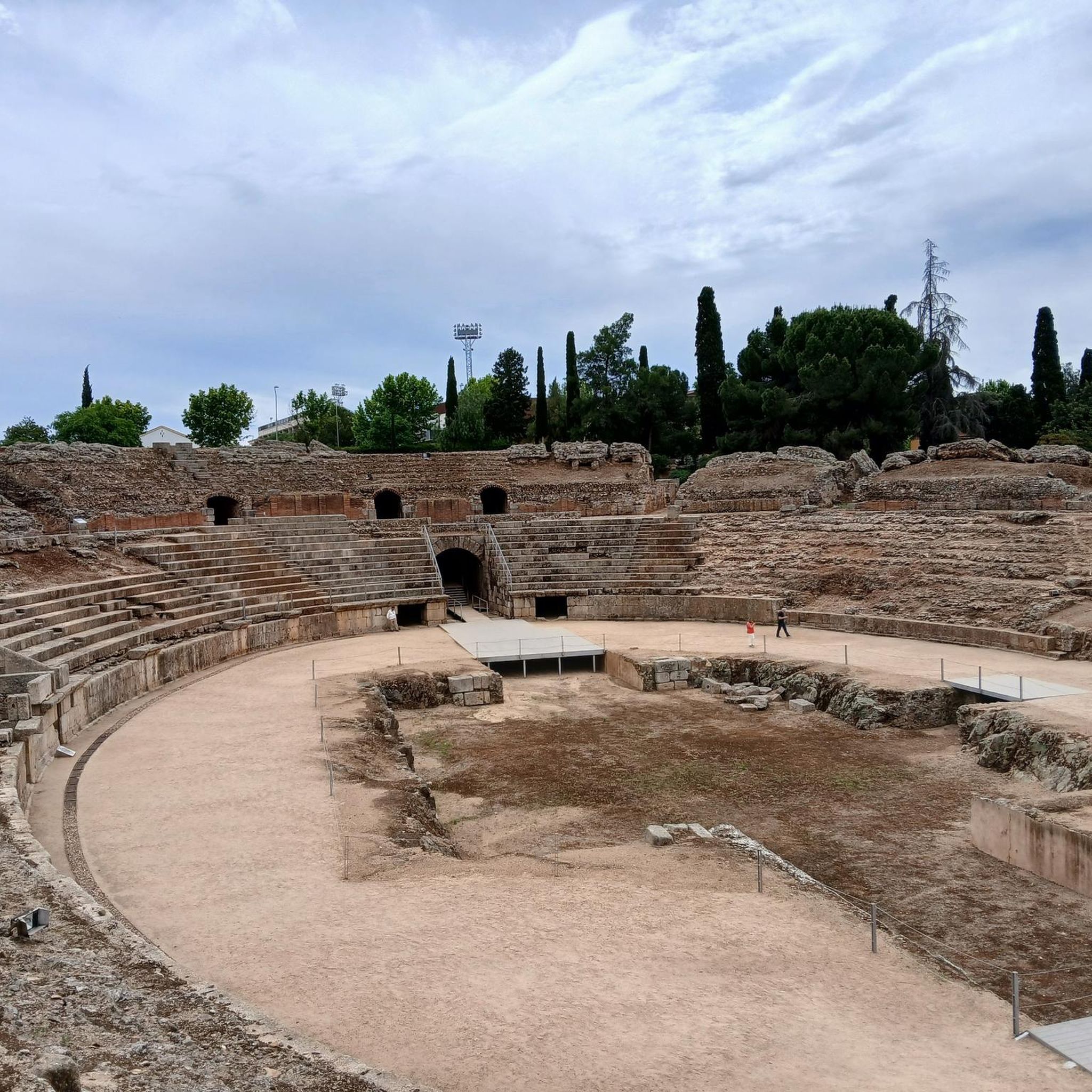
Roman Monuments of Mérida
Highlight • Historical Site
Translated by Google •
Tip by

Sign up now to discover places like this
Get recommendations on the best single tracks, peaks, & plenty of other exciting outdoor places.
Roman Bridge of Mérida
Highlight • Bridge
Translated by Google •
Tip by
Capitoline She-Wolf of Mérida
Highlight • Monument
Translated by Google •
Tip by
Fountain at Plaza de España, Mérida
Highlight • Monument
Translated by Google •
Tip by
Sign up for free to discover even more attractions around Arroyo De San Serván.
Already have an account?
Start today with a free account
Your next adventure awaits.
Tips from the Community

In Tarragona, Mérida has the most Roman remains that are worth seeing one by one. The city of Mérida is on the Unesco World Heritage List. There is so much beauty to see!!
15
0

Plasencia deserves to be walked through.
1
0

The square has its origins in the time of the Catholic Monarchs and has had two main functions throughout its history: commercial and festive. Fairs, bullfights, theater, masquerades and other events were held there. In the square, you will find several historic buildings, such as the Palacio de Los Mendoza, La Casa de Los Pacheco, El Círculo Emeritense, La Casa Consistorial, El Palacio de La China and the Co-Cathedral of Santa María. Additionally, in the center of the square, there is a 19th century neo-baroque marble fountain with putti mounted on dolphins. I hope you enjoy exploring the Plaza de España in Mérida! 😊
7
0

Located directly on the Ponte Romana
1
0
When it rains, you can quickly take shelter in the archways
1
0
The Capitoline Wolf of Mérida is a replica of the one found in the Capitoline Museums in Rome. It was a gift from the Italian city to Mérida in 1997. This sculpture represents the founding of the Roman Empire and shows Romulus and Remus being breastfed by a wolf named Luperca. According to mythology, these two brothers were the ones who founded the city of Rome. The sculpture is located in a roundabout next to the door of the Arab Alcazaba, specifically in the Plaza de Roma, near the Roman Bridge.
7
0

The central square of the city and meeting point for the residents of Mérida
2
0
The monument of the Roman she-wolf feeding Romulus and Remus, a symbol of ancient Rome, is located in the center of the roundabout, right next to the entrance to the Roman bridge. How could it be otherwise, in a city with so much Roman culture, the founding history of Rome had to be paid homage.
2
0
Frequently Asked Questions
What historical and cultural sites can I explore in Arroyo de San Serván?
Arroyo de San Serván offers a rich historical tapestry. You can visit the 16th-century Iglesia de la Santa Cruz, known for its remarkable main altarpiece, or the Ermita de la Soledad, which houses a unique Visigothic holy water font. Don't miss the well-preserved Medieval Bridge crossing the Tripero stream, and the Plaza de la Libertad in the town center, dedicated to the town's emigrants.
Are there any ancient Roman sites near Arroyo de San Serván?
Yes, the nearby city of Mérida, once the capital of the Roman province of Lusitania, boasts an impressive collection of Roman heritage. You can explore the Temple of Diana, the extensive Roman Monuments of Mérida, and the ancient Roman Bridge of Mérida. Another notable Roman-era monument is the Capitoline She-Wolf of Mérida.
Where can I see prehistoric art in the Arroyo de San Serván area?
The area around Arroyo de San Serván is notable for its prehistoric cave paintings. Between the Cerro de San Serván and Cerro de la Moneda, there are around twenty rock shelters, including Las Palomas, La Grieta, and San Serván, which feature schematic cave paintings dating between 1500 and 500 B.C. These artworks depict animals, idols, hunting scenes, and symbols of power.
What natural attractions are there for outdoor enthusiasts?
The region is surrounded by diverse natural landscapes. The Sierra de San Serván (Cerro de San Serván) offers stunning views and is home to various birds of prey and wild animals. The surrounding countryside and dehesas provide picturesque settings for nature lovers. Additionally, the Parque Natural de Cornalvo and the Embassments of Los Canchales and Alange are nearby, offering further opportunities to enjoy nature.
Are there opportunities for hiking around Arroyo de San Serván?
Yes, the Sierra de San Serván is a popular destination for hiking, offering trails with varying difficulty. You can find several running routes, including a 'Running loop from Arroyo de San Serván' and a 'Puerto de la Moneda loop from Arroyo de San Serván'. For more detailed information on hiking trails, you can explore the Running Trails around Arroyo De San Serván guide.
What cycling routes are available near Arroyo de San Serván?
Cyclists can enjoy a variety of routes in the area. Options include the 'Guadiana Natural Trail and Vía de la Plata Loop' and routes around the Roman monuments of Mérida, such as the 'Roman Bridge of Mérida – Roman Monuments of Mérida loop'. For more cycling options, check out the Cycling around Arroyo De San Serván guide.
Are there any family-friendly attractions or activities?
Many of the historical sites, such as the Roman Monuments of Mérida and the Roman Bridge of Mérida, are considered family-friendly and offer engaging experiences for all ages. Exploring the natural landscapes of the Sierra de San Serván or the surrounding dehesas can also be a great family activity.
What is the Sierra de San Serván known for?
The Sierra de San Serván, with an altitude over 600 meters, is known for its stunning panoramic views of the surrounding plains. It's a haven for wildlife, including birds of prey like black storks, owls, vultures, and harriers, as well as wild boars, wildcats, and lynx. The flora consists of typical Mediterranean forest species such as Holm oaks, cork oaks, and strawberry trees. It's also where the first Paleolithic tools were found in the region.
Can I visit any museums in Arroyo de San Serván?
Yes, Arroyo de San Serván is home to an Ethnographic Museum, dedicated to preserving the region's culture and history with artifacts from the Roman era to the 20th century. Uniquely, there's also a Museum of Hiking, which showcases a local resident's extensive collection of over 300 routes across Spain.
What is the best time to visit Arroyo de San Serván for outdoor activities?
While specific seasonal weather data isn't provided, regions like Extremadura generally offer pleasant conditions for outdoor activities during spring (April-May) and autumn (September-October) when temperatures are milder. Summers can be very hot, and winters are typically mild.
Are there any wheelchair-accessible attractions?
Yes, the Capitoline She-Wolf of Mérida and the Fountain at Plaza de España, Mérida are noted as wheelchair-accessible, allowing for easier access for visitors with mobility needs.
What kind of wildlife can I expect to see in the natural areas?
In natural areas like the Sierra de San Serván, you might spot various birds of prey such as black storks, owls, vultures, and harriers. Mammals like wild boars, wildcats, and lynx also inhabit the region, making it an interesting spot for wildlife observation.
Most popular routes around Arroyo De San Serván

Get inspired with the komoot mobile app


Explore more
Still not found the Highlight you’re looking for? See guides of the top attractions in other regions:
