Attractions and Places To See around Barcarrota - Top 15
Attractions and places to see around Barcarrota, a municipality in Badajoz, Extremadura, offer a blend of historical, cultural, and natural sites. The area features ancient fortifications, significant religious buildings, and remnants of past civilizations. Visitors can explore picturesque natural landscapes, including ancient cork oak forests and important megalithic complexes. Barcarrota provides diverse opportunities for outdoor exploration and cultural discovery.
Best attractions and places to see around Barcarrota
- The most popular attractions is View of the Sierra de Tierra de Barros…
Last updated: June 29, 2026
Castillo de Miraflores
Highlight • Castle
Translated by Google •
Tip by

Nogales Castle
Highlight • Castle
Translated by Google •
Tip by
Sign up now to discover places like this
Get recommendations on the best single tracks, peaks, & plenty of other exciting outdoor places.
Sign up for free
The Twelve Apostles Cork Oaks
Highlight • Natural Monument
Translated by Google •
Tip by
View of the Sierra de Tierra de Barros
Highlight (Segment) • Viewpoint
Translated by Google •
Tip by

Valle de Matamoros
Highlight • Settlement
Translated by Google •
Tip by
Sign up for free to discover even more attractions around Barcarrota.
Sign up for free
Already have an account?
Start today with a free account
Your next adventure awaits.
Login or Signup


Tips from the Community

Valle de Matamoros is a small and charming municipality in the province of Badajoz, in the autonomous community of Extremadura, located in the Sierra Suroeste region, very close to Jerez de los Caballeros. It lies on the eastern slope of the Sierra de San José mountain range, with altitudes ranging from 550 to 670 meters. Its rugged terrain gives it a unique urban layout, with steep streets and natural viewpoints along the village's access roads.
5
0
The fortress has a 35-metre-high keep and a perimeter wall with cylindrical towers at the corners. Originally, the castle had a drawbridge that allowed access through a moat, although this no longer exists. The castle was restored by the Junta de Extremadura at the end of the 20th century, preserving its structure and historical elements.
7
0
Located in the Badajoz town of Nogales, this medieval fortress built in the 15th century sits on a small hill and its character is purely defensive. For this reason, its most outstanding element is the keep surrounded by a wall, since it was of great importance during the clashes with the French and the Portuguese.
9
0
Of Arab origin, and rebuilt in the 12th century by the Portuguese monarch Alfonso Enríquez, it was later consolidated by the Templars, becoming one of the most important bastions of this Order. Originally it was made up of a triple enclosure, the intermediate one reinforced with cubes pointing towards the south. It is presided over by a powerful keep, completing the complex with a good parade ground, cisterns, dungeons, chapel and other rooms of which various remains are preserved. Today the Interpretation Center of the Fortifications of the Great Lake of Alqueva is located inside and is preparing to house a unique space for conventions, congresses and exhibitions with the possibility of lodging.
12
0

The Alconchel castle or Miraflores castle is built on the top of the Miraflores hill, it is a defensive building in the border area that is currently recovered for hospitality and its dependencies can be visited. Its origins date back to the 12th century. It is close to a small stream, a tributary of the Guadiana River, so the hollow of its channel served as a natural defense. Source: Wikipedia in Spanish, accessed on 3/3/2023.
2
0

It is very close to Valle de Santa Ana, located on a rugged terrain near Jerez de los Caballeros. It is located on the eastern slope of the Sierra de San José.
0
1
It is very close to Valle de Santa Ana, located on a rugged terrain near Jerez de los Caballeros. It is located on the eastern slope of the Sierra de San José.
0
0
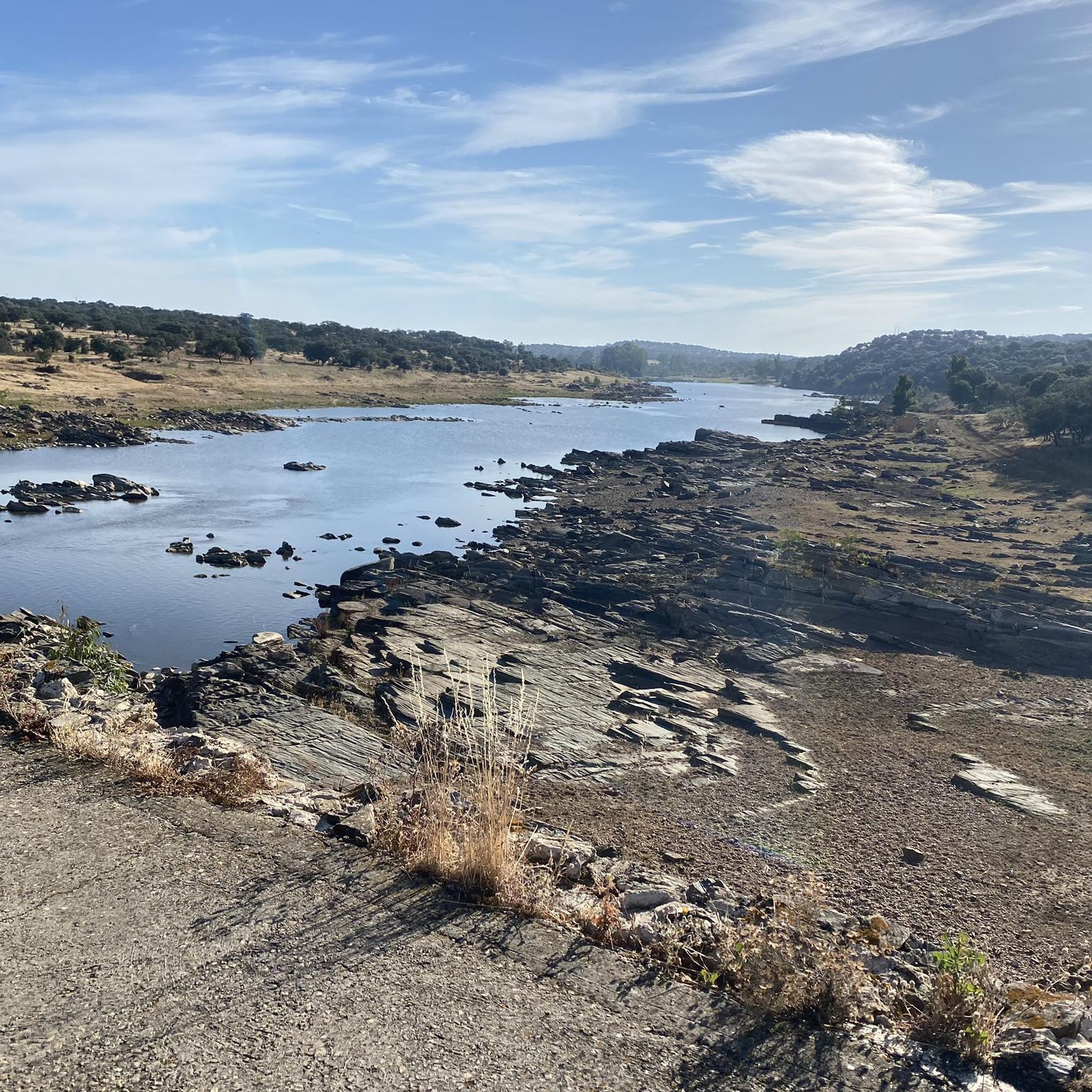
Road that connects the towns of Salvatierra de los Barros with the center of Salvaleón, where it winds along a road where you can see the typical landscape of this Extremadura area, the so-called Dehesas: oak forests with little undergrowth.
0
0
Frequently Asked Questions
What historical sites can I explore in Barcarrota?
Barcarrota is rich in history. You can visit the 14th-century Castillo de Barcarrota, also known as the Castle of the Seven Towers, which features one of Extremadura's oldest bullrings. Explore the medieval layout of the Barrio Judío (Jewish Quarter) and its significant Puerta de la Judería. Don't miss the monuments dedicated to the conquistador Hernando de Soto, including an equestrian statue and a house-museum.
Are there any ancient natural monuments or megalithic sites to visit?
Yes, Barcarrota is home to one of Spain's most important megalithic complexes. You can discover one of the few remaining menhirs in the Iberian Peninsula and one of the largest dolmens in Spain, the Dolmen del Milano. Another notable dolmen is the Dolmen de la Lapita, offering a glimpse into ancient civilizations.
What outdoor activities are available around Barcarrota?
The region offers various outdoor activities. You can explore the Route of the Twelve Apostles (Centenary Cork Oaks), which provides beautiful trails for hiking and cycling. For more structured routes, consider the Road Cycling Routes around Barcarrota, Running Trails around Barcarrota, or MTB Trails around Barcarrota, which include routes like the 'Trail of the Twelve Apostles'.
Can I find family-friendly attractions in the area?
Absolutely. The Route of the Twelve Apostles (Centenary Cork Oaks) is considered family-friendly, offering picturesque trails through ancient cork oak forests. The Embalse del Aguijón also provides opportunities for adventure activities suitable for families, such as crossing a river with ropes and climbing the dam.
Where can I experience scenic views of the Extremaduran landscape?
For breathtaking vistas, head to the View of the Sierra de Tierra de Barros. This viewpoint, located on the road connecting Salvatierra de los Barros with Salvaleón, offers classic Extremaduran dehesa landscapes, characterized by expansive oak forests with minimal undergrowth.
Are there any notable churches or religious sites in Barcarrota?
Barcarrota features several significant religious buildings. The Iglesia Nuestra Señora del Soterraño, a Gothic church from the 14th or 16th century, is considered the town's patron church. You can also visit the 13th-century Iglesia de Santiago Apóstol, known for its simple Romanesque transitional style, and the Ermita de La Soledad, a hermitage with floral and geometric frescoes.
What is the 'Route of the Twelve Apostles'?
The Route of the Twelve Apostles (Centenary Cork Oaks) is a scenic trail located between the Monsalud and Rozallana mountains. It's named for the twelve ancient cork oaks that once stood there, though seven remain today. This route offers beautiful and picturesque paths ideal for hiking and cycling, with a moderate difficulty level.
Are there any castles near Barcarrota besides the main one?
Yes, there are two notable castles nearby. The Castillo de Miraflores, of Arab origin and rebuilt by the Templars, now houses the Interpretation Center of the Fortifications of the Great Lake of Alqueva. Additionally, the Nogales Castle, a 15th-century medieval fortress, is purely defensive in nature with a prominent 35-meter-high keep.
What cultural centers or unique historical discoveries are there?
The Centro Cultural Luis García Iglesias, housed in an early 20th-century palace, offers a glimpse into Extremaduran culture. Barcarrota is also known for a significant discovery made in its library: a hidden copy of Lazarillo de Tormes, linked to a converso Jew from the 16th century, highlighting a unique piece of literary and historical heritage.
What is the best time to visit Barcarrota for outdoor activities?
The spring and autumn months generally offer the most pleasant weather for outdoor activities like hiking and cycling in Barcarrota. Temperatures are milder, and the natural landscapes are vibrant. Summers can be quite hot in Extremadura, which might make longer excursions less comfortable.
Are there opportunities for wild swimming or water-based activities?
While not explicitly a wild swimming spot, the Embalse del Aguijón (Aguijón Reservoir) provides opportunities for connecting with nature and adventure activities that involve water, such as crossing a river with ropes. It's a great spot for those looking for a more active water experience.
What kind of terrain can I expect on hiking and cycling trails around Barcarrota?
Trails around Barcarrota, such as the Ruta de los Molinos and the Route of the Twelve Apostles, typically feature a mix of rolling hills and forest paths. You can expect moderate inclines and varied terrain, often characterized by the dehesa landscape with oak forests and minimal undergrowth. Some routes may include singletracks for cycling.

Get inspired with the komoot mobile app


Explore more
Still not found the Highlight you’re looking for? See guides of the top attractions in other regions:
