Attractions and Places To See around Las Aldehuelas - Top 20
Best attractions and places to see around Las Aldehuelas include a blend of cultural heritage, distinctive architecture, and significant natural features in the province of Soria, Spain. The locality is situated on the upper course of the Río Cidacos, at the foot of the Sierra del Alba. Visitors can explore traditional villages, historical sites, and paleontological sites featuring dinosaur fossil footprints. The area is also part of the Natura 2000 network, highlighting its diverse ecosystems.
Best attractions and places to…
Last updated: July 8, 2026
Yanguas Historic Village
Highlight • Historical Site
Translated by Google •
Tip by

Santa Cruz de Yanguas
Highlight • Settlement
Translated by Google •
Tip by

Sign up now to discover places like this
Get recommendations on the best single tracks, peaks, & plenty of other exciting outdoor places.
Sign up for free
San Pedro Manrique
Highlight • Settlement
Translated by Google •
Tip by

Yanguas
Highlight • Settlement
Translated by Google •
Tip by
Ruins of the Abandoned Village of Buimanco
Highlight • Historical Site
Translated by Google •
Tip by

Sign up for free to discover even more attractions around Las Aldehuelas.
Sign up for free
Already have an account?
Start today with a free account
Your next adventure awaits.
Login or Signup
Popular around Las Aldehuelas
Tips from the Community

This is our third time in the Tierras Altas region. We're from the Cañón del Río Lobos area, and we're dedicated to promoting our region. That area is beautiful.
0
0

Good enduro routes in the area, abandoned villages, historic trails...
1
0
Buimanco is a depopulated town located in the province of Soria, in the autonomous community of Castile and León, Spain. It belongs to the municipality of San Pedro Manrique, in the Tierras Altas region. This town was depopulated in 1965 due to the purchase of land for pine plantations, and many of its former inhabitants emigrated to other cities such as Tudela, Barcelona, and Madrid. Although currently uninhabited, Buimanco remains a place of historical and cultural interest for the descendants of its former inhabitants.
0
0

there is a fountain and bar in the square
1
0
Accommodation, shops and bar in this beautiful medieval town. They have just restored the castle
0
0

Santa Cruz de Yanguas is a municipality in Soria in the Tierras Altas region, community of Castilla y León. During the Middle Ages it was part of the Community of Villa y Tierra de Yanguas. It is located in the Baos River basin, and has important forest and mycological resources. The municipal area is part of the Urbión Regional Reserve, with a large presence of deer, roe deer, wild boar and woodcock. Of its heritage, the Roman bridge that spans the bed of the Baos River, the church of the Santísima Trinidad (16th century) in Gothic style and the hermitage of the Virgen del Pilar stand out. As in the rest of the region, you can find dinosaur footprints (ichnites).
2
0
San Pedro Manrique is a municipality in Soria in the Tierras Altas region, in the community of Castilla y León. Its origin dates back to the Celts, Vascones, Iberians and Romans. With the passage of time, other neighboring towns such as Sarnago, Las Fuentes de San Pedro, Matasejún, Palacio de San Pedro, Taniñe, Valdenegrillos and Ventosa de San Pedro have been incorporated into the municipal area. San Pedro Manrique is well known for his particular way of celebrating San Juan Day. On the night of San Juan the well-known "paso del fuego" is carried out, in which the embers of a bonfire are stepped on by the town's natives, barefoot and carrying someone on their backs. Among its heritage, the hermitage of the Virgen de la Peña, the church of San Miguel, the remains of a castle on the outskirts and the ruins of the convent of San Pedro el Viejo stand out.
0
0
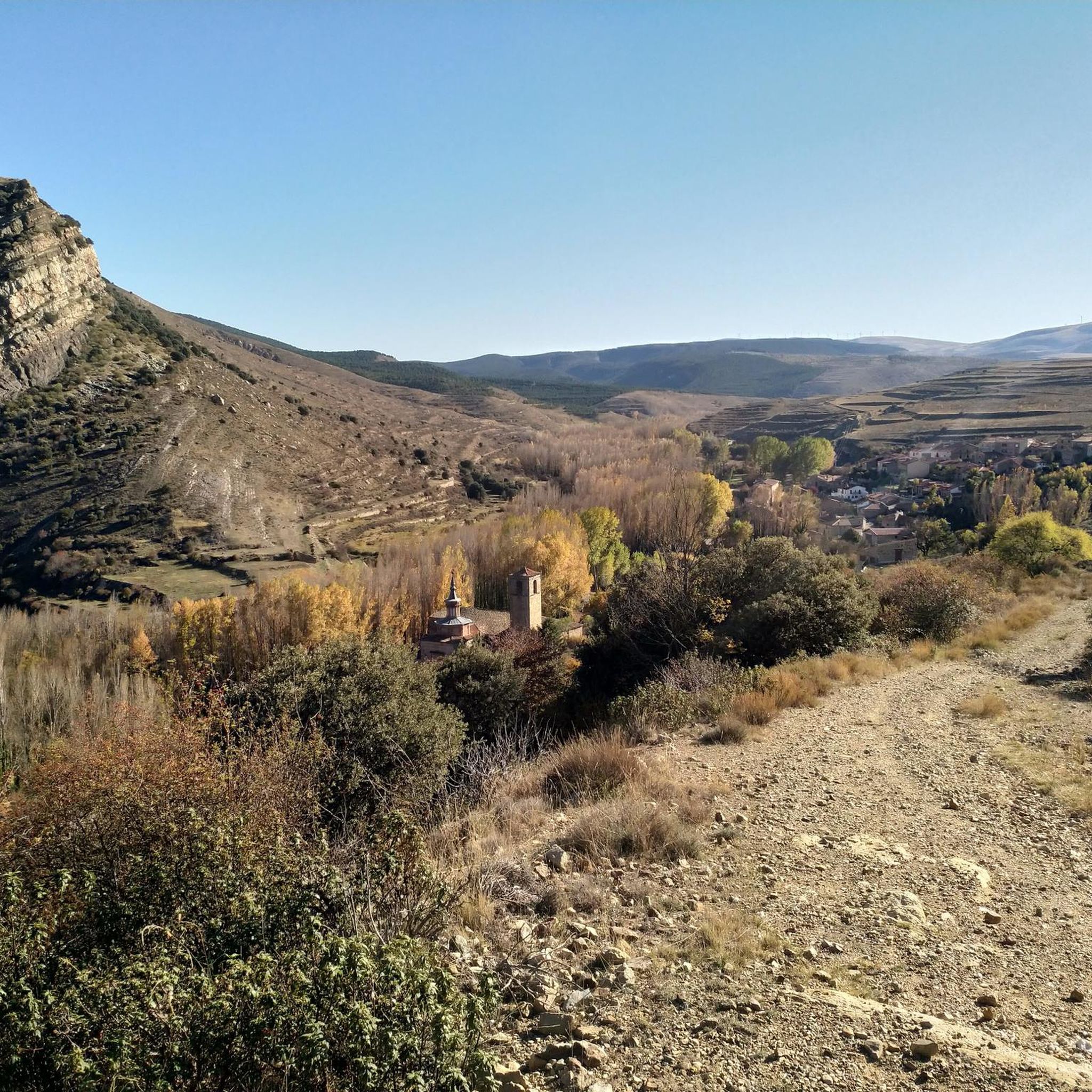
Yanguas is a town in Soria in the Tierras Altas region, in the community of Castilla y León. Of pre-Roman origin, it is located at the beginning of the Cidacos river gorge, on the road that linked Numancia and Calahorra. It was declared a Historical-Artistic Site in 1993 and belongs to the Most Beautiful Towns in Spain association. Of its heritage, the Romanesque tower of San Miguel stands out, in Catalan Romanesque style (unique in the province), the Yanguas castle (14th century) and the church of San Lorenzo.
2
0
Frequently Asked Questions
What historical and cultural sites can I explore around Las Aldehuelas?
The region offers a rich cultural heritage. You can visit the 18th-century Iglesia de Nuestra Señora del Sepulcro in Las Aldehuelas itself, known for its polychrome Virgin Mary image. The village also features traditional architecture with double lintels and blazoned houses. Nearby, the Yanguas Historic Village is a must-see, recognized as one of "The Most Beautiful Towns in Spain" with Romanesque churches like San Lorenzo and Santa María. Another significant site is San Pedro Manrique, which boasts the hermitage of the Virgen de la Peña and the church of San Miguel.
Are there any unique natural features or landscapes to discover?
Yes, Las Aldehuelas is nestled in a beautiful natural setting. The Río Cidacos flows through the village, which is located at the foot of the Sierra del Alba. The area is part of the Natura 2000 network, featuring sites like Oncala-Valtajeros and the Riberas del río Cidacos. You can also explore the prominent Robledal de la Hoya Condesa oak forest and diverse ecosystems with grasslands and mixed dehesas, particularly stunning in autumn.
Can I see dinosaur footprints in the Las Aldehuelas area?
Absolutely! Las Aldehuelas is renowned for its paleontological sites featuring dinosaur fossil footprints, known as icnitas. Significant finds, believed to be from sauropods, are located in areas like Salgar de Sillas and Arroyo del Santo. The site at Salgar de Sillas is specially prepared and signposted for visitors, and you can follow the dedicated Ruta de las Icnitas to explore these ancient traces.
What kind of outdoor activities can I do near Las Aldehuelas?
The region is excellent for outdoor enthusiasts. You can find numerous hiking, mountain biking, and road cycling routes. For hiking, explore trails like the Senda del Acebal or the Castro Alto de la Cruz Loop. Mountain bikers can tackle routes such as the Yanguas – Yanguas Historic Village loop. For more options, check out the dedicated guides for Hiking around Las Aldehuelas, MTB Trails around Las Aldehuelas, and Road Cycling Routes around Las Aldehuelas.
Are there family-friendly attractions or activities in the area?
Yes, several attractions are suitable for families. Exploring the dinosaur fossil footprints along the Ruta de las Icnitas is a fascinating activity for all ages. The charming Yanguas Historic Village and Almarza Village Center offer pleasant strolls through traditional architecture and historical sites that can be enjoyed by families.
What is the best time of year to visit Las Aldehuelas?
The diverse ecosystems around Las Aldehuelas, with oaks, maples, ash, hawthorn, and holly, are particularly spectacular in autumn, making it an ideal time for scenic walks and enjoying the vibrant foliage. Spring also offers pleasant weather for outdoor activities and exploring the natural beauty.
Are there any abandoned villages or unique historical ruins nearby?
Yes, you can explore the Ruins of the Abandoned Village of Buimanco. This depopulated town, located in the municipality of San Pedro Manrique, offers a glimpse into the region's past and is a place of historical interest for its former inhabitants and visitors alike.
What are some notable nearby villages worth visiting?
Beyond Las Aldehuelas, you should definitely visit Yanguas Historic Village, known for its beauty and traditional stone houses. Another interesting settlement is San Pedro Manrique, located in the Tierras Altas region, famous for its unique San Juan Day celebrations and historical heritage. Almarza Village Center also offers a beautiful church and attractive traditional architecture.
What kind of traditional architecture can I expect to see?
The villages in the area, including Las Aldehuelas, are characterized by their traditional houses. Many feature distinctive double lintels and blazoned houses, testaments to the historical prosperity linked to merino wool production in the 17th and 18th centuries. Yanguas Historic Village, for instance, is known for its well-preserved historic group of stone and slate houses.
Are there any long-distance or historical routes that pass through the area?
Yes, the area is historically significant for transhumant pastoralism. Several traditional livestock trails, including the Cañada Real Soriana Oriental, cross the region. These routes are part of the broader Ruta de la Trashumancia, offering a glimpse into the historical movement of livestock across Spain.
What do visitors enjoy most about the attractions around Las Aldehuelas?
Visitors particularly appreciate the blend of cultural heritage, distinctive traditional architecture, and significant natural features. The paleontological sites with dinosaur fossil footprints are a unique highlight, and the well-preserved villages like Yanguas Historic Village are highly praised for their beauty and historical significance. The natural landscapes, especially the river valleys and mountain foothills, also receive high acclaim.
Most popular routes around Las Aldehuelas

Get inspired with the komoot mobile app


Explore more
Still not found the Highlight you’re looking for? See guides of the top attractions in other regions:
