The best road cycling routes around Benlloch
4.7
(14)
1,832
riders
69
rides
Road cycling routes around Benlloch are characterized by a hilly countryside with a constant alternation of ascents and descents. The region, located within the La Plana Alta area of Castellón province, offers diverse and picturesque landscapes. Roads are often well-maintained with low traffic, providing ideal conditions for cycling. The terrain includes significant climbs like Coll de la Bandereta and Puerto de la Serratella, set against a backdrop of varied natural features.
Best road cycling routes around Benlloch
- The most popular…
Last updated: July 11, 2026
33
riders
80.9km
04:09
1,460m
1,460m
Hard road ride. Very good fitness required. Mostly well-paved surfaces and easy to ride.
27
riders
51.9km
02:33
780m
780m
Moderate road ride. Good fitness required. Mostly well-paved surfaces and easy to ride.

Sign up for free
25
riders
Moderate road ride. Good fitness required. Mostly well-paved surfaces and easy to ride.
15
riders
86.2km
04:33
1,520m
1,520m
Hard road ride. Very good fitness required. Mostly well-paved surfaces and easy to ride.
15
riders
24.6km
01:03
170m
170m
Easy road ride. Great for any fitness level. Mostly well-paved surfaces and easy to ride.
Get access to more routes and recommendations from other explorers.
Sign up for free
Already have an account?
Our route recommendations are based on thousands of hikes, rides, and runs completed by other people on komoot.
Start today with a free account
Your next adventure awaits.
Login or Signup

Tips from the Community

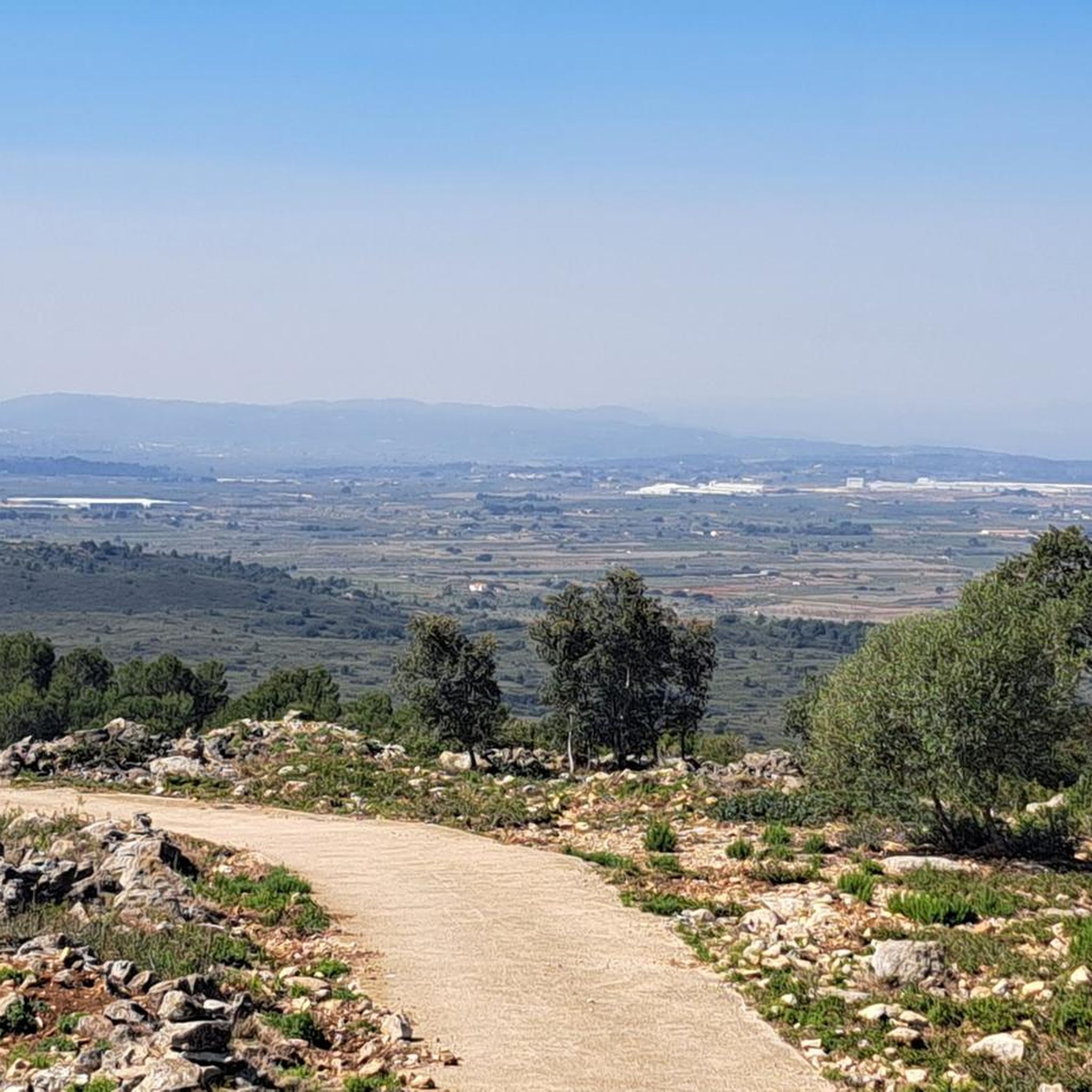
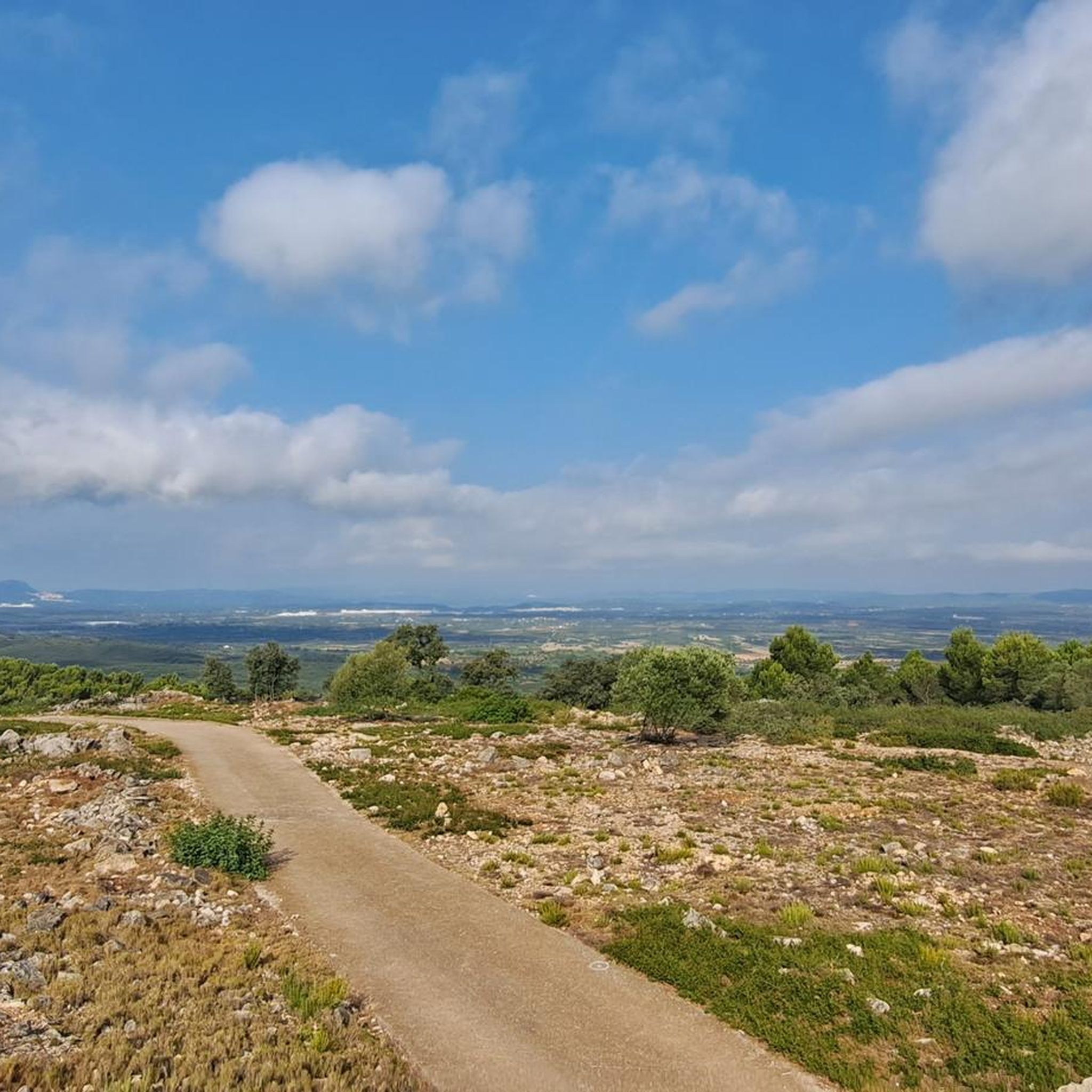
Incredible mountain pass. It is quite easy to get to. The village is small and has a fountain.
0
0

Very good place to take a break. Generous sandwiches and good coffee.
0
0

Vilanova d'Alcolea is a mountain town in the province of Castellón, but with the Mediterranean just 10 minutes away. This place is surrounded by spectacular landscapes of almond trees, olive groves and vineyards, and stands out for its nature, its monuments and its traditions. What to see in Vilanova d'Alcolea Touring Vilanova d'Alcolea takes us to its nature and the magical places that surround it. One of them is the beautiful Font del Mas de Calaf fountain, where one of the highest quality natural water sources in the area is located. In addition, there is a recreation area to enjoy an ideal day with the whole family. Other of its most attractive points are the Barranco de la Fuente Roja, the Fuente de la Carrasqueta and the Fuente de la Villa. Without a doubt, it is worth visiting them through the different hiking routes. If you want to discover part of the history of this destination, you just have to follow the Al Calaf Route to discover the Vilanova d'Alcolea of the 13th and 14th centuries. It will surprise you! With this trip back in time, you cannot miss visiting the Via Augusta as it passes through Vilanova d'Alcolea. In addition, you will discover the stories of the mansions and, especially, that of ILDUM. Vilanova d'Alcolea is characterized by keeping its traditions and popular festivals alive, such as the Sant Antoni Festival. This traditional festival begins with the “Hoguera de los Mayorales” and, with the arrival of night, it is the turn of the Matxà. Fire, an impressive show, procession and the distribution of traditional San Antonio cakes. A party that takes place in January and you can't miss it. This is a destination full of history and nature is one of the main jewels of Vilanova d'Alcolea. Enter this fantastic town and enjoy every minute.
0
0
Historically, it was part of the Encomienda de Les Coves de Vinroma and with it it was the lordship of Blasco de Alagón between the years 1235 and 1242. Later, it was the Templars who were in charge of governing the town. In the archives and annotations of the town map of Albocácer it appears that originally the town was called Sierra de Biarach. During the first half of the 16th century, it took the name of Sarratella de Biarach and it was not until the last third of the same century when the place name of Sarratella was made official. The demographic indicators of the town have been growing throughout its history until it surpassed the barrier of 700 inhabitants in the first years of the 20th century. Since 1900 the population has been constantly reducing until it currently reaches 93 registered people. Its geographical location and orography seduced prehistoric groups. Very close to the hill where the hermitage is located there was an Epipalaeolithic site. Furthermore, in several areas of its territory, cave paintings have been discovered that are part of the Levantine rock art, declared a World Heritage Site. Social media Economic activities are dedicated to agriculture and livestock. Agriculture is traditionally based on dryland agriculture, with olive and almond cultivation predominating. Livestock farming is mainly based on grazing and pig and poultry farms. The scarce industry is related to agriculture and oil. Urban tour La Sarratella is a small town, which is very easy to get around. During the tour you can see the harmony that the houses maintain with each other, the tranquility of its people and the dark green of the mountainous landscape that can be seen from almost any area of the town. Despite being a small town, the places of interest that we can find are many and quite varied: The building of the old oven, with clear medieval traces. The torrent, located in the lower part of the town, whose complex is made up of a fountain, a water trough and some washing places. The town hall inaugurated in 1958 with some porches that limit the public part of the common part of the town halls of the medieval period. The hermitage of San Juan and the Church of San Miguel, where there is a front of the green velvet altar on which you can see Saint Michael embroidered fighting against the devil. Landscape The landscape is very mountainous, with large slopes that provide impressive views to the sea. Holm oaks and bushes scented with rosemary, thyme, lavender and other aromatic plants predominate. The climate is cool and pleasant in summer contrasting with the cold winter. The town is located at about 800 meters above sea level, although the highest point in the area is at 937 meters where the hermitage of San Juan Nepomuceno is located with an unbeatable panoramic view.
0
0
Albocàsser, in the Alt Maestrat region, is a very old town, founded in no less than 1239 and in its upper part contains the most interesting points for a visit to its urban area. There you can find in the main square the Parish Church of the Assumption, built in a severe Baroque style on the original Gothic temple and which preserves an altarpiece and interesting examples of goldsmithing inside. Another architectural treasure that has survived the passage of time is the hermitage of Santos Juanes, from the end of the 13th century, a simple and rustic temple with a lot of charm that you should not miss the opportunity to visit if you are sightseeing in Albocàsser. A little further away is the hermitage and inn of Sant Pau, built between the 16th and 17th centuries and with a beautiful façade with a bell tower. Neighbors come to it in pilgrimage and celebrate traditional dances. Continuing with the list of things to do in Albocàsser, we cannot fail to remind you that its municipal area is part of the Valltorta-Gasulla Cultural Park, which protects shelters with cave paintings. In addition to these interesting relics of the past, you can go hiking in places such as the Barranco de les Calçades, the Mas de les Llomes, the Font del Bosq, els Tolls, Las Devesas and the Barranc de la Selda and a good number of routes further. Finally, you can buy high-quality local olive oil or taste their sweets made with almonds. And don't leave without trying their grilled meats, the typical pot or their heavenly coca!
0
0
Monument with a cross at the exit of Cabanes in its northern part.
0
0
Roundabout at the entrance to Cabanes in its eastern part. In it is the Bar Branto, a place where we can have a drink if we feel like it.
0
0

Definitely worth looking at one of 7 giant chairs.
0
0
Frequently Asked Questions
What is the typical terrain like for road cycling around Benlloch?
The region around Benlloch is characterized by a hilly countryside with a constant alternation of steep ascents and fast descents. You'll find diverse and picturesque landscapes, with well-maintained asphalt roads that often have very little traffic, making for an enjoyable cycling experience.
Are there challenging climbs for experienced road cyclists in Benlloch?
Yes, Benlloch offers several demanding climbs. Notable ascents include the Coll de la Bandereta, known for its picturesque views and varying gradients, and the Puerto de la Serratella, a 3rd category port spanning almost 14 km with over 540 meters of elevation gain, offering rewarding views throughout.
What are the difficulty levels of road cycling routes in Benlloch?
Benlloch caters to various skill levels. Out of approximately 70 road cycling routes, you'll find about 7 easy routes, 33 moderate routes, and 29 difficult routes, ensuring options for beginners to advanced cyclists.
What natural features can I expect to see while cycling in Benlloch?
While cycling, you'll experience diverse and picturesque landscapes. The broader Castellón province, where Benlloch is located, is known for its contrasting scenery, being one of Spain's most mountainous municipalities despite its coastal proximity. This offers spectacular views and varied natural beauty.
Are there any historical landmarks or points of interest along the cycling routes?
Yes, the region boasts several historical attractions. You might encounter the ancient Fortified Hermitage of Albalat or the Hermitage of Saint Joseph of Quartico. The historical Roman Albalat Tower is also nearby, adding cultural insights to your ride.
What do other road cyclists enjoy the most about road cycling in Benlloch?
The area is highly rated by the komoot community, with an average score of 4.5 stars from over 10 reviews. Cyclists often praise the well-maintained, low-traffic roads, the challenging yet scenic climbs, and the diverse, picturesque landscapes that make each ride engaging.
Are there any circular road cycling routes available in Benlloch?
Yes, many routes in Benlloch are designed as loops. For example, you can try the challenging Puerto de la Serratella – Carrasca de Culla loop from Benlloc, or the moderate Serra d'en Galceran – Coll de la Bandereta loop from Vilanova d'Alcolea, which offers scenic views through hills and valleys.
Are there any easy road cycling routes suitable for beginners or a relaxed ride?
Absolutely. For an easier ride, consider the Cabanes east roundabout – Narrow Alleyway in Cabanes loop from Benlloc. This route covers about 24.6 km with minimal elevation gain, perfect for a less strenuous outing.
What is the best time of year for road cycling in Benlloch?
While specific weather data isn't provided, the region's diverse landscapes and generally well-maintained roads suggest that spring and autumn would offer the most comfortable temperatures for cycling. Summers can be hot, and winters mild but potentially wet.
Are there any lakes or natural parks near Benlloch that can be incorporated into a cycling trip?
Yes, the Prat de Cabanes-Torreblanca Natural Park is a significant natural monument nearby, featuring lagoons like Lagoons of Parc Natural del Prat. While not directly on all road cycling routes, these areas offer beautiful natural scenery that could be explored as part of a longer ride or a separate visit.
How many road cycling routes are available around Benlloch?
There are over 60 road cycling routes available around Benlloch, offering a wide variety of distances, difficulty levels, and scenic experiences for cyclists to explore.
Can I find routes that include both challenging climbs and picturesque views?
Many routes in Benlloch combine both. For instance, the Road to Benassal – Coll de la Bandereta loop from Benlloc is a difficult route featuring significant elevation gain through varied and beautiful terrain, ensuring both a physical challenge and stunning scenery.
Most popular attractions around Benlloch

Get inspired with the komoot mobile app


Explore more
Browse the best Road cycling routes in other regions.
