The best MTB trails around Paraje Natural Karst en Yesos de Sorbas
4.7
(8)
129
riders
9
rides
Mountain biking around Paraje Natural Karst en Yesos de Sorbas offers a unique experience through one of the world's most significant gypsum karst landscapes. This arid region features distinctive geological formations, including sinkholes and gypsum outcroppings, alongside the contrasting verdant Río Aguas canyon. The terrain provides a mix of challenging unpaved segments and more accessible tracks, catering to various skill levels. Mountain bikers can explore diverse environments, from desert-like expanses to lush riverbanks, all shaped by millions of years of geological processes.
Best mountain bike trails around Paraje Natural Karst en Yesos de Sorbas
- The most popular mountain bike trail is Las Cruces Viewpoint – Viewpoint of the Hanging Houses loop from Sorbas, a 31.9 miles (51.4 km) trail that takes 4 hours 33 minutes to complete. This difficult route offers extensive views across the unique gypsum karst landscape.
- Another top favourite among local mountain bikers is Sorbas – Uleila del Campo loop from Sorbas, a moderate 23.3 miles (37.4 km) path. This route traverses varied terrain, providing an immersive experience of the region's distinctive geological features.
- Local mountain bikers also love the Bar Zambra – View of Sierra Cabrera loop from Parada de ALSA V. Lorquino, a 14.5 miles (23.4 km) trail leading through accessible paths with views of Sierra Cabrera, often completed in about 1 hour 29 minutes.
- Mountain biking around Paraje Natural Karst en Yesos de Sorbas is defined by gypsum karst formations, arid steppes, and the verdant Río Aguas canyon. The network offers options for different ability levels, from easy rides to challenging routes with significant elevation changes.
- The routes in Paraje Natural Karst en Yesos de Sorbas are highly rated by the komoot community with an average score of 4.9 stars from over 6 reviews. More than 130 mountain bikers have used komoot to explore Paraje Natural Karst en Yesos de Sorbas's varied terrain.
Last updated: July 4, 2026
10
riders
52.2km
04:26
760m
760m
Moderate mountain bike ride. Good fitness required. Advanced riding skills necessary.
5
riders
49.3km
04:27
1,080m
1,080m
Hard mountain bike ride. Very good fitness required. Suitable for all skill levels.

Sign up for free
1
riders
41.6km
03:43
790m
790m
Moderate mountain bike ride. Good fitness required. Suitable for all skill levels.
2
riders
58.5km
04:45
1,050m
1,050m
Hard mountain bike ride. Very good fitness required. Suitable for all skill levels.
5.0
(1)
3
riders
24.5km
01:36
280m
280m
Easy mountain bike ride. Great for any fitness level. Suitable for all skill levels.
Get access to more routes and recommendations from other explorers.
Sign up for free
Already have an account?
Our route recommendations are based on thousands of hikes, rides, and runs completed by other people on komoot.
Start today with a free account
Your next adventure awaits.
Login or Signup
Tips from the Community

The Lucainena de las Torres information office is the best starting point for exploring this village, located next to the Vía Verde in a building reminiscent of an old train station. Here, visitors receive personalized attention and recommendations on routes and activities, such as the popular, well-marked 6.2-km mining trail. The site is adapted for people with reduced mobility and families, making it accessible to all. It's a highly recommended stop before exploring the village and its surroundings.
2
0
The Town Hall Square is the heart of Lucainena de las Torres and a perfect place to pause during your route. Surrounded by whitewashed houses and flower-filled balconies, it captures the peaceful atmosphere of this village, declared one of the most beautiful in Spain. Here you'll find the Town Hall building, along with bars and terraces where you can enjoy a coffee or soft drink before continuing your route.
2
0
The sanctuary of the Virgin of Cabeza de Monteagud, in Benizalón, stands at the top of Monteagud Hill and is one of the most iconic sites in the area. The hermitage, built on the site of an old Muslim ribat, houses the venerated image of the Virgin, a center of devotion for residents and pilgrims from throughout the region. Every year it hosts a mass pilgrimage that fills the area with a festive and religious atmosphere. For hikers, the climb offers excellent panoramic views, so it's a good idea to wear comfortable shoes and water.
2
0
The Church of Our Lady of Montesión was built in the 18th century in the neoclassical style, following the destruction of the original church during the Morisco Rebellion. Built on the site of an old mosque, it stands out for its fortress-like exterior and its two entrance portals. The interior features a Latin cross plan with a single vaulted nave and a dome over the transept, as well as a quadrangular tower attached to the sanctuary. It is a point of historical and architectural interest for those visiting the area.
3
0
Uleila del Campo is a small town located on the southern slopes of the Sierra de los Filabres, at the foot of Monteagud Hill. Its surroundings combine hills, gullies, and unusual sites such as "El Salar," a salt flat with a unique ecosystem. Its heritage includes the Neo-Romanesque Church of Santa María and the Cueva de la Mora archaeological site, home to Neolithic remains and cave paintings. The town keeps its traditions alive with festivals such as the Santo Cristo de las Penas festival in September, ideal for discovering local life and culture after a hike through the mountains.
3
0

Highest gear down here, you’ll sail up the other side. Decent piece of tarmac. After about 2.5 kms road runs out. You have to go left at the end. On to trail.
0
0

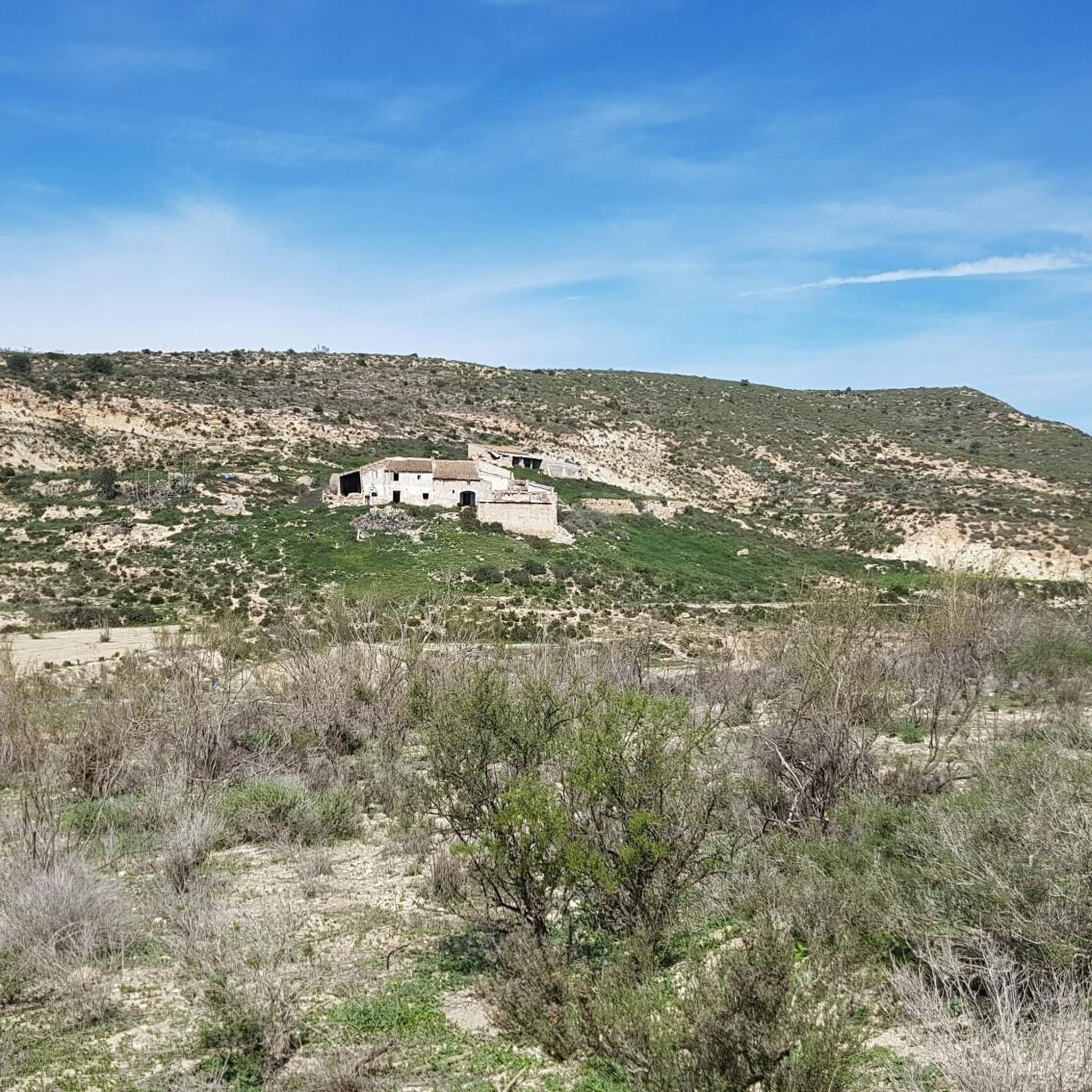
Village situated in the foothills of the Filabres, descending to the depression of Sorbas and near the Campo de Tabernas. Situated on a small elevation, it forms a well-structured round group of buildings in a not unattractive landscape where fields of vineyards, almond and olive trees predominate. The church of St. Mary characterizes the village.
0
0

In 1227, Pastor Juan de Ribas, originally from Colomera (Granada), witnessed the apparition of the Virgin on a hill in the Sierra Morena. He asked her to build a temple in her honor, and a few years later, the devotion led to the construction of a building that still stands today.
0
0
Frequently Asked Questions
How many mountain bike trails are available in Paraje Natural Karst en Yesos de Sorbas?
There are 5 mountain bike trails in Paraje Natural Karst en Yesos de Sorbas, offering a range of experiences from easy to difficult.
What kind of terrain can I expect on the mountain bike trails?
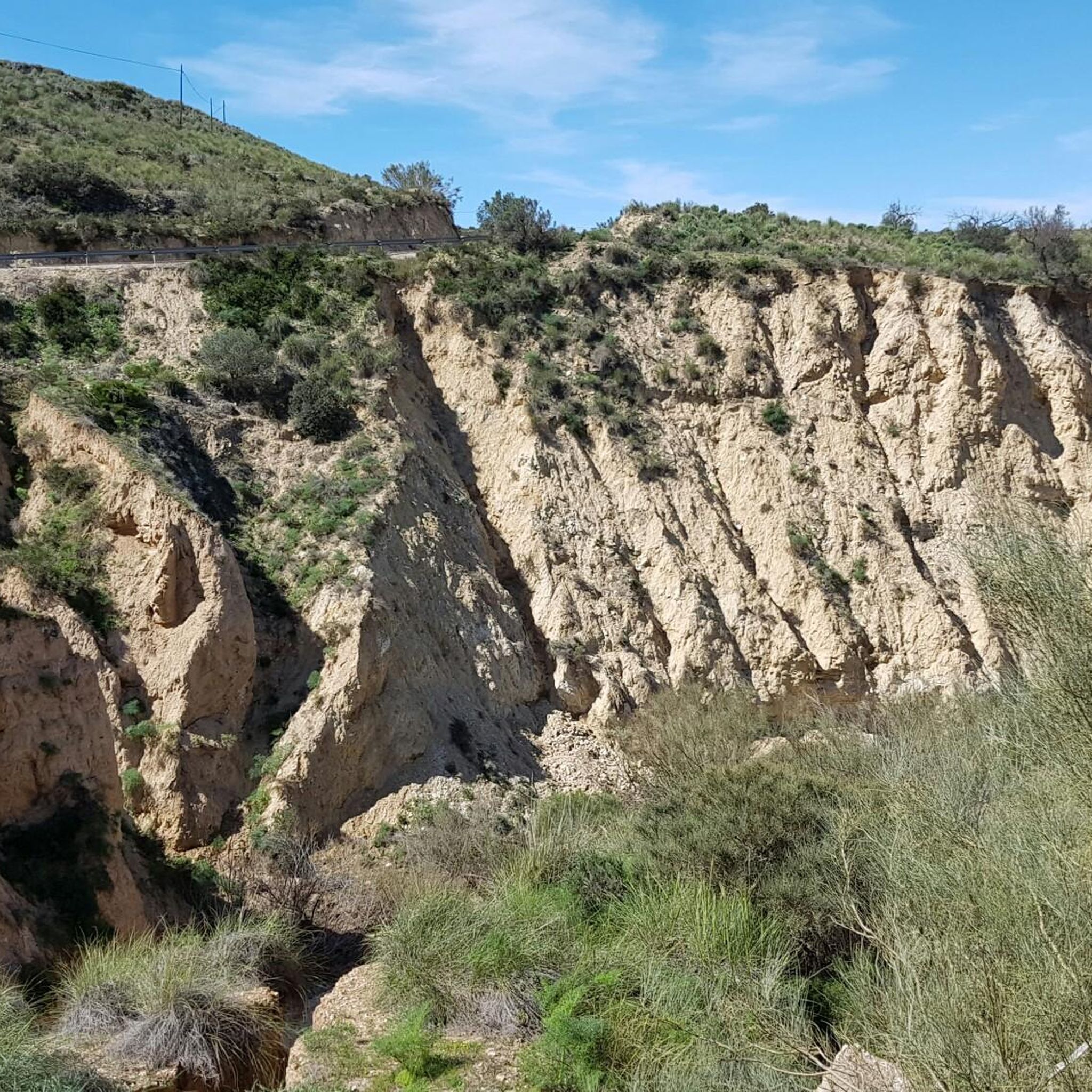
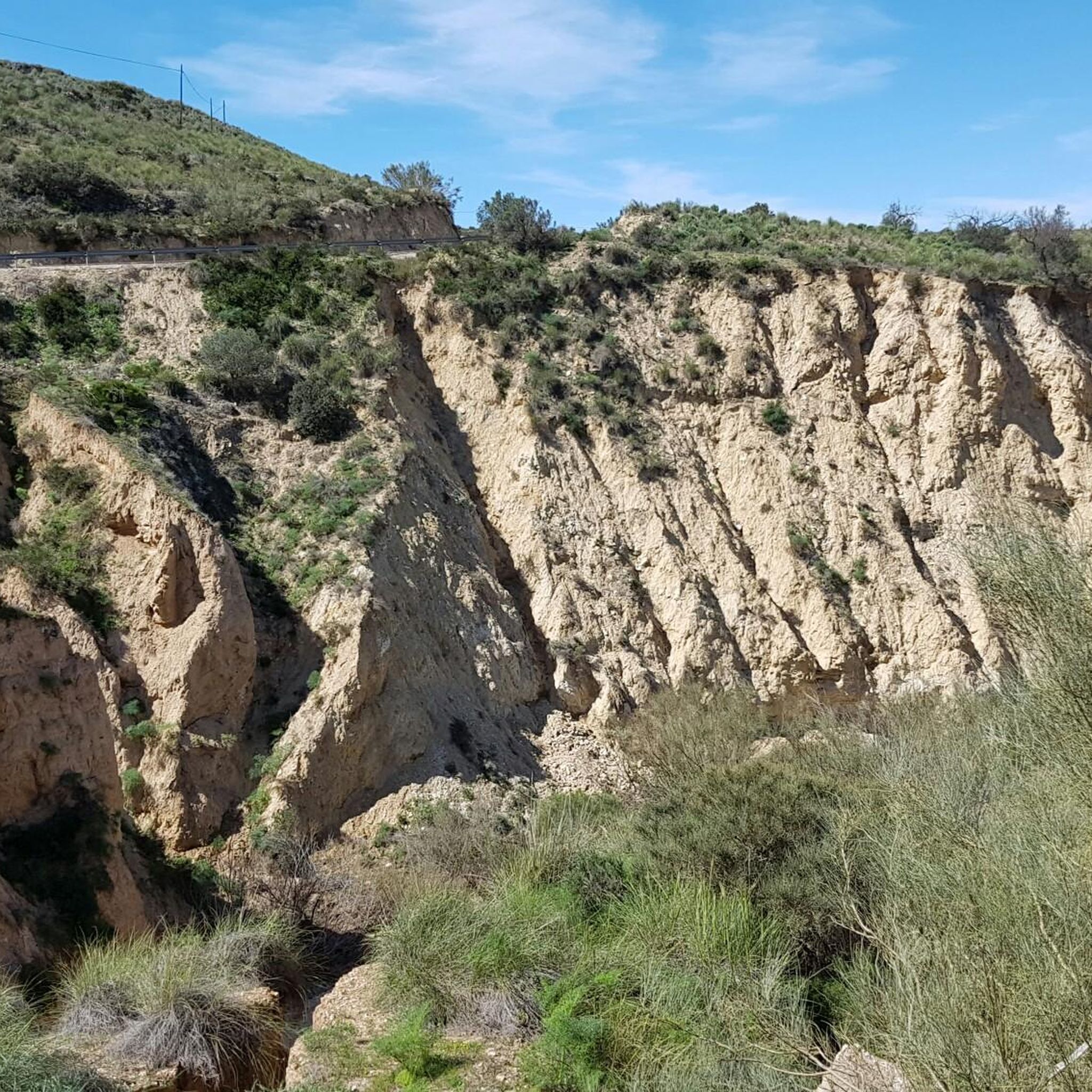
The terrain is diverse, featuring stony paths, sandy sections, and winding trails. While some routes may include paved sections, many offer unpaved and technically challenging segments. You'll encounter the unique gypsum karst formations, arid landscapes, and contrasting verdant riverbeds.
When is the best time of year to go mountain biking in this region?
Almería boasts a high number of sunshine hours annually, making it suitable for cycling throughout most of the year. While summer heat can be intense, it's best to avoid the central hours of the day during summer. The mild temperatures during the rest of the year provide ideal conditions for mountain biking.
Are there any family-friendly mountain bike trails?
Yes, there are options for various skill levels. For an easier ride, consider the Bar Zambra – View of Sierra Cabrera loop from Parada de ALSA V. Lorquino, which is 14.5 miles (23.4 km) long and leads through accessible paths.
What are some notable natural features or landmarks I might see along the trails?
You'll encounter the striking gypsum karst formations, including sinkholes and gypsum outcroppings. The Aguas River creates surprisingly lush corridors, offering a verdant oasis amidst the dry steppe. The surface trails can also reveal 'windows' that connect to the extensive underground cave systems.
Are there circular mountain bike routes available?
Yes, many routes are designed as loops. For example, the Las Cruces Viewpoint – Viewpoint of the Hanging Houses loop from Sorbas is a challenging 31.9 miles (51.4 km) trail, and the Sorbas – Uleila del Campo loop from Sorbas is a moderate 23.3 miles (37.4 km) path.
What do other mountain bikers say about the trails in Paraje Natural Karst en Yesos de Sorbas?
The area is highly rated by the komoot community, with an average score of 4.9 stars from over 6 reviews. Mountain bikers often praise the unique gypsum karst landscape and the diverse terrain that offers engaging rides for various skill levels.
Is there parking available for mountain bikers?
While specific parking areas for mountain bikers are not detailed, routes often start from villages like Sorbas or Parada de ALSA V. Lorquino, where general parking facilities would be available. It's advisable to check local parking options in these starting points.
Are there routes suitable for advanced mountain bikers?
Absolutely. The region offers challenging routes requiring very good fitness and advanced riding skills. An example is the Pathway to Orchard – Statue of a Miner in Bédar loop from Los Castaños, a difficult 58.5 miles (94.2 km) trail with significant elevation changes.
What makes the geology of Paraje Natural Karst en Yesos de Sorbas unique for mountain biking?
The region is celebrated as Spain's most important gypsum karst landscape, where water has sculpted soluble gypsum deposits over millennia. This creates a fascinating surface landscape with dramatic erosion, sinkholes, and unique gypsum outcroppings, providing a visually stunning and geologically interesting backdrop for rides.
Can I find food or accommodation near the mountain bike trails?
The quaint village of Sorbas, known for its hanging houses, is a good base and offers amenities. You can also find options in other nearby towns and villages, providing places to eat and stay after your rides.
What are the typical distances and durations of the mountain bike trails?
Trail lengths vary significantly. For instance, the Bar Zambra – View of Sierra Cabrera loop is 14.5 miles (23.4 km) and takes about 1 hour 29 minutes, while the Pathway to Orchard – Statue of a Miner in Bédar loop is 58.5 miles (94.2 km) and can take over 4 hours.
Most popular routes around Paraje Natural Karst en Yesos de Sorbas

Get inspired with the komoot mobile app


Explore more
Browse the best MTB trails in other regions.
