The best walks and hikes around Oropesa
4.5
(93)
473
hikers
61
hikes
Hiking around Oropesa offers diverse landscapes, blending mountainous terrain with coastal views and protected natural areas. The region features the Sierra de Oropesa mountain range to the west, providing winding paths and panoramic vistas. To the east, the coastline includes rugged limestone hills, steep cliffs, and hidden coves, particularly within the nearby Sierra de Irta Natural Park. Additionally, the area encompasses coastal wetlands like the Prat de Cabanes-Torreblanca Nature Reserve, offering varied natural environments for exploration.
Best hiking trails around…
Last updated: June 25, 2026
5.0
(5)
28
hikers
12.5km
03:18
100m
100m
Moderate hike. Good fitness required. Easily-accessible paths. Suitable for all skill levels.
1
hikers
10.1km
02:40
100m
100m
Moderate hike. Good fitness required. Easily-accessible paths. Suitable for all skill levels.

Sign up for free
1
hikers
6.06km
01:39
90m
90m
Easy hike. Great for any fitness level. Easily-accessible paths. Suitable for all skill levels.
23.9km
06:08
100m
100m
Hard hike. Very good fitness required. Easily-accessible paths. Suitable for all skill levels.
5.37km
01:27
70m
70m
Easy hike. Great for any fitness level. Easily-accessible paths. Suitable for all skill levels.
Get access to more routes and recommendations from other explorers.
Sign up for free
Already have an account?
Our route recommendations are based on thousands of hikes, rides, and runs completed by other people on komoot.
Start today with a free account
Your next adventure awaits.
Login or Signup

Tips from the Community

The Count's Palace of Oropesa, located in the province of Toledo, is an architectural gem with a rich history and great heritage value. The Old Palace (or Doña Elvira Palace): in the Mudejar Gothic style, built in the 14th century. The New Palace: in the Renaissance style, built in the 15th century. It stands out for its original coffered ceiling, its balconies with the coat of arms of the Counts of Oropesa, and a large interior courtyard that was even used as a bullring. Together with the adjacent castle, it forms a complex declared a Historic-Artistic Monument in 1923. In 1931, it was incorporated into the National Parador Network, becoming the first Parador built on a historic building.
4
0

Using the power of moving water to drive a mill wheel is an ancient invention that dates back to pre-Christian times. Thanks to such a construction, human or animal muscle power could be easily replaced by a watercourse - natural or artificially created - in order to grind grain into corn, for example. There are essentially two different ways of driving watermills: Either the water simply hits the blades of the water wheel from below to set it in motion; or the water is guided above the wheel and falls onto the blades; this type of construction is more efficient due to natural gravity.
0
1

The Archbishop's Bridge is a municipality in Toledo that takes its name from its beautiful Gothic bridge with 11 arches that crosses the waters of the Tagus River. The town is famous for its ceramics, and together with Talavera de la Reina, it is the largest pottery center in Spain.
1
1

This great bridge with eleven eyes over the Tagus River gives its name to the Toledo town in which it is located, although the left bank of the river is already considered Cáceres and forms part of the municipality of Villar del Pedroso. It was built between 1383 and 1388 by order of the Archbishop of Toledo Pedro Tenorio.
2
1

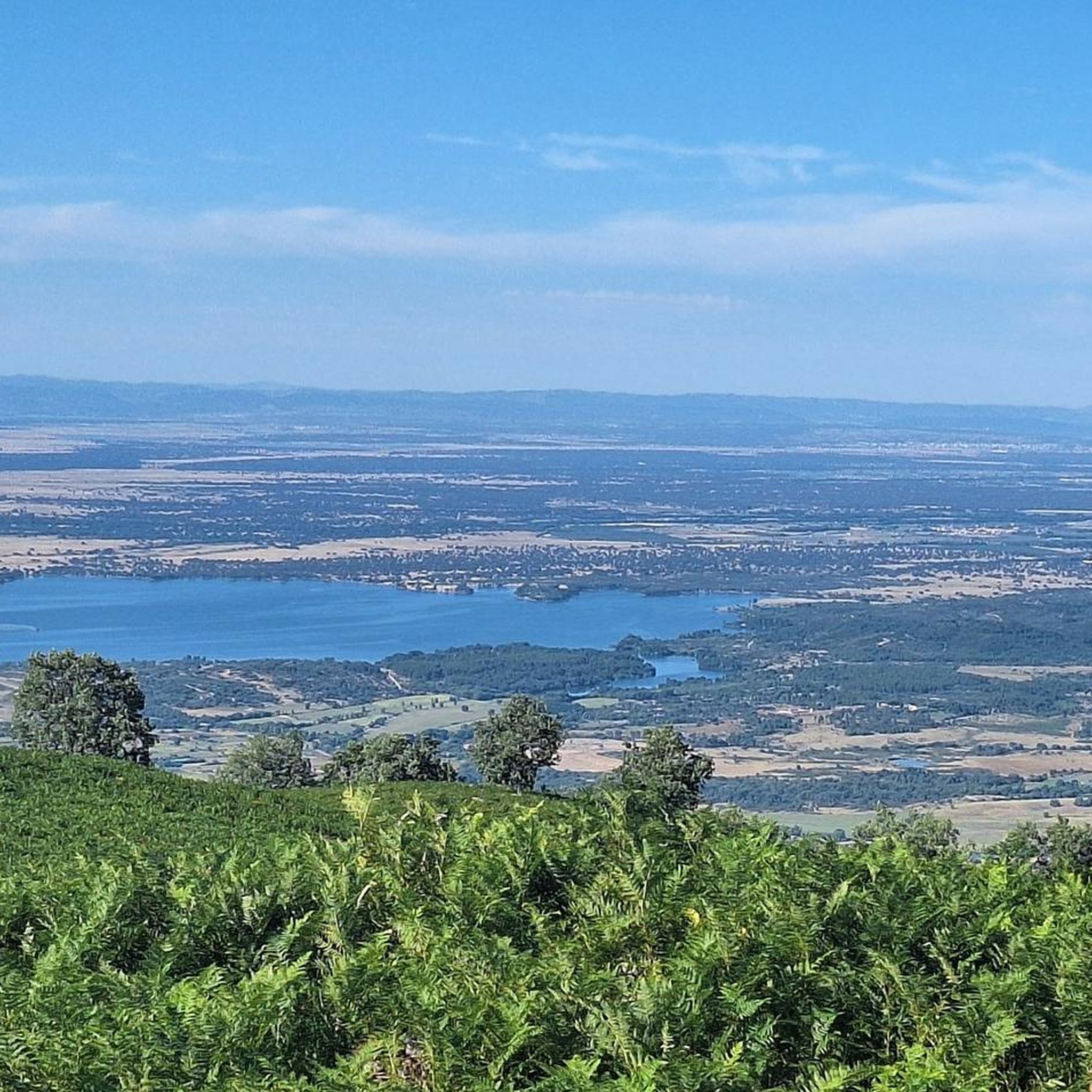
Delimiting the border between the communities of Castilla La Mancha and Castilla León, the Rosarito reservoir was built, taking advantage of the course of the Tiétar river as it passed through this region. A privileged place for the hot months where you can enjoy its waters to cool off or take a kayak ride.
3
0
This beautiful Renaissance-style building not only holds the title of Palace but is also known for being officially the first National Tourist Parador in Spain. It is worth visiting inside, its details from that time are truly dazzling, perfectly preserved today that will make you travel back in time for a few moments.
2
0
The attraction of Oropesa does not only go through its castle, without a doubt the Plaza del Navarro is a place that is really worth visiting and taking advantage of having a drink in one of the bars that surrounds it. The town has a very pleasant atmosphere and although it is a recognized tourist site, it still retains that village air that makes it very special.
1
1
Undoubtedly the main attraction of the city of Oropesa and its renowned "monumental route". The castle complex is made up of two main buildings, the "old castle" is a 12th century Arab fortress, and the "new castle" also known as the Álvarez de Toledo Count's Palace which dates from the 15th century and is of marked style. Renaissance. The most recent one has the particularity of having been converted into the first National Tourism Parador in 1931. It is worth making a visit to the complex, its schedules and rates can be consulted on the web. http://www.turismocastillalamancha.es/patrimonio/castillo-de-oropesa-2464/descripcion/
1
0
Frequently Asked Questions
How many hiking trails are available around Oropesa?
There are over 60 hiking routes around Oropesa, offering a wide range of options for different preferences and fitness levels. These include 20 easy trails, 31 moderate routes, and 9 more challenging treks.
What kind of terrain can I expect on Oropesa's hiking trails?
Oropesa's hiking trails offer diverse terrain, from the mountainous paths of the Sierra de Oropesa with panoramic views of orange groves and the Mediterranean, to coastal routes along the Ruta de las Aves Trail. You can also find trails through protected natural areas like the Sierra de Irta Natural Park, featuring rugged limestone hills and hidden coves, or the coastal wetlands of the Prat de Cabanes-Torreblanca Nature Reserve.
Are there any easy, family-friendly hiking options in Oropesa?
Yes, Oropesa offers several easy and family-friendly routes. A great option is the Circular Route to the Ermita de la Fuente Santa, an easy 6.1 km path that leads to a local hermitage. The Monumental Route of Oropesa – circular walk is another easy 5.4 km trail that takes you through historical landmarks.
Can I find circular hiking routes in Oropesa?
Yes, Oropesa has several circular hiking routes. The Circular Route to the Ermita de la Fuente Santa is an easy 6.1 km loop, and the Monumental Route of Oropesa – circular walk is a 5.4 km loop through historical sites. For a more challenging option, consider the difficult Rosarito Reservoir Loop from Las Ventas de San Julián.
What are some notable landmarks or attractions I can see along the trails?
Many trails in and around Oropesa offer access to interesting landmarks. You can explore historical sites like the Count’s Palace of Oropesa and Oropesa Castle. Further afield, the Sierra de Irta Natural Park features ancient watchtowers like the Badum Tower and the castles of Xivert and Polpis. The region also has several scenic bridges, such as the Puente del Arzobispo.
Are there any trails with scenic viewpoints in Oropesa?
Absolutely. The Sierra de Oropesa mountain range offers numerous paths with panoramic vistas of orange groves and the Mediterranean Sea. The Vía Verde del Mar, connecting Oropesa del Mar with Benicàssim, passes through Monte Bovalar, which provides viewpoints over the marina and, on clear days, potential sightings of the Columbretes Islands. The Desierto de las Palmas natural park also features well-marked trails with scenic viewpoints.
What do other hikers enjoy most about hiking in Oropesa?
The komoot community highly rates hiking in Oropesa, with an average score of 4.6 stars from over 70 reviews. Hikers often praise the diverse landscapes, from stunning coastal views to tranquil mountain paths, and the variety of routes suitable for all abilities. The well-maintained trails and the opportunity to explore both natural beauty and historical sites are frequently highlighted.
Are there any trails that pass by water features like lakes or reservoirs?
Yes, the region offers trails near water features. The Rosarito Reservoir Loop from Las Ventas de San Julián is a difficult route that takes you around the Rosarito Reservoir. The Prat de Cabanes-Torreblanca Nature Reserve, a coastal wetland, also provides trails for exploring its unique ecological value and birdlife.
What is the best time of year to go hiking in Oropesa?
Oropesa offers pleasant hiking conditions for much of the year. Spring and autumn generally provide the most comfortable temperatures for exploring both coastal and mountain trails. Even in winter, the climate can be mild enough for enjoyable hikes. Summer can be warm, making early morning or late afternoon hikes along coastal routes or in shaded mountain areas preferable.
Are there any long-distance or more challenging hikes available?
For those seeking a challenge, Oropesa has more difficult routes. The Rosarito Reservoir Loop from Las Ventas de San Julián is a difficult 23.9 km trail. Within the Sierra de Oropesa, the "Camí de la Serra" trail, including a variant to "Barranc del Diable" (Devil's Ravine), is noted as a medium-high difficulty option, offering extensive views and varied terrain.
Can I reach hiking trailheads using public transport in Oropesa?
While specific public transport connections to every trailhead may vary, Oropesa del Mar is generally well-connected. The Vía Verde del Mar, an accessible greenway, starts directly from Oropesa, making it easy to reach. For trails further into the Sierra de Oropesa or natural parks, local bus services or taxis might be available to get closer to starting points, but planning ahead is recommended.
Are there any trails suitable for birdwatching?
Yes, the region is excellent for birdwatching. The Prat de Cabanes-Torreblanca Nature Reserve, a significant coastal wetland north of Oropesa, is particularly noted for its diverse birdlife and unique flora, offering dedicated trails for exploration. Additionally, the Birdwatching Hide at Tiétar River and Reservoir and the Birdwatching Hut at the Rosarito Reservoir provide specific spots for observing local avian species.
Most popular attractions around Oropesa

Get inspired with the komoot mobile app


Explore more
Browse the best Hikes in other regions.
