Attractions and Places To See around Constanzana - Top 15
Best attractions and places to see around Constanzana include historical sites and rural landscapes. Constanzana is a small municipality in the province of Ávila, Castilla y León, Spain, characterized by its historical context within the La Moraña comarca. The area features a tranquil, agrarian landscape, historically noted for natural elements like lagoons, a well, and a stream. Its charm lies in its rural setting and historical roots dating back to the 13th century.
Best attractions and places to see around…
Last updated: June 24, 2026
Castle of Narros de Saldueña
Highlight • Castle
Translated by Google •
Tip by

El Bohodón
Highlight • Settlement
Translated by Google •
Tip by
Sign up now to discover places like this
Get recommendations on the best single tracks, peaks, & plenty of other exciting outdoor places.
Sign up for free
Castronuevo Castle-Palace
Highlight • Castle
Translated by Google •
Tip by
Church of San Pedro Apóstol
Highlight • Religious Site
Translated by Google •
Tip by

Ruins of Castronuevo
Highlight • Historical Site
Translated by Google •
Tip by

Sign up for free to discover even more attractions around Constanzana.
Sign up for free
Already have an account?
Start today with a free account
Your next adventure awaits.
Login or Signup
Popular around Constanzana

Tips from the Community

Narros de Saldueña Castle, also known as the Castle of the Duke of Montellano, is one of the best-preserved fortresses in the province of Ávila. It is located in the town of Narros de Saldueña, within the town limits. Construction: Late 15th century, attributed to Rodrigo de Valderrábanos, Lord of the Saldueña Estate. Expansions: It was renovated and enlarged at the beginning of the 16th century by his successors.
4
0
The Castle-Palace of Castronuevo, also known as Castle of Rivilla de Barajas, is an impressive fortification located in the municipality of Rivilla de Barajas, in the province of Ávila, within the autonomous community of Castilla y León. Although its current use is null, its history and structure reveal its former greatness. It was erected by Gil de Vivero before 1481, on the site of Castronuevo, and later remodeled by his son before selling it in 1489 to the Duke of Alba. The castle has three circular towers and two rectangular towers. Despite its age and danger of collapse, this castle remains a fascinating testament to medieval history and architecture. 🏰🌟
3
0
The Castle of the Duke of Montellano, also known as Castle of Narros de Saldueña, is located at the end of the town of Narros de Saldueña, in the heart of the La Moraña plain, in the province of Ávila, autonomous community of Castilla y León. This castle, tracing its origins to the 15th century, is a good example of a castle-palace built with brick and mud (mortar), which relates it to Mudejar architecture.
6
0
El Bohodón is a municipality in Spain belonging to the province of Ávila, in the autonomous community of Castilla y León. It is located in the La Moraña region, in the north of the province. It is located 35 kilometers from the capital and 17 kilometers from Arévalo.
5
0

Beautiful castle also called the Duke of Montellano (Ávila) Well-preserved building that is worth visiting!
0
1

The castle of the Duke of Montellano dates from the s. XV and, given the use of brick and mud in its construction, it is related to Mudejar architecture. In its day it belonged to the Valderrábano family. It is listed as an Asset of Cultural Interest.
1
0
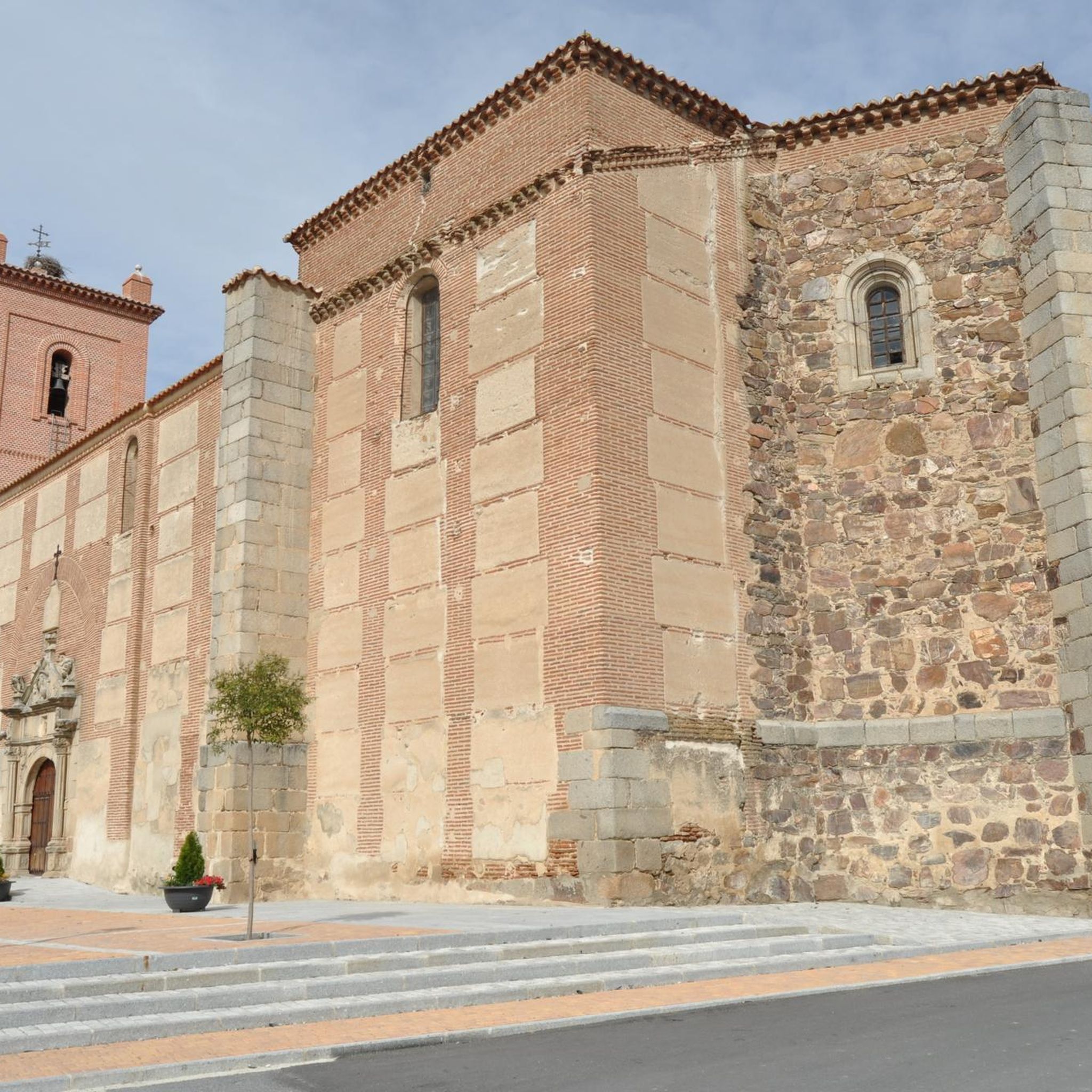
This church constitutes the most outstanding and relevant monument of the town. Romanesque in style, it is approximately eight centuries old. Its most outstanding characteristic is the Mudejar head, which presents a unique archway that originates from a brick plinth, accompanied by a curb course that culminates with corners and several superimposed curbs. Likewise, the altarpiece located in the main chapel, which dates from the 16th century, deserves to be highlighted. This altarpiece is organized into three streets divided by inter-streets, and has four bodies that house various images of Saints and Biblical scenes. In total, it is made up of 18 paintings of great artistic value.
2
0

Small population where two rivers bathe the lands of the municipality, to the east the Adaja river and to the west the Arevalillo river, a tributary of the previous one.
1
0
Frequently Asked Questions
What types of historical sites can I explore around Constanzana?
The area around Constanzana is rich in historical architecture. You can visit the impressive Castle of Narros de Saldueña, a 15th-century Mudejar castle-palace. Another significant site is the Parish Church of Fontiveros, known for its Gothic-Mudejar style and exposed masonry, making it the largest church in the Moraña region.
Are there any other castles or fortifications to see?
Yes, besides the Castle of Narros de Saldueña, you can also explore the Castronuevo Castle-Palace. This impressive fortification, built before 1481, features three circular and two rectangular towers, offering a glimpse into medieval history.
What natural features characterize the landscape around Constanzana?
The region around Constanzana, particularly the La Moraña comarca, is characterized by a tranquil, agrarian landscape. Historically, it has been noted for natural elements such as lagoons, a well, and a stream. The municipality of El Bohodón, for instance, is notable for being situated where the Adaja and Arevalillo rivers flow through its lands.
What outdoor activities are available near Constanzana?
You can enjoy various outdoor activities, especially hiking and road cycling. There are several routes available, such as the 'Arévalo to Fuente el Saúz Trail' for hiking or the 'Pueblos de la Morana y Castillo del Duque de Montellano' for road cycling. You can find more details and routes on the hiking guide and road cycling guide for the area.
Are there easy hiking trails suitable for beginners?
Yes, there are easy hiking options. For example, the 'Arévalo to Fuente el Saúz Trail' is an easy route, approximately 4.8 km long. Another easy option is the 'Castillo del Duque de Montellano — circular desde Muñomer del Peco' which is about 4.9 km. You can explore more easy trails in the hiking guide.
Can I find circular hiking routes in the area?
Yes, circular routes are available. The 'Ermita del Cristo de los Pinares from Nava de Arévalo — circular by Pedro Rodríguez' is a moderate 12.5 km loop, and the 'Castillo-Palacio de Castronuevo — circular por los Parajes de La Mora' is a moderate 15 km loop. Check the hiking guide for more options.
What is the significance of the Parish Church of Fontiveros?
The Parish Church of Fontiveros is a significant religious building in the Gothic-Mudejar style. It is notable for its unique exposed masonry, which is uncommon for ecclesiastical constructions in the region, and is the largest church in the Moraña area. It has also been declared an Artistic Historic Monument.
What can I expect to see at the Ruins of Castronuevo?
At the Ruins of Castronuevo, located in an area called Las Capellanas, you will find the remains of a church. These ruins are situated near a small pond, and from a distance, you can also see the nearby Castronuevo Castle.
What do visitors appreciate most about the attractions around Constanzana?
Visitors appreciate the well-preserved historical sites, particularly the castles and religious buildings, which offer a deep dive into the region's past. The rural setting and tranquil agrarian landscape also provide a peaceful escape, with opportunities to explore local communities and enjoy the natural environment.
Is Constanzana itself a historical place?
While Constanzana is a small, rural municipality, its history dates back to at least the 13th century, with its rural settlement likely occurring after the Christian reconquest of Toledo. It was even mentioned in the work of Gonzalo de Berceo, an important medieval Spanish poet, highlighting its historical roots within the La Moraña comarca.
Are there any specific road cycling routes recommended near Constanzana?
Yes, road cycling enthusiasts can find several routes. The 'Pueblos de la Morana y Castillo del Duque de Montellano — circular desde Arévalo' is a moderate 97.9 km loop, while the 'Llanura de la Moraña y Castillo del Duque de Montellano — circular desde San Pedro del Arroyo' offers an easier 37.8 km ride. More options are available in the road cycling guide.
What is the significance of the Castle of Narros de Saldueña?
The Castle of Narros de Saldueña, also known as the Castle of the Duke of Montellano, is a well-preserved 15th-century castle-palace. It stands as an excellent example of Mudejar architecture, constructed with brick and mud, and is considered one of the best-preserved fortresses in the province of Ávila.
Most popular routes around Constanzana

Get inspired with the komoot mobile app


Explore more
Still not found the Highlight you’re looking for? See guides of the top attractions in other regions:
