Attractions and Places To See around Olite - Top 20
Best attractions and places to see around Olite, a medieval town in Navarre, Spain, are known for their historical significance and architectural heritage. The region features a landscape characterized by its wine culture and proximity to natural areas. Olite offers a blend of historical landmarks and cultural sites, making it a notable destination in northern Spain.
Best attractions and places to see around Olite
- The most popular attractions is Royal Palace of Olite, a castle that was one of…
Last updated: October 15, 2026
Royal Palace of Olite
Highlight • Castle
Tip by

Church of Santa María la Real
Highlight • Religious Site
Showing Translation
Tip by

Sign up now to discover places like this
Get recommendations on the best single tracks, peaks, & plenty of other exciting outdoor places.
Marcilla Castle
Highlight • Castle
This 15th-century Gothic fortress …
Translated by Google •
Tip by

Ancient Olive Tree of Olite
Highlight • Natural Monument
Olite November 4, 2006 VI Chapter”
Translated by Google •
Tip by

Ujué
Highlight • Settlement
Translated by Google •
Tip by

Sign up for free to discover even more attractions around Olite.
Already have an account?
Start today with a free account
Your next adventure awaits.

Tips from the Community

magnificent castle restored in the 20th century with numerous towers, many steps
0
0

Unfortunately, the Romanesque church cannot be visited.
2
0

It is located at Plaza de la Cava, 1, in the town center of Marcilla (Navarra), easily accessible and surrounded by bars and a children's playground. This 15th-century Gothic fortress was built of brick on a stone foundation by Mosén Pierres de Peralta, with material and financial support from Charles III the Noble. It served both as a defensive stronghold and as a palatial residence for the Marquesses of Falces, descendants of Peralta. In 1516, the Marchioness Ana de Velasco saved the castle from being demolished by order of Cardinal Cisneros.
5
0

The west façade of the Church of Santa María de Olite was restored between 2015 and 2017. The project, funded by the Government of Navarre and the Gondra Barandiarán Foundation, was ambitious and complex. It focused on its spectacular painted portal, built alongside the façade during the first third of the 14th century. The successive layers of polychromy had been preserved thanks to a large portico, removed at the end of the 19th century. It was necessary to clean all the elements, determine the causes of alteration, stabilize the existing damage, and protect the result to ensure its proper preservation. The work garnered the dedication and interest of specialists in architecture, restoration, archaeology, history, art, and viticulture. Thus, this necessarily multidisciplinary book was born. The portal of Santa María de Olite, in its most striking uniqueness, unites Christian iconography, art, and viticulture on a single plane, in a journey "from vine to stone," which is still understandable and coherent today. Information taken from https://www.culturanavarra.es/es/la-portada-de-santa-maria-de-olite-de-la-vid-a-la-piedra
0
0

Carved out of a mountain, Ujué has only 300 inhabitants and is a remarkable example of a medieval village. Above the village towers an 11th century church
0
0
Originally a Roman fortress in a strategic location, the fortress is both a castle and a palace, although it was originally built as a court building to fulfil a military function. Since the 13th century, the Castle of Olite has been called the Palace of the King of Navarre.
2
0

Hidden behind the church is the old olive tree of Olite, I almost didn't see it.
0
0
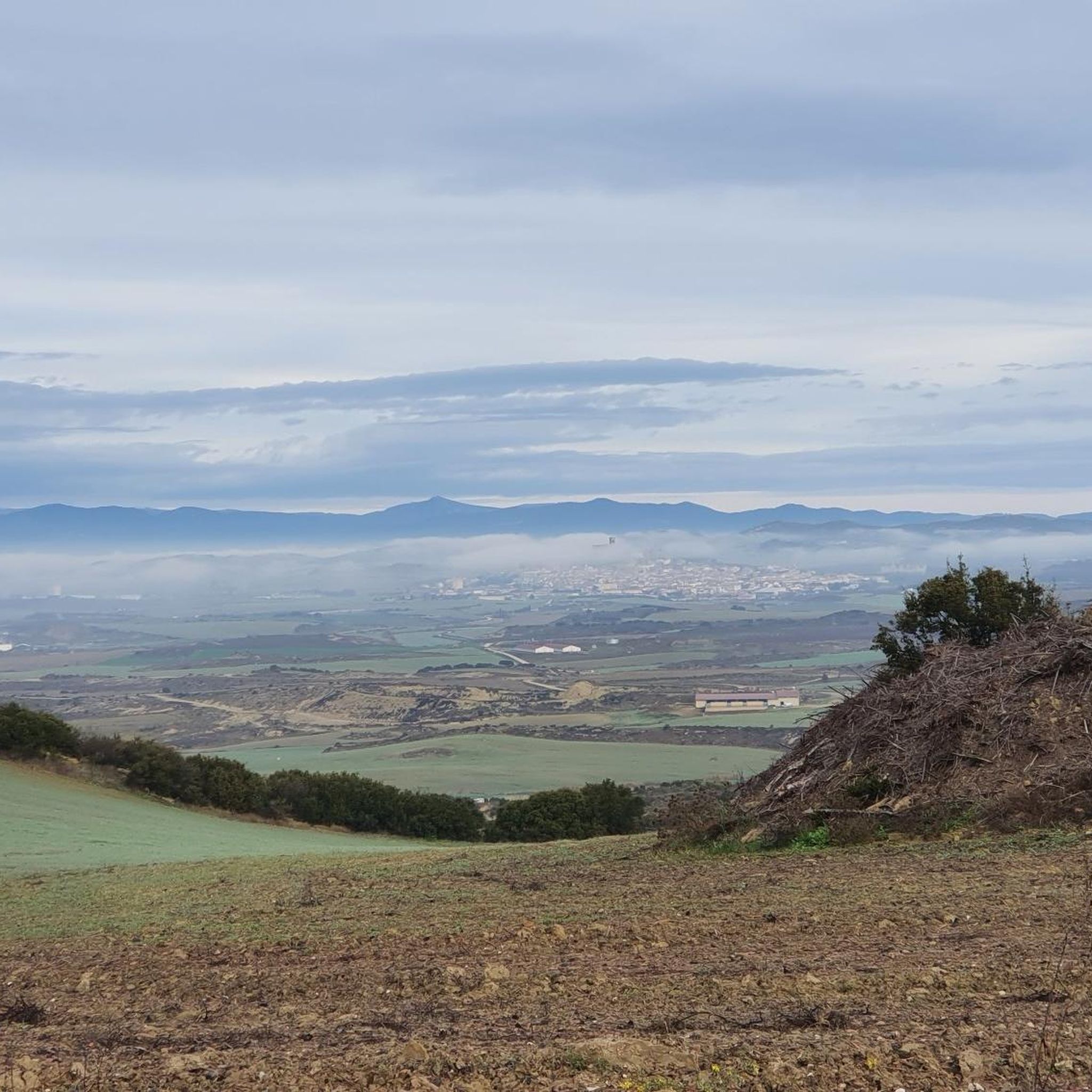
From Ujué there is a beautiful view towards the south down to the Ribera de Navarra, the wide valley of the river Ebro. In between there are mountains on whose slopes wine is grown. The small town is a stop on the Ruta del Vino, which leads through the wine-growing regions of Navarre.
1
0
Frequently Asked Questions
What are the main historical attractions to visit in Olite?
Olite is rich in history, with its most iconic landmark being the magnificent Royal Palace of Olite, a former residence of the Kings of Navarre. Adjacent to the palace is the Church of Santa María la Real, a Gothic church with an impressive façade. You can also explore the well-preserved Medieval Walls and the historic center with its cobbled streets and charming squares.
Are there any family-friendly activities or attractions in Olite?
Yes, several attractions in Olite are suitable for families. The Royal Palace of Olite is a captivating castle that sparks imagination for all ages. The Church of Santa María la Real and Marcilla Castle are also categorized as family-friendly. Additionally, the Medieval Underground Galleries offer an engaging exhibition about life in the Middle Ages.
What natural features or parks are near Olite for outdoor enthusiasts?
For nature lovers, the Lagoon of Pitillas, located near Olite, is a natural park perfect for birdwatching. Further afield, approximately 45 minutes southeast, you can find the unique desert-like landscapes of the Bardenas Reales Natural Park, a UNESCO Biosphere Reserve ideal for hiking and photography.
What kind of outdoor activities can I do around Olite?
The region around Olite offers various outdoor activities. You can find numerous hiking trails, including easy loops around the Royal Palace and more moderate routes like the 'Rodeo to the Laguna de Pitillas'. There are also running trails and road cycling routes that explore the scenic surroundings and wine-growing regions.
Where can I learn about the wine culture of Navarra in Olite?
Olite is the wine capital of Navarra, and you can delve into its rich wine heritage at the Wine Museum (Museo de la Viña y el Vino de Navarra), located in the Old Palace of Santo Angel. Another option is the Enozentrum Olite, a wine culture center offering interactive experiences and often a complimentary glass of wine.
How long does it take to visit the Royal Palace of Olite?
The Royal Palace of Olite is extensive, with multiple towers, courtyards, and gardens to explore. A thorough visit can take several hours. It's recommended to check the official website for current opening hours and to plan your visit, as guided tours are available.
Are there any other notable historical sites or villages near Olite?
Yes, a short distance from Olite is Ujué, a picturesque hilltop medieval village known for its panoramic views and the beautiful Church-Fortress of Santa María. Another significant site is the Monastery of La Oliva, a Cistercian monastery south of Olite, showcasing impressive Cistercian architecture.
What do visitors enjoy most about the attractions around Olite?
Visitors frequently praise the stunning architecture and historical significance of the Royal Palace of Olite, often describing it as one of the most beautiful castles in Spain. The well-preserved medieval character of Olite and the impressive façade of the Church of Santa María la Real also receive high acclaim.
Is there a specific time of year that is best to visit Olite?
Olite is charming throughout the year. The town hosts an annual Medieval Festival, usually in August, which transforms the town with historical reenactments. The spring and autumn months generally offer pleasant weather for exploring the historical sites and enjoying outdoor activities in the surrounding wine regions.
Can I find any unique cultural experiences in Olite?
Beyond the historical sites, Olite is known for its strong wine culture, offering tours and tastings at local bodegas along the Navarra Wine Route. The town also hosts an internationally renowned classical theatre festival, adding to its cultural appeal.
Are there any castles other than the Royal Palace of Olite nearby?
Yes, another notable fortress in the region is Marcilla Castle. This 15th-century Gothic fortress, built of brick on a stone foundation, served as both a defensive stronghold and a palatial residence and is easily accessible in the town center of Marcilla.
Most popular attractions around Olite

Get inspired with the komoot mobile app


Explore more
Still not found the Highlight you’re looking for? See guides of the top attractions in other regions:
