Attractions and Places To See around Alcalá Del Río - Top 20
Best attractions and places to see around Alcalá Del Río include historical landmarks, cultural institutions, and natural spaces. Situated near Seville, this town is rich in history, deeply intertwined with the Guadalquivir River and its past as the Roman city of Ilipa Magna. Visitors can explore ancient Roman remnants, Mudejar architecture, and scenic riverbanks. The area offers a blend of historical depth and natural beauty for exploration.
Best attractions and places to see around Alcalá Del Río
- The most popular…
Last updated: October 10, 2026
Columbus Monument (Columbus' Egg)
Highlight • Monument
Translated by Google •
Tip by

Seville City Walls
Highlight • Historical Site
The city has been surrounded by walls since Roman …
Translated by Google •
Tip by

Sign up now to discover places like this
Get recommendations on the best single tracks, peaks, & plenty of other exciting outdoor places.
Amphitheatre of Italica
Highlight • Historical Site
Showing Translation
Tip by

Parish of San Isidoro del Campo
Highlight • Religious Site
Translated by Google •
Tip by
Alamillo Bridge
Highlight • Bridge
Translated by Google •
Tip by
Sign up for free to discover even more attractions around Alcalá Del Río.
Already have an account?
Start today with a free account
Your next adventure awaits.
Tips from the Community

The Parroquia de San Isidoro del Campo is a beautiful example of Mudéjar architecture and is located in Santiponce, near the ruins of the Roman city of Itálica. It was originally built in the 14th century by Alonso Péréz de Guzmán y María Alonso Coronel as a church and convent. The building combines elements of Gothic and Mudéjar styles and has an impressive cloister, a beautiful interior with murals and a rich collection of works of art.
8
0
The Muralla de Sevilla is an impressive historical monument that surrounds the city of Seville. These city walls have a rich history that dates back to Roman times. They were rebuilt and expanded several times, especially during the Almohad period in the 12th century. The walls consisted of cyclopean towers and were intended to protect the city from attacks. Although the walls largely disappeared in the 19th century, some remains can still be seen, such as around the Alcázar of Seville and here in the barrio de la Macarena. These remains provide a glimpse into the city's defenses and military architecture.
7
0
The Puente del Alamillo is an impressive cable-stayed bridge in Seville, Spain, designed by renowned architect Santiago Calatrava. The bridge was built for the Expo '92 and spans the Guadalquivir River. It is a unique cantilever spar cable-stayed bridge without back supports, with a height of 140 metres and a span of 200 metres.
9
0
The Columbus Monument, also known as the Egg of Columbus, is an impressive monument located on the Paseo de Catalina de Ribera in the Santa Cruz district of Seville. The monument was built in 1921 and is a tribute to the famous explorer Christopher Columbus. The monument consists of a base and two stone columns, with bronze caravels in the center and bronze plaques with the names of Isabella and Ferdinand on the sides. On the base are two marble medallions with the chest of Columbus and the coat of arms of the Catholic Monarchs1. On top is a lion with a sphere.
2
2
The Parroquia de San Isidoro del Campo is a beautiful example of Mudéjar architecture and is located in Santiponce, near the ruins of the Roman city of Itálica. It was originally built in the 14th century by Alonso Péréz de Guzmán y María Alonso Coronel as a church and monastery. The building combines elements of Gothic and Mudéjar styles and has an impressive cloister, a beautiful interior with murals and a rich collection of works of art.
2
0
The Amphitheatre of Itálica in Santiponce is an impressive Roman amphitheatre that was built between 117 and 138 AD during the reign of Emperor Hadrian. It is one of the largest amphitheatres in the Roman Empire, with a capacity of approximately 25,000 spectators. The amphitheatre has an elliptical shape and consists of three levels of stands, the first level of which is still intact. The amphitheatre was used for gladiatorial combats and fights between animals and humans, and had an underground service pit for these events. Today it is a tourist attraction and an important archaeological heritage.
7
0

I recommend stopping by the Peña Bética, which is opposite and eating there, good price, good service and excellent quality.
1
0

The walls of Seville were military fences that surrounded the old town of the city of Seville. Throughout history, Seville has had several walled enclosures. As it grew, the oldest references to the existence of walls appear in the Roman period. The existence of a first enclosure of Roman origin is known, of which no visible vestiges remain, which would encompass the south-eastern quadrant of the current historic center (area from Puerta Jerez to San Martín, Encarnación, Puerta Osario, Puerta de la Carne and Alcázar). . The only remains detected correspond to chance finds in the subsoil of the city, these data, together with the observation of the current urban topography, which have allowed us to draw a hypothetical route of the first wall of Hispalis. The walls that are currently preserved belong to the last defensive system built in the 12th century, mainly by the Almohads; Nothing remains of the Roman wall, only material reused in the Caliphal or Taifa era mainly, which also would not cover the same space as the current one since the city was much smaller.
4
0
Frequently Asked Questions
What historical sites can I explore in Alcalá del Río?
Alcalá del Río is rich in history. You can visit the Royal Shrine to San Gregorio de Osset, a Mudejar-style chapel with a 15th-century mural. The Santa María de la Asunción Church, with its Mudejar tower and Baroque altarpiece, is another significant historical and architectural gem. Don't miss the remnants of the ancient Roman city of Ilipa Magna, including sections of the Roman Wall and its Interpretation Centre.
Are there any Roman ruins to visit near Alcalá del Río?
Yes, Alcalá del Río has a strong Roman heritage. You can explore the remnants of the ancient Roman city of Ilipa Magna, including sections of its defensive wall. Additionally, the Amphitheatre of Italica, one of the largest Roman amphitheatres in the Roman Empire, is an impressive site located nearby in Santiponce.
What natural attractions are there around Alcalá del Río?
The Guadalquivir River is central to Alcalá del Río's natural beauty, offering pleasant walks along its banks, especially at sunset. The Alcalá del Río Dam is a significant feature. You can also enjoy the beautiful Winthuysen Gardens, landscaped in 1934, and the picturesque orange groves that surround the town in the Guadalquivir Valley.
Can I find family-friendly attractions in Alcalá del Río?
Several attractions are suitable for families. The Columbus Monument (Columbus' Egg) is a large, impressive sculpture that pays tribute to Christopher Columbus. Historical sites like the Seville City Walls and the Amphitheatre of Italica offer engaging historical exploration for all ages. The Winthuysen Gardens also provide a pleasant outdoor space for families.
What kind of outdoor activities, like cycling or mountain biking, are available near Alcalá del Río?
Alcalá del Río is a great base for outdoor activities. You can find various cycling routes, including road cycling and touring bicycle options, that explore the surrounding area. For mountain biking enthusiasts, there are dedicated MTB trails. You can discover more details and specific routes on the Road Cycling Routes around Alcalá Del Río, Cycling around Alcalá Del Río, and MTB Trails around Alcalá Del Río guide pages.
Are there any cultural experiences unique to Alcalá del Río?
Alcalá del Río offers several unique cultural experiences. The Municipal Museum of Archaeology and the Casa de la Cultura house extensive collections showcasing the town's rich antiquity, particularly its Roman past. The Soledad Confraternity House and Museum and the Vera Cruz Confraternity House and Museum offer insights into local religious traditions. If you visit during Semana Santa (Holy Week), you'll experience a vibrant cultural event declared a Festival of National Tourist Interest.
What is the best time of year to visit Alcalá del Río for outdoor exploration?
The best time to visit Alcalá del Río for outdoor exploration is typically during the spring (March to May) and autumn (September to November) months. During these periods, the weather is generally mild and pleasant, making it ideal for walking, cycling, and exploring historical sites without the intense heat of summer.
What do visitors enjoy most about the attractions around Alcalá del Río?
Visitors appreciate the blend of historical depth and natural beauty. The Columbus Monument (Columbus' Egg) is noted for its artistic significance and tribute to history. The Alamillo Bridge is admired for its unique design and engineering. The historical sites, such as the Seville City Walls and the Roman ruins, offer a glimpse into the region's rich past, making them highly regarded by the komoot community.
Are there any interesting engineering marvels or modern architecture to see?
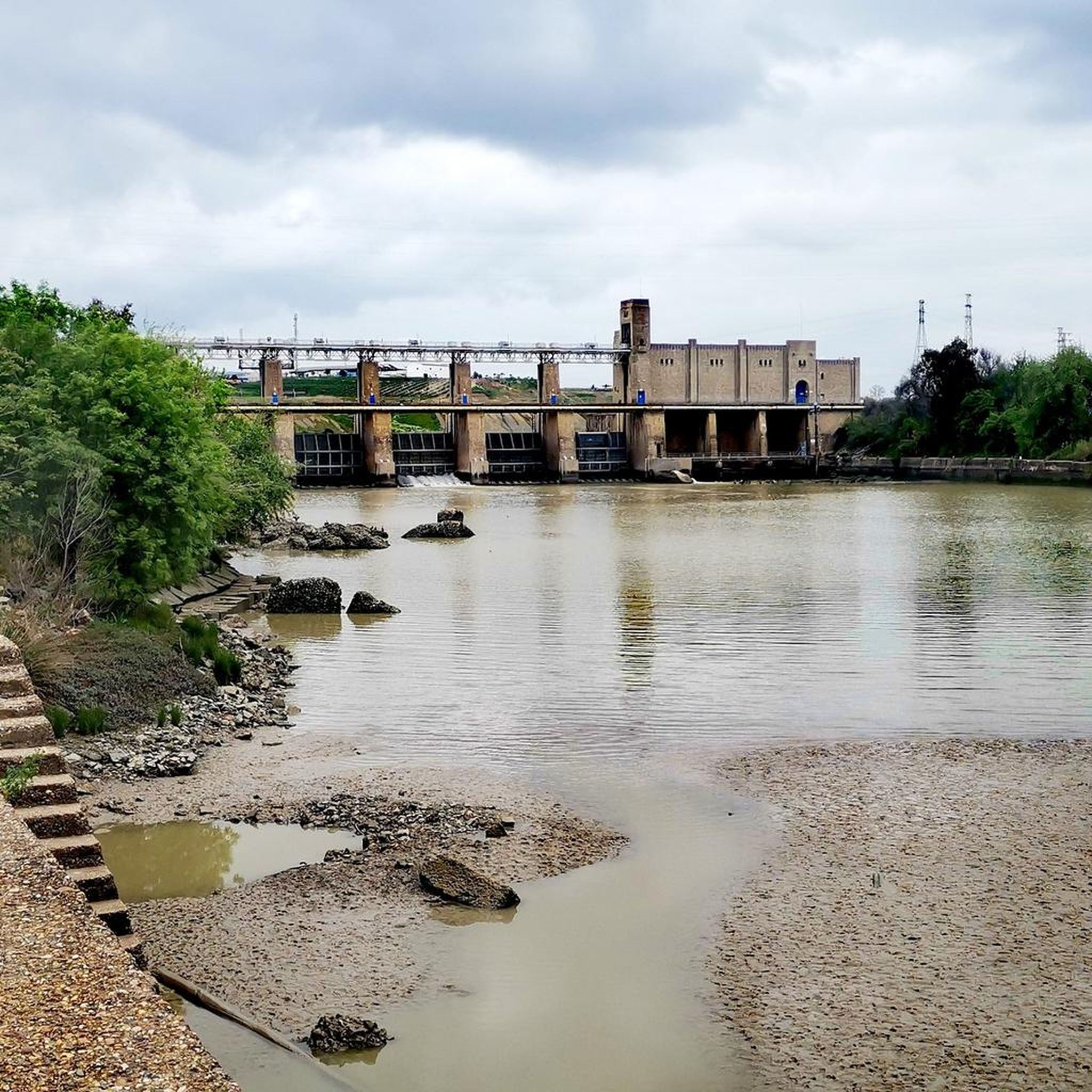
Yes, the Alcalá del Río Dam, constructed in 1931, is an important engineering feat on the Guadalquivir River, featuring a hydroelectric plant and bridges. Additionally, the Alamillo Bridge, designed by Santiago Calatrava for Expo '92, is an impressive cable-stayed bridge known for its unique cantilever design.
Can I visit an olive oil museum or learn about local agricultural traditions nearby?
Absolutely. A short distance from Alcalá del Río, you can visit Hacienda Guzmán. This historic estate features a fascinating Olive Oil Museum, a 14th-century oil mill, and a Carriage Museum, providing excellent insights into the region's agricultural heritage and traditions.
Are there any places to eat traditional food in Alcalá del Río?
While specific restaurant names are not provided, Alcalá del Río, like many towns in Andalusia, offers local eateries where you can enjoy traditional Spanish and Andalusian cuisine. Look for local 'ventas' or 'bares' to experience authentic flavors. For a specific recommendation near a historical site, visitors suggest stopping by the Peña Bética opposite the Parish of San Isidoro del Campo for good quality food at a reasonable price.
Is there a central square or plaza to visit in Alcalá del Río?
Yes, Plaza de España is the central square in Alcalá del Río. It offers views of the Guadalquivir River and features the Town Hall, a monument to the bullfighter Antonio Reverte, and is adorned with orange trees, making it a pleasant spot for a stroll.
Most popular routes around Alcalá Del Río
Most popular attractions around Alcalá Del Río

Get inspired with the komoot mobile app


Explore more
Still not found the Highlight you’re looking for? See guides of the top attractions in other regions:
