Attractions and Places To See around Sarracín - Top 20
Best attractions and places to see around Sarracín, a municipality located 9 km south of Burgos, Spain, offers a variety of historical and cultural attractions. Situated in the Alfoz de Burgos region, the town is bordered by the Ausines river, providing a natural setting. Visitors can explore significant historical sites and architectural landmarks within the area.
Best attractions and places to see around Sarracín
- The most popular attractions is Burgos Cathedral, a religious building that was declared a World Heritage Site by UNESCO. It features Gothic patterns with Renaissance and Baroque elements inside.
- Another must-see spot is Arch of Santa María, a man-made monument. This triumphal arch is organized as a large altarpiece carved from limestone.
- Visitors also love Plaza Mayor of Burgos, a settlement that serves as the center of social life in the city. Its origins date back to the Middle Ages, where it was used for weekly markets.
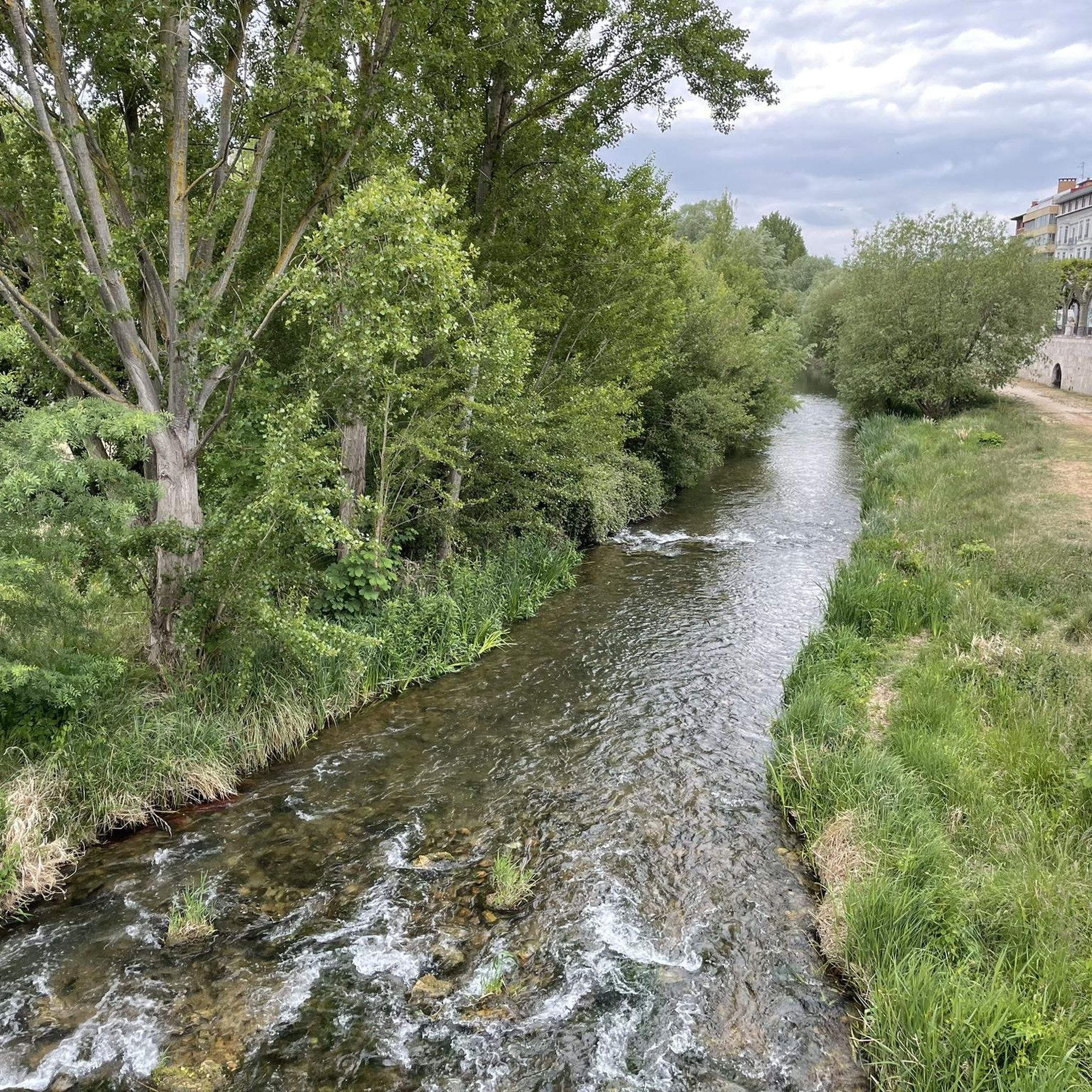
- Sarracín is known for its historical sites, religious buildings, and man-made monuments. The area offers a variety of attractions to see and explore, including significant architectural works and natural features like the Ausines River.
- The attractions around Sarracín are appreciated by the komoot community, with over 550 upvotes and 890 photos shared.
Last updated: July 6, 2026
Burgos Cathedral
Highlight • Religious Site
Translated by Google •
Tip by

Arch of Santa María
Highlight • Monument
Translated by Google •
Tip by
Sign up now to discover places like this
Get recommendations on the best single tracks, peaks, & plenty of other exciting outdoor places.
Sign up for free
Plaza Mayor of Burgos
Highlight • Settlement
But throughout its history it has also been known as Plaza Real, Plaza de la Constitución or Plaza de la República.
Built in 1221 in Gothic style, by King Ferdinand III and Bishop Don Mauricio, it was declared a World Heritage Site by UNESCO in 1984.
Translated by Google •
Tip by
Burgos Cathedral
Highlight • Religious Site
Translated by Google •
Tip by

Burgos Old Town
Highlight • Settlement
Translated by Google •
Tip by

Sign up for free to discover even more attractions around Sarracín.
Sign up for free
Already have an account?
Start today with a free account
Your next adventure awaits.
Login or Signup

Tips from the Community

Historical treasures and pilgrimage routes Burgos is known for its impressive Gothic cathedral, the third largest in Spain after those in Seville and Toledo. This cathedral, along with the Monasterio de las Huelgas, makes the city an important stop on the pilgrimage route to Santiago de Compostela.
4
0

Spectacular area for hiking routes
0
1

The Cathedral of Burgos, one of the most important and magnificent stops for pilgrims on the Camino Frances, is immensely impressive and a wonderful testament to the faith of its builders. If you'd like to see more photos, you can find them in the komoot system under the corresponding hiking highlight at the following link =>> https://www.komoot.com/de-de/highlight/171220
0
1

Be careful cycling around here. It's mostly prohibited.
2
0

It's not like the one in Salamanca, but it's also worth it.
3
2

With one of the most beautiful Gothic churches on the Way of St. James, it's definitely worth a visit.
8
0

The Arch of Santa Maria is one of the twelve medieval gates that the city had during the Middle Ages. It was rebuilt by the Holy Roman Emperor, Charles V, during the 16th century after the local rulers of the city supported him during the Revolt of the Comuneros.
11
0

Burgos Cathedral, a UNESCO World Heritage Site, is a gem of Spanish Gothic architecture. Construction began in 1221 and lasted for several centuries, giving it a unique mix of styles. Its sharp spires, stunning rose window, and richly decorated interior—home to artwork, chapels, and the tomb of El Cid Campeador himself—make it a must-see for lovers of history, art, and architecture. English: Burgos Cathedral, a UNESCO World Heritage Site, is a gem of Spanish Gothic architecture. Construction began in 1221 and lasted for several centuries, resulting in a unique mix of styles. Its sharp spires, stunning rose window, and richly decorated interior—home to artwork, chapels, and the tomb of El Cid—make it a must-see for lovers of history, art, and architecture.
1
1
Frequently Asked Questions
What historical and cultural sites can I visit in Sarracín itself?
Within Sarracín, you can explore several significant historical and cultural sites. These include the 16th-17th century Iglesia de San Pedro, a Property of Cultural Interest (BIC) known for its Renaissance portal. Also notable is the 15th-century Torre de los Salamanca, affectionately called 'el palomar' by locals, and the 17th-century Ermita del Santo Cristo de los Buenos Temporales, which houses a 17th-century bust of Christ.
Are there any notable architectural landmarks around Sarracín?
Yes, the Palacio de Saldañuela is a prominent architectural landmark located just outside the old town. This palace features Renaissance details, a gallery with columns, and a tower with a Gothic twin window. It was declared a National Monument in 1931 and is a Property of Cultural Interest (BIC).
What natural features can I explore in Sarracín?
You can enjoy the natural setting along the Ausines River, which borders the town. A stroll along its banks is recommended, where you can discover three distinct bridges, each with unique architectural features, including one with a single semicircular arch and two others with double arches.
What are some historical highlights in the nearby city of Burgos?
The nearby city of Burgos offers several historical highlights. The most prominent is the Burgos Cathedral, a UNESCO World Heritage Site known for its Gothic architecture with Renaissance and Baroque elements. You can also visit the Arch of Santa María, a triumphal arch carved from limestone, and the historic Plaza Mayor of Burgos, which has served as the city's social center since the Middle Ages.
Are there family-friendly attractions around Sarracín?
Many of the historical sites and monuments are suitable for families. For instance, the Burgos Cathedral and the Arch of Santa María are categorized as family-friendly. Exploring the Plaza Mayor of Burgos also offers a lively atmosphere for all ages.
What outdoor activities can I do near these attractions?
Near Sarracín, you can find various outdoor activities. For hiking, consider routes like the 'Fuente del Prior Beach – Arlazón River Trail loop from Burgos'. If you prefer mountain biking, there are trails such as the 'Burgos Cathedral – Burgos Cathedral loop from Aparcamiento de emergencia Vialidad Invernal Villariezo'. For more options, explore the dedicated guides for Hiking around Sarracín, MTB Trails around Sarracín, and Gravel biking around Sarracín.
Are there hiking trails directly in Sarracín or very close by?
While Sarracín itself is a small municipality, the natural setting along the Ausines River provides pleasant walking opportunities. For more structured hiking trails, you'll find options starting from nearby Burgos, such as the 'University of Burgos – Statue of the Seated Pilgrim loop from Burgos', which is an easy route. Many trails are accessible within a short distance, offering various difficulty levels.
What do visitors enjoy most about the attractions around Sarracín?
Visitors particularly appreciate the rich historical and architectural heritage. The Burgos Cathedral is often highlighted as a spectacular work of art with surprising details and beautiful light. The Plaza Mayor of Burgos is enjoyed for its vibrant social life and colorful buildings, while the Arch of Santa María is admired for its unique triumphal arch form.
Is there parking available for the attractions in Sarracín and nearby Burgos?
Parking availability varies by location. In smaller towns like Sarracín, street parking might be available near the main attractions. For attractions in Burgos, such as the Cathedral or Plaza Mayor, it's advisable to look for public parking garages or designated parking areas within the city center. Specific parking information for individual sites is best checked locally upon arrival.
Are there any wheelchair-accessible attractions?
Yes, some attractions in the nearby city of Burgos are noted for their accessibility. The Plaza Mayor of Burgos, the Statue of El Cid, and the Statue of the Seated Pilgrim are categorized as wheelchair accessible, allowing for easier enjoyment by all visitors.
What is the best time to visit Sarracín and its surrounding attractions?
The best time to visit Sarracín and the Burgos region generally depends on your preferred activities. Spring (April-June) and autumn (September-October) offer pleasant temperatures for exploring historical sites and engaging in outdoor activities like hiking. Summers can be warm, while winters are typically cold, making them less ideal for extensive outdoor exploration but still suitable for indoor attractions.
Can I find cafes, pubs, or accommodation in Sarracín?
Sarracín is a small municipality, so options for cafes, pubs, and accommodation might be limited directly within the village. However, due to its proximity to Burgos (just 9 km away), you will find a much wider selection of restaurants, cafes, pubs, and various accommodation types, from hotels to guesthouses, in the city.
Most popular routes around Sarracín
Most popular attractions around Sarracín

Get inspired with the komoot mobile app


Explore more
Still not found the Highlight you’re looking for? See guides of the top attractions in other regions:
