Attractions and Places To See around Campo Lameiro - Top 20
Best attractions and places to see around Campo Lameiro include a rich blend of archaeological sites, natural landscapes, and cultural heritage. The region is recognized as the "Galician capital of rock art," featuring significant prehistoric rock engravings. Campo Lameiro also offers diverse natural features, including rivers, oak groves, and viewpoints. It was named the Capital of Rural Tourism in Spain for 2023.
Best attractions and places to see around Campo Lameiro
- The most popular attractions is Church of the Pilgrim…
Last updated: July 6, 2026
Church of the Pilgrim Virgin (Iglesia de la Virgen Peregrina)
Highlight • Religious Site
Translated by Google •
Tip by

Camino de Santiago Milestone – Km 60
Highlight • Monument
Yellow arrows: These arrows will guide you throughout the entire route. They indicate the direction to follow, especially at crossroads. …
Translated by Google •
Tip by

Sign up now to discover places like this
Get recommendations on the best single tracks, peaks, & plenty of other exciting outdoor places.
Sign up for free
Ponte do Burgo
Highlight • Bridge
Translated by Google •
Tip by
Caldas de Reis Thermal Baths
Highlight • Structure
Translated by Google •
Tip by
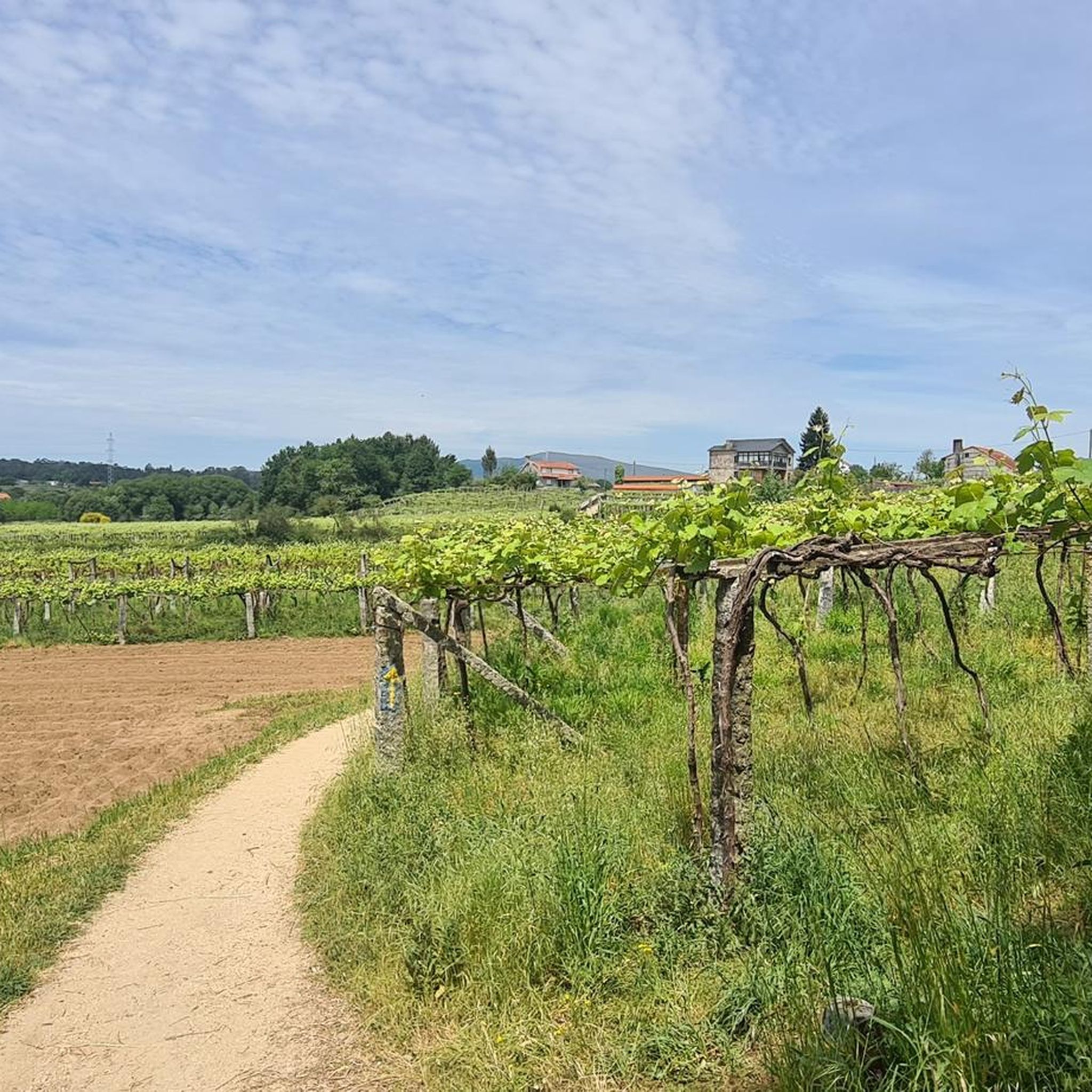
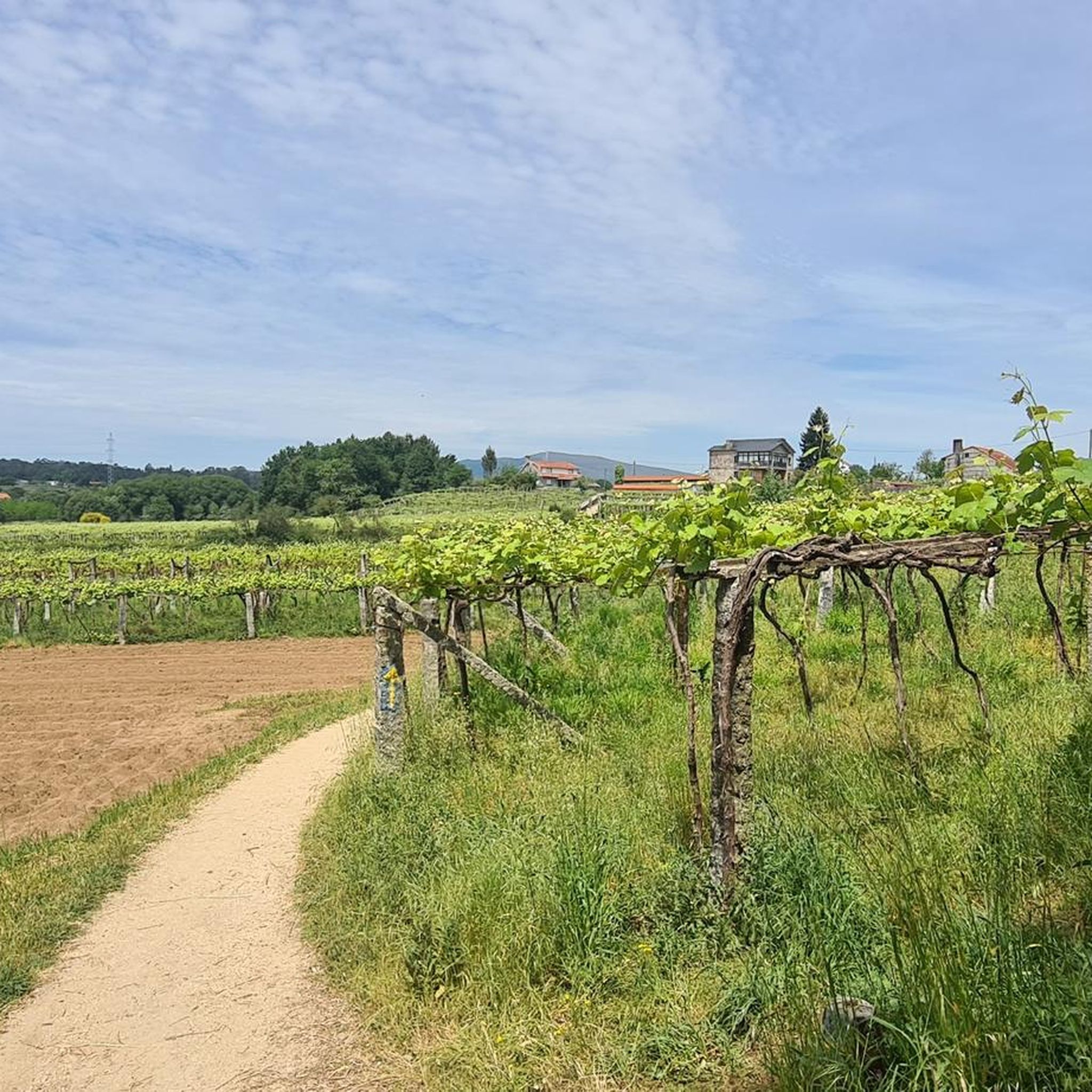
Vineyard and Forest Path
Highlight (Segment) • Trail
Translated by Google •
Tip by
Sign up for free to discover even more attractions around Campo Lameiro.
Sign up for free
Already have an account?
Start today with a free account
Your next adventure awaits.
Login or Signup

Tips from the Community

really beautiful pilgrimage route 🤙
1
1

Very pleasant and beautiful cathedral. Pilgrim mass at 7:30 p.m.
2
0
The goal is the path.
1
1
The nice thing is that you don't need navigation.
0
1
Enjoy the fresh air in the shade of the vines.
2
0
Beautiful city with many murals.
1
0

Signage on the Camino de Santiago is essential for pilgrims. Yellow arrows: These arrows will guide you throughout the entire route. They indicate the direction to follow, especially at crossroads. The yellow color is due to the contribution of the parish priest Elías Valiña, a key figure in the resurgence of the Camino de Santiago in the 20th century. Cairns or milestones: These concrete blocks include an arrow, a yellow shell on a blue background and the distance in kilometers to Santiago de Compostela. You will find them every 500 meters in Galicia. Scallop shells: In addition to being drawn on the markers, scallop shells are distributed throughout the Camino. They are universal symbols and have been carried by pilgrims for centuries. The open part of the shell indicates the direction towards Santiago. Good way! 🚶♂️🌟
7
0
Through the forest, along the railway line.
2
0
Frequently Asked Questions
What archaeological sites can I visit in Campo Lameiro?
Campo Lameiro is renowned for its archaeological heritage. The primary site is the Parque Arqueolóxico da Arte Rupestre (PAAR), which showcases one of Europe's most significant concentrations of prehistoric rock engravings. You can also explore Castro de Penalba on Monte Agüeiros, an ancient fortified settlement dating back to the 8th-7th centuries BC, which offers panoramic views and features the famous Pedra da Serpe petroglyph.
Where can I see prehistoric rock art in Campo Lameiro?
The best place to experience prehistoric rock art is at the Parque Arqueolóxico da Arte Rupestre (PAAR). Here, you can follow a 3-kilometer route to view exceptionally well-preserved petroglyphs on rock outcrops, including large deer silhouettes at Laxe da Forneiriña and Laxe dos Carballos. The park also features a replica of a Bronze Age village.
Are there historical churches to explore in Campo Lameiro?
Yes, Campo Lameiro features several historic churches. Notable examples include the Iglesia de San Miguel do Campo, with Romanesque origins from the 12th century, and the Iglesia de Santa Mariña de Fragas, also from the 12th century, known for its unique portal reliefs. The Iglesia de Santa María de Moimenta is an 18th-century Baroque-style church worth visiting.
What natural attractions are there to explore in Campo Lameiro?
The region boasts beautiful natural landscapes. The Lérez River flows through the area, and the Lodeiro Recreational Area offers a fluvial beach and picnic spots. You can also hike along the Meneses River and Mill Route (PR-G 230), which features several old mills. Don't miss the tranquil River Beach of Redonde and the scenic Oak Groves of Rozas and San Brais.
What hiking routes are available in Campo Lameiro?
For hikers, the Meneses River and Mill Route (PR-G 230) is a beautiful circular trail of about 8 kilometers, passing by old mills and an ancient bridge. For more options, you can find various running and hiking trails in the area, including routes like the 'Pontevedra — Rio Lerez circuit and Isla las Esculturas' or the 'Community of Montes Fountain loop'. Explore more options on the Running Trails around Campo Lameiro guide.
Are there opportunities for cycling or gravel biking near Campo Lameiro?
Absolutely! The area around Campo Lameiro offers diverse terrain for cycling and gravel biking. You can find routes like the 'Community of Montes Fountain – Roman Bridge over the Bermaña River loop' for touring bicycles, or more challenging gravel biking routes such as 'Ponte Sampaio Bridge – Mysterious forest loop'. Discover more trails in the Cycling around Campo Lameiro guide and the Gravel biking around Campo Lameiro guide.
What is the significance of the Camino de Santiago in the Campo Lameiro area?
While not directly on the main route, the area is connected to the Camino de Santiago. You can find a Camino de Santiago Milestone – Km 60, which guides pilgrims towards Santiago de Compostela. The nearby Ponte do Burgo in Pontevedra is also a significant medieval bridge on the Portuguese Camino, featuring carved scallop shells.
Are there family-friendly activities or attractions in Campo Lameiro?
Yes, Campo Lameiro offers several family-friendly options. The Parque Arqueolóxico da Arte Rupestre (PAAR) with its Bronze Age village replica is engaging for all ages. The Lodeiro Recreational Area and the River Beach of Redonde provide pleasant spots for relaxation and play. Easy sections of the Meneses River route are also suitable for families.
When is the best time to visit Campo Lameiro to enjoy its attractions?
The best time to visit Campo Lameiro is generally during the spring (April to June) and early autumn (September to October). During these months, the weather is typically mild and pleasant, ideal for exploring archaeological sites, hiking, and enjoying the natural landscapes without the intense heat of summer or the heavier rains of winter.
Are there any accessible attractions for visitors with mobility needs?
While many natural and archaeological sites may have varied terrain, the Ponte do Burgo in Pontevedra, a historic bridge on the Camino de Santiago, is noted as being wheelchair accessible. It's always advisable to check specific accessibility details for other sites before your visit.
What unique cultural experiences can I find in Campo Lameiro?
Beyond the rock art, you can explore examples of traditional Galician stately homes, known as Pazos, such as Pazo de Ameixeiriñas, Pazo da Formigueira, and Casa das Cruces, which showcase the region's architectural heritage. The area's recognition as the Capital of Rural Tourism in Spain for 2023 also highlights its authentic cultural charm.
Are there any thermal baths near Campo Lameiro?
Yes, nearby you can visit the Caldas de Reis Thermal Baths. These historical baths are known for their hyperthermal sodium-chloride sulfur waters, which range between 23 and 45 °C and are used for various therapeutic purposes, offering a relaxing experience.
Most popular routes around Campo Lameiro
Most popular attractions around Campo Lameiro

Get inspired with the komoot mobile app


Explore more
Still not found the Highlight you’re looking for? See guides of the top attractions in other regions:
