Top 9 Castles around Sant Quirze Del Vallès
Best castles around Sant Quirze Del Vallès are located in the province of Barcelona, Catalonia, an area known for its historical buildings and diverse landscape. While traditional medieval castles are not within its immediate borders, the region features significant historical sites, including Romanesque churches and fortified farmhouses. This area offers a blend of agricultural heritage and architectural evolution, with historical structures reflecting its past.
Best castles around Sant Quirze Del Vallès
- The most popular castles is Sentmenat Castle, a castle that is a Gothic building rebuilt on older foundations. It features walls 3 meters thick and a stone bridge, located on a strategic ridge.
- Another must-see spot is Fossada Tower (Castellbisbal), a historical site. This watchtower includes a moat and provides views over Martorell and the Devil's Bridge.
- Visitors also love La Torre Negra, a Romanesque military construction. This 12th-century structure is well-preserved, with a quadrangular plan and dark-colored stone walls.
- Sant Quirze Del Vallès is known for its Gothic castles, Romanesque military constructions, and fortified farmhouses. The area offers a variety of historical structures to explore, from ancient watchtowers to renovated estates.
- The castles around Sant Quirze Del Vallès are appreciated by the komoot community, with more than 150 upvotes and 30 photos shared by visitors.
Last updated: July 1, 2026
Sentmenat Castle
Highlight • Castle
The castle is in a strategic place. The façade, oriented to the west, is on the margin of the ravine that forms the Sentmenat stream. Built on a flat ridge of the ridge, 1,300 m northwest of the parish church of the village of Sentmenat.
It is a large Gothic building rebuilt on older foundations. In the fortress, it is reached through a stone bridge that protrudes from the castle and that seems to replace the old drawbridge. The grandeur of its fortress is manifested with walls three meters thick. The castle is made up of two rectangular bodies, arranged octagonally, with the ends joined by another body, the plan of which describes an arc of a quarter circle, more or less regular. These three bodies surround a patio in the shape of a trapezoid.
Translated by Google •
Tip by

Fossada Tower (Castellbisbal)
Highlight • Historical Site
Translated by Google •
Tip by

Sign up now to discover places like this
Get recommendations on the best single tracks, peaks, & plenty of other exciting outdoor places.
Sign up for free
Castell de Clasquerí
Highlight • Castle
Translated by Google •
Tip by

La Torre Negra
Highlight • Castle
Since 1842 until today it is in private hands and belongs to the Rabadà family.
Some windows on the façade are geminated and the entrance door is formed by a semicircular arch.
Located in a natural setting between two streams, at the entrance to the Gausac valley on the border between the Collserola mountain range and the southern fields of the Vallés plain, with views over the entire horizon to the north.
Its origin dates back to the 12th century, in a castle named Ricanli or Ricard, built in the time of Abbot Ermengol and it seems that it was rebuilt between the 14th and 15th centuries. The Black Tower owes its current name to its dark-colored stone walls.
Its first known inhabitants were the Vilanova in the 12th century. Later it passed to the Palou family.
Throughout the Middle Ages it was the subject of disputes between the owners and the Sant Cugat monastery, which opposed its construction.
Translated by Google •
Tip by

Mogoda neighborhood and Mogoda Castle
Highlight • Historical Site
The neighborhood revolves around the 12th century fortified farmhouse, residence of the Mogoda lords and seat of the Mogoda barony, owned by the Montealegre Charterhouse between the 15th and 19th centuries.
Access to the current estate is through a modernist-style arch-shaped portal that leads to the parade ground. The complex is made up of several buildings: the fortified farmhouse, the chapel, the residential building and the stables. They all surround the old parade ground.
The Mogoda neighborhood gives its name to the town and is the deepest root of the town of Santa Perpètua de Mogoda.
It is located in the southeast of the urban nucleus, bordering between the Caldes stream, the Caldes highway and the Renfe Mollet-Papiol line.
Translated by Google •
Tip by
Sign up for free to discover even more castles around Sant Quirze Del Vallès.
Sign up for free
Already have an account?
Start today with a free account
Your next adventure awaits.
Login or Signup

Tips from the Community

climb from the train station, difficult stretch of + or - 2 km.
0
0
Go up from the train station.
0
0

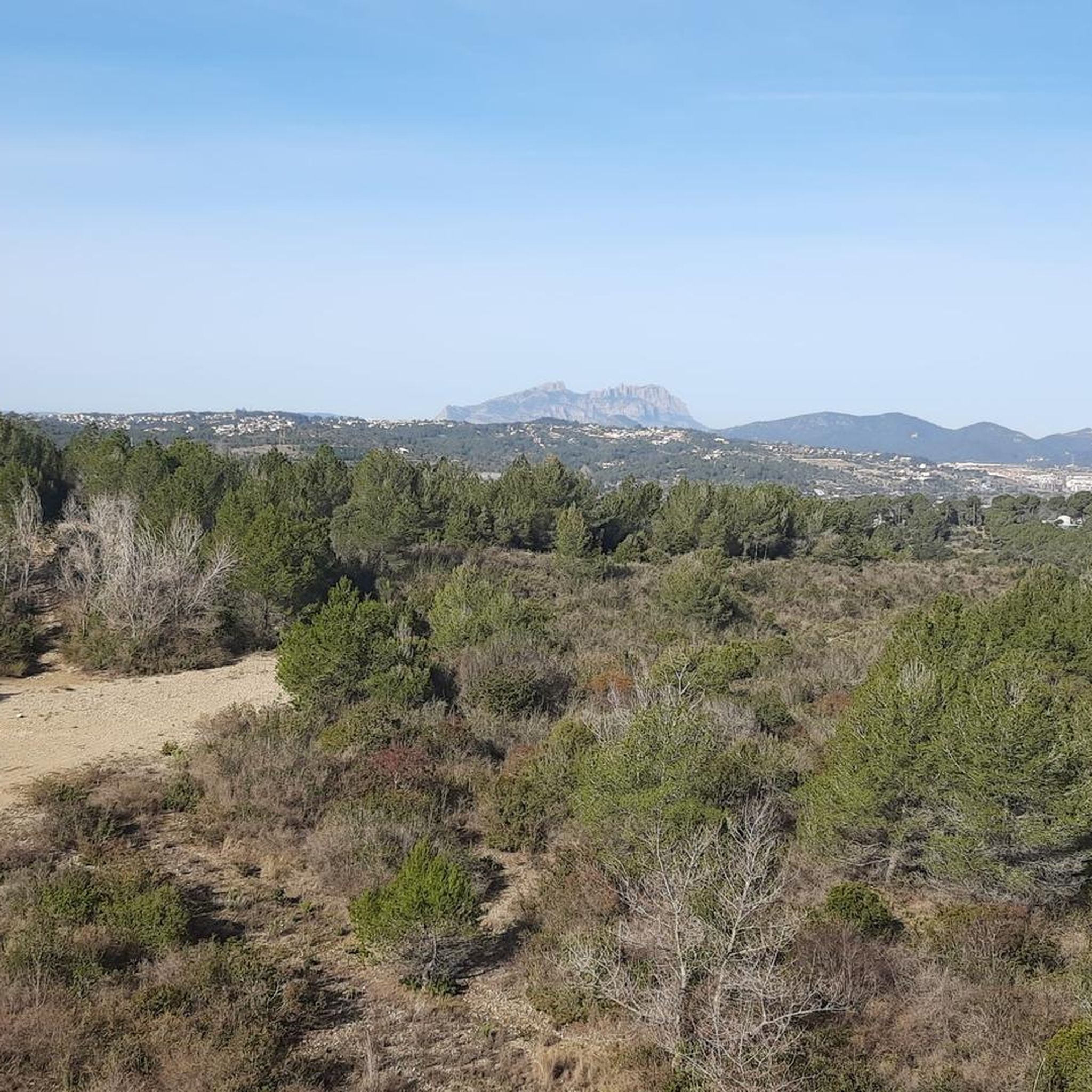
good views from up there, it is better to go up through the area of the urbanization that is softer, on the river side the climbs are very strong.
0
0

Also known as the Clasquerí Castle, it is located on the right bank of the Ripoll on a hill surrounded everywhere by ravines that make it difficult to access. With a trapezoidal plan, probably because of the ravine that is in the south-west part it must have forced it, it has a central courtyard. In this there is a well and the stairs that give access to the first floor, and it is closed by two added wings and by an exempted tower in the corner. It consists of a ground floor and two floors. The first documentary reference is from 912 in a donation act. But what is mentioned is the castrum kastellare, and we do not know if it refers to the castle itself, or to the territorial unit that would end up being Castellar. In the 11th and 12th centuries, the castle under the count's power was owned by the Montcada family. However, this family sells the castle, to recover it again a century later. In 1310 Gastó de Montcada ceded the castle to Pere de Clasquerí, and finally his great-grandson, Guerau de Clasquerí, bought it. From the 15th century, the Clasquerí became the territorial and jurisdictional lords of the lands, properties, farms and houses belonging to the castle. The current owner, Carles Fontcuberta, is a descendant of the Clasquerí family and the families that have been related to them: the Meca in the 16th-17th centuries and the Sentmenat in the 17th-19th centuries. The current appearance of the castle preserves very few remains of its early medieval origin. It is, for example, the entrance arch of half a point. The appearance of the castle changed thanks to the reforms made by Guerau de Clasquerí in 1335. And also by those made at the end of the 19th century and the beginning of the 20th. Over time the state of the castle deteriorated, despite the fact that since 1994 consolidation and restoration works were carried out throughout the building. One of the essential elements of the castle, as well as the most beautiful, is the chapel of Santa Bárbara, in Gothic style and with a single nave, where masses and ceremonies were held by the noble family, while they lived in the castle . (Source: https://www.castellarvalles.cat/14374/equipament/386/d/ )
3
0

An oasis in the middle of so much urbanization and bustle
2
0

The moat tower was built in the middle of the 19th century and was part of the military optical telegraph line from Barcelona to Lleida. It communicated with the towers located in Molins de Rei and Esparreguera with a structure located on the tower that was formed by a fixed vertical pole and a transversal one that could be inclined 45 ° to the left and right, with a circle at each end. A pulley allowed the movement of a third circle up and down the vertical pole, thus achieving a total of 20 possible combinations. At night the circles were replaced by lanterns. On January 24, 1939, the tower, abandoned since the late nineteenth century, became a last point of resistance of Republican troops to the Francoist army. Once restored by Castellbisbal City Council, it is now part of the catalog of 100 elements of Catalonia's industrial heritage. Information extracted from the Castellbisbal City Council website:
1
0
Place with beautiful views over Martorell and the Devil's Bridge.
1
0

Frequently Asked Questions
What kind of historical structures can I expect to find around Sant Quirze Del Vallès?
While Sant Quirze Del Vallès does not feature traditional medieval castles within its immediate borders, the region is rich in historical buildings. You can explore Romanesque churches, fortified farmhouses known as 'masias', and ancient watchtowers. These sites offer a deep dive into the area's agricultural heritage, social history, and architectural evolution.
Are there any notable fortified farmhouses (masias) to visit in the area?
Yes, Sant Quirze Del Vallès is home to several significant masias. Masia Can Barra, documented since 1667, features a 17th-century farmhouse and an adjacent 1888 tower. Mas Duran, from 1641, is known for its 18th-century square-plan farmhouse with an arched doorway. Can Feliu, a 17th-century masia, now functions as a municipal civic center after restoration.
What are some of the most interesting castle-like structures near Sant Quirze Del Vallès?
You can visit several unique structures. Sentmenat Castle is a large Gothic building with walls three meters thick. The Fossada Tower (Castellbisbal) is a historical watchtower with a moat, offering views over Martorell. La Torre Negra is a well-preserved 12th-century Romanesque military construction with dark-colored stone walls.
Are there any family-friendly historical sites or castles in the region?
Yes, Can Taió Castle is a great option for families. Originally a 17th-century house converted into a castle in the 20th century, it's nestled in an area of forests and crops, making for a beautiful excursion suitable for all ages. The Mogoda neighborhood and Mogoda Castle also offer a family-friendly historical experience around a 12th-century fortified farmhouse.
What outdoor activities can I do near these historical sites?
The area around Sant Quirze Del Vallès is excellent for outdoor activities. You can find numerous routes for hiking, mountain biking (MTB), and gravel biking. For hiking, explore trails like the 'View of Vallès Occidental – Monks' Path loop' or 'El Pla dels Estels – Turó de Mataric loop'. You can find more details on these and other routes in the Hiking around Sant Quirze Del Vallès guide.
Are there hiking trails that incorporate historical sites?
Yes, many hiking trails in the region allow you to combine nature with history. For instance, you can find routes that pass by structures like La Torre Negra or the Mogoda Castle, offering scenic views and historical context. Check the Hiking around Sant Quirze Del Vallès guide for specific routes.
What is the best time to visit the historical sites and enjoy outdoor activities?
The best time to visit is generally during spring and autumn when the weather is mild and pleasant for exploring both historical sites and outdoor trails. Summers can be hot, especially for hiking, while winters are generally mild but can be cooler and wetter.
Can I bring my dog to the historical sites or on nearby trails?
While specific rules for each historical site may vary, many outdoor trails around Sant Quirze Del Vallès are dog-friendly. It's always advisable to keep your dog on a leash and check local regulations for specific sites or natural parks. You can often find dog-friendly routes in the Hiking around Sant Quirze Del Vallès guide.
Are there any Romanesque architectural examples in Sant Quirze Del Vallès?
Yes, the Church of Sant Quirze and Santa Julita is a significant Romanesque architectural landmark in the town. Romanesque architecture, prevalent in the 11th and 12th centuries, is characterized by its massive quality, thick walls, and round arches, offering a glimpse into early medieval ecclesiastical architecture. Learn more about Romanesque architecture on Wikipedia.
What do visitors enjoy most about the historical sites around Sant Quirze Del Vallès?
Visitors appreciate the blend of history and natural beauty. The well-preserved structures, like the 12th-century La Torre Negra, offer a tangible connection to the past. Many enjoy the strategic locations of sites like Sentmenat Castle, which provide beautiful views and a sense of grandeur. The opportunity to combine historical exploration with hiking or biking in the surrounding landscapes is also a major draw.
Are there cafes or restaurants near these historical sites?
Sant Quirze Del Vallès and its surrounding towns offer various cafes and restaurants where you can relax and refuel. While specific establishments might not be directly adjacent to every historical site, you'll find options within a short drive or walk in the nearby urban centers and villages.
How accessible are these historical sites for visitors?
Accessibility varies by site. Some, like the main buildings of masias or churches, may have easier access, while others, such as watchtowers or structures on strategic ridges like Sentmenat Castle, might involve walking on uneven terrain or inclines. It's recommended to check specific details for each location if accessibility is a concern.
Most popular routes around Sant Quirze Del Vallès
Most popular attractions around Sant Quirze Del Vallès

Get inspired with the komoot mobile app


Explore more
Looking for the best castles somewhere else? Discover other guides around Sant Quirze Del Vallès:
