The best MTB trails around Willems
4.4
(896)
4,212
riders
303
rides
Mountain biking around Willems features a landscape characterized by gentle terrain, greenways, and marshlands. The region offers a network of trails that often follow converted railway lines or canal paths, providing accessible routes. Elevation changes are generally minimal, making it suitable for various skill levels. The area's natural and historical features, such as marshes and old estates, contribute to varied scenery along the routes.
Best mountain bike trails around Willems
- The most popular mountain bike trail is Marais du Warlet…
Last updated: June 18, 2026
4.4
(12)
53
riders
38.2km
02:23
80m
80m
Moderate mountain bike ride. Good fitness required. Suitable for all skill levels.
5.0
(3)
28
riders
53.6km
03:29
110m
110m
Moderate mountain bike ride. Good fitness required. Advanced riding skills necessary.

Sign up for free
4.9
(17)
29
riders
16.2km
00:59
20m
20m
Easy mountain bike ride. Great for any fitness level. Suitable for all skill levels.
4.5
(4)
14
riders
48.2km
03:06
150m
150m
Moderate mountain bike ride. Good fitness required. Advanced riding skills necessary.
12
riders
36.6km
02:12
110m
110m
Moderate mountain bike ride. Good fitness required. Suitable for all skill levels.
Get access to more routes and recommendations from other explorers.
Sign up for free
Already have an account?
Our route recommendations are based on thousands of hikes, rides, and runs completed by other people on komoot.
Start today with a free account
Your next adventure awaits.
Login or Signup

Tips from the Community

In a small parking lot near Estaimbourg Church, you'll find several pieces of street art, the most striking of which is the long mural "Vive le Sport" (Long Live Sport). It's painted on the wall that separates the parking lot from the soccer field behind it and the adjacent sports facility. Street art is also displayed on the right wall of the parking lot.
3
0
Today, the Camille Depinoy municipal school is partly housed in the castle (park).
3
0
The lordship of Templeuve is already mentioned at the end of the 13th century. In 1278, Guillaume de Mortagne received the lordship of Rumez, which is now a hamlet within the municipality. Guillaume was also lord of Dossemer, near Templeuve. It is assumed that he also received the lordship of Templeuve from there. In any case, his son, Guillaume II, gave it to his wife as a dowry in the early 14th century. Dossemer and Templeuve remained in the hands of the Mortagne family until the end of the 14th century. This family presumably gradually expanded the manor, thus laying the foundation for the first fortified castle in Templeuve-en-Dossimer. In 1414, only Templeuve came into the possession of the du Quesnoy family. The Blondel and finally the Lannoy families followed. Around 1500, the castle likely became a manor house and a farm. The evolution of military weapons led the lords to demolish the old, cumbersome fortress and replace it with a lavish and modern residence. Out of respect for feudal traditions, which would continue for another two centuries, the moat was preserved, but the drawbridge was replaced by a permanent stone bridge. Originally, moats ran along all sides of the castle. The moat surrounding the castle on the east side was removed in 1845 by Victor de Formanoir de la Cazerie. The towers, a privilege of the noble lord, are preserved more as decoration than as a means of defense, as is the quadrangular shape, which was once dictated by military necessity. In short, its appearance as a 'castle' or 'fort' is more defined by tradition and grandeur than by military function. Source: Wikipedia
3
0
However dilapidated the castle may be, the future promises improvement: The current owners of the castle, Pierre and Annie Moulin-Duthoit and their children, are responsible for its restoration, particularly Olivier Moulin, who wrote a thesis on this heritage at the end of his architectural studies. ...that's why you can see signs of construction work from a distance (approaching close is not permitted). Source: leershistorique.fr
2
0
The Château de Royères, probably around 1100, was a feudal motte with a wooden tower and a retractable walkway... which Havide de Néchin brought as a dowry to Lambert de Wattrelos. The inhabitants of Tournai submitted to Philip II Augustus. The Tournai region would belong to the French royal family for over 300 years (1187-1521). La Royère is located in the Château de Lille, in the Flanders region, on the hills of Leers and Néchin, on the edge of the Wattines forest, on the border with Tournaisis: it is the castle of the border. In 1227, it was probably a feudal motte with a stone tower that was purchased by Arnoul IV. Wealthier than the seller Hugues de Roubaix, he may have had Tournai's stone walls built. From 1500 onwards, the lords of Roubaix also became lords of La Royère through marriage: the de Werchin and the de Melun. Pierre de Melun, governor of Tournai, lord of Roubaix and La Royère, and a Protestant supporter, was considered civilly dead by Philip II, the Catholic king. His possessions passed to the Ligne family through Anne de Melun. As a supporter of the Edict of Nantes (Henry IV, 1598), Louis XIV returned La Royère to the de Melun family. This led to family disputes: the property first went to the de Ligne family and then back to the de Melun family. A Crombez from Tournai bought La Royère, 35 hectares (Popp map circa 1850). Miss Crombez de Remond de Montmort married Count Ferdinand Costa de Saint-Gérix de Beauregard… Everything was then sold to farmers. Source: leershistorique.fr
2
0
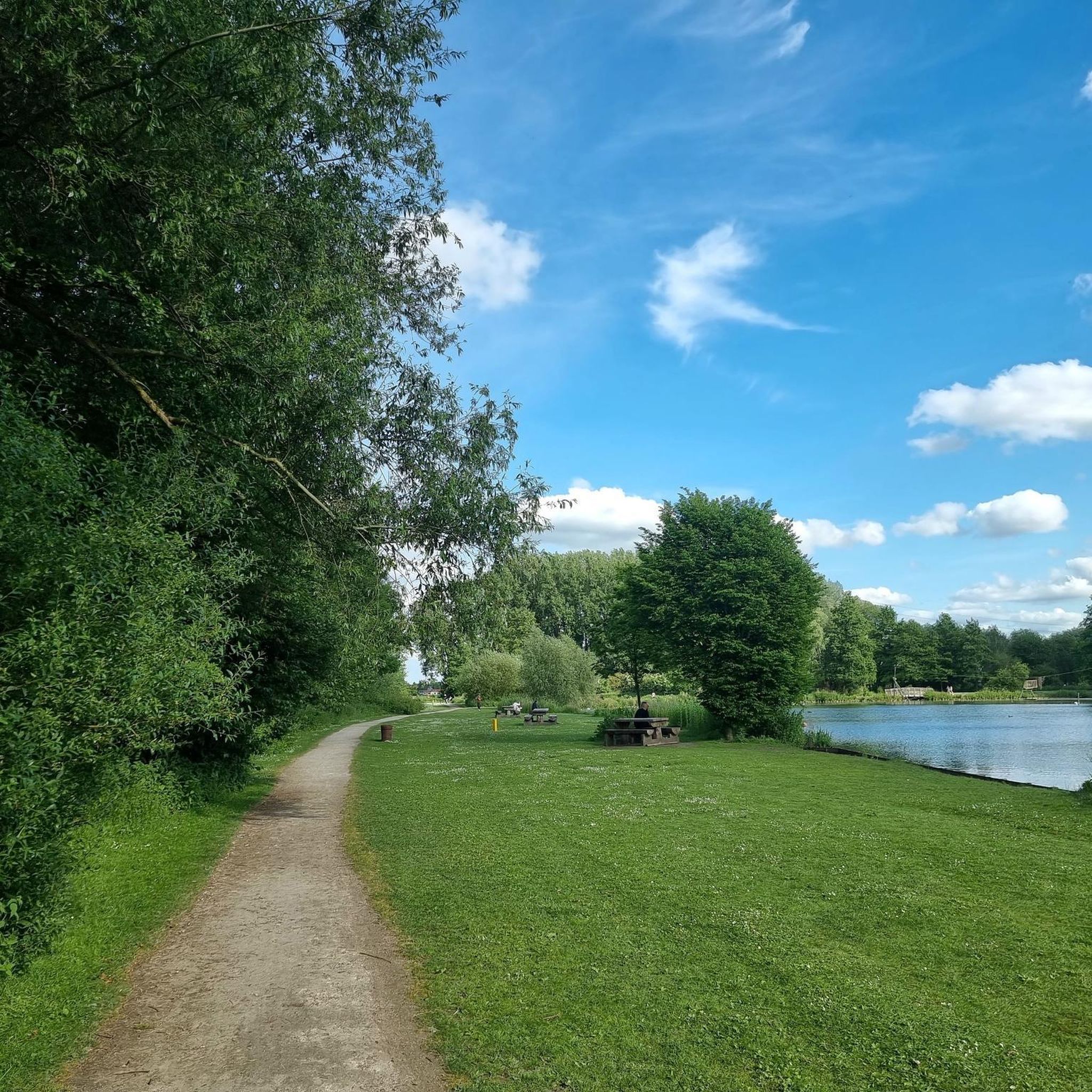
From the early 1970s, the development of the new town in this area took shape with the construction of the Heron Park and the Heron Lake. The former hunting lodge was converted into a house divided into two rental apartments. In 1973, the building was acquired by the Public Institution for the Development of the New Town of Lille-East. In December 1982, the building, which had suffered damage since the expropriation, was returned to the municipality of Villeneuve d'Ascq. At the end of 1983, the municipality decided to have the building completely restored by the Compagnons du Devoir (a French craft guild) as part of a training program. Source: information board on site
3
0


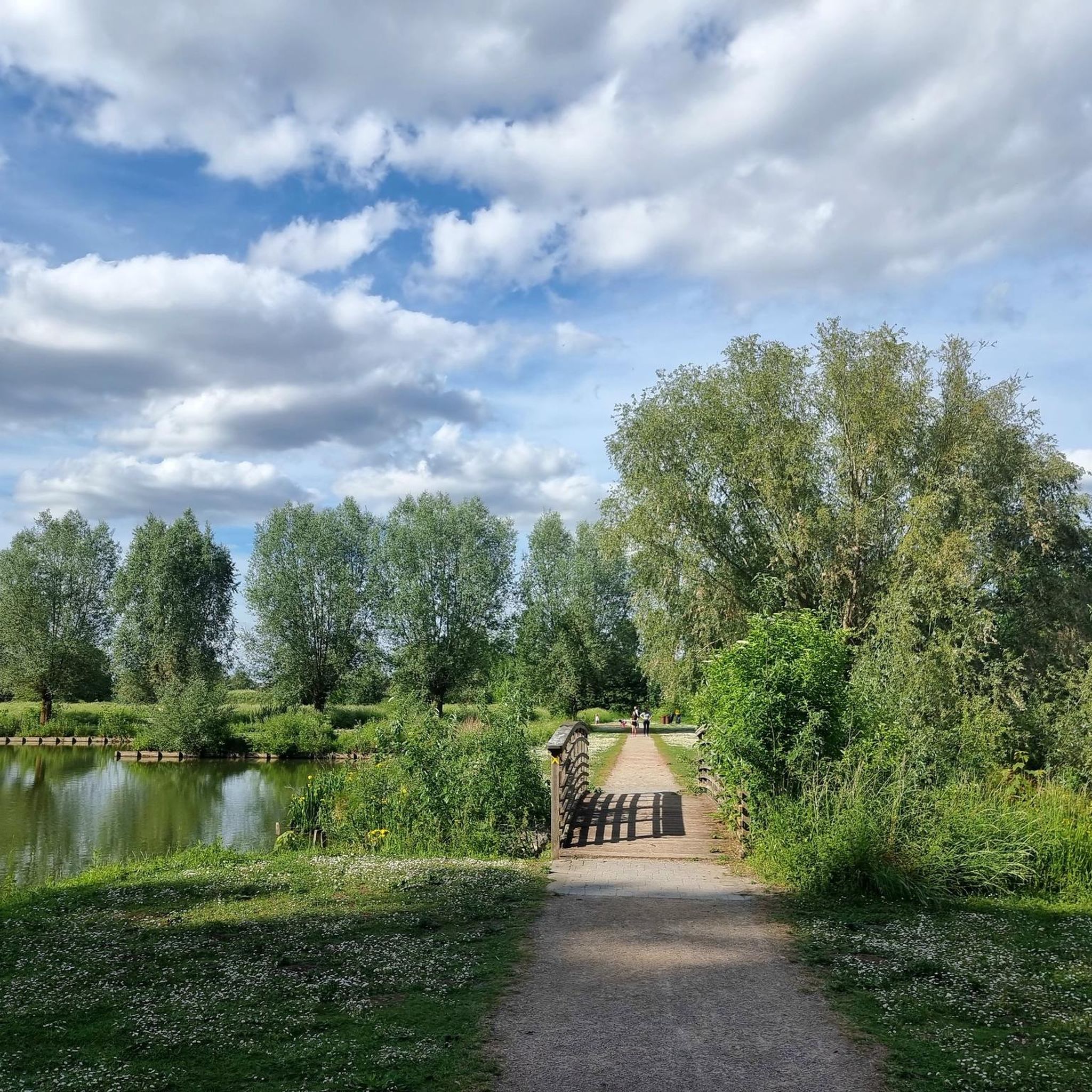
Great spot for slaloming on footbridges and paths with a little relief. Watch out for pedestrians.
0
0
Frequently Asked Questions
How many mountain bike trails are available around Willems?
There are over 300 mountain bike trails around Willems, offering a wide variety of options for different skill levels. You'll find a good mix of easy and moderate routes, with a few more challenging options as well.
Are there easy mountain bike trails suitable for beginners or families in Willems?
Yes, Willems offers many easy mountain bike trails perfect for beginners and families. The terrain is generally gentle, often following greenways and canal paths with minimal elevation changes. An excellent option is the Marais du Warlet – Bonnance marshes loop from Baisieux, which is an easy 15.2-mile (24.4 km) ride through scenic marshlands.
What are some longer mountain bike routes near Willems?
For those looking for longer rides, Willems has several moderate routes. The Pévèle greenway – Bonnance marshes loop from Baisieux is a substantial 37.9-mile (60.9 km) trail, and the Val de Marque Greenway – Bonnance marshes loop from Baisieux covers 29.7 miles (47.7 km). These routes offer extended exploration through the region's varied landscapes.
Are there any challenging mountain bike routes for advanced riders in Willems?
While Willems is known for its gentle terrain, there are a few routes that offer a more moderate challenge, often due to their length rather than extreme technical difficulty. Out of over 300 trails, about 10 are classified as difficult. For a longer, more varied ride, consider the Ruins of la Royère castle – La Maison du Canal loop from Baisieux, which is 33.1 miles (53.2 km) and leads through varied terrain including historical ruins.
What kind of scenery can I expect along the mountain bike trails in Willems?
Mountain bike trails in Willems are characterized by greenways, marshlands, and gentle rolling countryside. You'll often ride along converted railway lines or canal paths, offering accessible routes through varied scenery. The region's natural and historical features, such as the Bonnance marshes and old estates, contribute to a pleasant and diverse riding experience.
What do other mountain bikers enjoy most about mountain biking in Willems?
The area is highly rated by the komoot community, with an average score of 4.5 stars from over 700 reviews. Reviewers often praise the accessible greenways, the tranquil marshland paths, and the overall pleasant, gentle terrain that makes it suitable for various skill levels.
Are the mountain bike routes in Willems typically circular?
Many of the mountain bike routes around Willems are designed as loops, offering convenient circular journeys. Examples include the Marais du Warlet – Bonnance marshes loop from Baisieux and the Chemin de Brigode – The Hunting Lodge loop from Baisieux, allowing you to start and finish at the same point.
What interesting landmarks or attractions can I see along mountain bike trails near Willems?
Several trails pass by interesting historical and natural sites. You might encounter historical ruins like the Ruins of la Royère castle, or natural features such as the Heron Lake and the Colline de Marchenelle. The region also features various châteaux like Château de La Fontaine.
What is the best time of year for mountain biking in Willems?
The gentle terrain and greenways of Willems make it enjoyable for mountain biking through much of the year. Spring and autumn offer pleasant temperatures and beautiful scenery. While the marshlands can be wet after heavy rain, the generally well-maintained paths are accessible in most conditions. Summer is also popular, but ensure you stay hydrated.
Are there any specific trail conditions to be aware of in Willems?
Given the prevalence of marshlands and canal paths, some sections of the trails can be muddy, especially after rainfall. However, many routes follow converted railway lines and greenways, which are generally well-surfaced. It's always a good idea to check local weather conditions before heading out.
Is there parking available near the mountain bike trails in Willems?
While specific parking areas are not detailed for every trail, many routes around Willems start from towns or villages like Baisieux, where public parking is typically available. As many trails follow former railway lines or canal paths, access points often have nearby parking facilities.
Most popular attractions around Willems

Get inspired with the komoot mobile app


Explore more
Browse the best MTB trails in other regions.
