The best walks and hikes around Fromelles
4.5
(719)
4,903
hikers
272
hikes
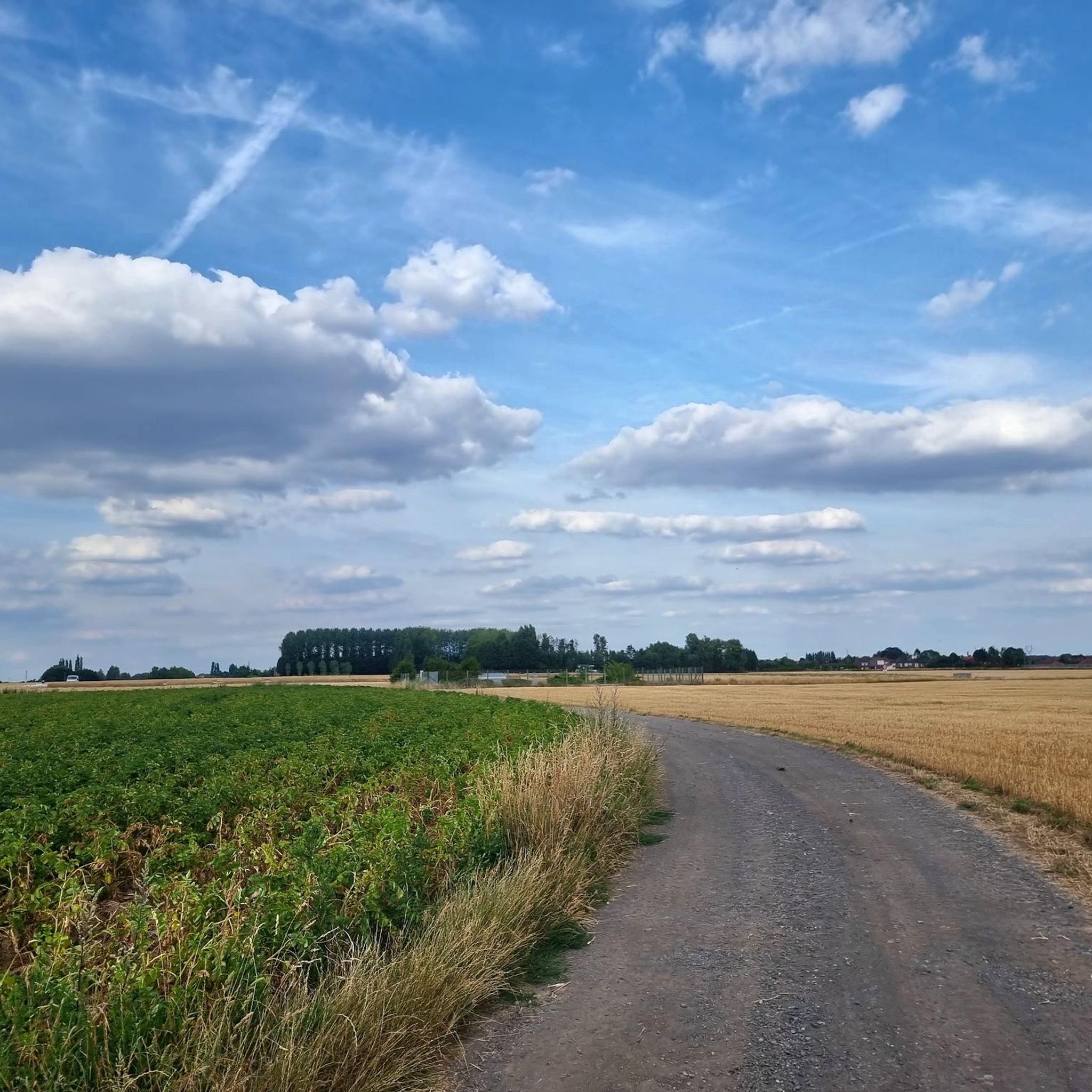
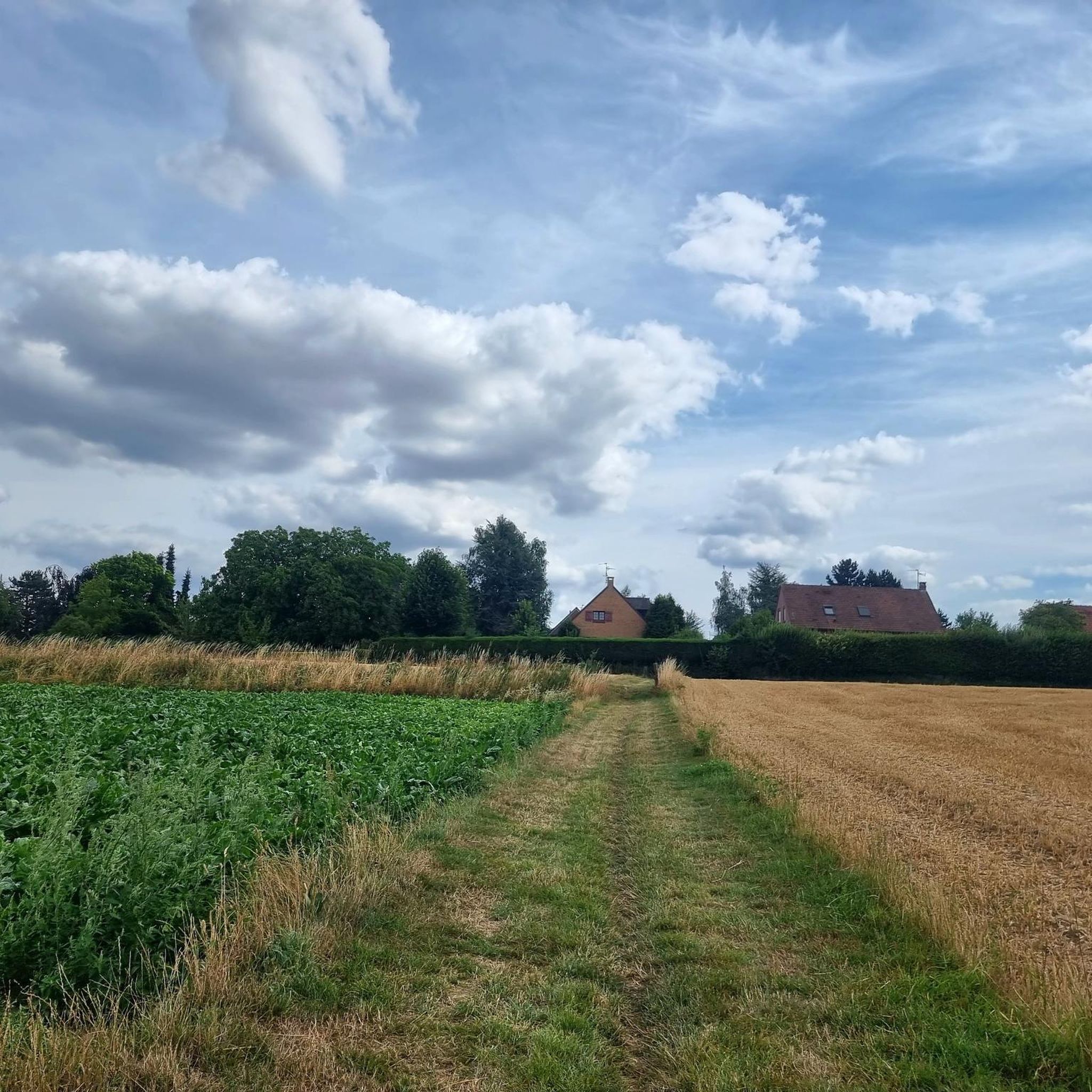
Hiking around Fromelles offers a unique experience through a landscape deeply marked by World War I history. The region is characterized by flat, rural terrain, dominated by agricultural fields, pastures, and meadows. Drainage ditches lined with hedgerows and copses crisscross the serene scenery, providing gentle walking conditions. This area provides opportunities to combine historical exploration with tranquil rural walks.
Best hiking trails around Fromelles
- The most popular hiking route is At the ponds. – Cobbers Australian Memorial loop from Fromelles, a 7.3 miles (11.7 km) trail that takes about 3 hours to complete. This route connects natural features with significant historical sites.
- Another top favourite among local hikers is Hiking loop from Aubers, a moderate 5.7 miles (9.1 km) path. It offers views of the agricultural landscape and quiet village surroundings.
- Local hikers also love the Rue-Petillon Military Cemetery – Le Trou Aid Post Cemetery loop from Fromelles, a 5.6 miles (8.9 km) trail leading through historical battlefield areas, often completed in about 2 hours 15 minutes.
- Hiking around Fromelles is defined by agricultural fields, hedgerows, and historical WWI sites, with routes offering options for various ability levels.
- The routes in Fromelles are highly rated by the komoot community with an average score of 4.5 stars from over 600 reviews. More than 4000 hikers have used komoot to explore Fromelles's varied terrain.
Last updated: July 2, 2026
4.0
(10)
46
hikers
11.6km
02:58
40m
40m
Moderate hike. Good fitness required. Easily-accessible paths. Suitable for all skill levels.
4.3
(3)
21
hikers
9.14km
02:20
30m
30m
Moderate hike. Good fitness required. Easily-accessible paths. Suitable for all skill levels.

Sign up for free
3.7
(3)
17
hikers
Moderate hike. Good fitness required. Easily-accessible paths. Suitable for all skill levels.
5.0
(4)
22
hikers
11.0km
02:48
40m
40m
Moderate hike. Good fitness required. Easily-accessible paths. Suitable for all skill levels.
3.5
(2)
6
hikers
13.3km
03:23
30m
30m
Moderate hike. Good fitness required. Easily-accessible paths. Suitable for all skill levels.
Get access to more routes and recommendations from other explorers.
Sign up for free
Already have an account?
Our route recommendations are based on thousands of hikes, rides, and runs completed by other people on komoot.
Start today with a free account
Your next adventure awaits.
Login or Signup


Tips from the Community

La Joyeuse Guinguette des Weppes: Located near the Étang des Sept Fontaines during the summer months (usually from June to September), this open-air café has become a very popular and festive spot in the Weppes. For residents of the Lille metropolitan area and visitors looking for a relaxed and lively atmosphere, it's a must-see summer spot.
0
0

An interesting anecdote concerns the excavations in 2009. During these excavations, the bodies of 250 British and Australian soldiers were discovered in mass graves. Thanks to DNA research, many of these soldiers could be identified, giving their families clarity about their fate. This research has helped to bring the stories of these soldiers back to life and to honor their memories.
8
0
Pheasant Wood Military Cemetery is the Commonwealth war cemetery in Fromelles, located next to the Musée de la Bataille de Fromelles. The cemetery was created in 2010 following the discovery of mass graves in the area. It contains the graves of 250 British and Australian soldiers who died during the Battle of Fromelles. Of these graves, 126 are unidentified.
8
0
The Musée de la Bataille de Fromelles is dedicated to the Battle of Fromelles of 19–20 July 1916, which pitted British and Australian troops against a Bavarian division. The museum offers a comprehensive exhibition on the battle, the 2009 archaeological excavations that unearthed the bodies of 250 soldiers, and the identification campaign that followed.
7
0
Attacking in a southerly direction, Capt Kennedy was shot while leading 'B' Company in the Battle of Aubers Ridge. He and his men had got well beyond the German line which ran roughly east-west where the preserved bunkers are today. His mother later wrote "He had crossed the road and was on the Fromelles side of it when he was shot by a sniper. His men tried to carry him back but he was terribly wounded and after they had carried him back across the road he told them to put him down..." Capt P A Kennedy, 2/Rifle Brigade Killed in action 9 May 1915. No known grave. Remembered on the Ploegsteert Memorial.
8
0
The Michelin enameled lava stone signs are an iconic part of French traffic signage. Produced by Michelin between 1910 and 1971, these signs are made of durable lava stone, enameled and mounted on a concrete base. They were used to provide traffic information and tourist directions and are known for their durability and resistance to weather conditions. Michelin began offering these signs to municipalities as a form of advertising, often featuring the name "Michelin" on the signs.
8
0
Le Trou Aid Post Cemetery was established in October 1914 by British soldiers of the 19th Infantry Brigade during the First Battle of Ypres. The cemetery initially contained 123 graves, but was expanded after the war. It now contains over 350 graves, of which over 200 are unknown. The cemetery commemorates soldiers who died in a number of battles, including Le Maisnil (October 1914), Aubers Ridge (May 1915), Loos (September–October 1915), and Fromelles (July 1916). A special feature of the cemetery is its rural setting, surrounded by a narrow moat and sheltered by a grove of weeping willows. Visitors reach the cemetery via a footbridge and enter through a delicate cottage-style gate.
7
0
The Rue-Petillon Military Cemetery was established in December 1914 and was used by British troops until the spring offensive of 1918, when the area fell into German hands. After its recapture by the Allies in September 1918, the cemetery was expanded to include graves from isolated locations and smaller cemeteries. The cemetery contains 895 identified graves of soldiers who died during the First World War. Many of them died of their wounds in a dressing station located in the nearby buildings known as 'Eaton Hall'.
7
0
Frequently Asked Questions
What is the typical terrain and difficulty of hiking trails in Fromelles?
The landscape around Fromelles is generally flat and rural, dominated by agricultural fields, pastures, and meadows. Most of the 266 available routes are considered easy or moderate, with 147 easy and 117 moderate trails. There are only 2 difficult trails, making the area accessible for a wide range of hikers.
Are there any specific historical sites or memorials I can visit while hiking in Fromelles?
Yes, Fromelles is deeply intertwined with World War I history. Many trails incorporate significant sites. You can visit the Australian Memorial Park Fromelles, which features the 'Cobbers' statue, or the Fromelles (Pheasant Wood) Military Cemetery. The Le Trou Aid Post Cemetery is also a notable historical point of interest along some routes, such as the Rue-Petillon Military Cemetery – Le Trou Aid Post Cemetery loop from Fromelles.
Are the hiking trails in Fromelles suitable for families with children?
Yes, the predominantly flat and rural terrain, with many easy and moderate routes, makes Fromelles suitable for family hikes. The historical sites can also offer an educational experience for older children. Consider routes that are shorter in duration and have minimal elevation gain for younger family members.
Can I bring my dog on the hiking trails in Fromelles?
Generally, dogs are welcome on trails in rural areas like Fromelles, especially on public footpaths. However, it's always recommended to keep your dog on a leash, especially when passing through agricultural fields or near livestock, and to clean up after them. Specific rules may apply to certain memorial parks or cemeteries, so check local signage.
What natural features or viewpoints can I expect to see on a hike in Fromelles?
While not mountainous, Fromelles offers tranquil natural beauty. You'll encounter an agricultural landscape of cornfields, pastures, and meadows, crisscrossed by drainage ditches lined with hedgerows. From certain points, like the Fromelles (Pheasant Wood) Military Cemetery, you can enjoy wide-open vistas of the peaceful countryside. Some routes also pass by local ponds, such as those near Marcel Park Pond or The Village Pond.
Are there many circular walking routes available in Fromelles?
Yes, many of the hiking routes in Fromelles are designed as loops, allowing you to start and end at the same point. Examples include the At the ponds. – Cobbers Australian Memorial loop from Fromelles and the Hiking loop from Aubers. This makes planning your hike convenient, especially if you're driving.
What do other hikers enjoy most about hiking in Fromelles?
The area is highly rated by the komoot community, with an average score of 4.5 stars from over 600 reviews. Hikers often praise the unique combination of peaceful rural scenery with the profound historical significance of the World War I battlefields. The well-maintained paths and the opportunity to reflect on history amidst quiet fields are frequently highlighted.
Where can I find parking for hiking trails in Fromelles?
Parking is generally available near key attractions and trailheads in Fromelles. For instance, there is parking at the Fromelles (Pheasant Wood) Military Cemetery and the Musée de la Bataille de Fromelles, which are common starting points for historical walks. Village centers and other memorial sites also typically offer parking facilities.
Are there any cafes, pubs, or accommodation options near the hiking trails in Fromelles?
Fromelles is a small village, but you can find local amenities. There are cafes and small eateries in the village center where you can refresh after a hike. For accommodation, you might find guesthouses or B&Bs in Fromelles itself or in nearby larger towns. It's advisable to check in advance, especially during peak seasons.
What is the best time of year to go hiking in Fromelles?
The spring and summer months (April to September) are generally ideal for hiking in Fromelles, offering pleasant weather for exploring the open fields and historical sites. During these times, the agricultural landscape is vibrant, and the sounds of nature are abundant. Autumn can also be beautiful with changing foliage, though it might be cooler and wetter.
Are there any longer or more challenging routes for experienced hikers?
While most routes are easy to moderate, there are a few longer options. For example, the Hiking loop from Fromelles covers nearly 13 km. The region's terrain is generally flat, so 'challenging' typically refers to distance rather than significant elevation gain. There are 2 routes specifically graded as difficult if you are looking for a longer endurance test.
Can I access hiking trails in Fromelles using public transport?
Public transport options directly to Fromelles might be limited. It's generally easier to reach Fromelles by car, which also provides flexibility for accessing various trailheads and memorial sites. However, you can check local bus services from larger nearby towns like Lille, which may have connections to Fromelles or its vicinity.
Most popular routes around Fromelles
Most popular attractions around Fromelles

Get inspired with the komoot mobile app


Explore more
Browse the best Hikes in other regions.
