Attractions and Places To See around Ventabren - Top 20
Best attractions and places to see around Ventabren include historical landmarks, cultural sites, and natural features. This hilltop village in Provence offers panoramic views of the surrounding landscape, including the Étang de Berre and the Sainte-Victoire Mountain. Visitors can explore ancient ruins, 17th-century churches, and picturesque streets. The area also provides opportunities for hiking and experiencing the Provençal garrigue.
Best attractions and places to see around Ventabren
- The most popular attractions is Roquefavour Aqueduct, a man-made monument that is…
Last updated: October 9, 2026
Place de l'Hôtel de Ville
Highlight • Other
Translated by Google •
Tip by

Rotonde Fountain
Highlight • Monument
Translated by Google •
Tip by

Sign up now to discover places like this
Get recommendations on the best single tracks, peaks, & plenty of other exciting outdoor places.
Cours Mirabeau
Highlight • Other
Translated by Google •
Tip by

Saint-Jean-de-Malte Church
Highlight • Religious Site
Translated by Google •
Tip by
Roquefavour Aqueduct
Highlight • Monument
Translated by Google •
Tip by

Sign up for free to discover even more attractions around Ventabren.
Already have an account?
Start today with a free account
Your next adventure awaits.

Tips from the Community

Magnificent fountain with the Cours Mirabeau. Resting point and starting point for very diverse circuits and nearby countryside. The only downside: Aix en Provence is absolutely not equipped for cyclists, but fortunately you can get out of it quite quickly (Gametta and its roundabout below deserve to be very careful)
1
0

Originally, the church was in the shape of a Latin cross and consisted only of the nave, transept, bell tower, and watchtowers to the north and south of the choir, as well as the Hélion de Villeneuve chapel (14th century) with its beautiful ribbed vault featuring liernes and tiercerons. Outside, the twenty or so stepped buttresses topped with pinnacles are hidden on Rue Cardinale by the unimpressive buildings attached to the monument in the 17th century. The 67-meter-high bell tower was completed in 1376. The priory, now the Granet Museum, served both as the residence of the knights and as a hospice where pilgrims were welcomed and the sick cared for. The church and the priory were built in the fields, outside the city walls. They were set into the central vista of the Mazarin Quarter in the 17th century, built by Michel de Mazarin, brother of Louis XIV's minister. The building was remodeled during the 17th century by Prior Jean-Claude Viany, who had six chapels built within the buttresses and, for symmetry, added the south turret similar to the one on the north side that provides access to the bell tower. In 2018, after 225 years, the church received three new bells for its carillon, out of the four that comprise it. The three previous bells had been cast in 1793 during Napoleon's Italian campaign.
2
0
In its current form, the Church of Saint-Jean-de-Malte is the first entirely Gothic church in Provence. It was built between 1270 and 1280 by the Knights Hospitaller of Saint John of Jerusalem, replacing an older building whose dedication is known to have been celebrated by Cardinal Pierre de Colmieu on May 3, 1251. The lightness and elegance of the Gothic rib vaults, which support the pillars, give the nave a dynamic and rhythmic quality that earned it the nickname "Sainte-Chapelle of the South." The side windows are less open than those in churches in the Île-de-France region, but the apse window is exceptionally large for Provence. The overall effect was restored during the recent restoration work carried out in 1996, by highlighting the two-tone effect of the ochre wall surfaces and the white architectural elements, restoring to the space its luminosity, simplicity, elegance, and dynamism. The current building was constructed as the mausoleum of the Counts of Provence: – the tomb of Raymond Berenger V and his wife Beatrice of Savoy in the north transept – the tombs of Beatrice of Provence and her husband Charles I of Anjou, King of Naples, which were destroyed during the French Revolution. This church can be considered a kind of ‘Provençal Saint-Denis’.
2
0
The Rotonde, located on Place du Général de Gaulle, is where the past and future of Aix's urban development unfold. The square (100m in diameter) was created between 1840 and 1850. In 1860, the Rotonde fountain was built based on plans by the engineers Tournadre and Sylvestre. Twelve meters high, the fountain is constructed of cold stone and consists of two basins. Lions, dolphins, swans, and children, works by Truphème, adorn it. The three statues that surmount it represent Justice (toward the Cours), Agriculture (toward Marseille), and Fine Arts (toward Avignon), forming a star-shaped road. Ramus, Chabaud, and Ferrat are its creators. First supplied sparingly by the Zola canal (1854), then with full water every day by the Verdon canal (1875), it is now connected to the Provence canal.
3
0

Narrow, very busy road...dangerous in places...a magnificent site apart from that
1
0
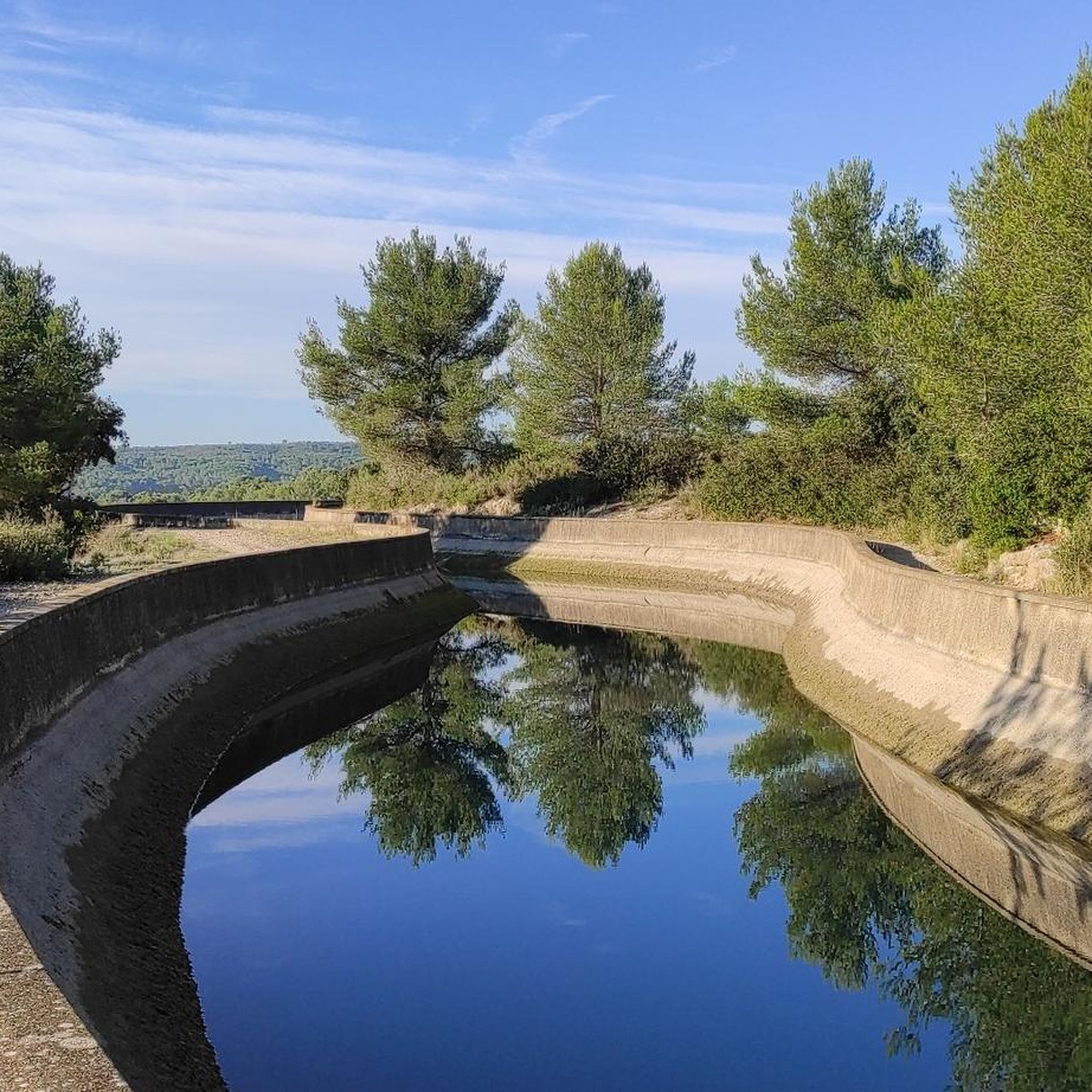
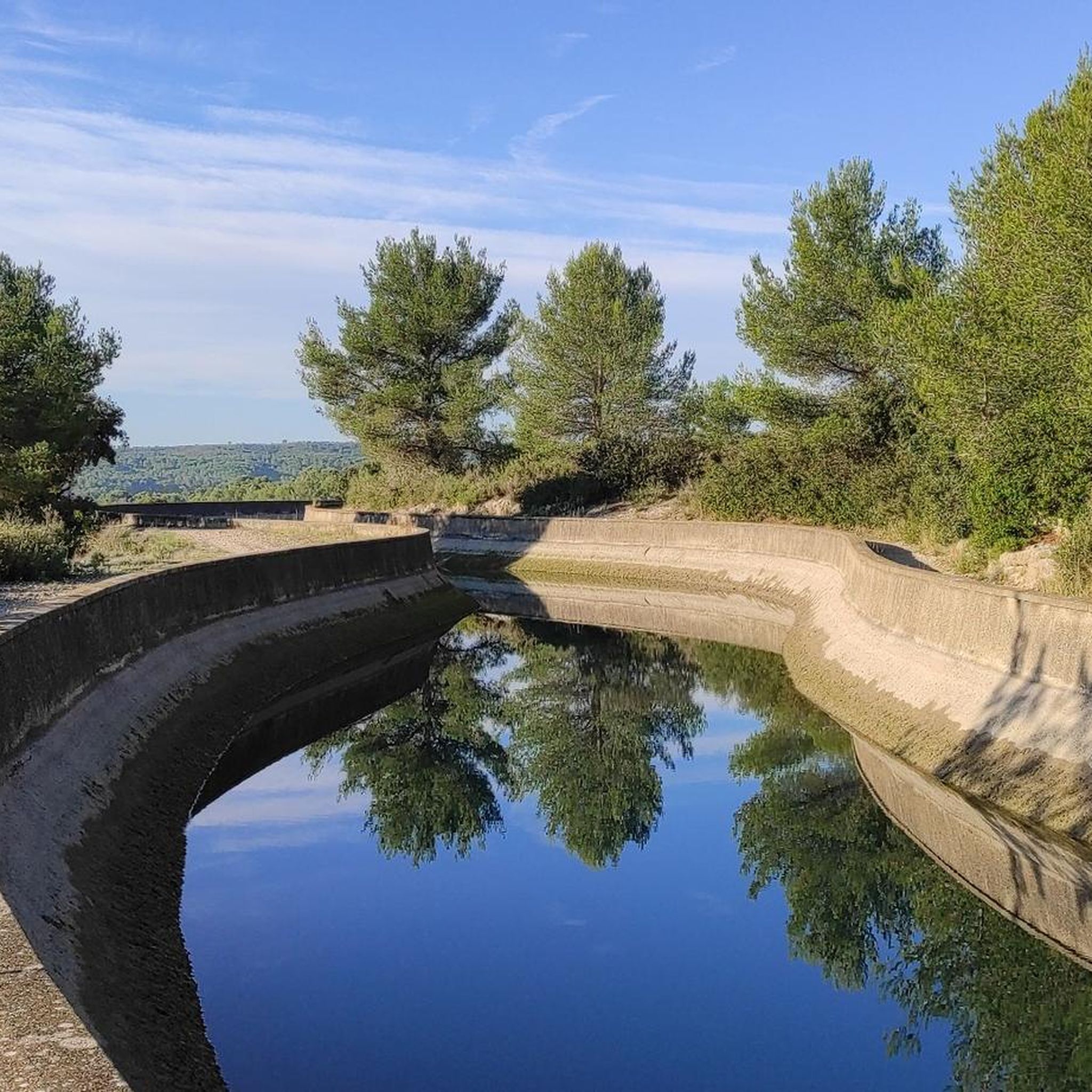
Very beautiful road with a view of the Aqueduct
1
0

This square features three key features: the town hall, its fountain, and the grain market. Situated since the 14th century at the foot of the Clock Tower, the town hall was rebuilt in two phases between 1655 and 1678. The overall design, inspired by Italian palaces, is the work of Pavillon, assisted by the sculptors Rambot and Fossé. Two series of paintings are located in the Salle des Etats de Provence, on the first floor: on the one hand, portraits of the counts of Provence and the kings of France, and on the other, major historical works. Time and the Revolution have stripped the façade of its rich ornamentation. The fountain, built in 1755, topped by a Roman column, is by Chastel. The monumental decor surrounding it gives it a wealth of character. Built in 1754, the Halle aux Grains is characterized by a central avant-corps, topped by a triangular pediment protecting a magnificent Baroque ensemble sculpted by Chastel: these are allegories of the Rhône and the Durance, in the form of a man and a woman depicted surrounded by all the agricultural riches derived from the benefits of water. The goddess's foot emerging from the pediment symbolizes the moments when the Durance bursts its banks... a subtle metaphor. (https://www.aixenprovence.fr/Place-de-l-hotel-de-ville)
3
0

From 1857 to 1862, Cézanne studied drawing and copied paintings exhibited at the Granet Museum, which adjoined the Church of St. John of Malta. The museum's curator, Henri Pontier, a true visionary, is said to have declared, "As long as I live, no work by Cézanne will enter our collections!" Thus, despite the immense success of this native of Aix-en-Provence, no major works by him grace the museum's walls.
1
0
Frequently Asked Questions
What historical sites can I explore in Ventabren?
Ventabren is rich in history. You can visit the impressive Roquefavour Aqueduct, an 83-meter-high 19th-century engineering marvel. Explore the ruins of Queen Jeanne's Castle for panoramic views, or see the 17th-century Saint-Denis Church with its notable altarpiece. The Old Mill and the ancient Oppidum of Roquefavour also offer glimpses into the region's past.
Are there any cultural attractions or museums in Ventabren?
Yes, Ventabren offers cultural insights. The Ventabren Museum details the village's history from prehistory to the Middle Ages and offers free admission on Saturday and Sunday afternoons. Additionally, strolling through the picturesque cobbled streets of the Old Town, with its fountains and wash houses, provides a cultural experience in itself.
What natural features and panoramic views can I find around Ventabren?
Ventabren, being a hilltop village, offers stunning panoramic views. From the castle ruins and other elevated points, you can see the Étang de Berre (Berre lagoon), the Chaîne de l'Étoile mountain range, Vitrolles, and even the Sainte-Victoire Mountain. The surrounding Provençal garrigue also provides beautiful natural landscapes to explore.
Are there family-friendly activities or attractions in Ventabren?
While specific family-focused attractions are not detailed, many sites in Ventabren can be enjoyed by families. The Rotonde Fountain is a notable man-made monument that is considered family-friendly. Exploring the village's historical sites and enjoying easy walks or picnics in the natural surroundings are also great options for families.
What outdoor activities, like hiking or cycling, can I do near Ventabren's attractions?
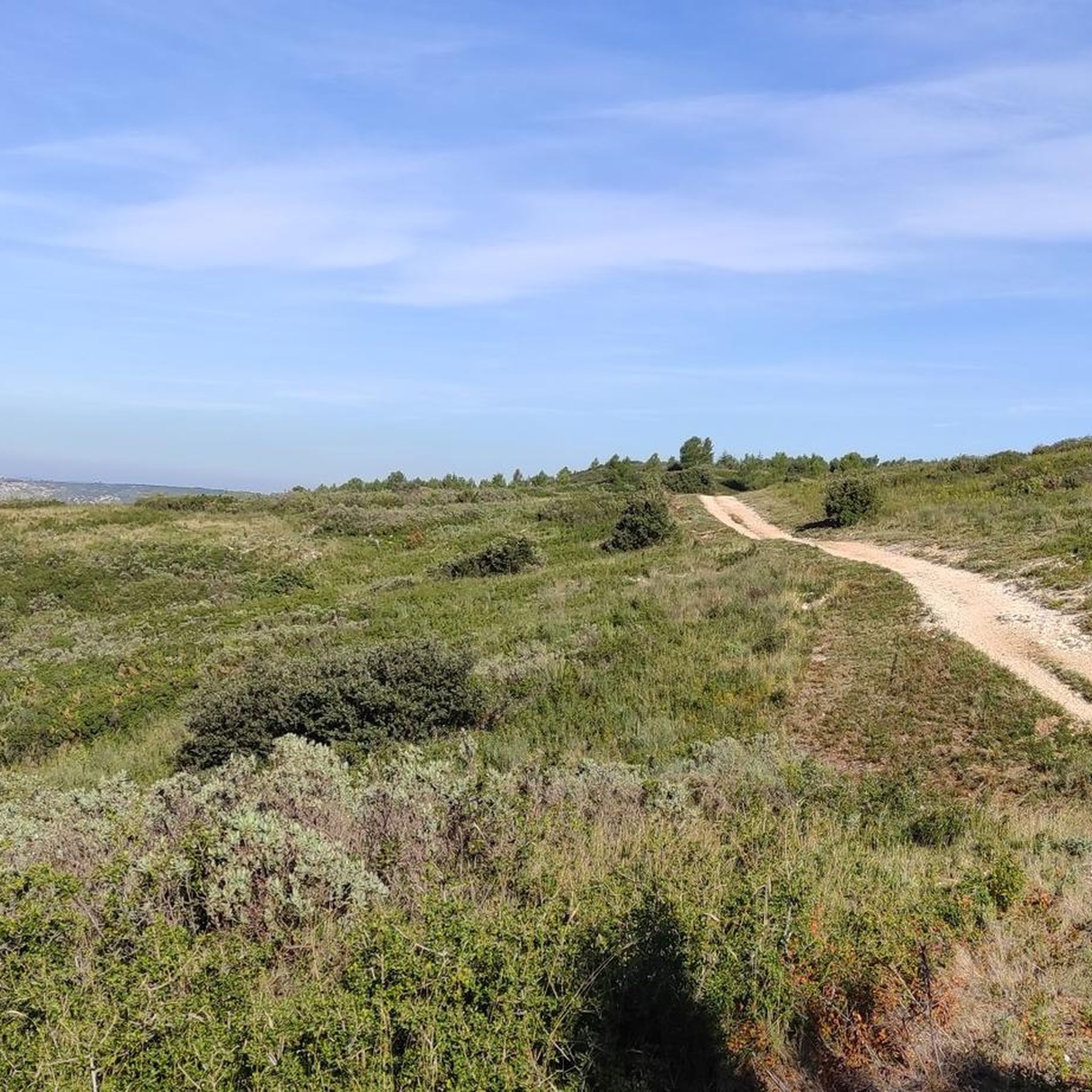
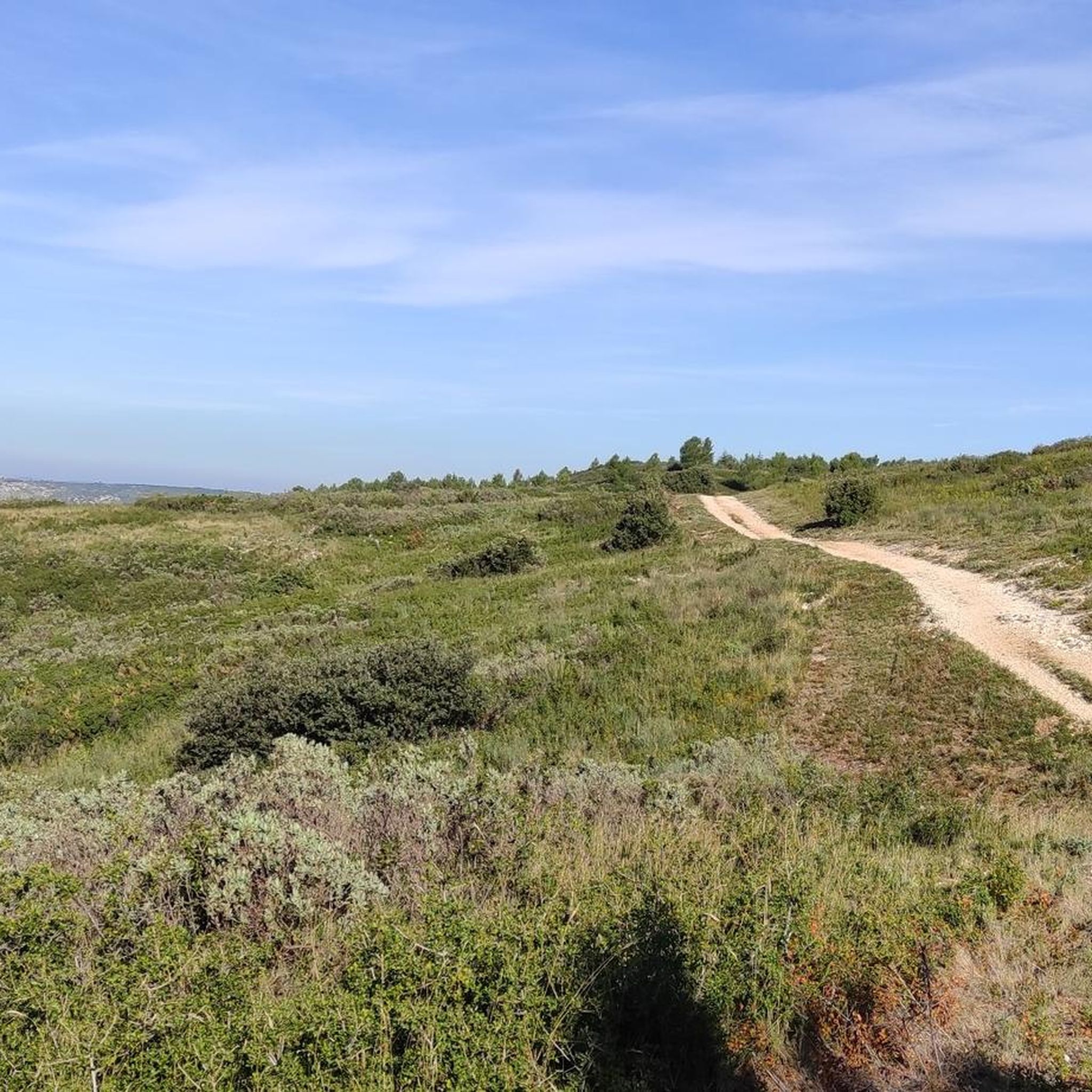
Ventabren is an excellent base for outdoor activities. You can find numerous trails for hiking, running, and cycling. For instance, a 7 km hiking trail from the village center leads to the Roquefavour Aqueduct. There are also various running trails, road cycling routes, and mountain biking trails available. You can explore more options on the Running Trails around Ventabren, Road Cycling Routes around Ventabren, and MTB Trails around Ventabren guide pages.
Are there any easy walking trails around Ventabren?
Yes, Ventabren offers easy walking opportunities. The picturesque streets of the Old Town are perfect for a leisurely stroll, discovering fountains and beautifully restored stone houses. The 7 km trail to the Roquefavour Aqueduct is also a popular option, allowing you to experience the Provençal garrigue.
What is the best time of year to visit Ventabren?
The best time to visit Ventabren is generally during the spring (April to June) and autumn (September to October) when the weather is pleasant for exploring historical sites, enjoying panoramic views, and engaging in outdoor activities like hiking and cycling. Summers can be hot, but still enjoyable for village exploration, while winters are milder.
Are there dog-friendly hiking trails in Ventabren?
Many of the natural trails and paths around Ventabren, including those leading to the Roquefavour Aqueduct and through the Provençal garrigue, are suitable for walking with dogs. It's always advisable to keep dogs on a leash, especially in protected natural areas or near livestock, and to carry water for them.
Where can I find cafes or places to eat in Ventabren village?
The historic center of Ventabren, particularly around the Place de l'Hôtel de Ville, offers cafes and places to eat. This large square features a columned fountain and is a pleasant spot to relax and enjoy the village atmosphere.
Is public transport available to reach Ventabren's attractions or trailheads?
Ventabren is a charming hilltop village, and while local bus services might connect it to larger towns, direct public transport to specific trailheads or remote attractions can be limited. It's often more convenient to reach Ventabren and its surrounding areas by car, especially for accessing hiking and cycling routes.
Are there any wheelchair-accessible attractions in Ventabren?
While the historic cobbled streets of Ventabren village may present challenges for wheelchair users, some attractions in the wider area offer better accessibility. The Rotonde Fountain, located in nearby Aix-en-Provence, is noted as wheelchair accessible. For specific sites within Ventabren, it's recommended to check accessibility details beforehand.
What do visitors particularly enjoy about the attractions around Ventabren?
Visitors frequently praise the grandeur of the Roquefavour Aqueduct, often describing it as an 'exceptional building that deserves to be seen.' The panoramic views from the village, the charm of the picturesque streets, and the opportunity to explore historical sites and natural landscapes are also highly appreciated by the komoot community.
Most popular routes around Ventabren
Most popular attractions around Ventabren

Get inspired with the komoot mobile app


Explore more
Still not found the Highlight you’re looking for? See guides of the top attractions in other regions:
